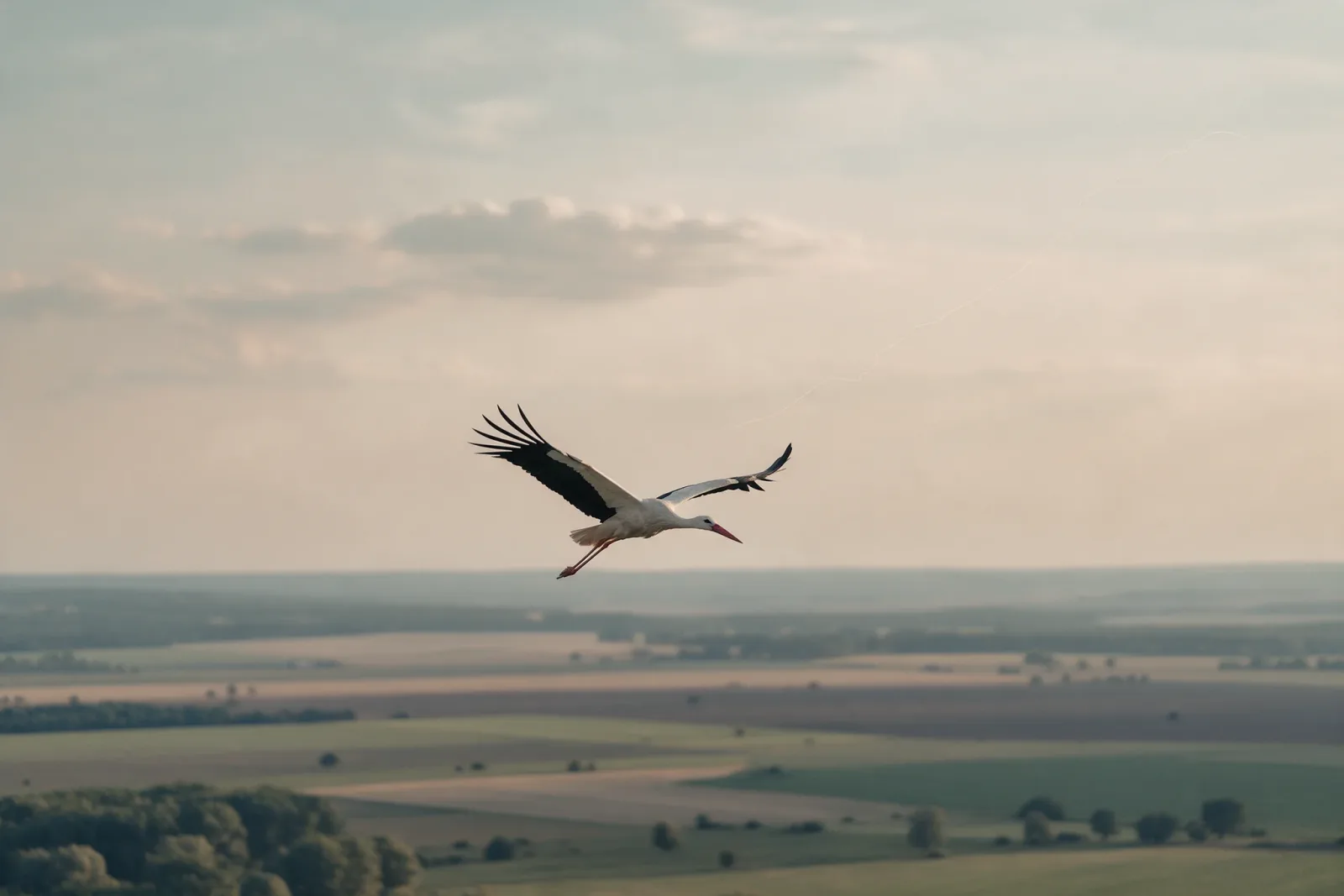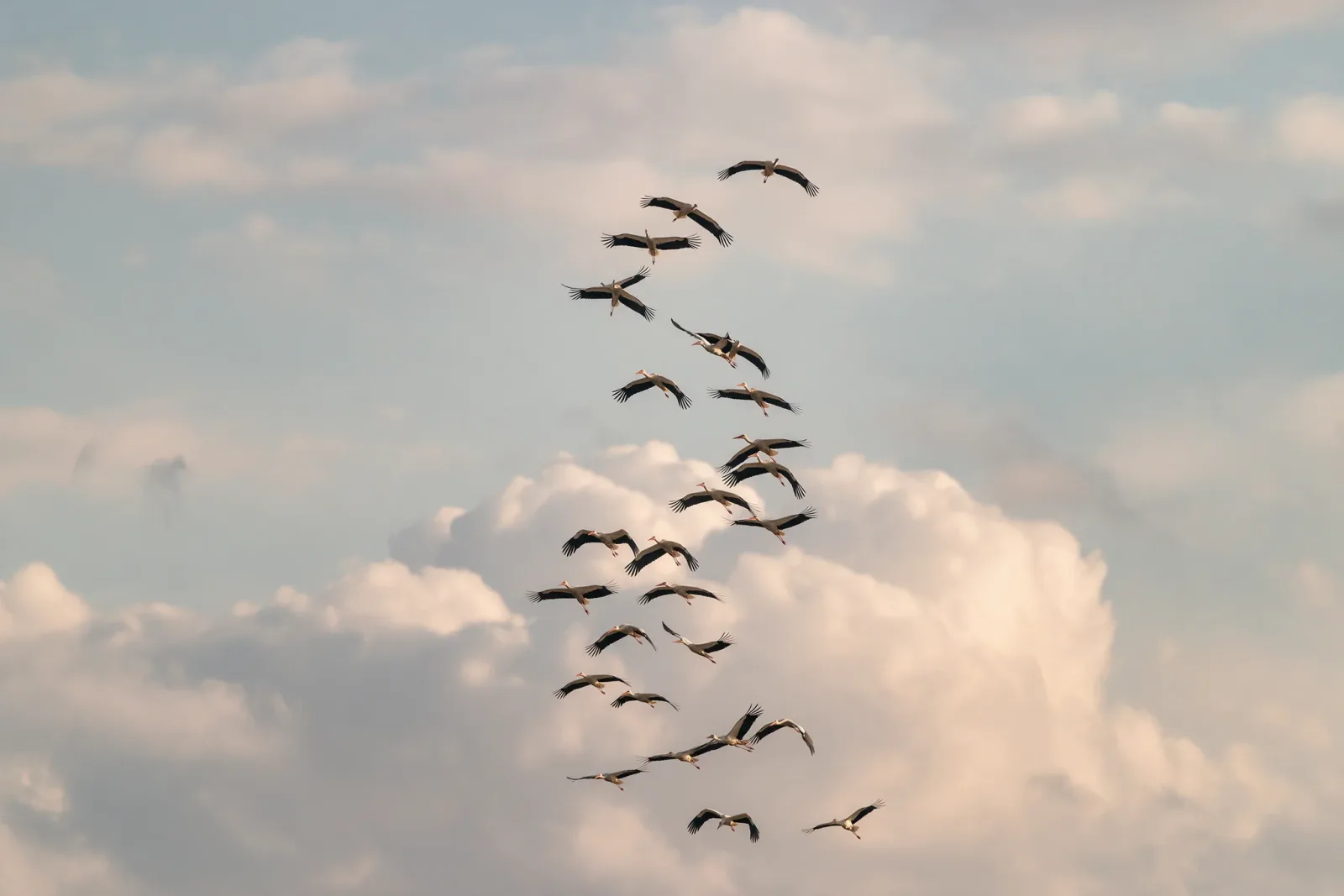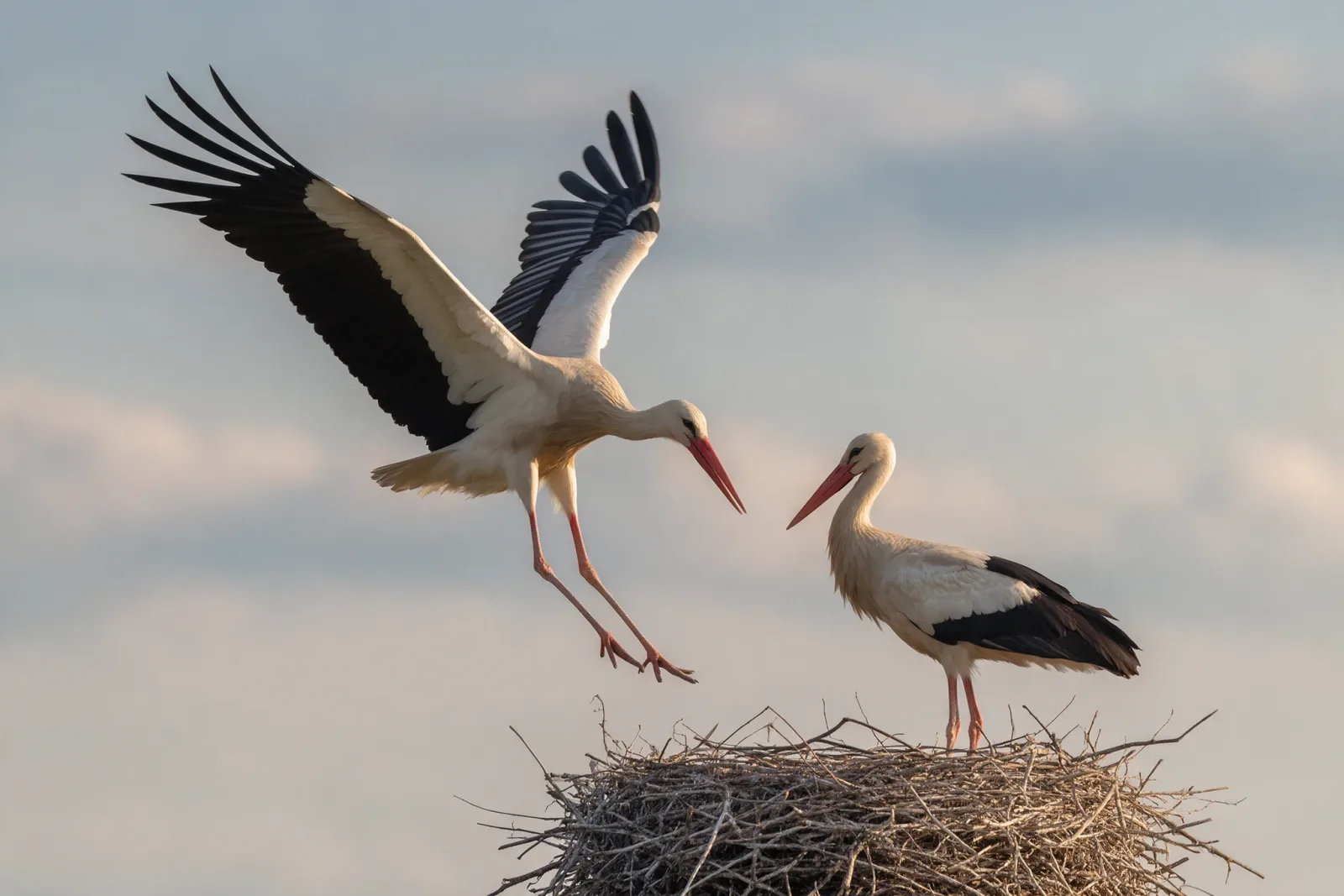
Coming home to the same nest is the white stork's most famous habit, and it never quite loses its wonder. After a winter spent far to the south, after seas and deserts and thousands of kilometres of sky, the stork returns to the place it left, the same rooftop, the same chimney, the same broad nest of sticks it built or inherited the year before. The bird could land anywhere in Europe. It lands at home.
The pull of the old place
A stork's nest is more than a pile of twigs. It is a location, a patch of the world the bird has marked as its own, and it holds that place in its memory through the whole long winter. When spring comes and the bird flies north, it is not searching for just any nesting site. It is searching for the one it remembers. The pull of the old place is one of the strongest forces in the stork's life, and it guides the bird home with a certainty that seems almost like love.
The partner who waits
The stork's loyalty to its nest is matched by its loyalty to its partner. White storks often form pair bonds that last, and the two birds may return to the same nest spring after spring, reuniting after their separate winter journeys. The arrival is a small ceremony. The returning bird lands on the nest, and the pair greet each other with the clattering of bills, a sound that has come to mean spring in the villages where storks live. The nest is home because the partner is there.
The work of renewal
Coming home is not the end of the story. It is the beginning of the breeding season, and the nest must be made ready. The storks add new sticks, repair what the winter damaged, and settle into the old site as if they had never left. A nest that has been used for years grows large and heavy with the seasons, a monument to the birds' faithfulness, added to a little more each spring.
The bond between the pair
The stork's loyalty to its nest is bound up with its loyalty to its partner. White storks often keep the same mate for years, and the two birds return to the same nest each spring, reuniting after the long winter apart. The bond is not a story we can fully see, but the behaviour is plain enough, the same two birds, the same rooftop, year after year, greeting each other with the clattering of bills.
How the birds find each other again is part of the mystery. They winter apart, often in different places, and then converge on the same nest in the spring. The nest itself is the meeting place, the fixed point both birds remember and return to. It is the centre of their shared life, and they are faithful to it in a way that looks, to us, like devotion.
The nest grows with the years. Each spring the birds add sticks, repair the damage, and the structure rises, sometimes until it is large and heavy with seasons. An old nest is a monument to the pair's faithfulness, built a little higher every year by the same two birds returning to the same place.
There are no guarantees in a wild life, and a pair may not always survive the year. But when they do, the return is a small renewal, the same birds, the same home, the same spring, and the long journey made worthwhile by the landing.
The meaning of the return
There is a reason the stork's return is celebrated wherever the birds breed. It is the first sign that the year is turning, that the cold is ending and the long light is coming back. Coming home to the same nest is a promise kept, a wild bird honouring a place the way we honour our own homes. The stork lands on the same rooftop, greets the same partner, and the world, for a little while, feels ordered again, the way it always has been, and the way it will be when the birds return once more.
Explore the gift