Autumn begins in the appetite. Before a white stork leaves Europe it eats far more than it needs, and the fat laid down in the weeks before departure is the fuel for the crossing. The journey south starts in the fields, long before a bird lifts.
The eating season
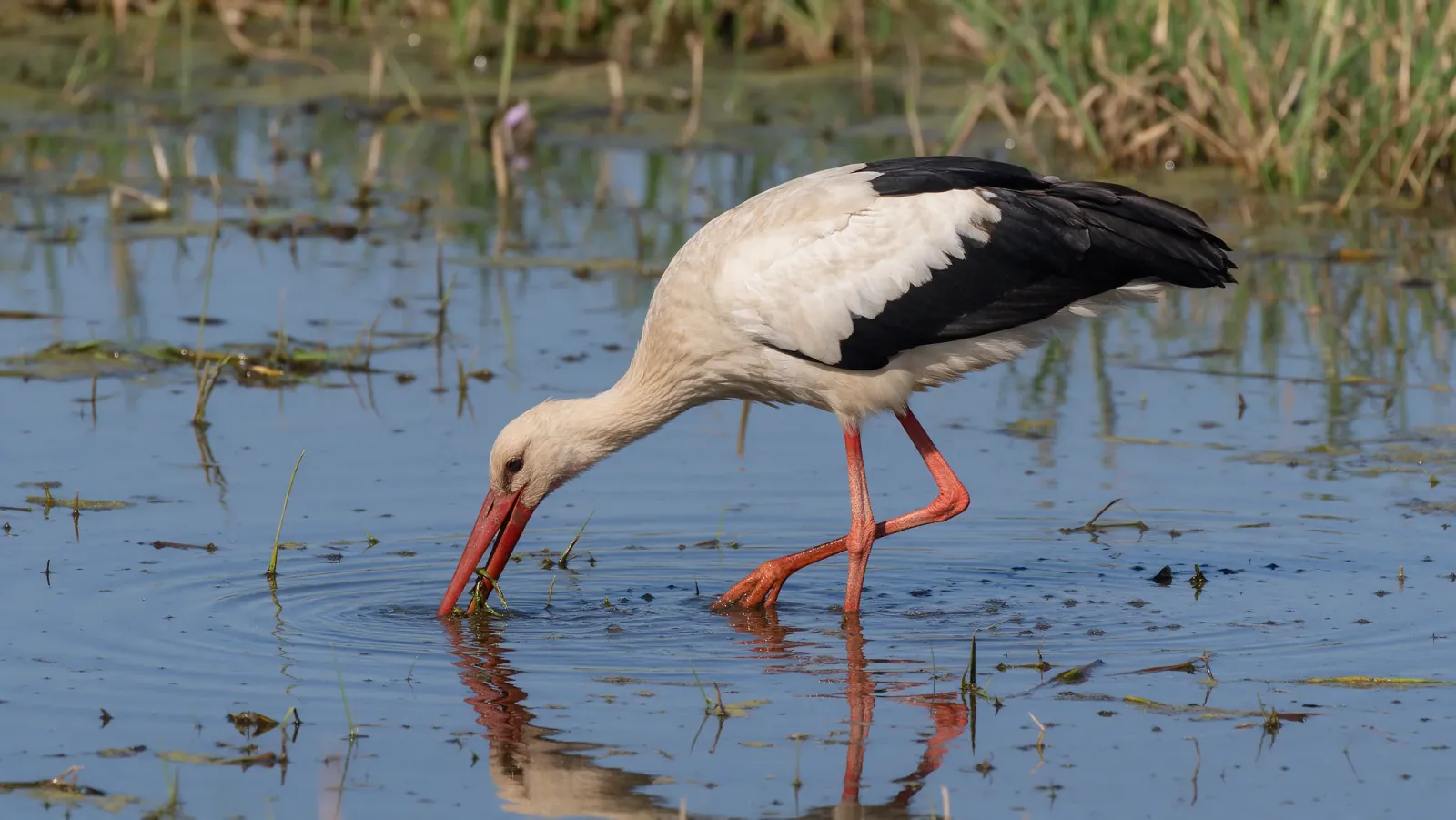
Through late summer and early autumn the birds feed hard, taking insects, frogs and small animals from fields and ditches. A stork that has finished breeding has time for this. The young are flying, the nest is empty, and the short days are spent hunting. The bird's weight climbs, and the extra mass is fuel, laid down as fat.
The final days before departure are spent close to the roost, in the best feeding fields the bird knows. It eats, rests, and eats again. Selene did very little in the last weeks of summer, and she did it well. Her chicks had fledged, and the season had turned from raising young to waiting for the long journey south.
When she did feed, it came easy. The fields had been cut and the stubble was full of insects, and she walked slowly through it, picking here and there. The insects rose in small clouds at her feet. The fat she was building would carry her over the sea and across the desert, and she gathered it a little at a time.
The gathering
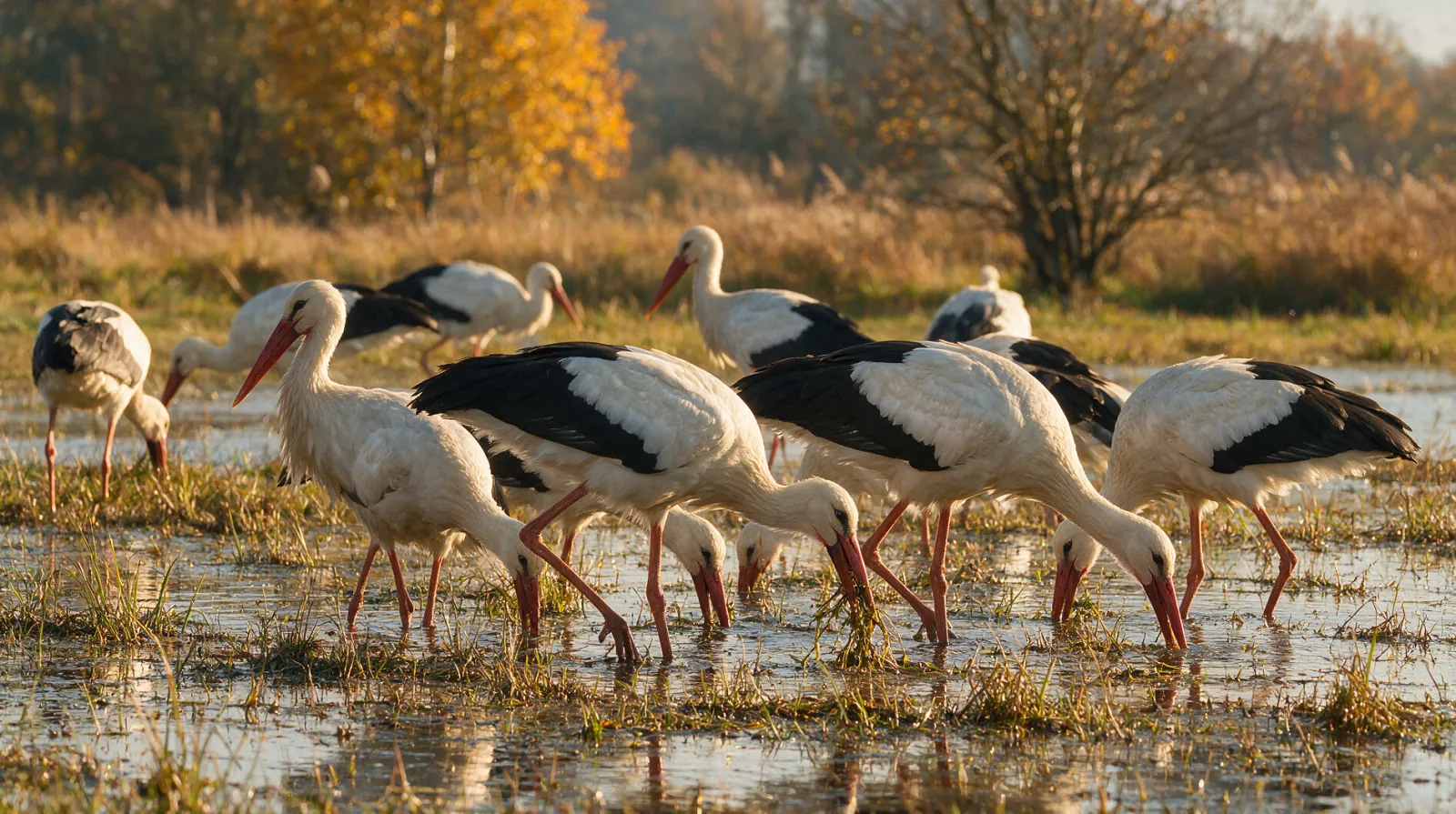
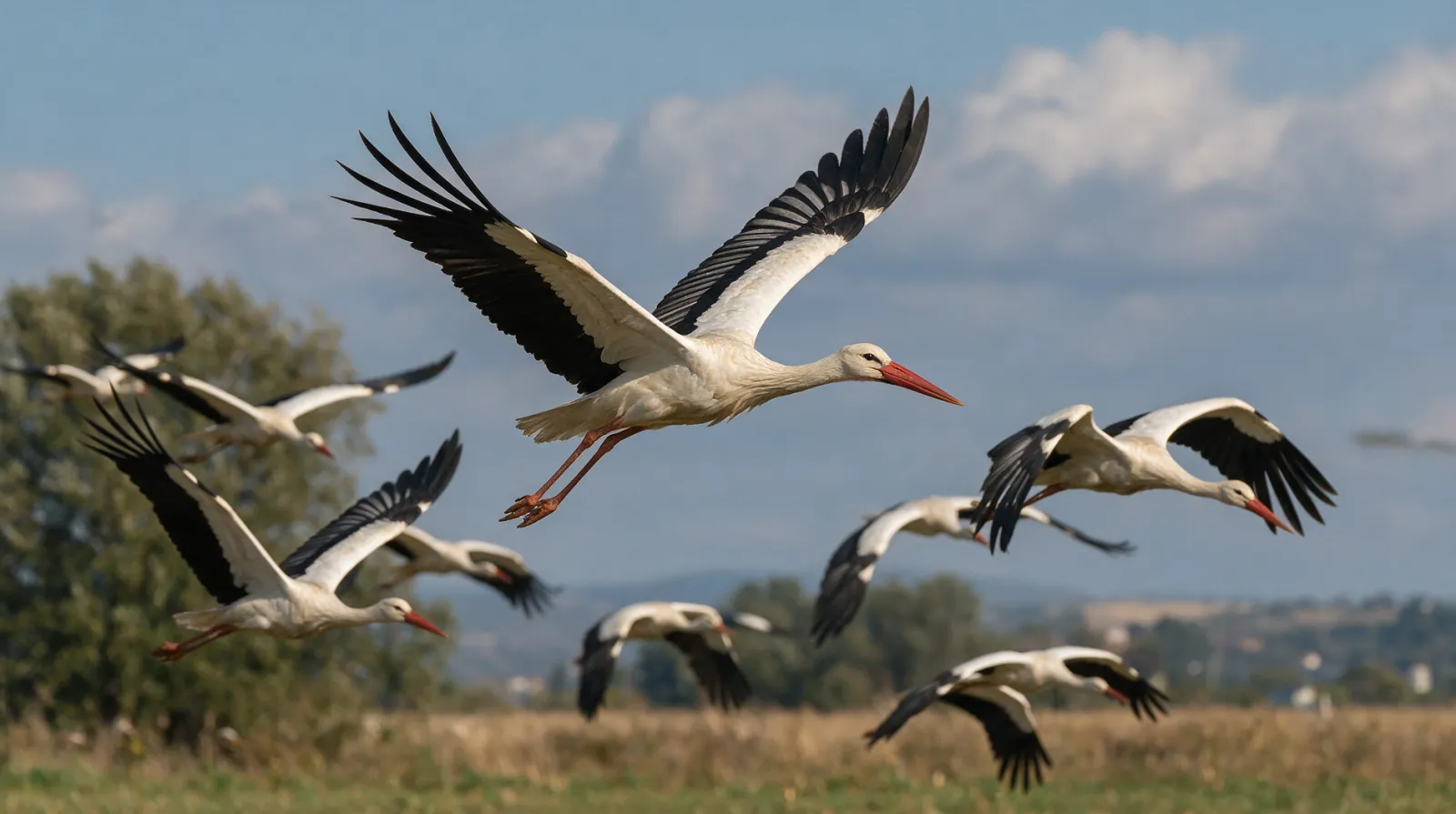
A stork does not leave alone if it can help it. In the weeks before migration the birds collect in the wet fields, dozens and then hundreds, standing shoulder to shoulder in the stubble. The gathering draws the whole local population together until the flock is large enough to make the journey worth the risk. No bird decides this. The season thickens around them, and one day the field is full.
Vesper was part of one of these gatherings. He had spent the whole summer within sight of the nest where he was raised, and he had been drifting toward the others for days, leaving the small ground of summer for the wider company of the flock. Then the air changed, and the field emptied in an afternoon.
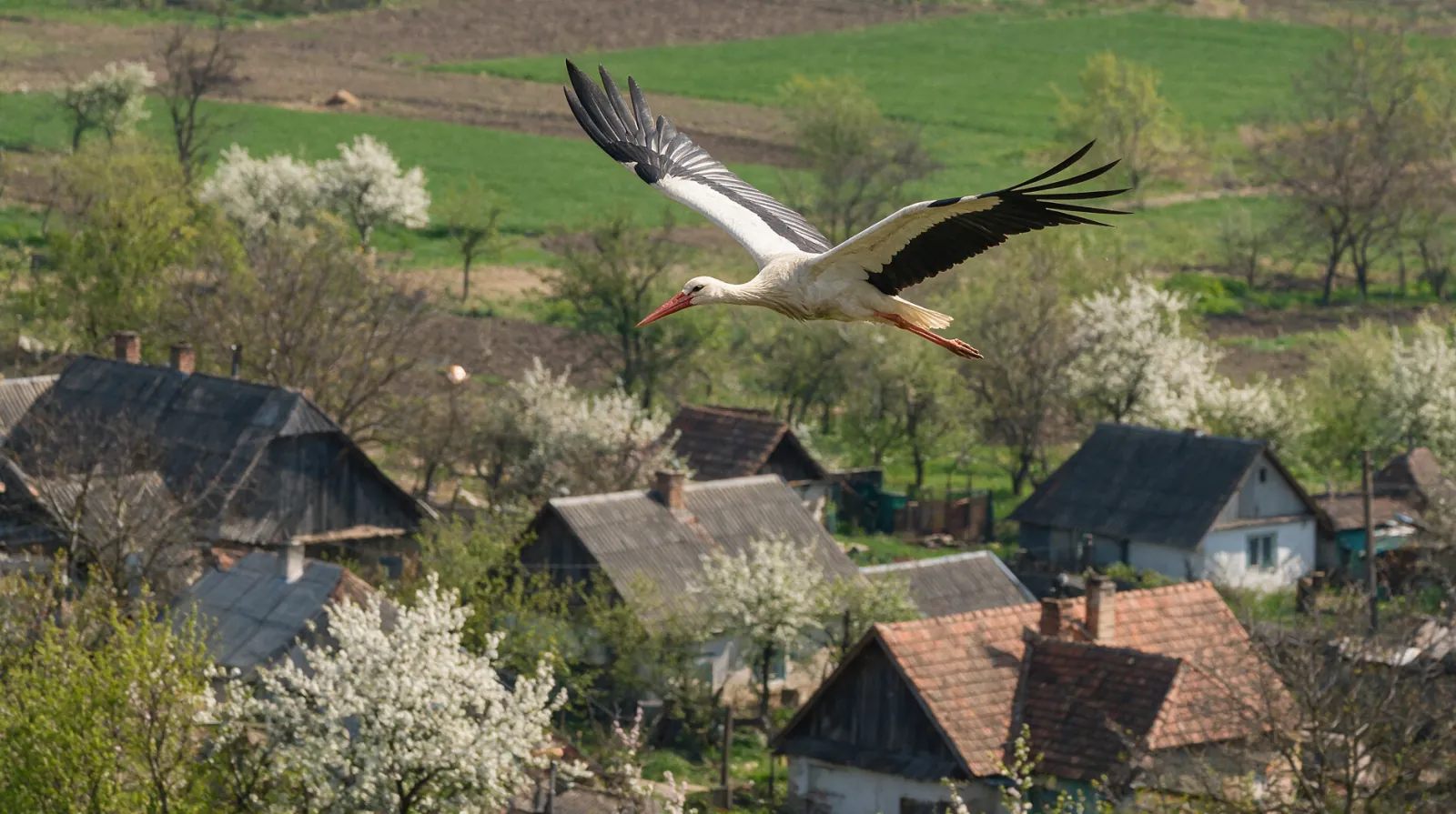
A white stork can climb without a single wingbeat when the air is right. One bird lifts, then another, then the flock is rising in slow circles. Vesper went up with them. He circled twice over the village, and then the flock drifted south and the rooftops were gone. The whole flock can leave a field in the time it takes to turn around.
The morning the field empties
From the air a flock of storks is a loose, changing shape. Birds drift apart and come back together, and the whole thing steers without a leader, each bird reading the air and the others. Vesper kept his place by instinct. The adults had flown this sky many times, and their certainty settled the young ones. By evening the flock had covered ground that would take a person days on foot. The field of the morning was far behind, and the south lay ahead: fields, rivers, and then the crossing over the sea.
That night the flock roosted in a line of trees at the edge of a town. Vesper slept badly. He woke when a dog barked and again when a lorry passed on the road, and each time he stood up and looked around at the other storks, who had not moved. By the third night he could sleep through anything.
The nest went quiet the same evening. His parents stayed on a little longer, as adults often do, and then they were gone too. The village emptied of storks, and winter moved in over the fields.
The reluctant one
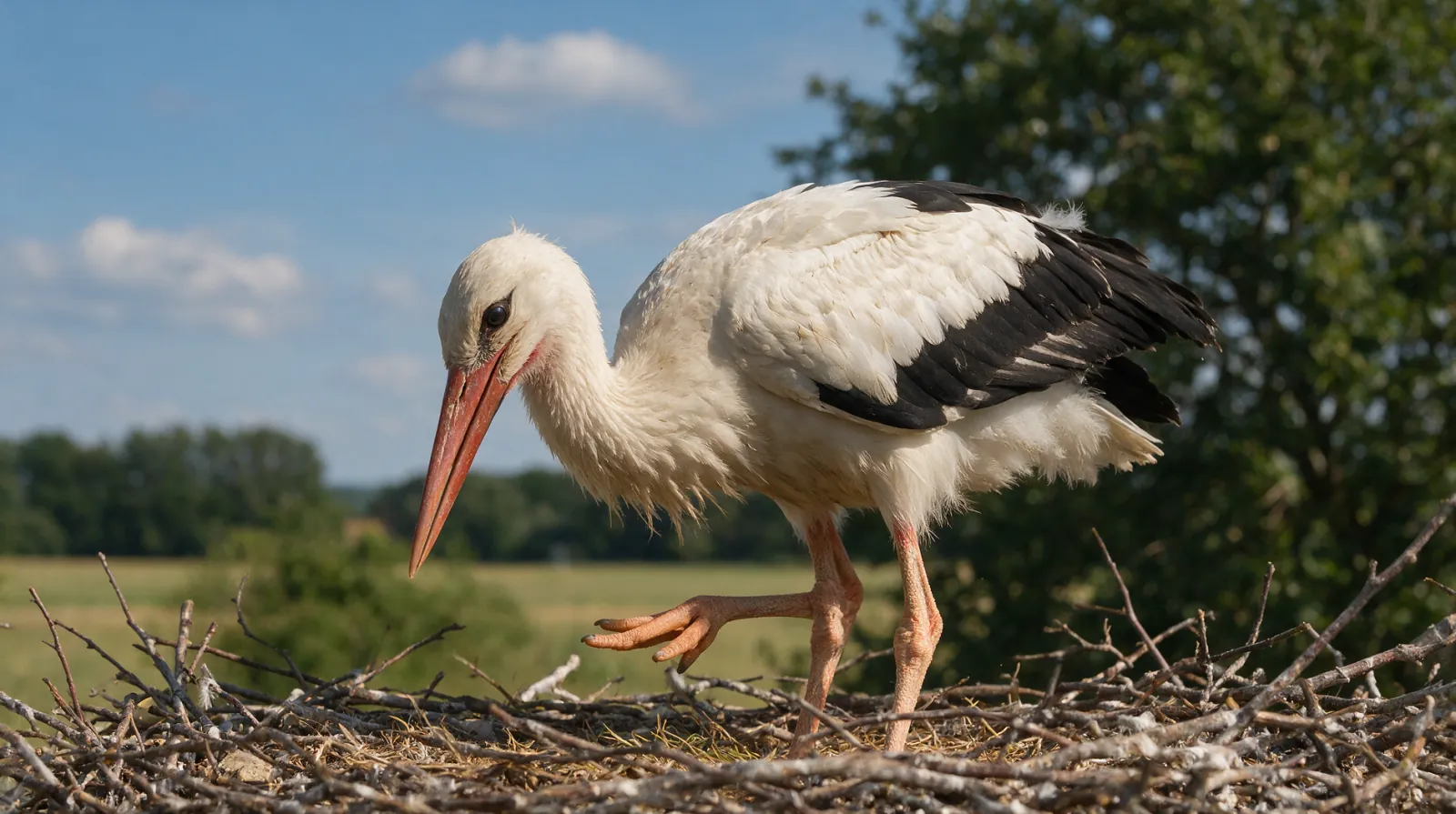
Bram was the last stork to leave that autumn, and for a while it looked as though he might not leave at all. He had been born in a high nest above a village, and for his whole first summer the world had been small: the nest, the field below, the sky above, and food arriving on the end of his parents' bills.
A young stork's first summer is a slow education. Bram learned to stand, to preen, to beg, and finally to fly. His first flights were short hops around the roof, then longer circles over the village. By August he could stay up for an hour and land without falling over. His parents had stopped feeding him by then, and he had learned to find his own frogs in the wet grass. The field below the nest was his whole map.
Then the fields began to fill. A young stork feels the pull of migration before it knows what the pull is for. Bram felt it and did not move. The food was still easy in the wet fields, and the nest was still his, and the south was a word other birds used. He watched the sky empty day by day and stayed where he was.
What holds a young stork back differs from bird to bird. Some leave with the first flock. Some wait a week, or two, and follow with the stragglers. The hesitation is quieter than fear. A bird that has never left home has no picture of where it is going. Bram had to want the south more than he wanted the roof.
By the end of the week the village was quiet. The last flock had gone, and the fields held only rooks and the first cold wind. Bram stood on the nest in the rain and looked south. He left alone, in the afternoon, on a day with good lift. He followed the coast because something in him said coast, and at the crossing he found other late birds and joined them. He flew behind older storks and copied them, and when he reached the wintering ground he was thinner than the birds that had left on time, and he was there. The wetland was crowded and the best pools were taken, and he fed on the edges until he found his own corner.
The winter wetland
Hakon spent the cold months on a shallow African marsh, where the water spread thin across the grass and the frogs called all night. He had come to this ground the year before and the year before that, and he settled into it the way a traveller settles into a familiar room.
The wetland gave him what he needed, frogs and small fish and insects in the shallows, and it gave it in the same places each day. Herons and egrets fished beside him. A monitor lizard watched from a bank. He had learned the map of the place in his first week: which pool held fish, which bank stayed dry, where the shade fell at noon. He fed in the early morning and again in the evening, and in the heat of the middle day he stood in the shade of a thorn tree with his bill tucked.
A stork spends the winter repairing what the summer took out of it. Two things happen in those months. He builds fat, and he moults. A stork that has raised chicks arrives thin and worn, with feathers bleached and broken by sun and work. On the wintering ground the old flight feathers drop and new ones push through, and for a few weeks he flies badly.
The moult and the turn north
His old flight feathers had to be replaced before he could go north. The change came quietly. The mornings were the same, and the water was the same, and yet he began to stand facing north for long stretches, the way a horse turns toward a gate. Something in the length of the light, or the smell of the air, or the state of his own wings told him the time had come.
One evening the flock rose together and drifted north, and Hakon rose with them. He left the wetland the way he had found it, without ceremony. The frogs were still calling, and the water was still shallow, and the long winter was over. Somewhere ahead of him lay the desert, the sea, and a roof he had not seen for half a year.
The birds that left early and the birds that left late take the same road south. The flock gathers, the field empties, and the winter ground fills with storks.
Explore the gift