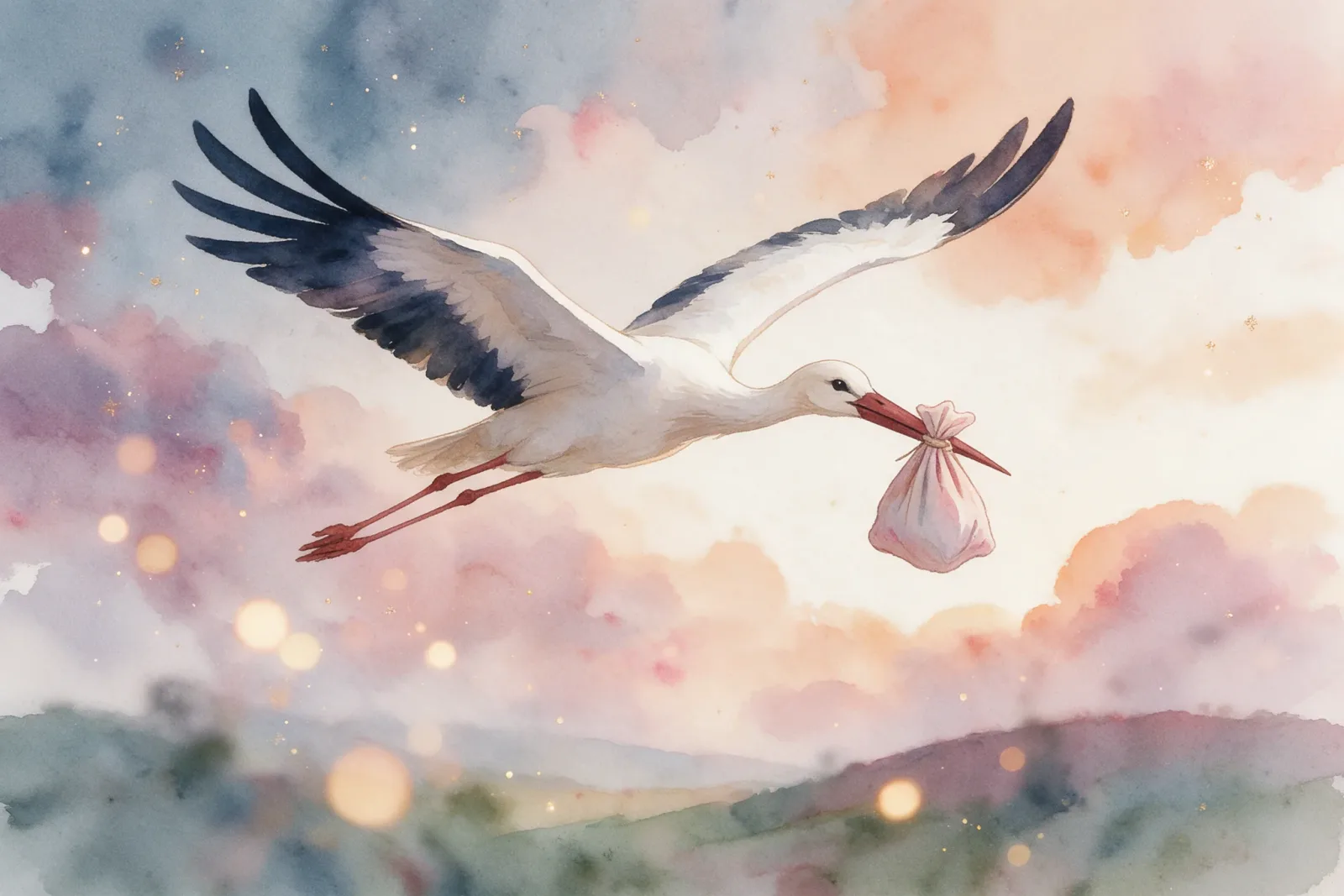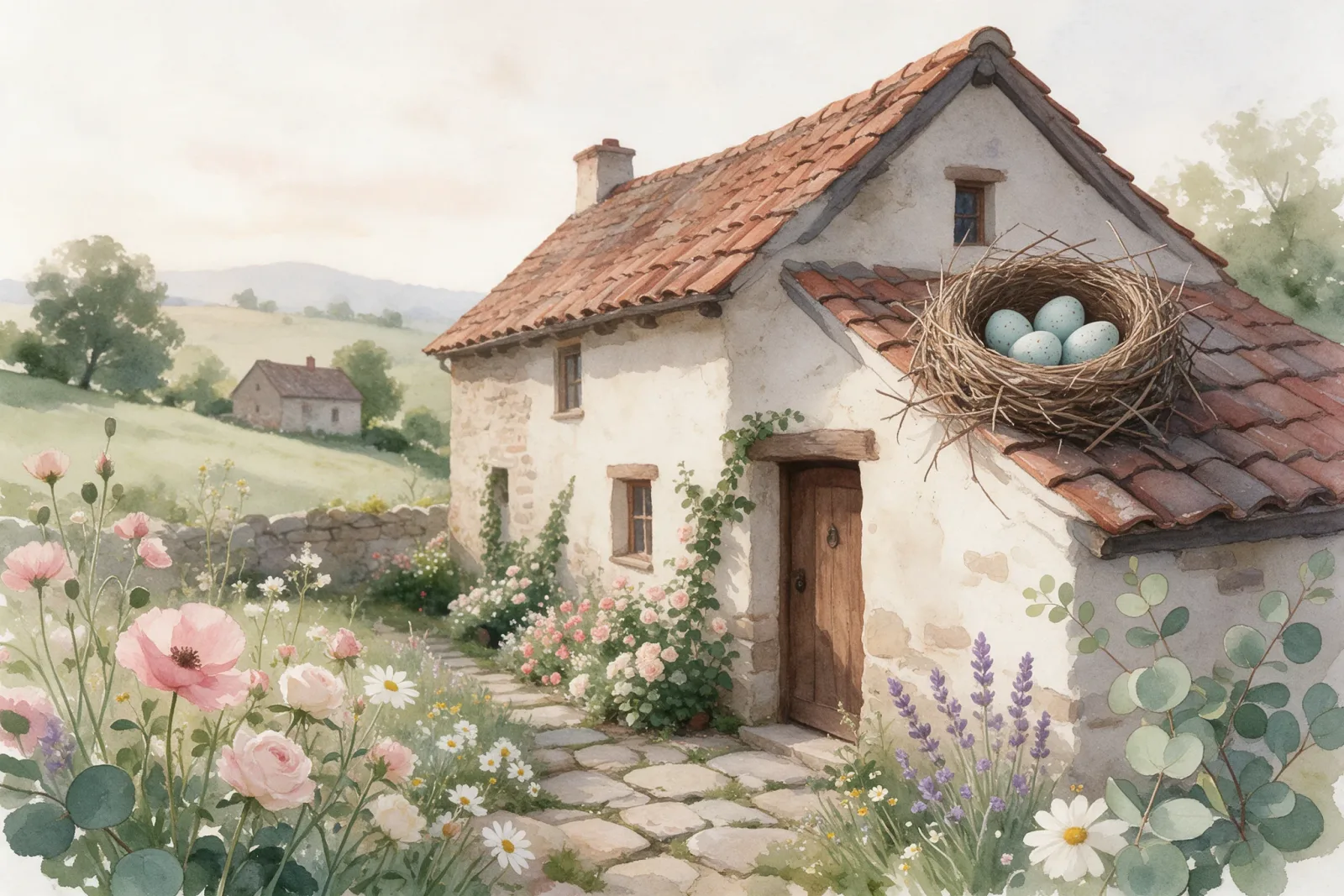
For centuries the belief has run across Europe that a nest on the roof brings luck. A house with a stork nesting on it was a fortunate house, guarded against fire, blessed with children, and favoured by the sky. The belief was so strong that people built platforms and wheels to invite the bird up, and treated the nest as a treasure.
The bird that chose you
The luck of the nest began with a simple fact. A stork is particular about where it settles, and it does not stay just anywhere. To have a stork choose your roof was to be singled out, and people read the choice as a judgement on the household itself.
A good, orderly, peaceful home, the reasoning went, drew the bird. A quarrelsome one did not. The nest on the roof became a kind of public certificate, proof that this was a house worth settling on.
The charm against fire and lightning
The strongest part of the belief was practical in spirit. The nest protected the roof, and the roof protected the family. A stork was said to guard the thatch from lightning, or to carry water in its beak to a burning house.
Whatever the details, the rule was the same everywhere. The nest was a shield, and anyone who harmed it or its young invited the very harm the bird had been holding off. The charm worked only while the household kept its side of the bargain.
A welcome for the returning guest
In spring, the return of the stork was greeted as a blessing. A household might leave the old nest undisturbed all winter, and wait through the cold months for the bird to come back. The first sight of the stork on the roof was a day of small celebration.
People placed an old cartwheel on a pole or a chimney to give the bird a foundation, a custom that still survives in many villages. To make a home for the stork was to make a place for luck itself.
The nest and the cradle
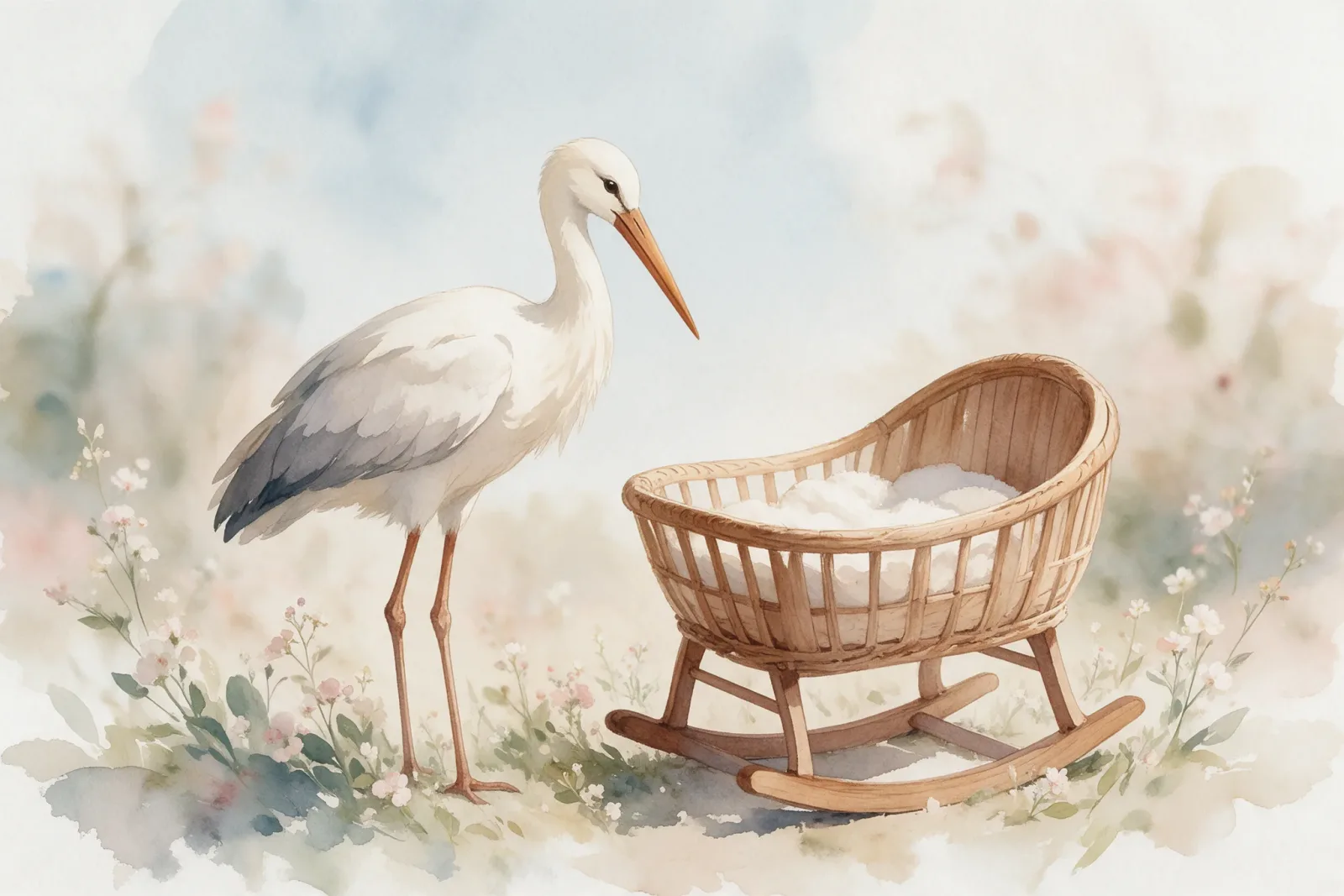
The luck people wanted from a stork was, above all, children. The nest on the roof and the cradle in the bedroom were linked in the folk mind, two homes for new life, one above and one below.
A couple hoping for a baby watched for the stork with special hope. If the bird nested over their house, the spring would bring the birds back, and it would bring the family a child.
A luck that is still felt
The old fears have faded, and a nest is now protected by law and affection rather than superstition. Yet the feeling remains. A stork on the roof still makes people pause and smile, as if the house had received a small, white, winged blessing.
A nest on the roof brings luck because people decided it did, and then lived as though it were true. That, in the end, is how most luck is made.
Explore the gift