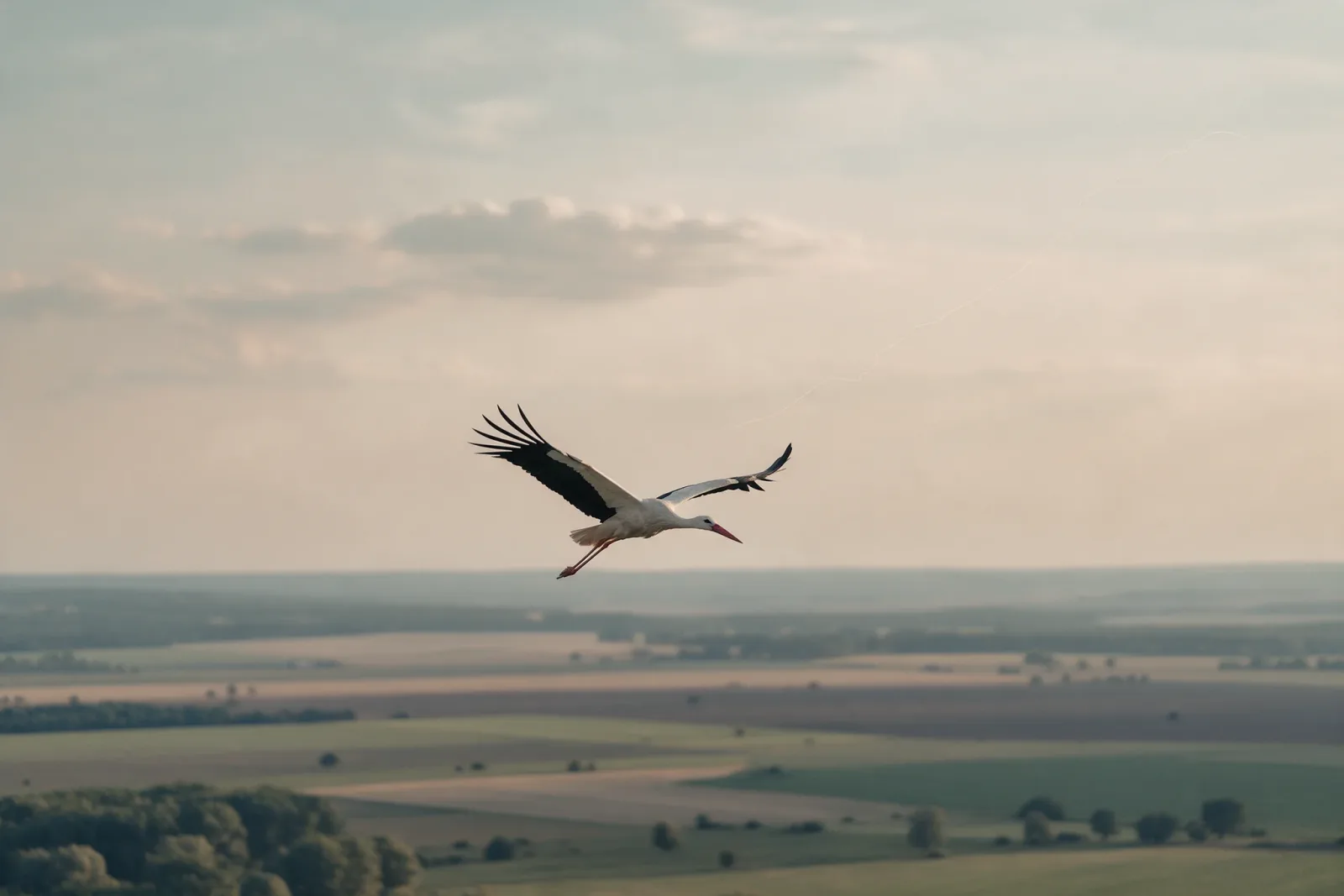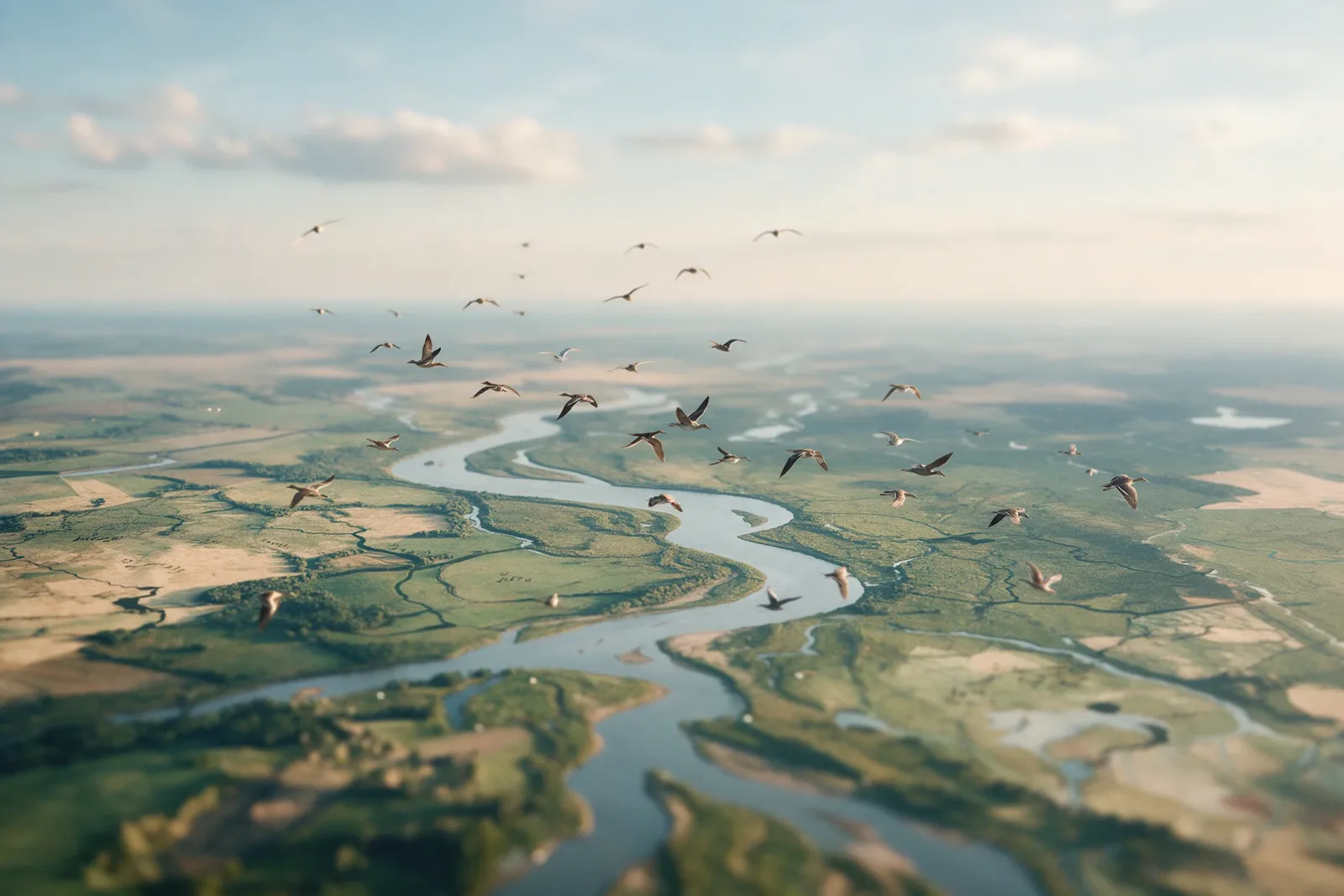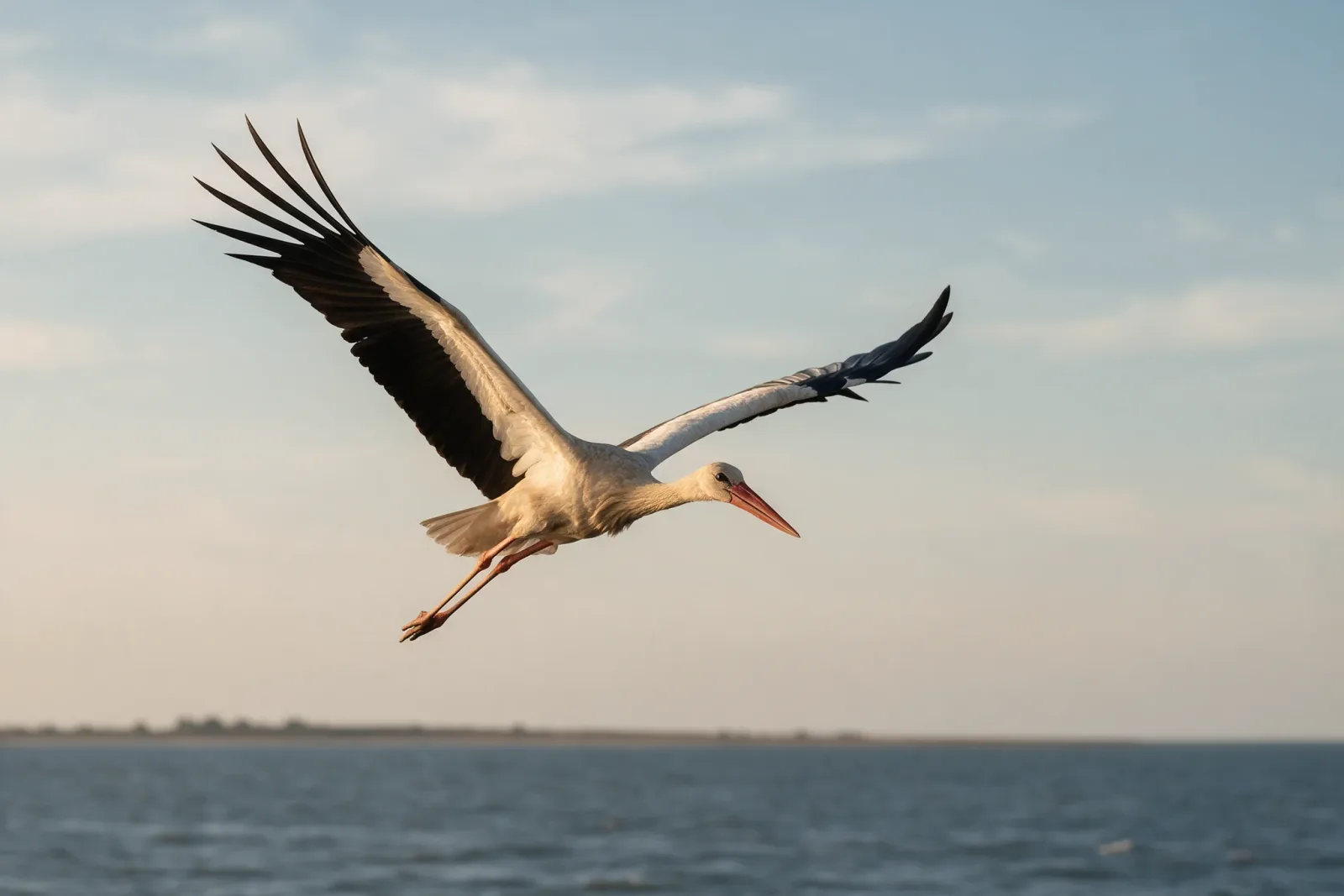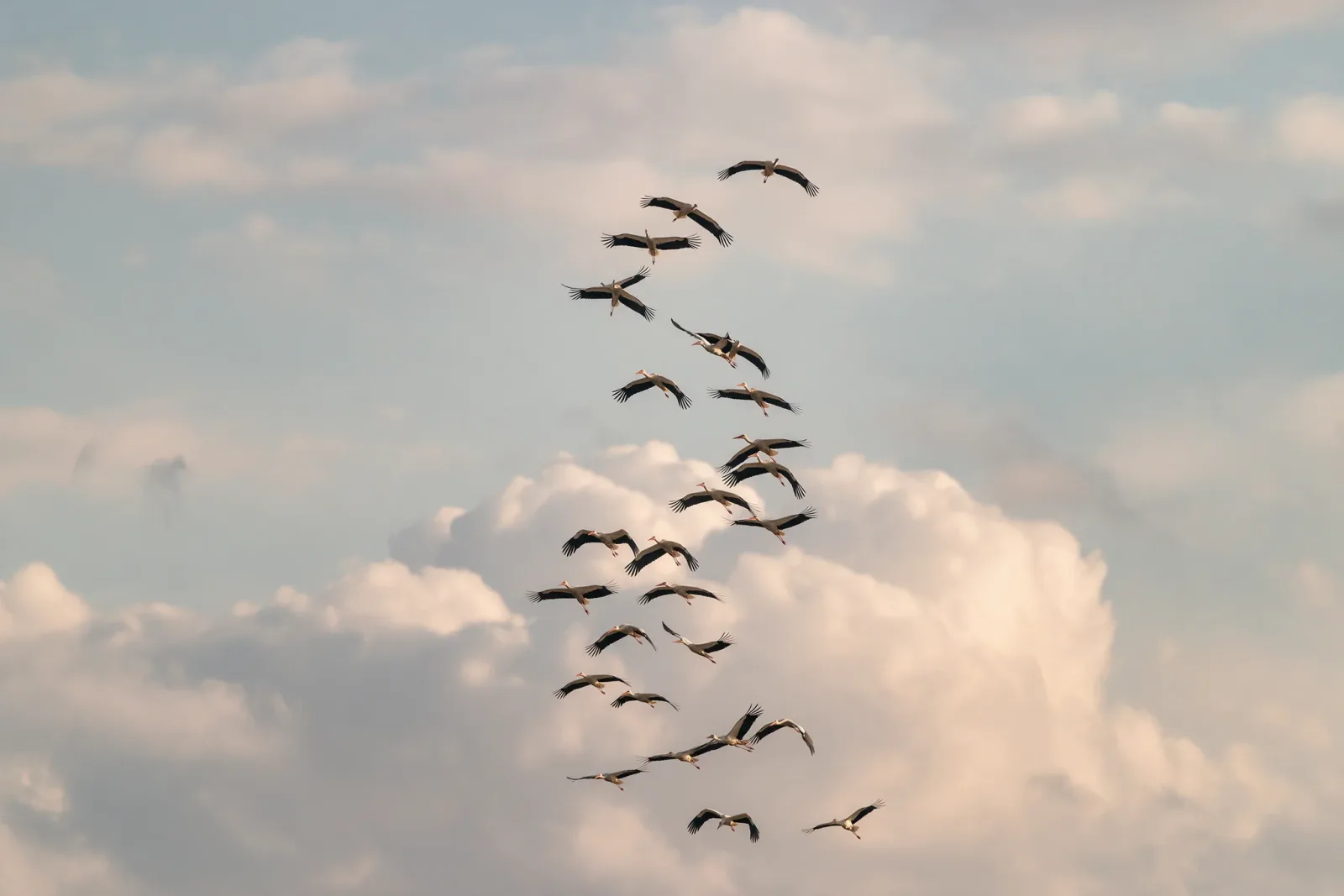
Why do storks migrate? The short answer is food. The long answer is a story about warmth, daylight, and a deep memory carried inside every bird that has ever hatched. Each autumn, as the northern days shorten and the ground cools, white storks leave the fields and rooftops of Europe and turn south. They do not leave because they dislike the cold. They leave because the things they eat begin to disappear.
The quiet reason behind the journey
A white stork eats what it can catch on the ground. Frogs, insects, small mammals, earthworms, and the many creeping things of a warm meadow. When winter arrives, that larder closes. Ponds freeze, insects vanish, and the soft ground hardens. A stork that stayed would spend months hungry and cold. So the bird does what its ancestors have done for a very long time. It leaves before the hunger arrives.
Instinct and memory
No one teaches a young stork the route. It flies south for the first time in its first autumn, alone or in a loose crowd of other first-time travellers, and it knows the general direction. That knowledge is not learned. It is inherited, the way a heartbeat is inherited. The urge to move, the direction of travel, the timing of departure, all of it arrives already written into the bird. Why do storks migrate? Because the impulse to go is as much a part of them as the black on their wings.
The pull of warmth
South of the great deserts lies a different season. While Europe shivers, the African savanna and the fields of the Sahel are warm and green and full of life. A stork that reaches those places finds insects moving through tall grass and water standing in shallow pools. It finds the food that winter took away. The bird spends those months feeding and resting, storing strength for the return journey north when the spring comes back to Europe.
The season that decides
The trigger for the whole journey is the season itself. A stork feels the days shorten through its own body, the way a tide feels the moon. The fading light works on the bird's hormones, and the restlessness grows until it becomes departure. Food is the reason for going, but light is the clock that says when. A stork migrates because the season tells it to, and the season is a thing the bird can feel in its bones.
The return works the same way, in reverse. When the southern days grow short and the urge to breed stirs, the bird turns north again, drawn toward the long light of the northern summer. The cycle never rests. The stork is bound to the year, travelling between the two halves of the earth the way a weight swings between two points, never stopping for long, always moving with the light.
A young stork that has never seen Africa will head for it anyway. No map is drawn for it, no older bird flies at the front calling out the turns. The route is passed down invisibly, generation to generation, not taught but carried, the way a seed carries the shape of the tree it will become. Even a bird that wanders in its first autumn still holds the general direction inside it, an arrow that points south when the season turns.
The answer to why storks migrate, then, has layers. A layer of food, a layer of light, a layer of inherited memory, a layer of the year's great turning. None of them alone is enough, and all of them together are irresistible. The bird does not weigh the reasons the way we might. It simply feels them, all at once, as a single pull toward the south, and it obeys.
A question with no single answer
There is no one cause for the migration, only a braid of causes. Daylight shortens and tells the bird it is time. Food thins and gives the bird a reason. The instinct to fly south hums beneath all of it like a current. Warmth waits at the far end of the journey, and the memory of warmth, generation after generation, keeps the whole thing moving. A stork migrates because every part of its life points the same way, toward the sun.
Explore the gift