Ask a grown person about a childhood stork and the answer often comes as one small thing: the flash of a black wing tip or the clatter of a bill. The rest of that summer has gone soft and general. The detail has stayed sharp. A child's memory works by selection, and it selects for surprise.
Memory keeps what surprised us
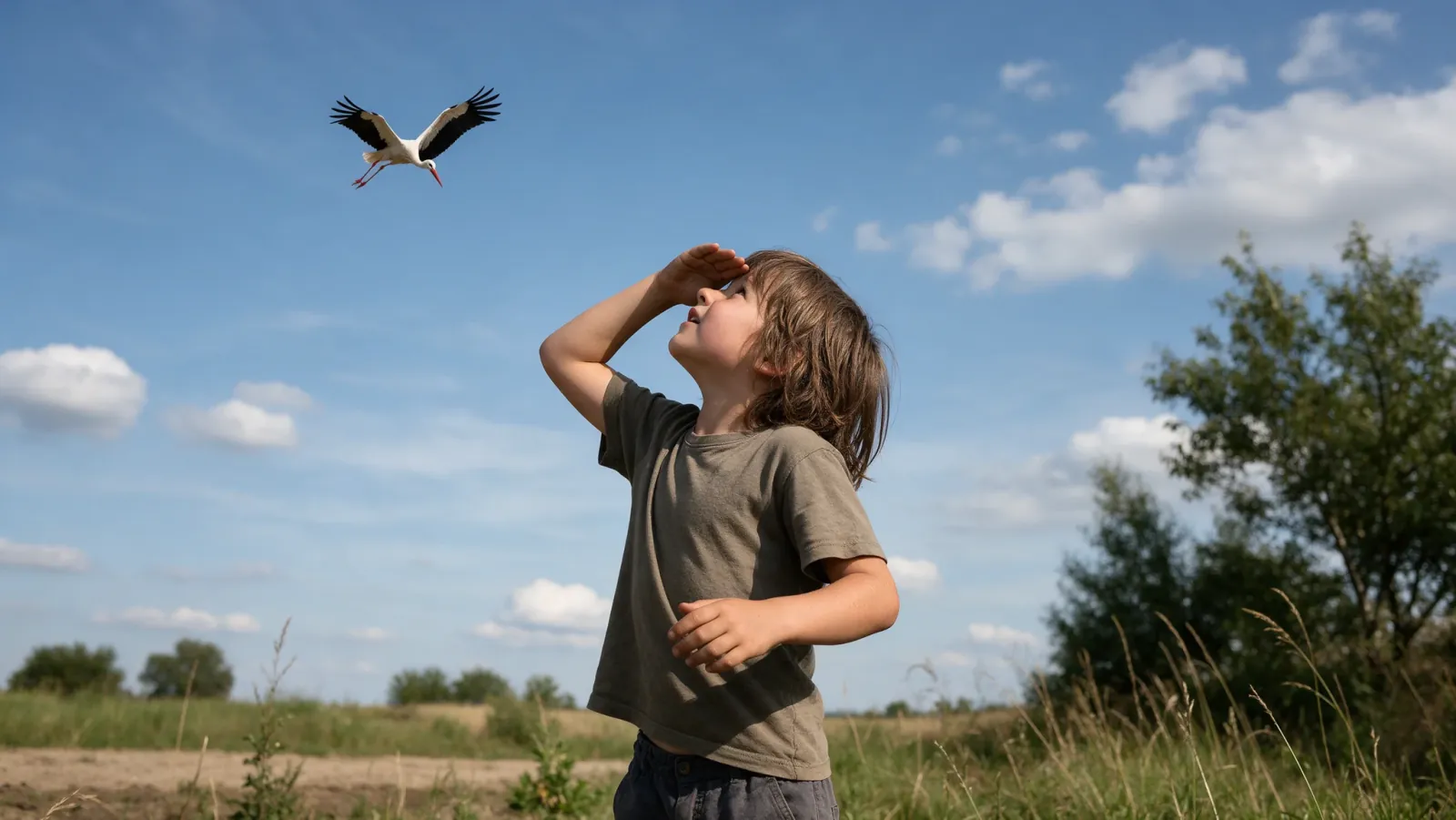
A child may forget a whole holiday and keep one glimpse of a stork lifting off a wet meadow. The wings open and the long red legs trail, and the bird is airborne. Everything around the moment blurs, and the moment holds.
The parts that stay are rarely the parts an adult would choose. A child keeps the black wing tips because the contrast was strange. They keep the open bill because it looked like a shout. Memory keeps what surprised the child, and surprise is a kind of attention. The ordinary afternoon around the bird does not stand a chance.
This is why a photograph of the same afternoon can mean so little. The photograph records the scene. The child records the jolt.
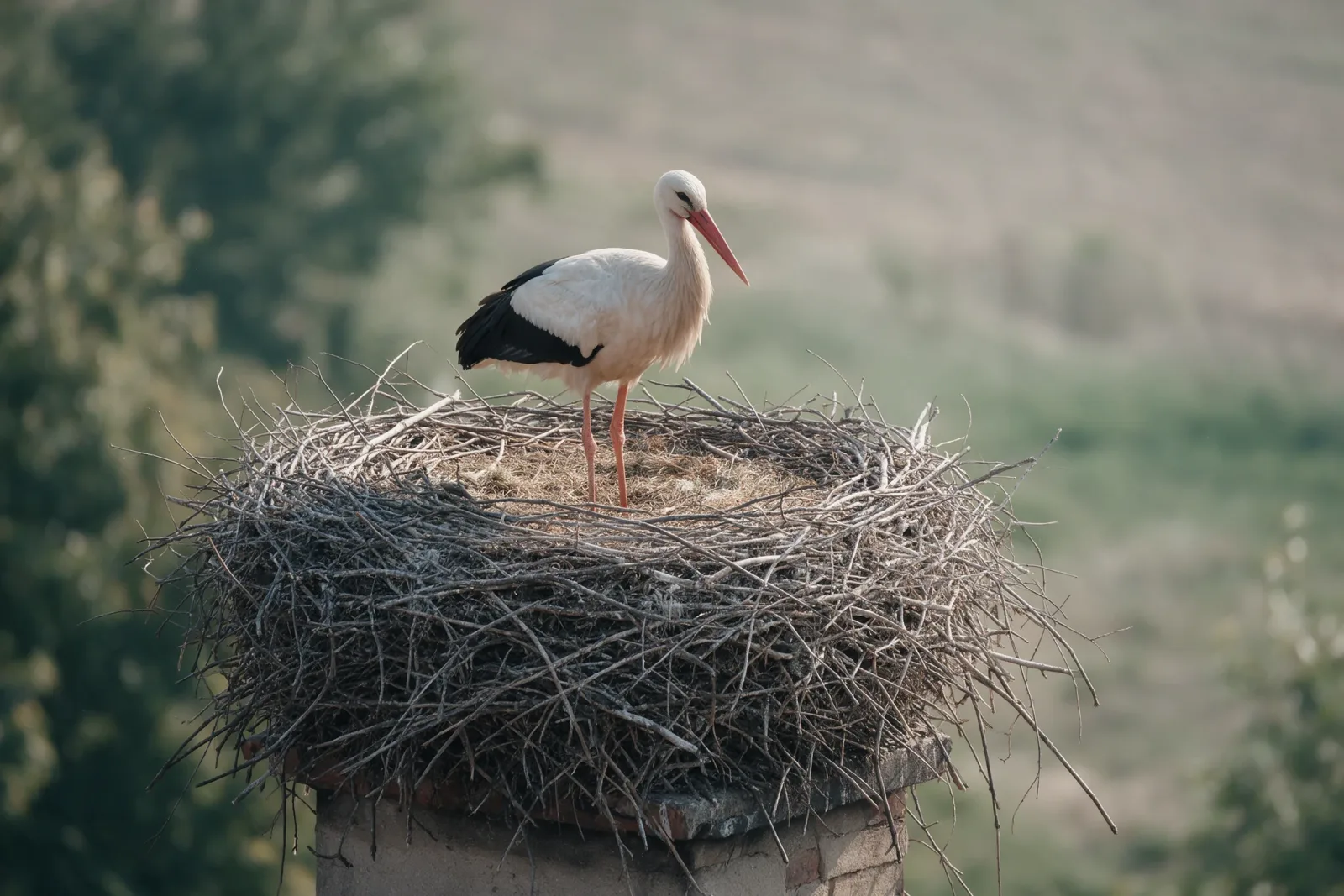
A detail can also be a sound. The clatter of a bill arrives before the bird is visible, and a child who has heard it once will turn toward the field before anyone else does.
Counting is a way of holding on
Counting starts with one bird in a field and ends with a number carried home for dinner. The finger moves through the air. The numbers are said aloud, lost, and begun again, because storks will not hold still.
The count matters because it can be checked. A child who counted seven storks in the morning and nine in the afternoon has learned that a careful look earns a real answer. A number is the first record a child makes of the wild world. The storks keep moving, and the number keeps meaning something anyway.
Counting is also a first lesson in accuracy. The child learns that a guess can be checked, and that checking takes patience. The storks move, the number changes, and the child tries again.
The tally also carries care. Nobody counts what they do not care about. Each bird is added with a small amount of attention, and the total gets announced at the table. To count something is to give it a place in the day. Once counted, the storks are never quite unremarkable again.
The counting also gives the walk an ending. A child likes an end that can be carried home, and a number is easy to carry. The number is said again at dinner, and the afternoon is fixed by it.
A record kept without a notebook
The count becomes a habit, and the habit becomes a small natural history. The child remembers eleven storks in the meadow in May, four in October before they left, the first one back in late February. Nobody writes any of it down. The record lives in the child.
That kind of memory is tied to place. The field is the page, and the birds are the entries. A child who has counted the same meadow across a year knows when it is early or late, when the grass is high, when the light has changed. The count turns a view into a place the child knows.
The memory of a place is built from repetition. The same gate, the same wet patch, the same line of reeds. A child who returns to one field learns it the way a reader learns a page.
Some children keep the tally in their head. Others draw a mark for each bird on a scrap of paper. The method does not matter. The habit of keeping a record does.
The storks go on standing in their field, uncounted and unbothered. The child grows into a person who never quite stops counting wild things, and who returns to the same place expecting a different answer.
The drawing records the looking
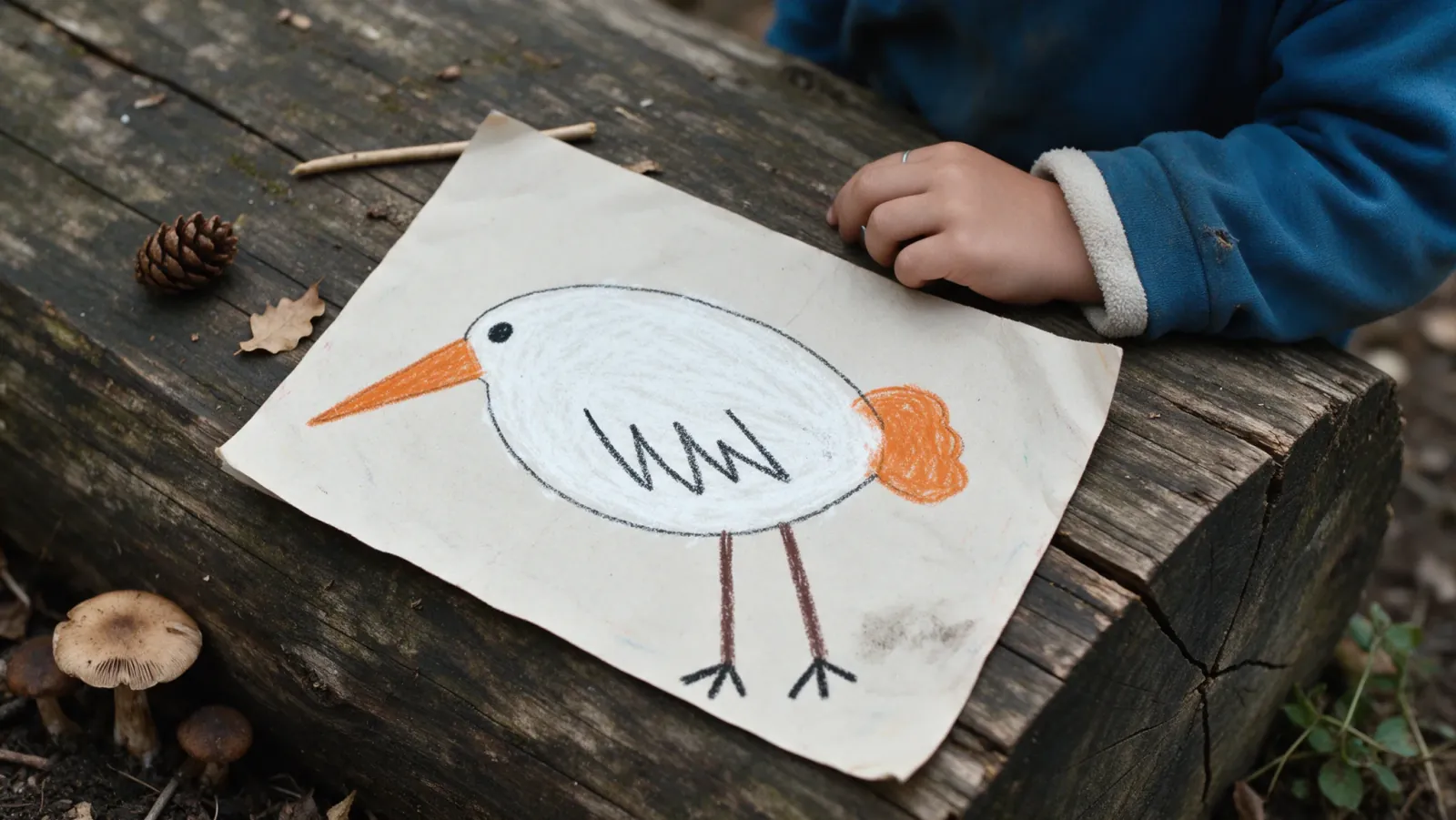
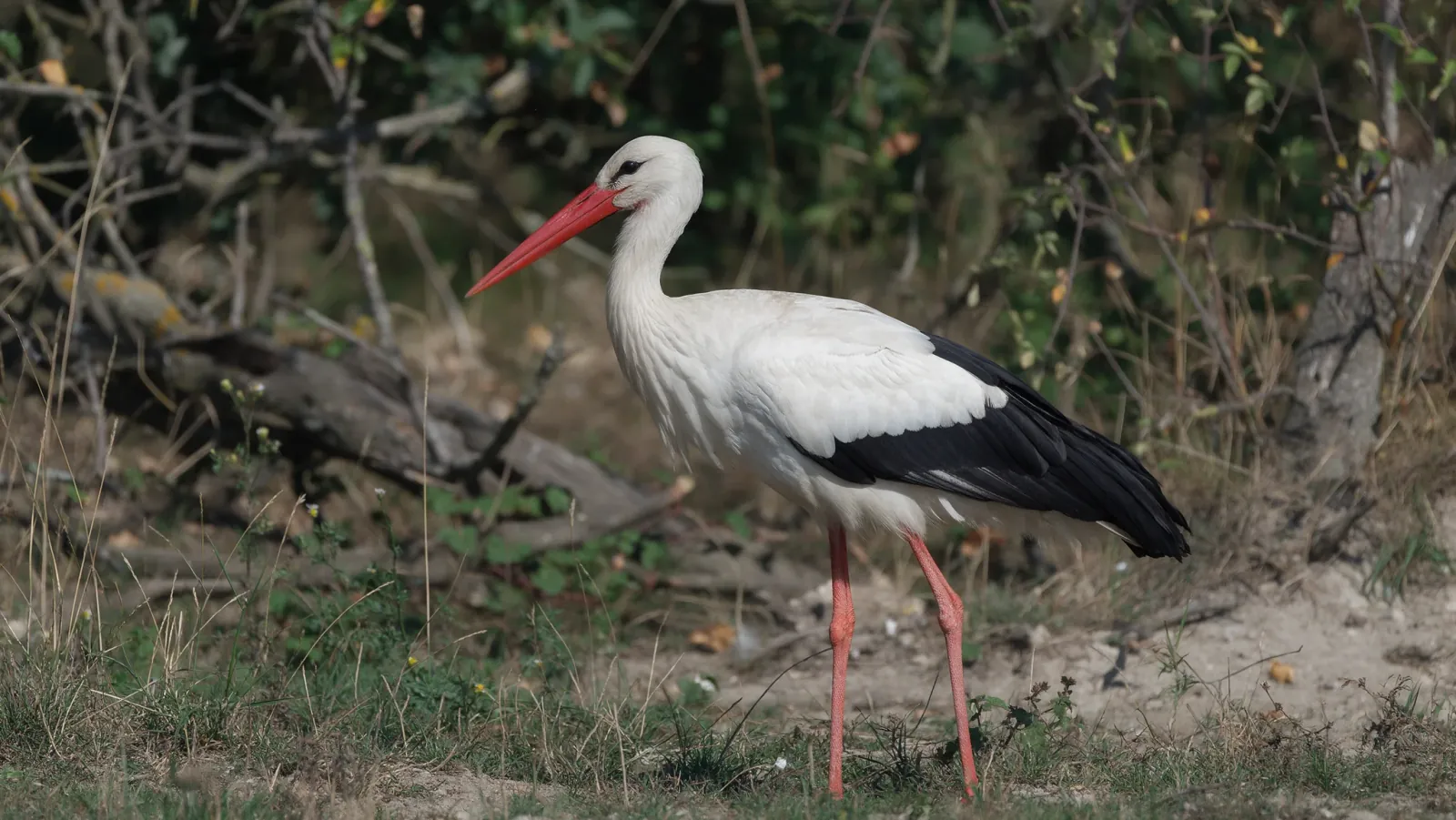
Ask a child to draw a stork and the order is revealing. The long red legs arrive first, because they are the strangest part. Then the open beak, then the black wing tips. The white body comes last, almost as an afterthought, because white is what the child expected.
A drawing records the surprise of the bird more than the bird itself. The hand is not yet fast, so the child chooses. The detail that mattered survives, and the rest falls away. What is left is a diagram of attention.
A drawing made from memory cannot be wrong, because there is nothing to be wrong about. The wobbly line is the child working something out. Next spring the legs will find their length and the beak will close a little, and the same bird will come out of the same hand a year older.
The order of the parts is the interesting thing. Legs first, then the bill, then the black tips. The white body, the largest part of the bird, comes last because it was never the surprise.
Keep the first drawing. Pin it to the wall. The paper will yellow, and the legs will still be too long, and the picture will still say what the child saw. A tidy copy made later cannot do that work.
The things nobody bought
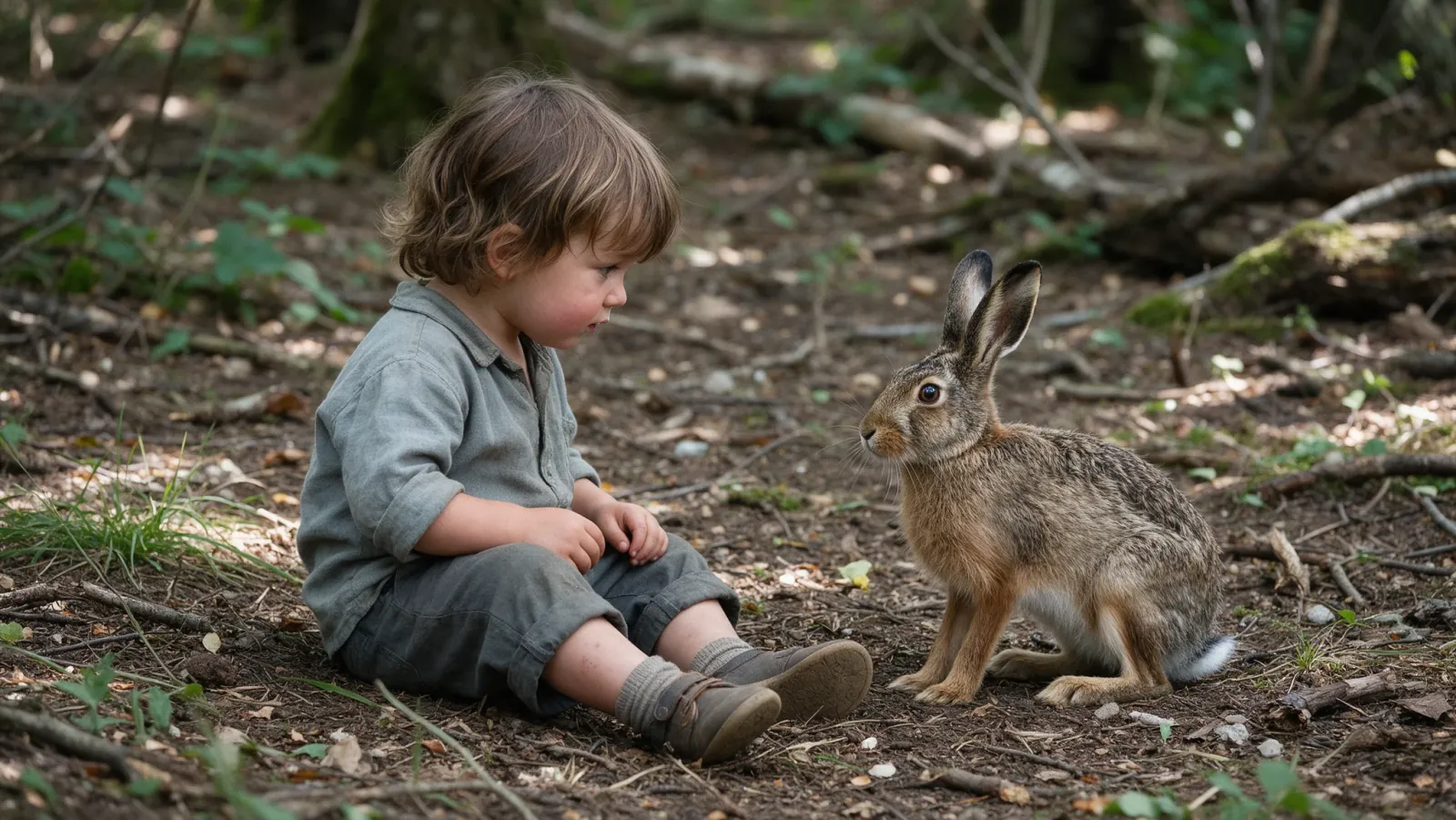
The clearest memories are often the ones nobody paid for. A toy is loved and then lost. A stork seen once in a field is kept for life, because the child never owned it. It was an encounter, met on equal ground.
An encounter asks for nothing and returns a great deal. The memory does not wear out from use and does not break. It sits at the bottom of the mind, bright and strange, and it does not need to be charged or repaired.
A stork gift on a shelf can hold the shape of that encounter until the next real bird appears. The child looks at the white figure, remembers the field, and asks when the storks will come back. The object works as a reminder, and the reminder does the rest.
Ownership changes how a thing is handled. A toy is used and then outgrown. A bird in a field is met, and the meeting is not something the child can put on a shelf. The memory keeps what the hands never held.
One detail is enough
A single detail can carry a whole place. The black wing tip brings the wet meadow with it. The clatter brings the rooftop and the morning. A detail is small enough to keep and sharp enough to last.
Years later the child is grown and walking a different field. The clatter comes across the grass, and for a moment the older body is young again. The bird is exactly where it was left.
The detail also carries a standard. A person who remembers one bird clearly is harder to fool about the value of looking, and more likely to stop for the next one.
That is why the first look deserves protection. The point was the looking, and the looking stays. It waits to be used again on some ordinary afternoon, on a bird the grown person has not met yet.
Explore the gift