A white stork on the wing looks down for water and frogs, not ahead for obstacles. A thin cable against a bright or misty sky gives it almost nothing to see, and a bird that size cannot stop in time.
Why the line disappears
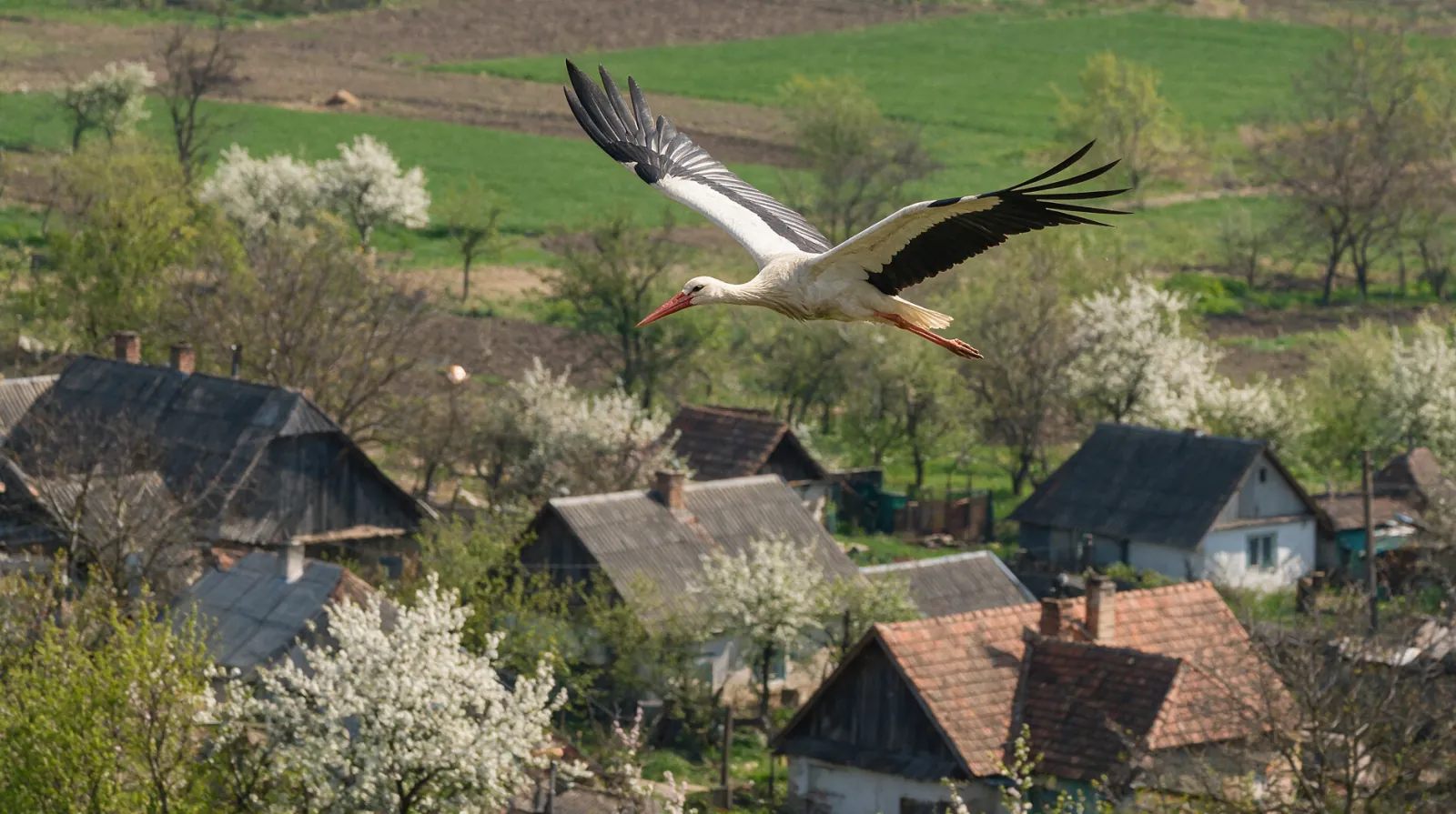
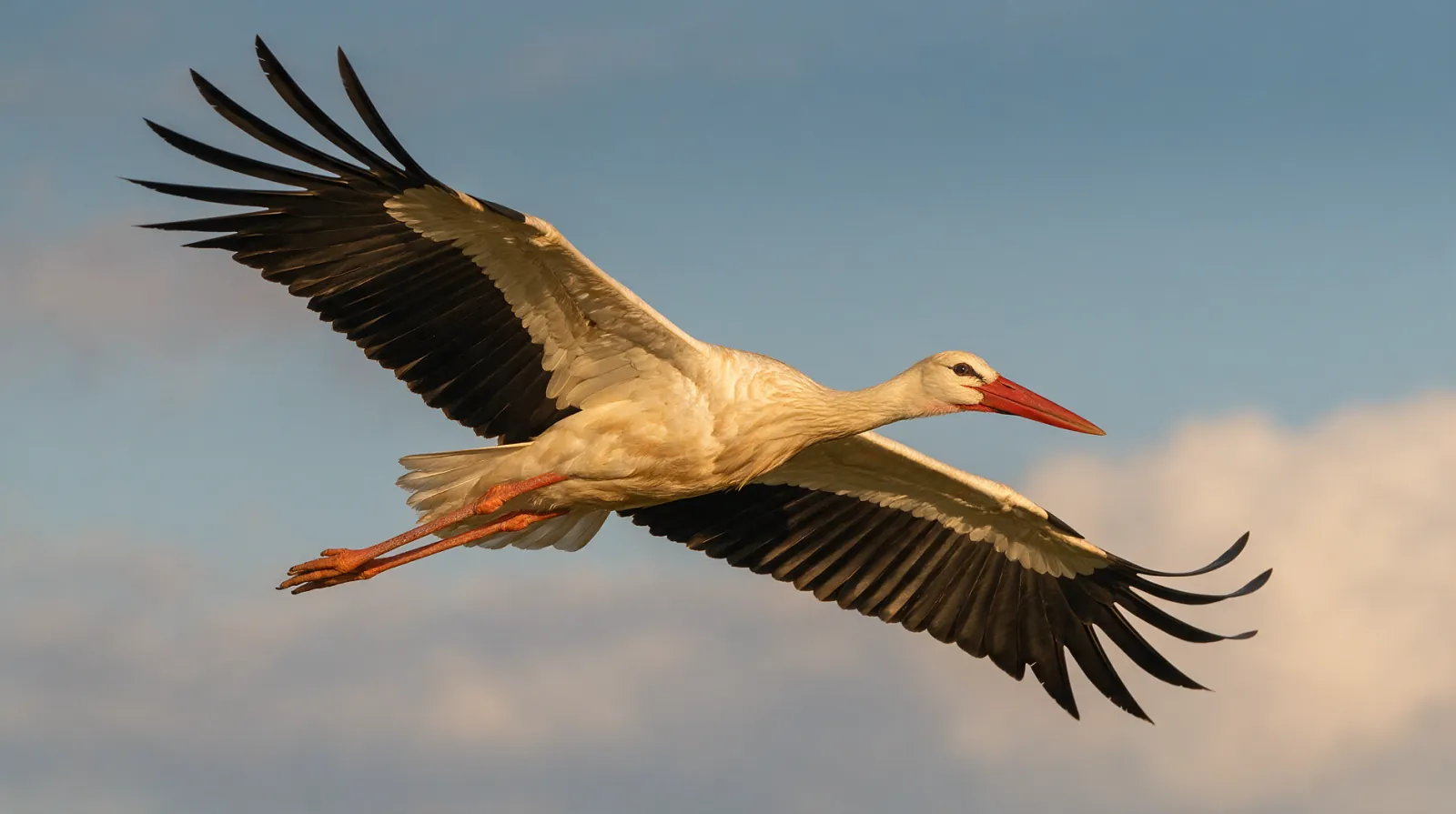
A white stork is built for soaring. Its wings span about two metres, its body is heavy, and it turns in wide, slow arcs. That shape is efficient over a valley and poor in an emergency. A bird that has spent the morning feeding rises heavily from a wet field, and a heavy climb leaves no room to swerve. A stork in flight is watching for movement below: a frog shifting in wet grass, a vole crossing a furrow. Its head is angled down, and the air ahead of it gets less attention than the field beneath.
The dangerous cables are rarely the thick high-voltage lines. They are the thin earth wires and the low distribution lines strung between poles, the ones that disappear when the sun is behind them. A stork sees the ground it is hunting and the air it is crossing; a wire between the two is the one thing it has no reason to expect.
Birds hit at the height they naturally fly, often at the end of a long day when they are heavy and descending. A tired stork coming down to feed looks at the field, and the cable crosses it at breast height. The body is found later in the long grass, and it becomes the first mark on a map.
Marking the cable
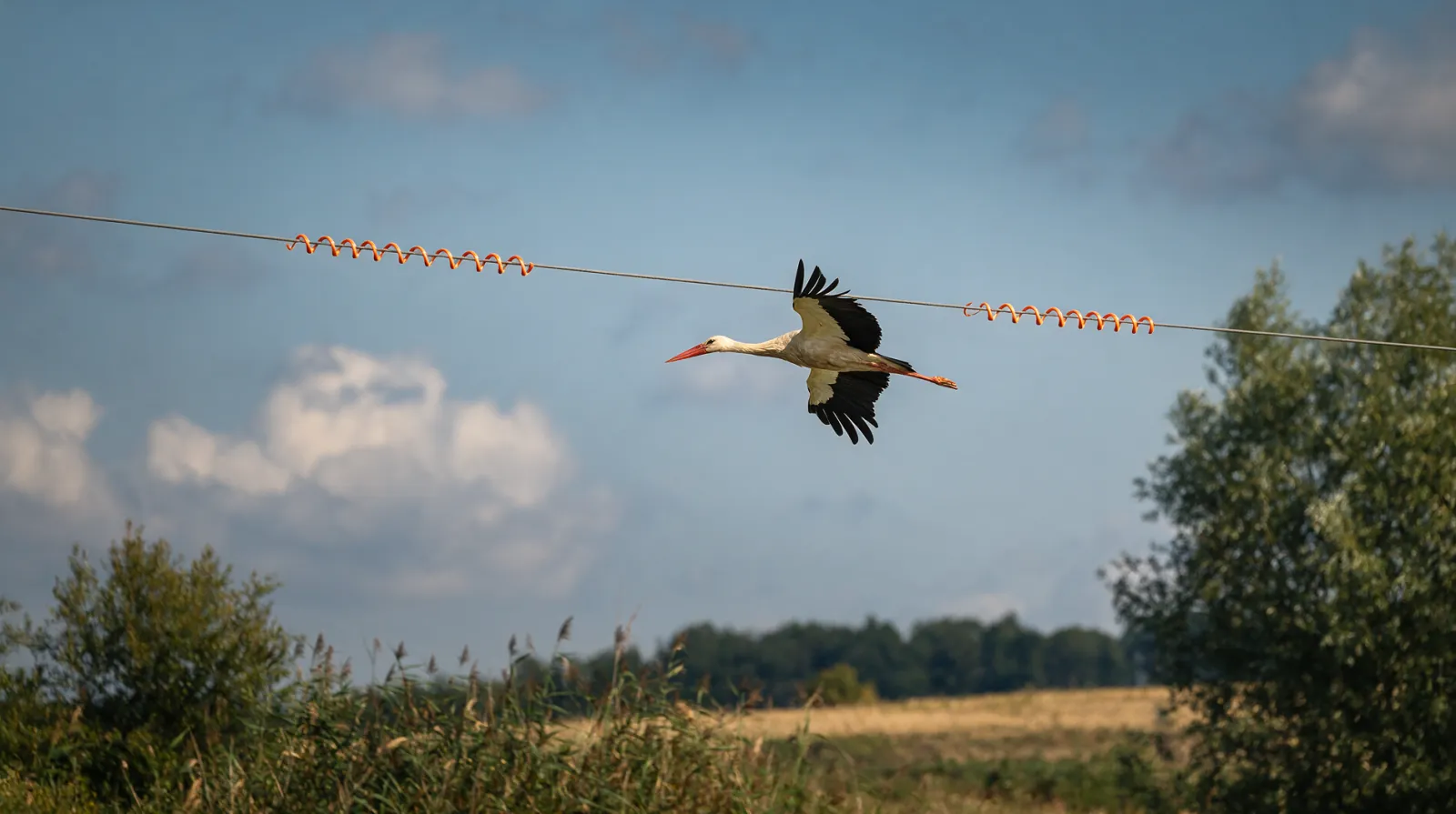
Bird flight diverters are simple: plastic spheres, spirals or flapping plates clipped to the cable at intervals. They do not insulate anything or carry a current. They make the line visible.
Once the cable reads as a row of bright points, the bird can judge its height and climb. The change is immediate, and the same pattern shows up wherever lines are marked: far fewer collisions on the marked spans than on the bare ones beside them. Spacing matters. Markers placed closely enough to read as a continuous line give a bird time to change course, while a single marker on a long span is easy to miss. A diverter is the cheapest intervention in stork conservation, and one of the few that works the day it is installed.
Marking costs money and time, and the work is slow. A crew has to reach every span, often in remote country, often in weather. The oldest and least used lines are the last to be treated, and a bare cable across a migration corridor keeps taking birds every autumn.
The map of collisions
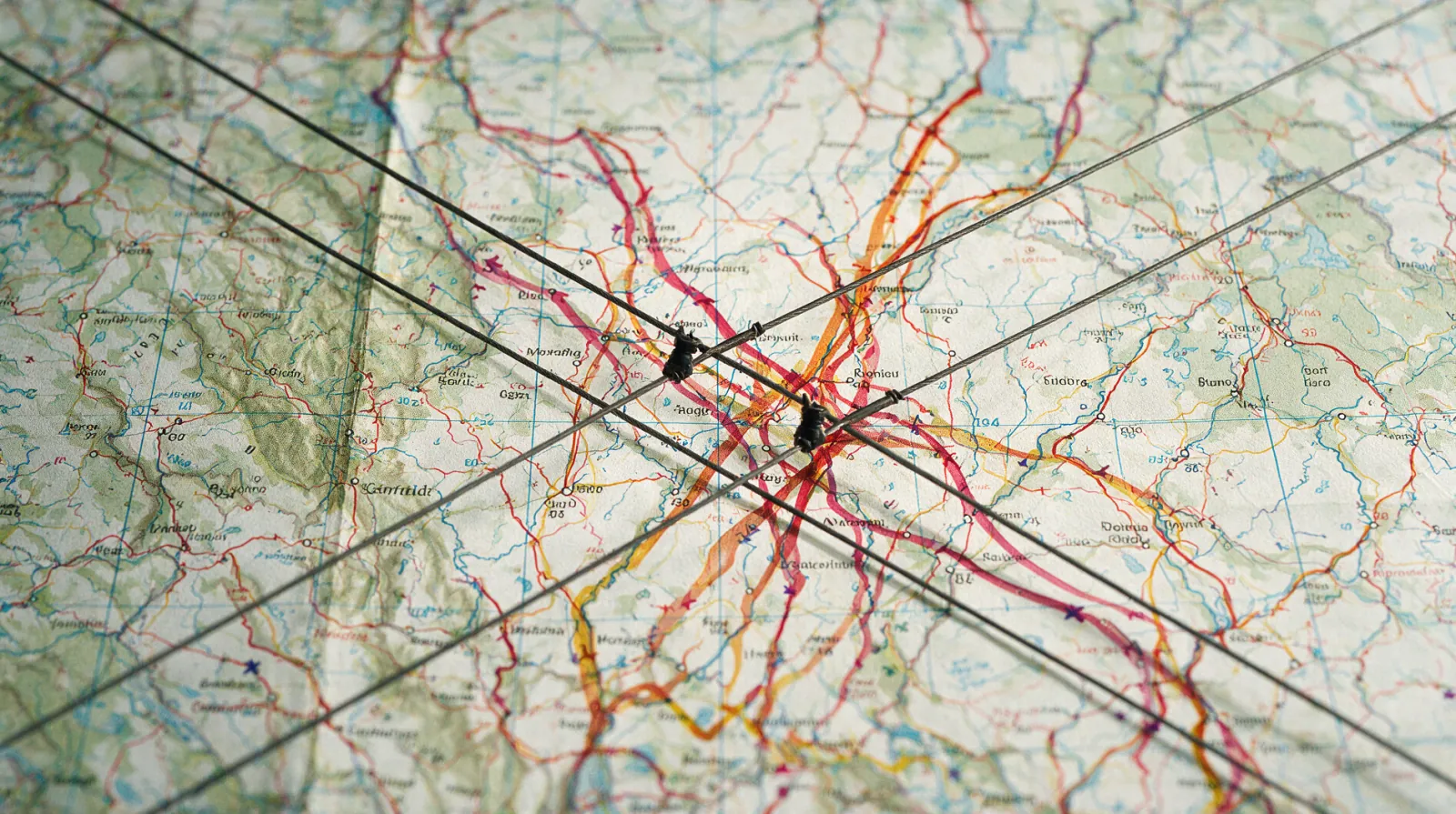
Mapping a hazard starts with walking. Researchers follow the routes, note the lines, and record where dead birds are found. Ring recoveries and tag signals fill in the rest: a bird whose transmitter stops beside a known line tells its own story.
The casualty counts are always incomplete. A struck bird may fall into a crop, be taken by a fox, or lie where nobody walks. The map is built from the birds that were found, and it is an underestimate by design. That is why a published hazard map matters. It puts the route in front of people who would otherwise never think of it, including the planners who decide where the next line goes. A map also shows the gaps in the record, the long stretches of line that nobody has walked, and those gaps are where the next survey goes.
Roads, pipes and the ground below
A motorway or a pipeline can cut a corridor that took centuries to settle, and the birds will keep flying into it. The flyway is fixed by wind, water and geography. It does not move for anything built since.
The traffic is the obvious danger. A stork crossing a motorway at dawn, heavy and slow to climb, can be struck by a car or a lorry in an instant. The noise and light spread into the fields on either side, which makes good feeding ground feel unsafe. The subtler damage is fragmentation. A wetland cut in two is two poorer wetlands, and the birds that once moved between them have to cross a barrier to do it. A motorway is also a wall for the small creatures a stork eats, and a wet ditch cut by a culvert loses the frogs that used it. A road does not have to kill a bird to shrink the country it can use.
A pipeline leaves a strip of disturbed ground through a wetland. The trench and the traffic can change where the water sits, and a marsh that dries at one edge may not recover for years. The risk does not end when the pipe is buried. A leak or a spill reaches ditches and pools, and from there the whole food chain. Months of construction traffic and light can also empty a site for a season, and some birds do not return to a place that frightened them.
Softer crossings
Most of the work happens on our side of the crossing. A road can be routed around a sensitive marsh. A pipeline can be buried deeper, away from wet ground. A stretch of cable can be fitted with diverters so a stork sees it in time. The noisiest work can be scheduled outside the nesting season.
A diverter on an existing line is a repair; a line routed elsewhere is a cure. Planning matters more than repair because the cheapest protection happens before anything is built. A route drawn on a map at the planning stage can move a line a few hundred metres and avoid years of collisions.
None of this removes the conflict. It makes the difference between a barrier a bird can cross and one it cannot. Over a migration of thousands of kilometres, a few softer crossings decide whether a stork reaches the nest at all. A wildlife bridge over a motorway gives a bird a way across, and a rough verge gives it somewhere to wait before it tries.
The cumulative cost
No single road decides the fate of a migration. The cost adds up across a continent: a motorway here, a rail line there, a pipeline across a marsh, a row of turbines on a ridge. Each takes a small piece of the route, and together they make the journey harder than any one of them looks on paper.
A flyway is lost by increments, and it is kept the same way. The crossing that gets a diverter, the road that gets a wildlife bridge, the marsh that is left wet: each is small, and each decides whether the birds still come through in fifty years.
The losses are easy to miss. A struck bird falls into a crop or a ditch and is found by a fox before anyone counts it. The true toll is written nowhere, which is why bare lines stay bare for so long. A marked line is a solved problem in one place, and solved problems are worth having, because they free attention for the ones that are not solved. The work needs repeating. Spirals work loose in wind and sun, fittings crack, and a span marked a decade ago can be bare again. Maintenance is the unglamorous half of a cheap fix, and it is the half that decides whether the fix lasts.