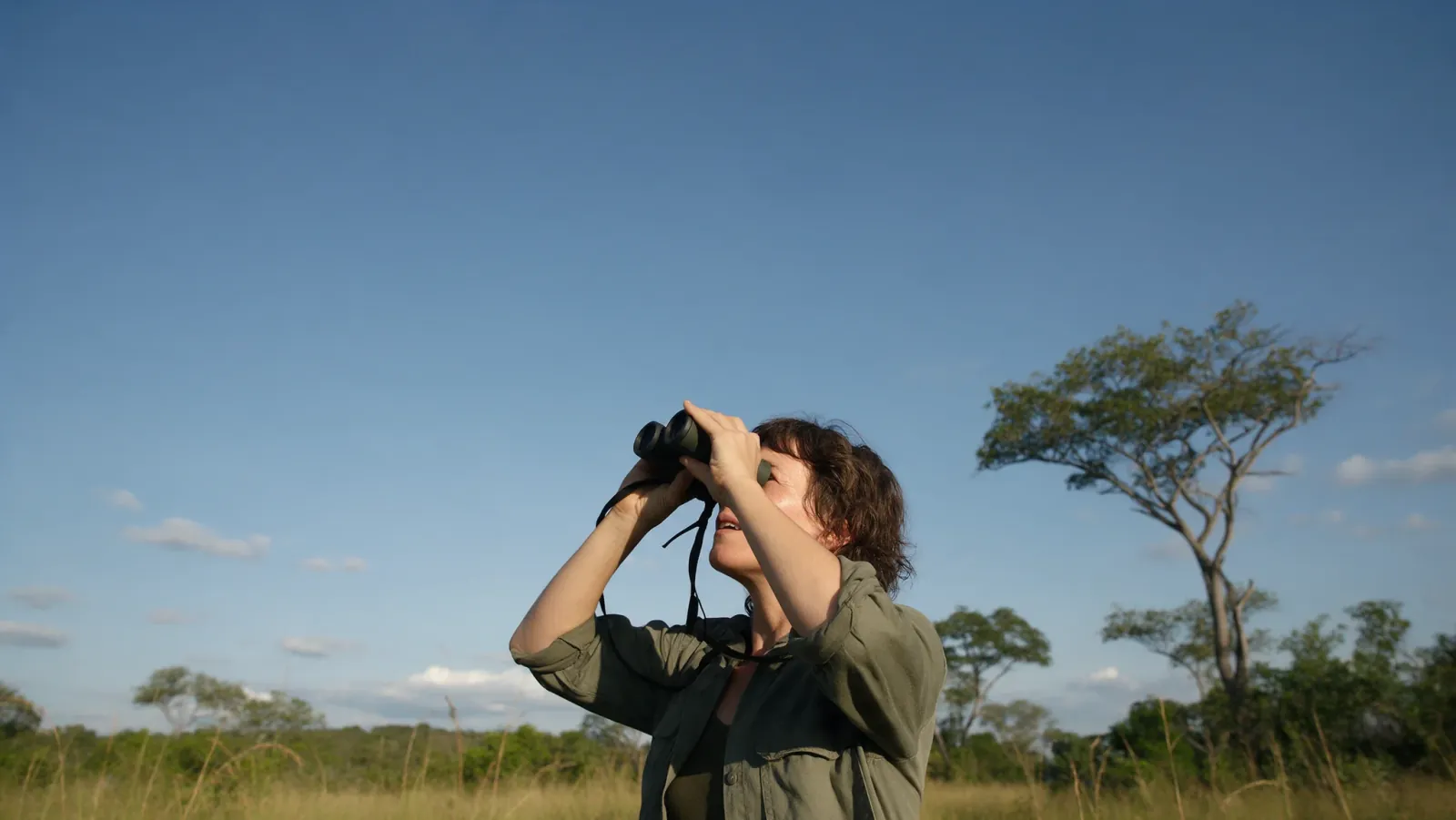
The teen who still watches is easy to miss. The pointing and the shouting have gone, and something quieter has taken their place. They stand at a window, sit on a back step, or lean on a fence at the edge of a marsh.
There was a time you carried them and told them to look. Now they do the looking alone. The wonder is still there, changed in shape the way a voice deepens without the words changing.
The pointing stops
There is a year when a child stops calling out every bird. The arm that used to shoot up at every nest stays down. A parent may read that as the end of an interest, and it usually is not. The looking has moved inside.
A teenager at a window, on a back step, or leaning on a fence is doing the same thing they did at four, with less noise and more patience. The habit outgrew the performance. What remains is a person who wants to see what is there.
The timing changes. A teenager will go out in low light, when the field is quiet and the demands of the day have thinned. They may take a bike, a dog, or nobody at all.
Parents learn not to make it a conversation starter every time. A teenager who is asked about the watching at the wrong moment will stop answering. The watching survives by being left alone.
The change can look like loss from the outside. The child who once shouted is quiet, and the quiet can be mistaken for indifference by anyone who did not see the years before it.
A place with no audience
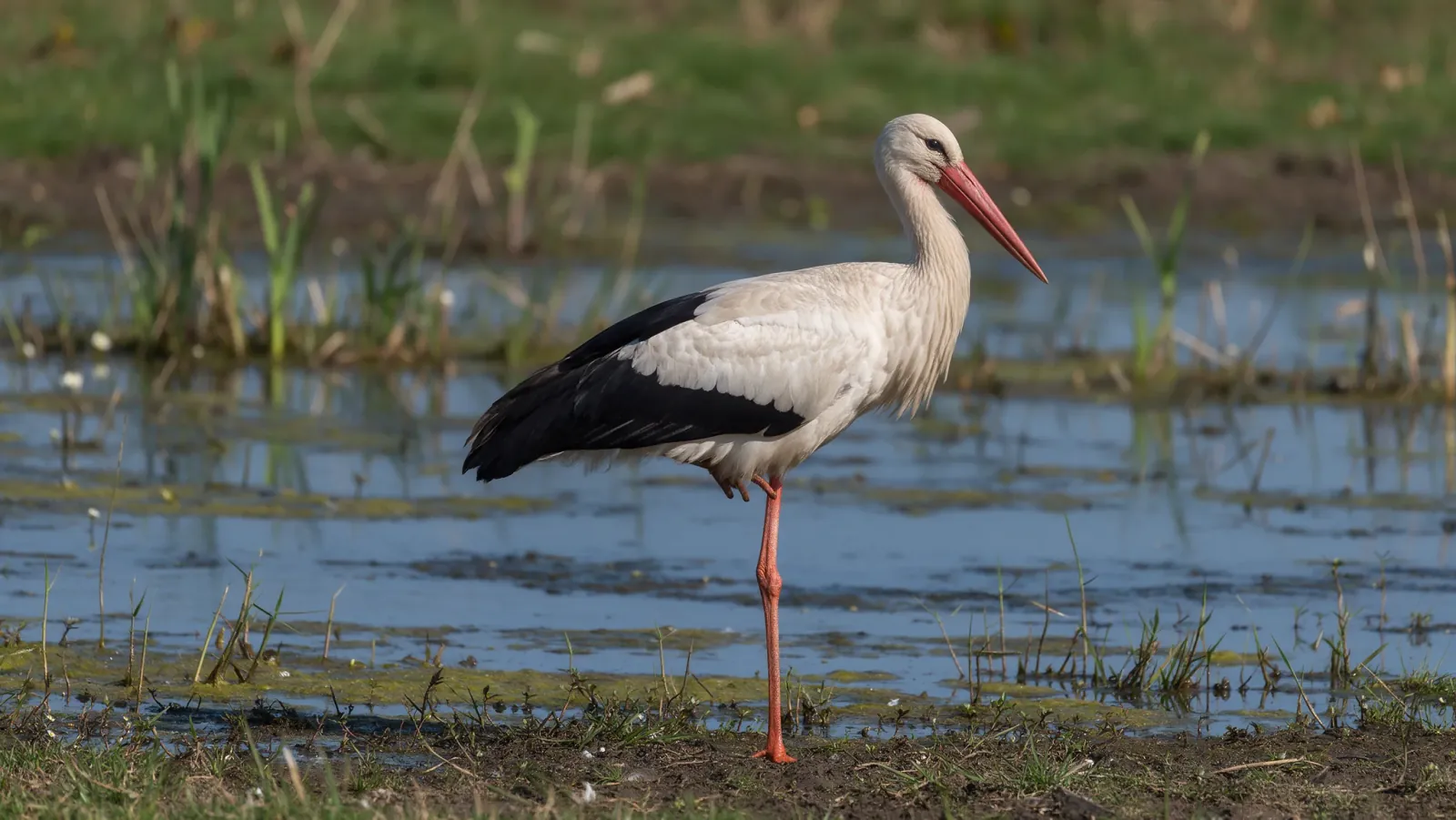
School asks. Friends ask. A phone asks, and all of it wants something back. The marsh asks nothing. A white stork in the shallows does not care whether anyone is watching, and for an hour that indifference is a relief.
The wild gives an adolescent somewhere to be that is not a performance. Nobody is watching the watcher out there. A teenager can think, or not think, and both are allowed. The bird goes on hunting frogs and insects, and the silence holds.
Parents sometimes mistake this quiet for a problem. Most of the time it is a person finding a place to put their attention that does not cost them anything. The place has no score, no audience, and no next thing to do.
The marsh also has weather, which helps. Wind, rain, and cold give the body something to deal with, and a body that is dealing with weather has less room for a bad week.
The place does not have to be wild. A canal, a park pond, a strip of waste ground behind a fence will do. What matters is that the hour has no task in it, and nobody is keeping score.
Why a real animal holds
A toy moves when a child moves it. A screen moves when it is switched on. A real animal moves from some inner place, and children sense the difference early. There is a mind in there, making choices, and that is interesting to a person just discovering that other minds exist.
A stork stepping through a flooded meadow is a whole life happening in front of the watcher, needing nothing to keep going. The bird watches back, or ignores everything, and neither response is a demand. That mutual indifference is a kind of respect, and teenagers feel it more sharply than younger children do.
Real animals can be frightening, slow, or entirely uninterested. A heron will stand in the same spot for twenty minutes and then leave without explanation. All of it is true, and the truth is why the watching lasts.
A screen can be paused and rewound. A bird cannot. The child learns to wait for the bird to do something, and to accept it when the bird does nothing at all.
A bird also keeps its own schedule. It arrives when it arrives, hunts when it is hungry, and leaves when it is done. A watcher who wants to see something has to accept the timetable of another creature.
The walk to the nest
The interest often keeps a physical form. A child who once asked to see a nest grows into a teenager who still walks to it, though the walk is now a reason to leave the house rather than a treat.
The approach has rules learned years earlier. Go quietly. Keep some distance. Look without disturbing. Patience is the price of a closer look, and the price has been paid often enough to feel normal.
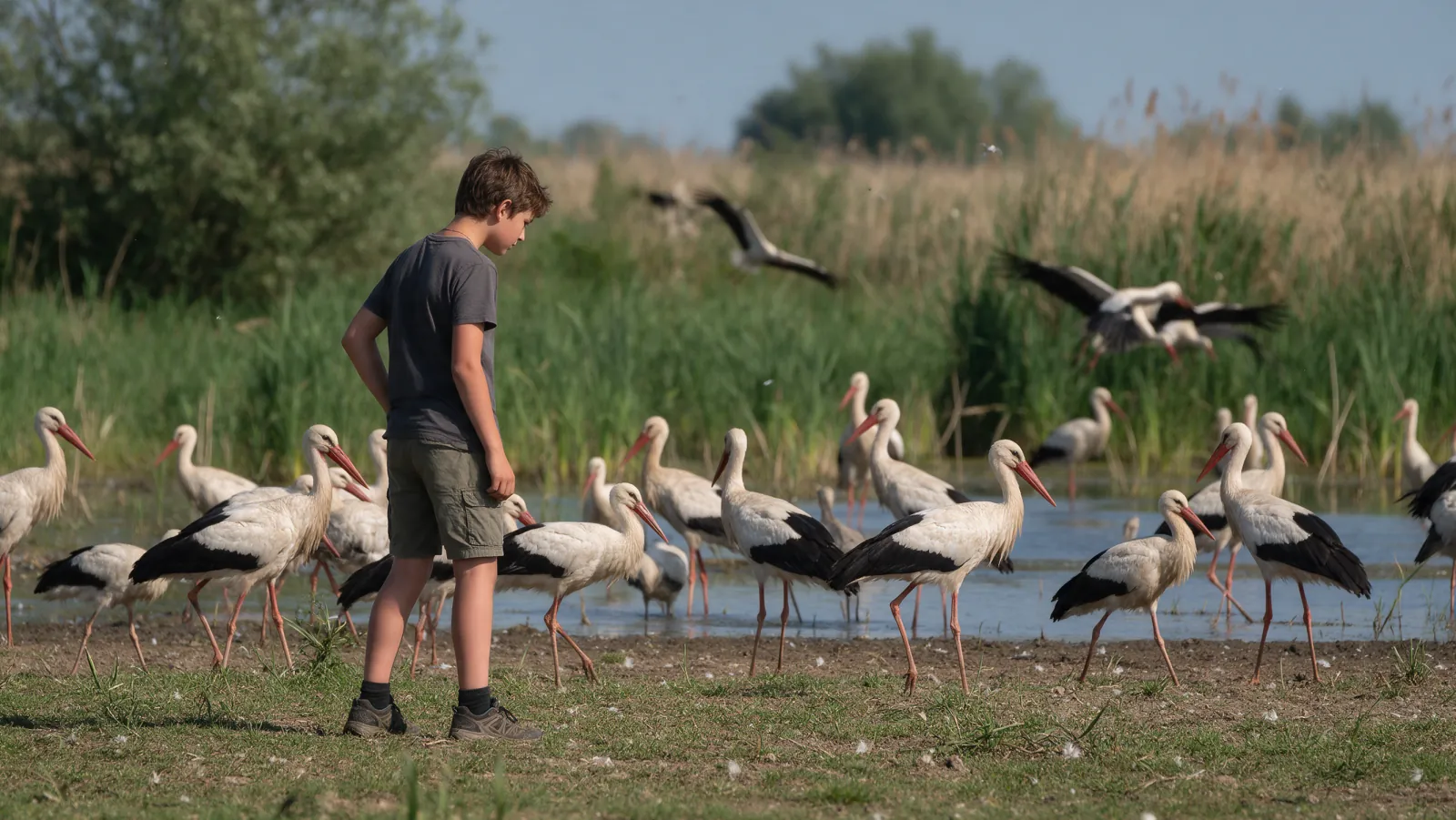
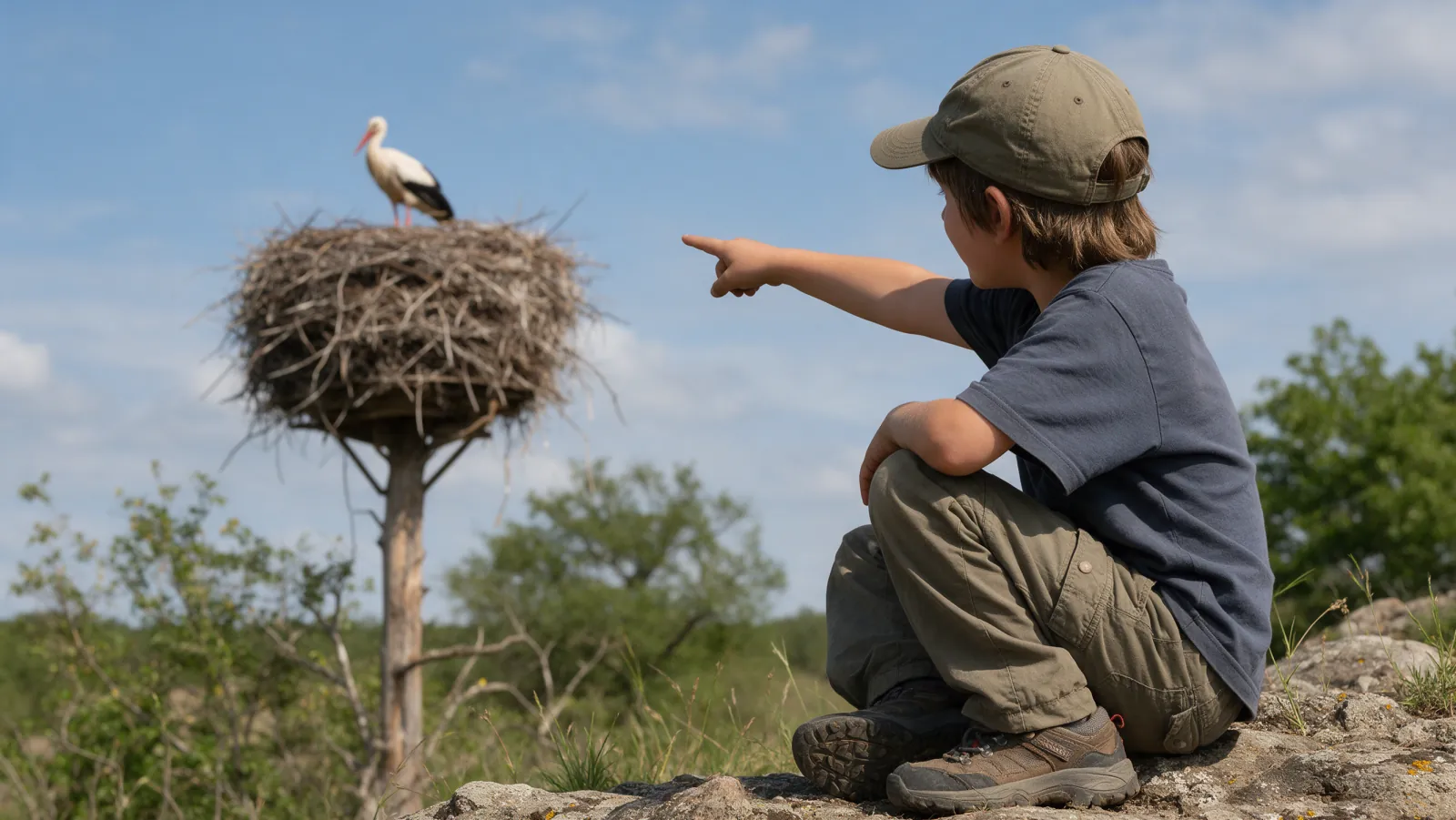
The nest is a deep bowl of sticks, wider than a barrow, built over years. The bird stands beside it, tall and calm, its red legs folded. A wild home seen from a respectful distance keeps its own weather, and a person who has learned to stand at that distance carries the lesson into other rooms.
The walk back is usually quiet. The teenager has seen what they came to see, and the seeing is enough.
Talking beside water
Conversation comes easier beside a fence. Two people looking at the same patch of water say more than two people facing each other across a table. The bird gives the eyes somewhere to rest, and the words arrive at their own pace.
The questions come back, older now. Some are about the stork. Some are about school, a friend, what happens after the last exam. The parent who waits through the quiet gets more than the parent who fills it.
A shared horizon does some of the work that words cannot. The teenager may not say much. The hour still counts, and both people know it.
There is no need to name the conversation afterward. It happened while nobody was looking directly at it, which is often how the useful ones happen.
Some of the best evenings end with no resolution at all. A bird flies off, the light goes, and the two people walk home. The conversation did not finish, and it did not need to.
What the habit becomes
The watching does not end when the teenager leaves home. It turns up in a flat with a small window, on a commute past a river, in a walk taken on a Sunday for no reason. The habit has become a way of being in the world.
Years later the grown child will stand at a fence with someone else and go quiet at the same moment. A stork will be crossing, or a heron, and the old attention will arrive.
Some families keep a stork on a shelf from the childhood years, a white shape that has pointed at a window for a long time. Adopt a stork if you want that marker for a child who never stopped looking. The shelf holds the object. The field holds the habit.
A childhood fascination that survives adolescence has done something most hobbies do not. It has outlasted the phase when everything is performed for other people. It belongs to the person now, and it will keep belonging to them.
The habit also makes a person easier to be around in a hard week. Someone who can stand at a fence for an hour has a way to put a problem down for a while, and pick it up later with a clearer head.
Explore the gift