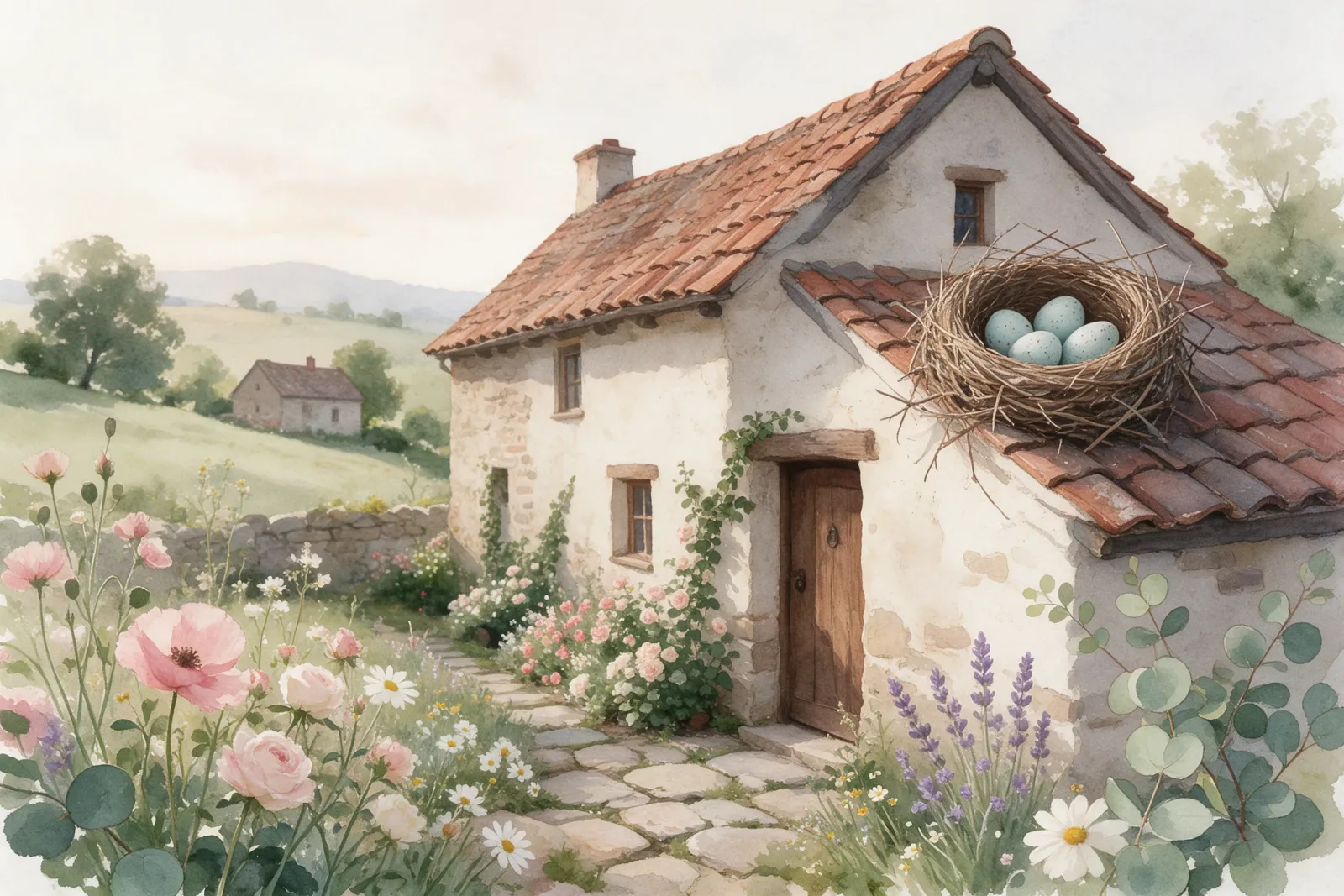
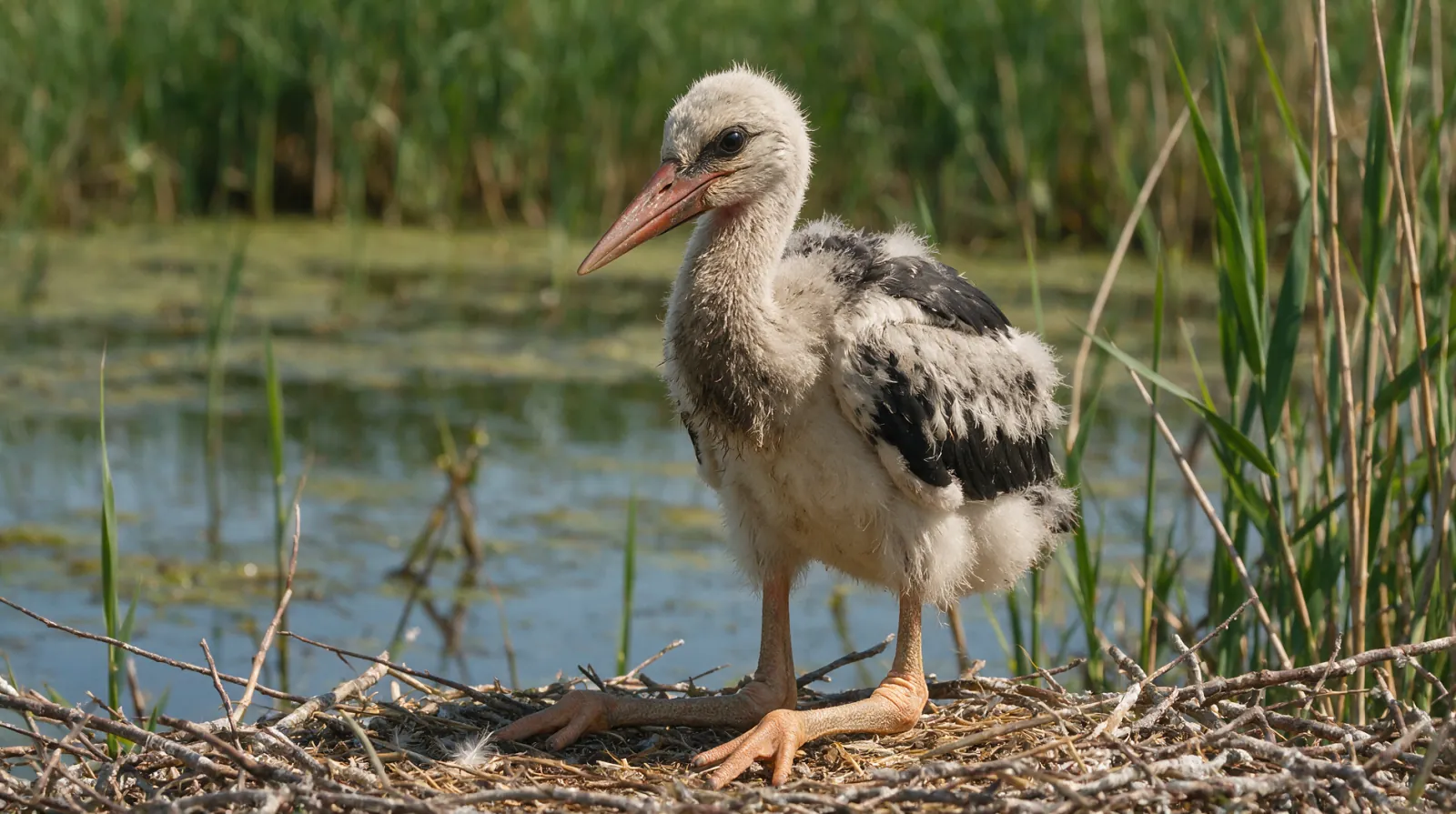
For most of human history the stork's winter was a blank on the map. The birds left in autumn and came back in spring, and nobody knew where they went. People filled the gap with stories. They watched the bird ride the wind, read the coming harvest in its habits, and told children it had gone to the moon. The real journey turned out to be as strange as any of it.
The invisible road
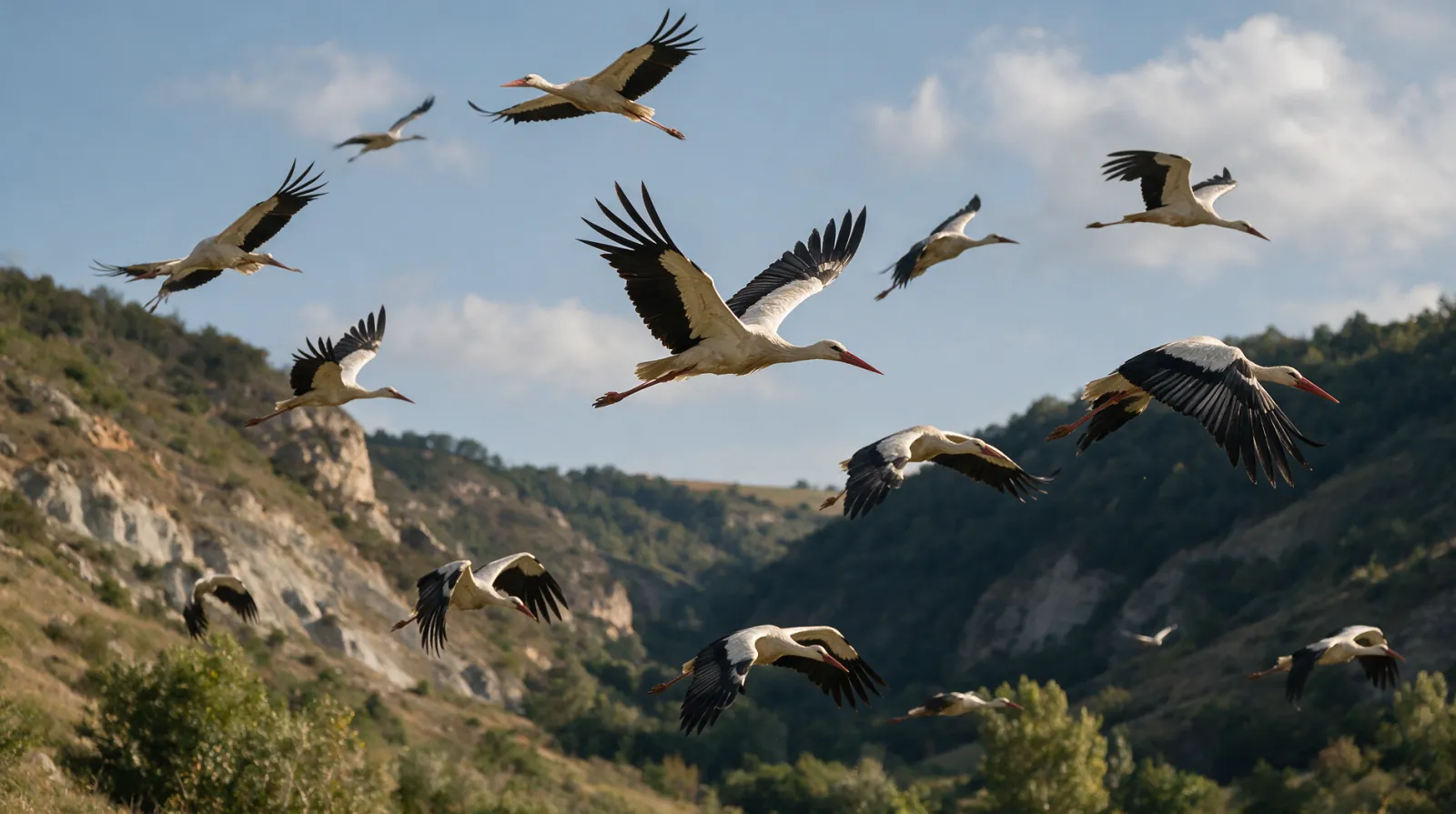
Storks are soaring birds. They do not beat their wings in a hurry the way smaller birds do. They wait for a column of warm air, a thermal, and ride it upward in wide, slow circles, wings locked and still. From the ground, a stork can climb out of sight without a single wingbeat.
To anyone watching, it looks as though the sky is pulling the bird up by an invisible thread. The stork has learned to use a road that no one can see. The air does the work, and the bird keeps its strength for the distance.
The people who lived under these flights understood the wind as a force with a will. It could be gentle or fierce, warm or cold, and it carried smells and weather and birds. A stork that rose so easily on the wind seemed to be on familiar terms with it, the way a rider is on familiar terms with a horse. So the old tales spoke of storks as riders.
Some said the stork rode the wind south in autumn and north again in spring, a passenger on an invisible road. Others said the wind itself was made of the wings of all the birds that had ever flown, and that the stork knew them all by name. The stories gave the bird a companion that no one could see.
Wind as a messenger
Because the stork travelled with the wind, it was thought to travel with news. The wind that rattled a window in spring had crossed the same fields the stork had crossed. If a stork appeared on the ridge on a windy day, people read it as a sign that something was on its way.
A change of weather, a letter, a birth. The stork became a courier for the air itself. It brought the south wind home in its feathers. The stories did not need the bird to speak, because the wind spoke through it, and everyone knew how to listen.
Storks are patient with the sky. They gather on the ground and refuse to leave until the wind is right, and they will turn back rather than fight a bad one. The people who lived alongside them learned to read this behaviour. A stork's restlessness became a forecast of the weather to come. The bird that waits for the south wind and then trusts it slowly became the bird that the wind carries.
Reading the harvest
The white stork and the farmer kept the same calendar. The bird returned when the soil was turning soft, fed on the frogs and insects that rose from wet fields, and raised its young while the grain grew. A farmer who saw storks walking the meadows knew the land was waking on time.
A farmer who saw none, or who saw them thin and few, began to worry long before the first sheaf was cut. The bird's arrival was a report from the fields, delivered to the roof. The report came every year, and the farmer learned to read it.
The tales went further than the practical truth. Some said the stork counted the ears of grain as they formed, walking the field rows at dusk and tallying what it found. Others said the bird nested higher in years of plenty, as though it knew how tall the harvest would grow and wanted its young above it. A stork that stayed late was the best sign of all. It meant the fields still held enough food, that the summer would stretch, that the reaping could wait and still be generous.
When the storks gathered in September and turned south, the farmers read it as the closing of the account. The old belief was practical at its root. Storks thrive when fields are damp and full of life, and damp, lively fields grow good crops. The birds were a mirror of the land, and the story gave that mirror a voice. A wet spring brought frogs, and frogs brought storks. A dry spring brought neither. The bird's health was the land's health, seen from a height.
The moon story
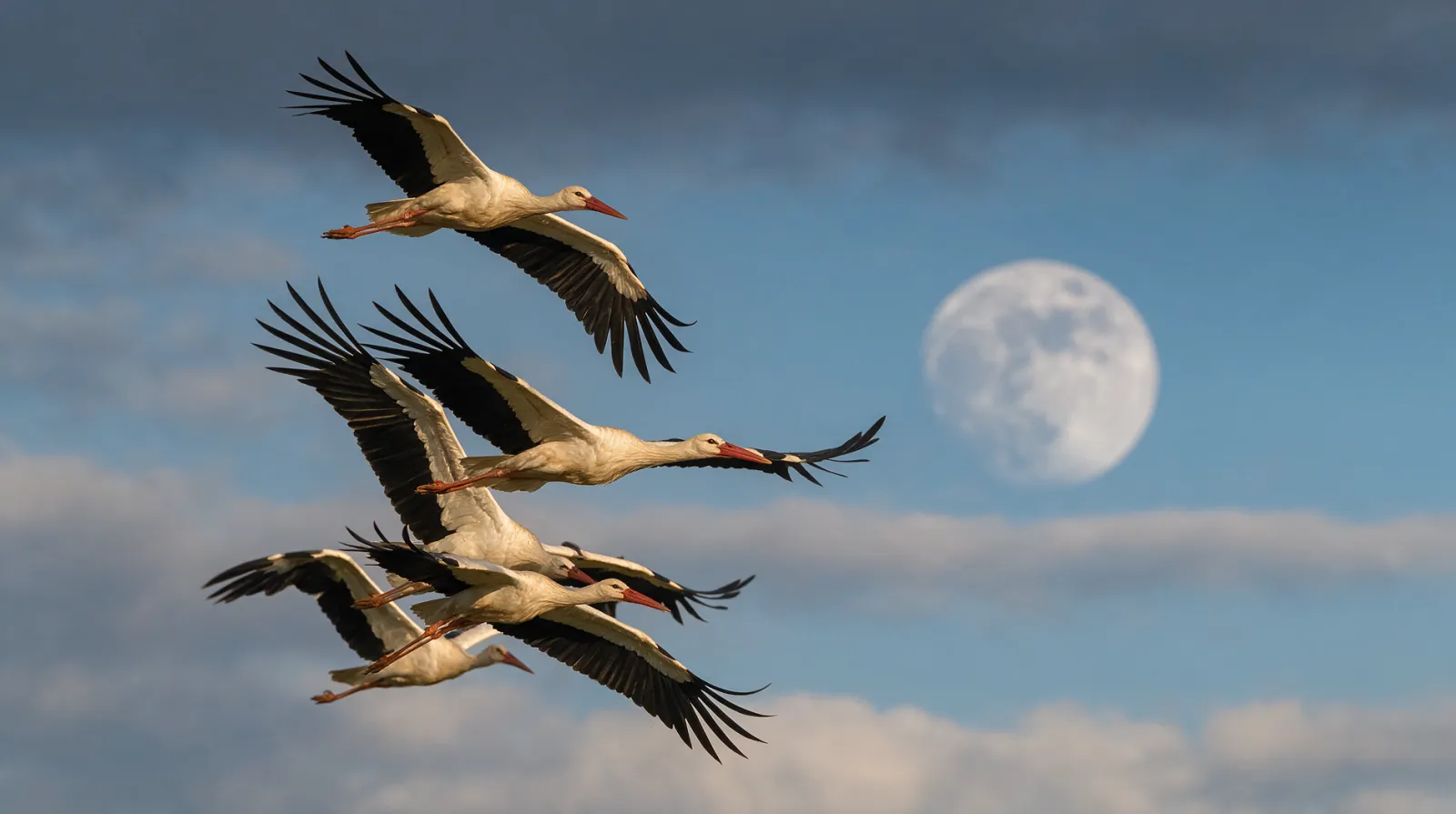
Late autumn nights were the time for a story about birds that went past the last farms and out of sight. In the tale the storks do not stop at the warm south. They keep going, past the last farms and the last coast, until they reach the moon and rest there through the winter. It is a child's way of explaining a long absence, and it is a gentle one, told in a low voice at the edge of sleep.
The tale grows out of a simple observation. Storks disappear in autumn and come back in spring, and for most of the winter nobody sees them at all. A bird that large should be easy to find, and it is nowhere. Folk imagination filled the gap with the brightest thing in the night sky. If the storks are gone and the moon is always there, then perhaps that is where they went. The story gave the absence a destination. A child could look up and see the place where the birds were waiting.
A resting place above the weather
The moon made a good winter home for a tired bird. It is pale and round, high above the weather, and it shines at night, the hour when everything is still. A stork resting on the moon would want for nothing. It could fold its legs, tuck its long neck, and sleep above the cold that grips the fields below. A bird so high would never feel the wind, and the long journey would have a place to end. The moon was a warm room at the top of the sky.
There is a kindness in the story. It insists the storks are safe and far away, waiting in a place no fox or storm can reach. Children slept better knowing it, and the story gave the family something gentle to say at the window on a cold night. The moon held the birds the way a cupboard holds the summer clothes. They were put away for the season and would return. The empty nest was a shelf waiting for their return.
The real flight and the return
The true journey is a marvel on its own. White storks migrate from Europe to Africa, riding columns of warm air, and they return the same way each spring. Some travel thousands of kilometres. The birds fly by day over land and rest at night, and the young make the trip without a guide.
Even the youngest know the way, a wonder the old tale never tried to explain, because the moon was answer enough. The folk tale caught the scale of the journey before anyone could measure it. The distance was so great that only the moon seemed far enough to hold it.
The story always keeps the same ending. The storks on the moon do not stay. When winter thins, they step off the pale surface, spread their wings, and drop back toward the villages, arriving with the first warm days. The story is a promise of return dressed as a trip to the moon. The moon is only a pause. The storks have not left you. They have gone up to a bright quiet place, and in the spring they will come down again.
Migration is mapped now, and a stork can wear a transmitter while its movements are followed on a map. The wonder has not gone out of the bird. It has changed shape. The birds come down through the weather and land on the nests they left.
Explore the gift