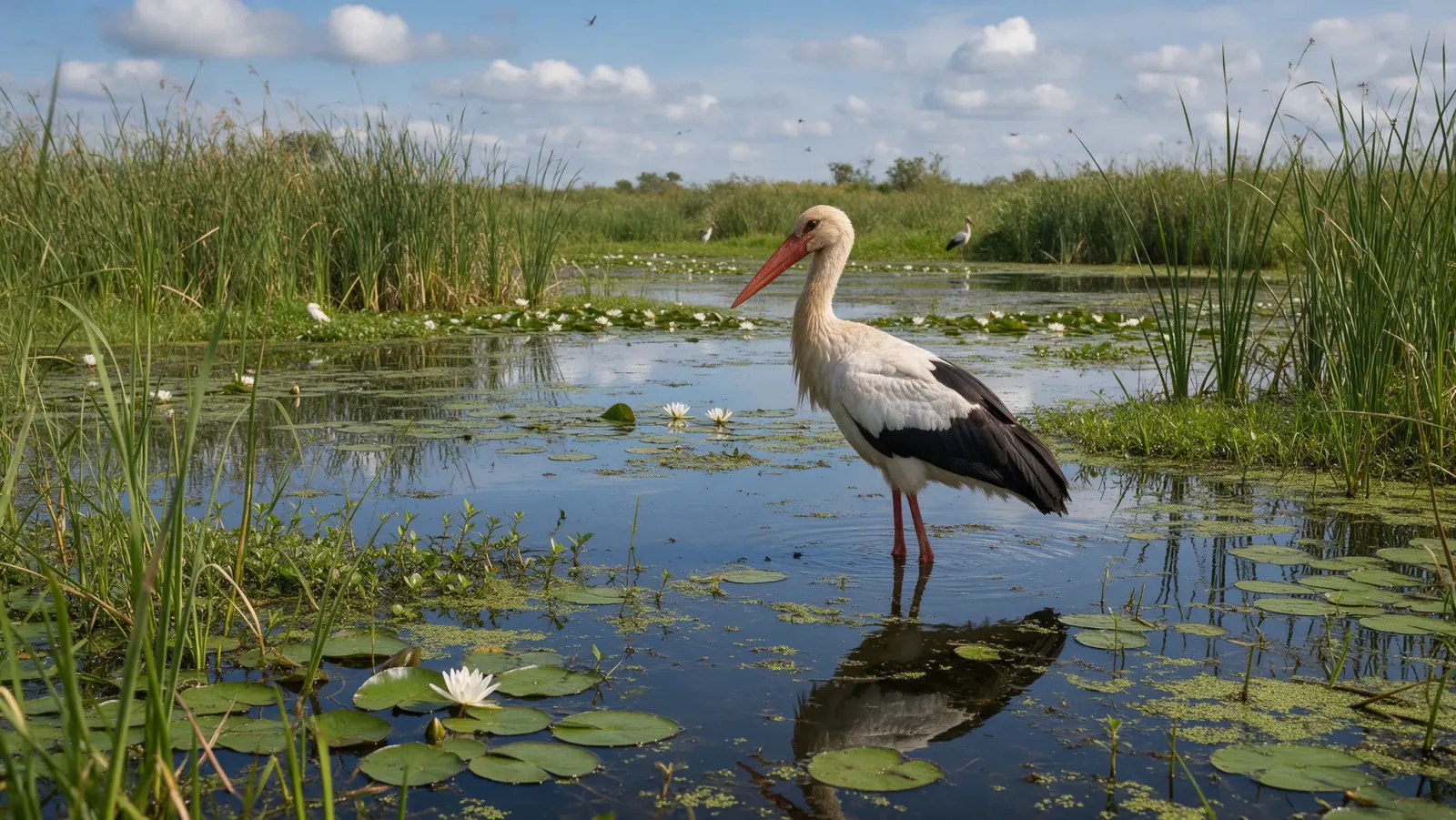
A white stork crossing Europe needs more than thermals and fat. It needs places to come down, where the water is shallow, the grass is wet and the food is thick. The stopover wetland is one of those places, and the whole migration is arranged around a chain of them.
Three things at once
Shallow water to stand in, which is where the frogs and the small fish are. Wet ground around it, full of insects and worms. Somewhere to roost close by, reeds or trees or a quiet bank, near enough that the bird does not have to travel far to sleep. A good wetland holds all three within a short walk of each other.
Food, water and a safe place to stand in one small area: that is what makes a wetland worth a stop. A stork can lose a whole day looking for those three things in separate places. A field with no water is a dry table. A pond with no bank is a place to drink and nothing more.
The three needs sit close together in a good marsh, and that is why a single drained field can matter more than its size suggests. A small pond with a wet margin can hold a flock for a day. A large lake with a hard shore cannot.
A chain, not a place
No single marsh can carry a migration. The birds move from one to the next, a day or two of flying apart, and each one has to be good enough to refuel the flock. A stopover is only useful if the next stopover is reachable, so the route depends on a network rather than a place.
Drain one wetland in the middle of the chain and the birds must fly further on the fat they already carry, or find another way that may not exist. The gaps matter as much as the marshes. A country that loses half its small wetlands can still look green from the air and be useless to a stork.
The birds do not see a country. They see the next place to stand, and the one after that. A chain with one broken link forces a longer flight on tired wings, and the extra miles are paid in fat that was meant for something harder.
The same wetlands are used year after year, by birds that have learned where the food is and where the night is safe. These places matter as much as the nesting roofs and the winter grounds. Drain one, and the birds must find another, often later and hungrier.
Reading a marsh from the air
From a height, a good wetland shows itself plainly. Open water, a fringe of reeds, mudflats, wet grass at the edges. Storks circle over a likely place and drop in if it looks right. They judge disturbance quickly. A marsh full of people, dogs or machinery empties as soon as the birds arrive, and a flock that has flown all morning may lift again and look for somewhere quieter.
A bird that has spent hours in the air will not settle for a bad field, and it has the fat to be choosy for a while. What it wants is the shallow edge where a frog can be seen and caught, and the quiet bank where it can stand with one leg drawn up. The two needs are rarely far apart in a healthy marsh.
A bird that has flown all morning will circle once over a field and move on if the water looks wrong. The decision takes seconds, and it is made on the shape of the ground as much as on the food. Reeds mean shallow water. Mud means a wet edge. A line of trees behind the water means somewhere to sleep.
The seasons of a wetland
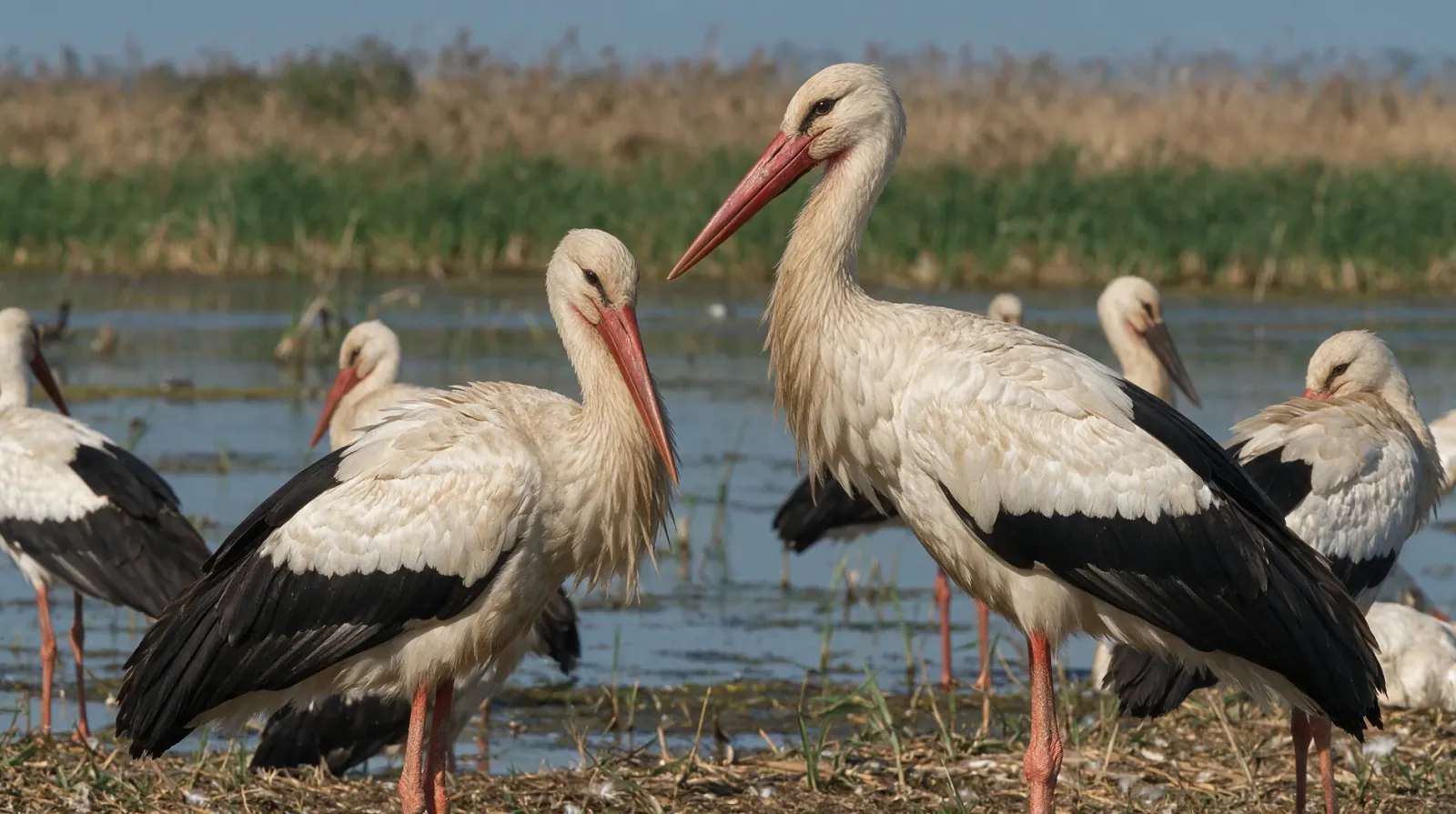
Wetlands change through the year. Spring floods spread the water wide. Late summer dries the edges and concentrates the food into smaller pools, which suits a bird that hunts in the shallows. In autumn, fish ponds are often drained, and the shrinking water brings fish and frogs within reach.
The migration is timed to these changes, and a stork arriving at the right moment finds a table already set. Arrive a fortnight late and the same pond is a dry basin with a few damp corners. The birds follow the water as it retreats, and the last wet places in a dry country can hold a crowd.
A marsh that is good in July can be dry in September, and a pond that was empty in spring can be full after a storm. The birds work with what the season gives them, and the route bends to the rain.
The arithmetic of a meal
A rest day is a feeding day. The fat a stork carries is the fuel for the next flight, and the bird spends its still hours building that fuel back up. It eats more than it needs for the day and stores the difference under the white feathers. The slow work of digestion is what makes the next long climb possible.
A resting stork is not busy. It feeds in the shallows and the grass, catching frogs and insects at a slow, steady pace. It drinks. It bathes, then stands with its wings half open while they dry. It preens for long stretches, drawing each feather through its bill. None of this looks like progress, and all of it is.
Every stop has to pay for itself. The bird must take in more energy than the next flight will spend, and store the rest as fat. That is why feeding looks so patient. A stork that hurried would burn more than it gained. The slow walk, the long wait, the sudden strike: all of it is a calculation made by instinct.
A stop can last a night or a week. It depends on the bird, the weather and the food. A flock that arrives in a rich wetland after a hard flight may stay for days, feeding and resting until the fat is back. A single stork in a poor field may move on the next morning. The birds take what the land gives and leave when the sky is right.
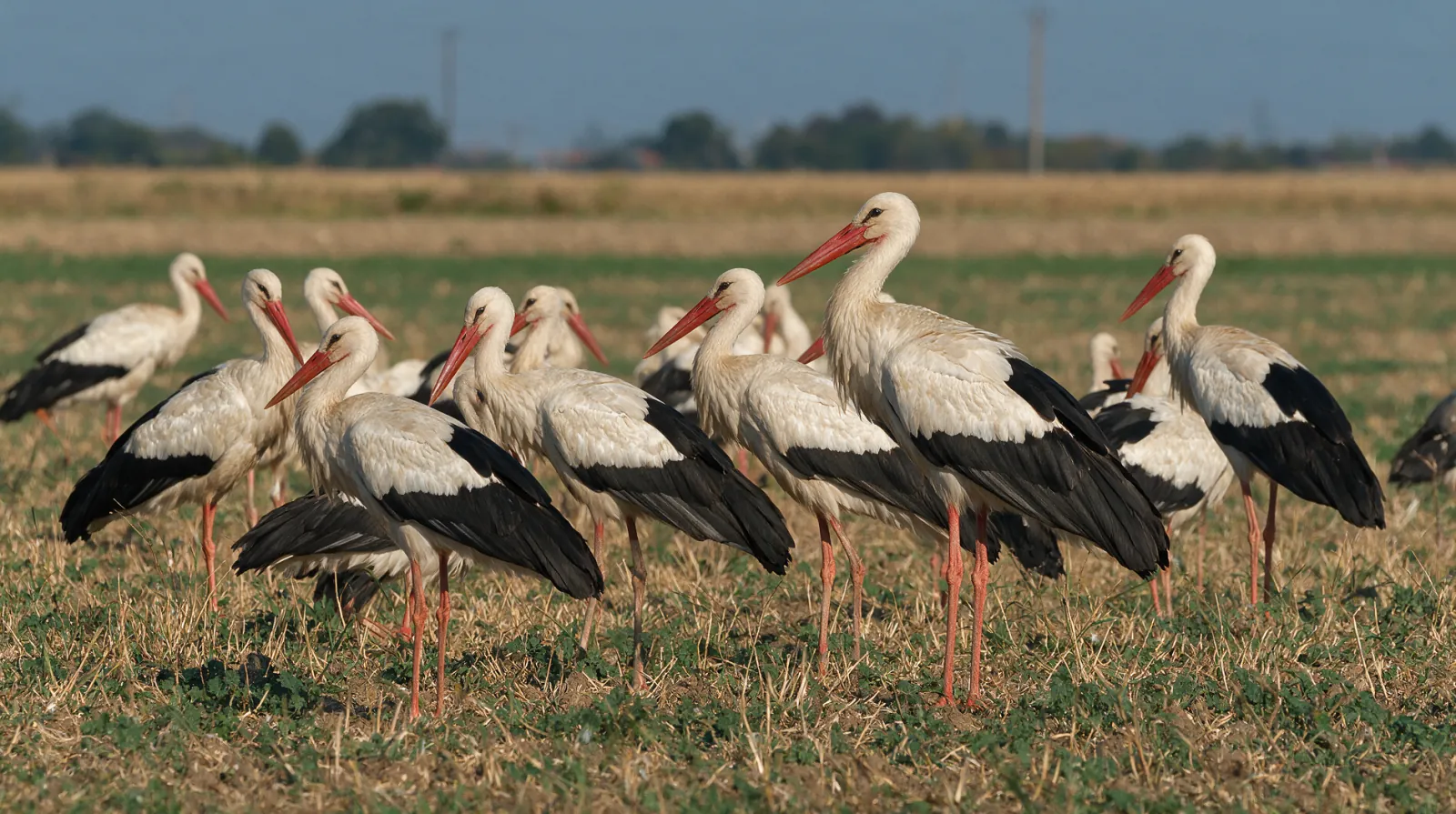
A shared table
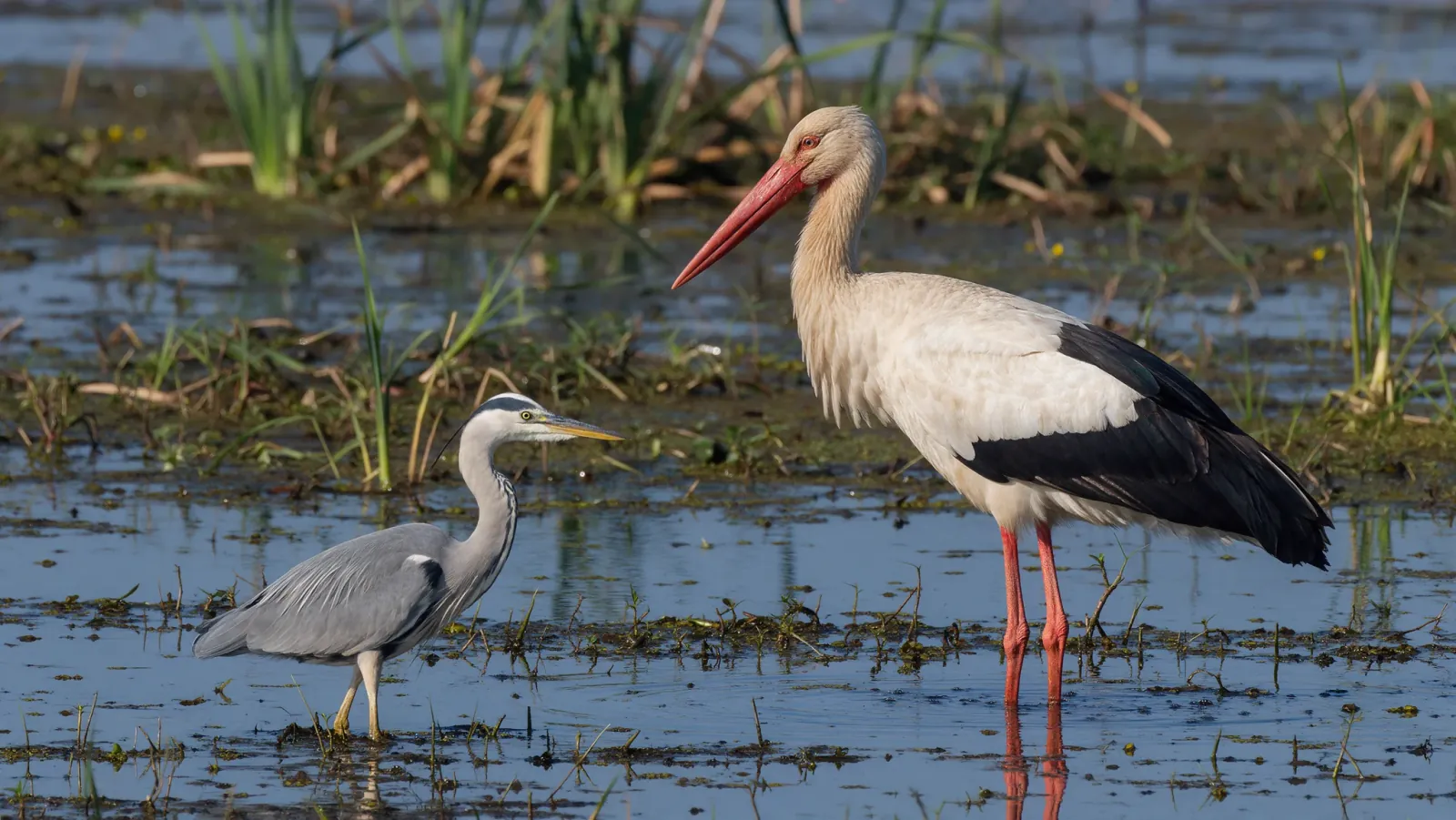
A stopover marsh holds more than storks. Herons stand in the deeper water, egrets work the edges, ducks and waders move through the reeds. The storks come and go in their own loose groups, and the marsh absorbs them all.
This is one reason a good wetland is worth protecting beyond its storks. The same shallow edges feed a whole company of birds, and the frogs and insects that bring the storks also feed the herons. When the storks leave, the marsh is still busy.
A heron and a stork want different depths, and the same water serves them both. The egret takes the edge, the duck takes the open water, and the stork takes the shallow grass between. A marsh that holds all three is doing several jobs at once, and the birds share it without competing for the same mouthful.
By evening the flock has fed, the light has gone, and the birds settle into the reeds. In the morning they will climb on the first warm air and be gone, and the marsh will be left to the frogs and the herons until the next wave arrives.
Explore the gift