The printed card and the postage are the physical half of a stork gift. Everything else, the naming and the year of news, happens on a screen. The card is what a family can hold, and the envelope is how it gets to them. Choosing between paper and a link takes less time than people expect, once the day is fixed.
Two ways to send a card
A stork gift can be given digitally. You choose the bird, add the baby's name and a message, and the card arrives by link within minutes. This is the version that works at eleven at night when someone has just remembered a birthday.
The printed version is a real card, mailed to a door. It is quoted with shipping at checkout, because postage depends on where it is going. The gift itself is €9.99, once, and the printed card is an extra you choose. One version takes an evening and a phone. The other takes an address and a few days.
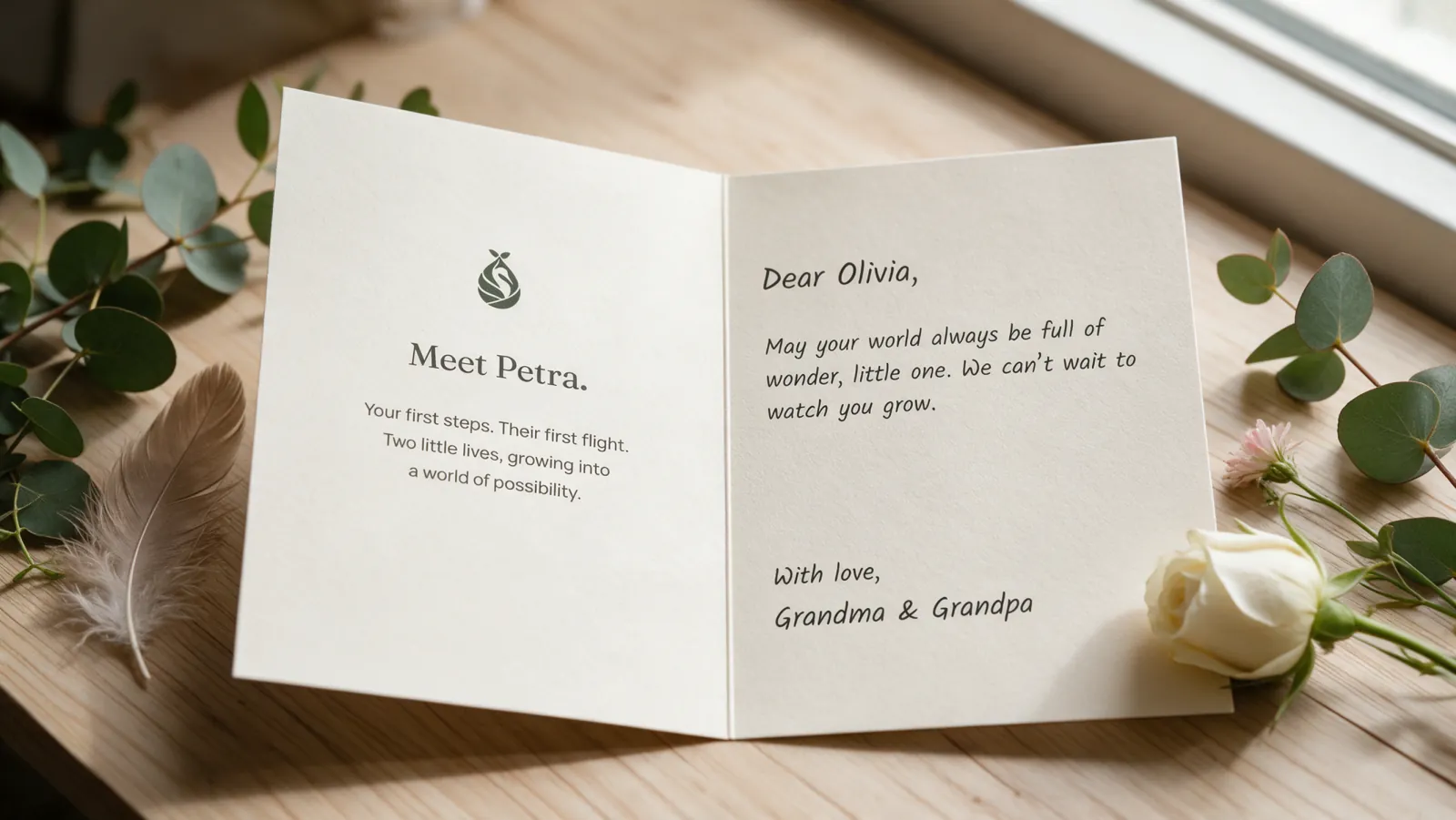
Both versions carry the same information: the baby's name, the message, the stork's name and photograph, and a code that opens the following page. The digital card is a link that works on any phone and can be forwarded. The printed card is a sheet of board that cannot be forwarded and does not need to be.
What paper adds
A screen shows a photograph. Paper shows a photograph you can prop against a jug. Quality is part of it. The bigger difference is that the thing can be left somewhere and found again.
A printed card can be put in a frame, and a frame turns paper into furniture. That is the fate of most of these cards: propped on a shelf, then framed, then hung in a hallway when the nursery is repainted.
There is also the weight of it. A card with a little stiffness in the board feels like an object rather than a notification. People notice that before they read a word. Handwriting adds something a font cannot: a card in a familiar hand is a small piece of a person, which is why it ends up on a shelf instead of in a bin.
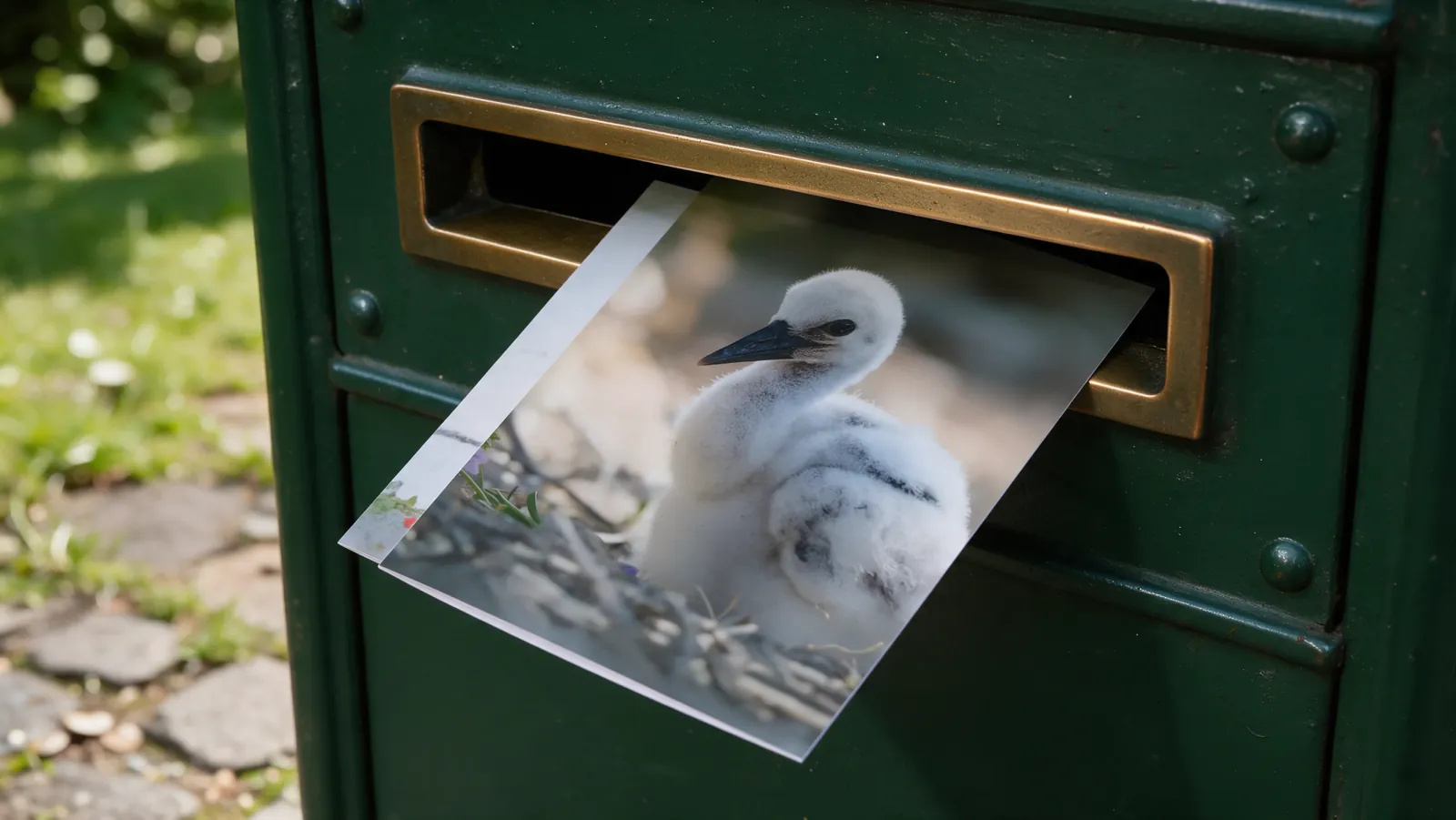
The postmark as a date
Years later the small printed mark on the envelope is proof that the gift arrived on a particular week, in a particular town, in the first months of a child's life. A postmark is a date, and a date is the part of a card that ages best.
Photographs get lost in phones. A postmark stays on the envelope in the drawer, unless someone throws the envelope away, which people rarely do with this one. The postmark is the only part of the gift that records the journey as well as the arrival.
Opening an envelope with a stork's name inside is a slower event than clicking a link. The paper, the fold, the card, the message in someone's handwriting. It takes ninety seconds and it is remembered. A card that appears instantly is consumed instantly; one that takes four days gets thought about, and the thought is part of the value.
When post runs late
It happens. Post is post. A card that lands three days after the party is still a card, and the following page works from the moment it is opened, whatever the date on the postmark.
The digital version exists partly for this reason. If the day matters more than the paper, send the link and let the family open it together. If the paper matters, order early and accept that the postal service has its own weather. If the card is for a party, order with room to spare. If it is for a birth that has already happened, there is no deadline at all, and a card that arrives in the second week is just as welcome as one that arrives on the first day.
A printed card is personalised, so it cannot be returned and re-sent cheaply. Check the street spelling, the flat number, the extra line that postcodes sometimes need. A minute spent on the address is worth more than an hour spent on the wording.
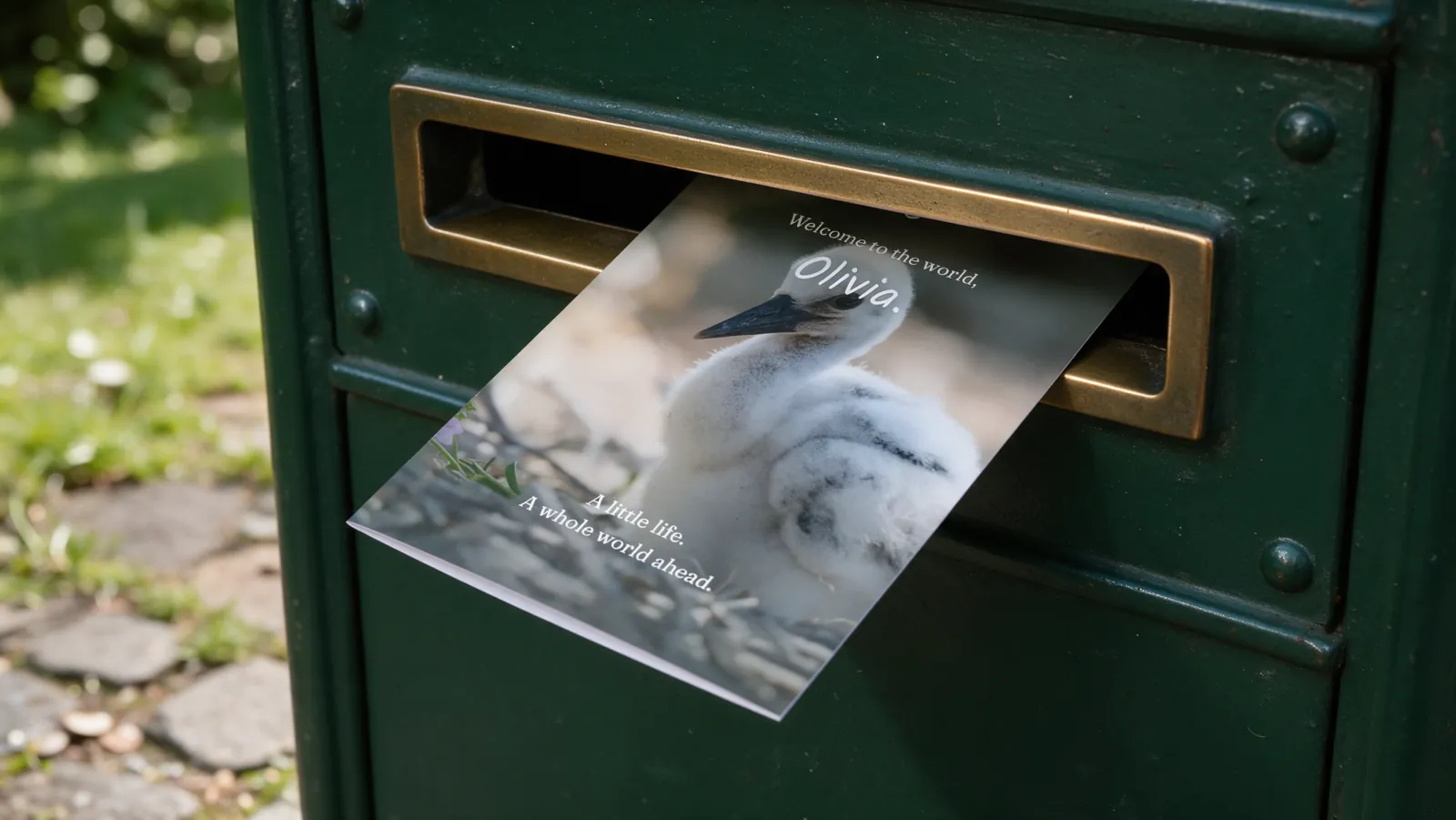
What arrives is a letter rather than a parcel. There is no box, no packing peanuts, no assembly. A stiff envelope, a card inside, and a printed slip with the details of the following. It goes through a letterbox, which means no trip to a depot and no neighbour holding a parcel for a week.
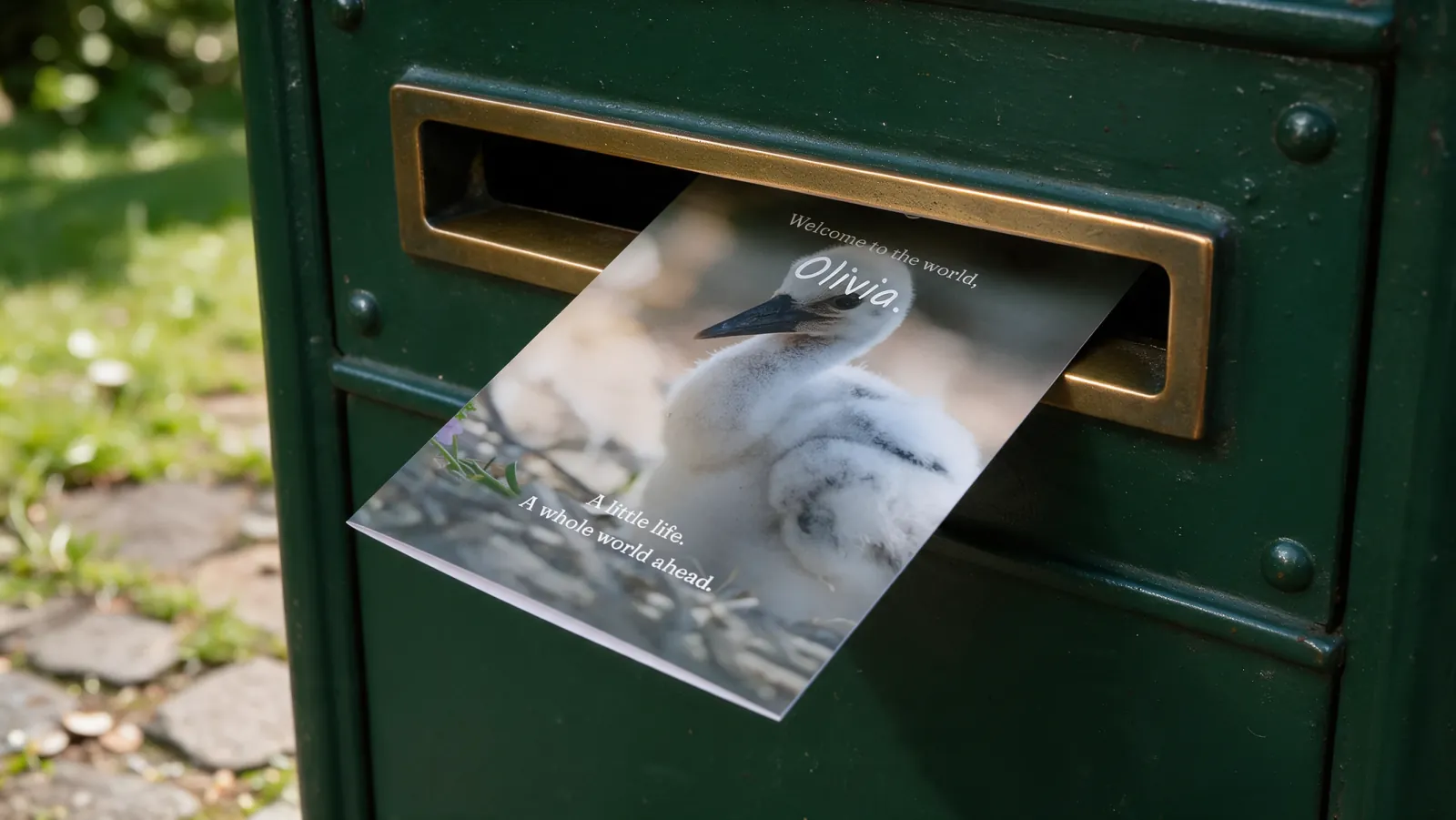
Sending both
Some families send the printed card to the house and the digital one to the group chat, which covers both habits. The paper goes on the shelf. The link gets opened by twelve people on the day. A link can also get buried under other messages and opened three days later, or never, so sending both is the safer arrangement when the date matters.
This is a reasonable default when you are unsure, and it costs little beyond the print and postage. A digital card can be forwarded to a grandparent, a godparent or a group, which spreads the gift further than one envelope can. A printed card cannot be forwarded, which is sometimes the advantage. Some gifts should go to one person. Neither format is better in general. The right one depends on the day, the person and how much warning you have.
If the day matters more than the object, send the link; if the object matters more, print it. With two weeks and an address, print. With an evening and a phone, send the link and let the family open it on the sofa.
The gift underneath
The packaging can make the choice feel bigger than it is. The bird is the gift. The card is how the gift is handed over, and the following does not change based on which one you pick.
Both formats have a way of failing. A link can get buried under other messages and opened three days later, or never. A card can go to the wrong address, or arrive bent, or sit in a post room until someone notices it. Knowing the failure modes helps. If the recipient rarely uses a phone, print it. If they are moving house that month, send the link and post the card to the new address when things settle.
The envelope is opened by whoever is nearest the door. Inside, a card with a stork on it, a name, a message and a code that opens the following page. That moment is short. A card is read in ninety seconds and then placed somewhere, and the placing is what makes it last. The person holding it decides whether it goes on the shelf, into a drawer or onto the fridge, and that decision is the real verdict on the gift.
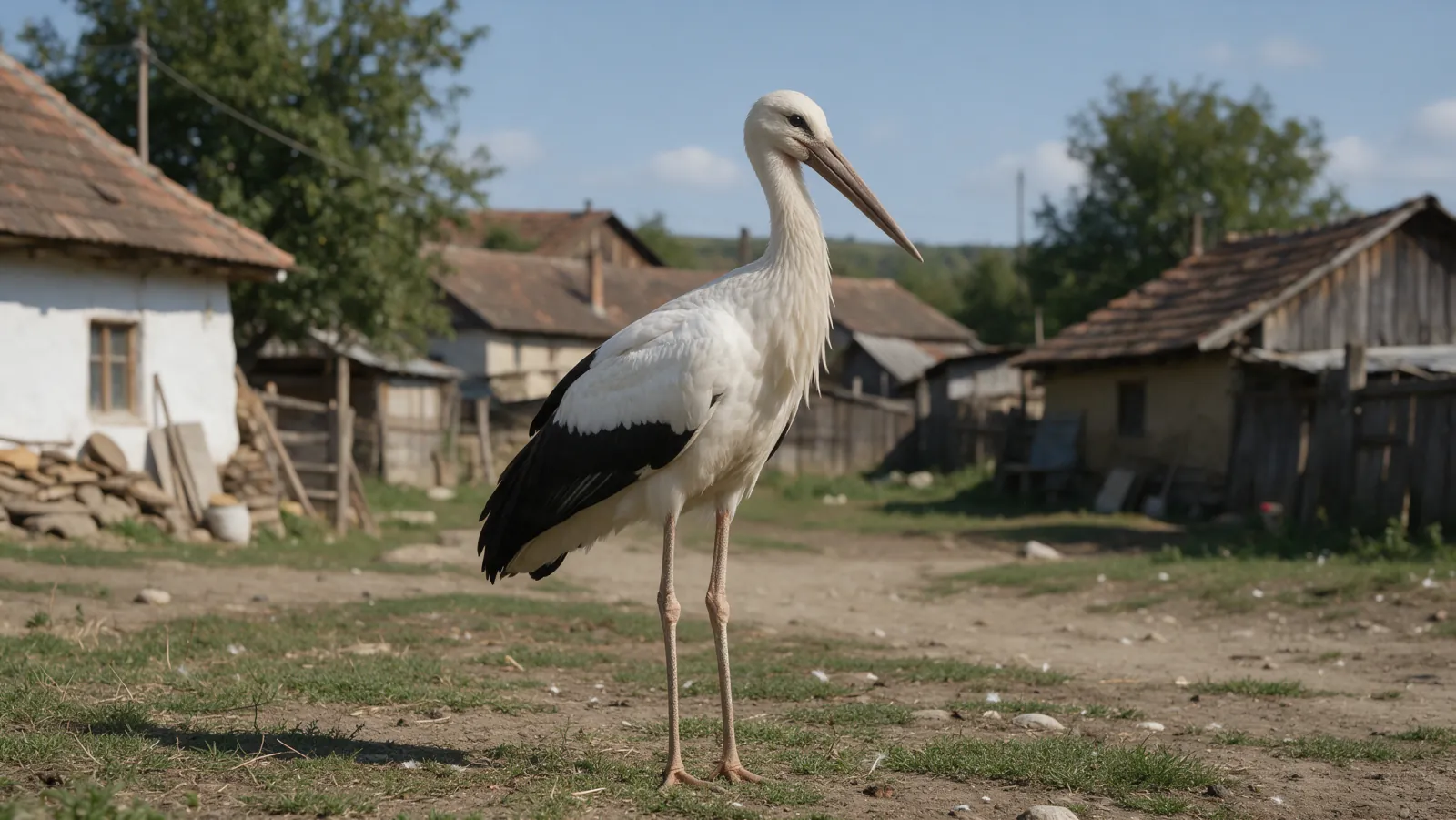
Post delivers the card once. The following delivers something every few weeks for a year, and none of it needs an address. The bird is already out there, standing in a field, doing the thing the card is about.
Explore the gift