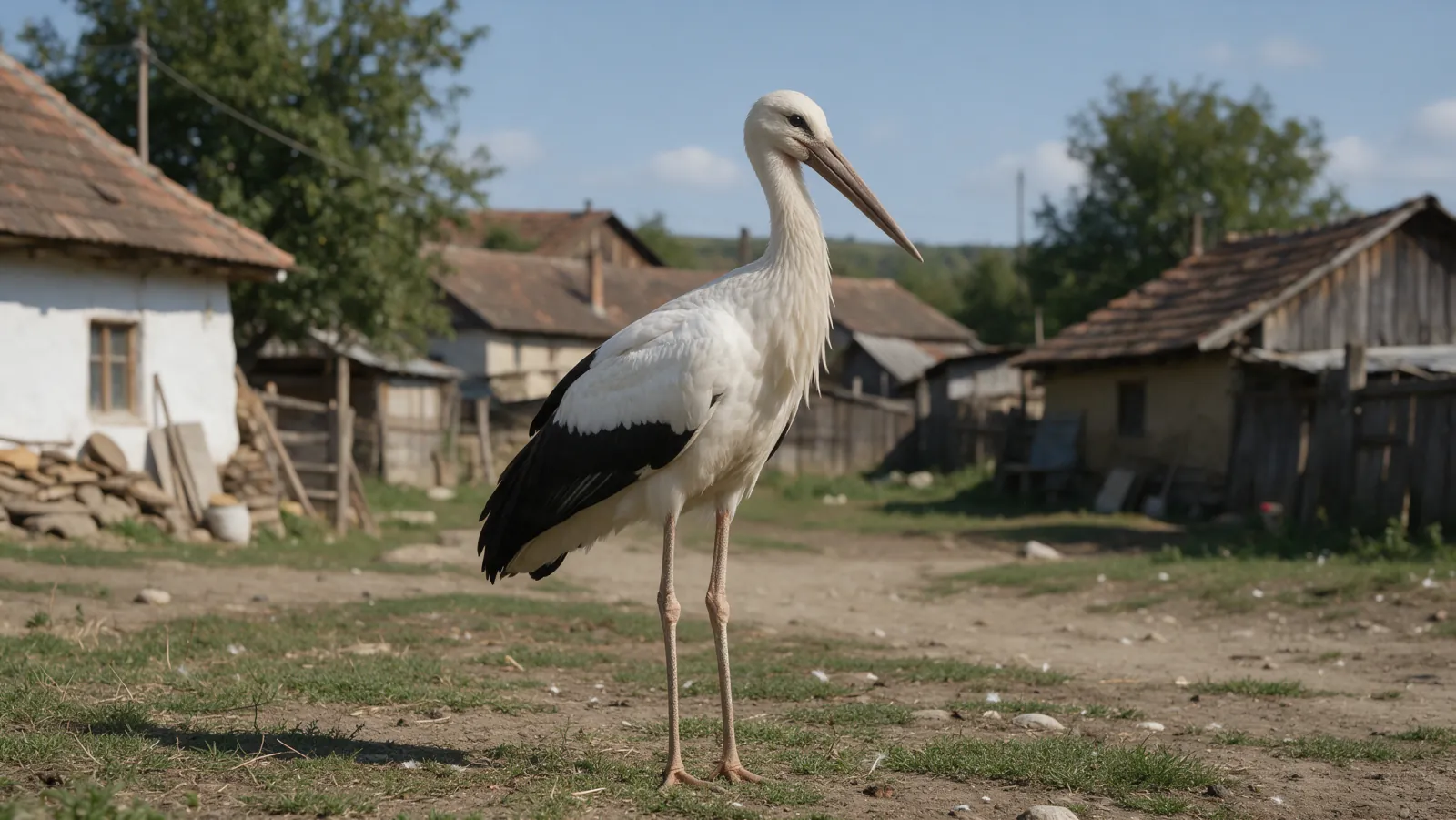
When storks disappear from a district they rarely drift back on their own. The birds learn nest sites and routes from the adults around them, and with no adults left there is nothing to copy. A region can hold perfect habitat and stay empty for decades.
Why empty habitat stays empty
The habitat is only half of the story. A young stork needs a place to nest, food within reach and other storks to show it how the place works. Remove the birds and the wet meadows sit unused, however good they look from the road.
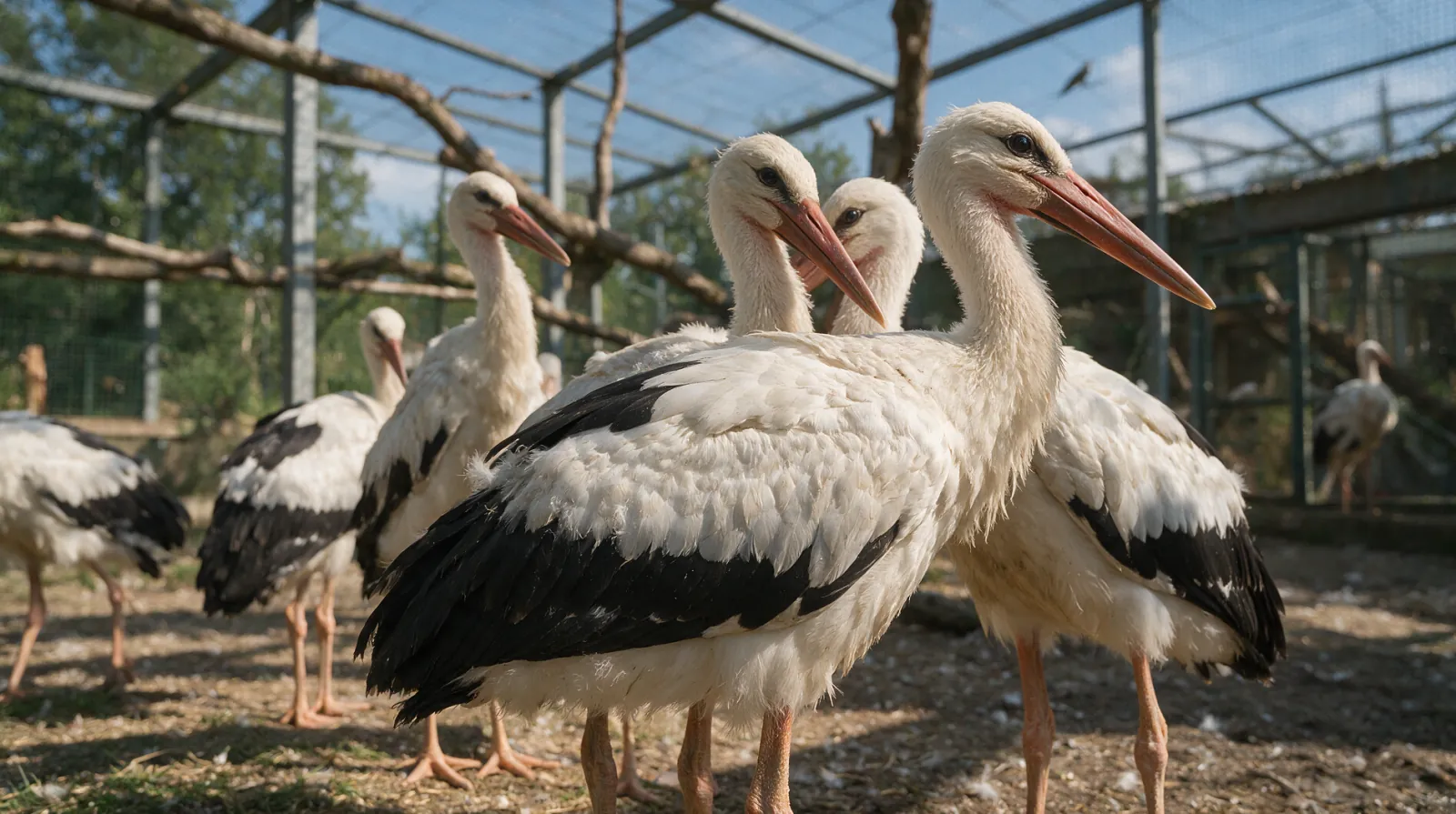
The aviary exists to restart a habit, not to keep birds alive in a cage. Inside a reintroduction aviary the work is patient, and the hardest part is keeping a wild bird wild. These are open enclosures where young white storks are raised for release in places where the species vanished. The birds are not pets and the enclosure is not a zoo. It is a nursery with one aim: to hand a wild population a new beginning without teaching the birds to depend on people.
The craft of staying hidden
Everything in the aviary is arranged around distance. Feed arrives through hatches and screens. Keepers work behind blinds, wear dull clothing, and handle the birds as little as possible. A chick that learns to associate a person with food will beg from people for the rest of its life, and a stork that begs on a road is a stork that does not last.
The daily work becomes slower and more awkward because of this. Feeding takes longer through a screen. Health checks are planned around the birds' routine rather than the staff's. Every shortcut that would make the job easier is the shortcut that would make the bird tamer, so it is refused.
The release is quiet. A panel is opened, and the young birds decide for themselves when to step out. Some circle the enclosure for days. Some leave and are not seen again. The people who raised them can only watch, because the next part cannot be taught.
A basket on a pole
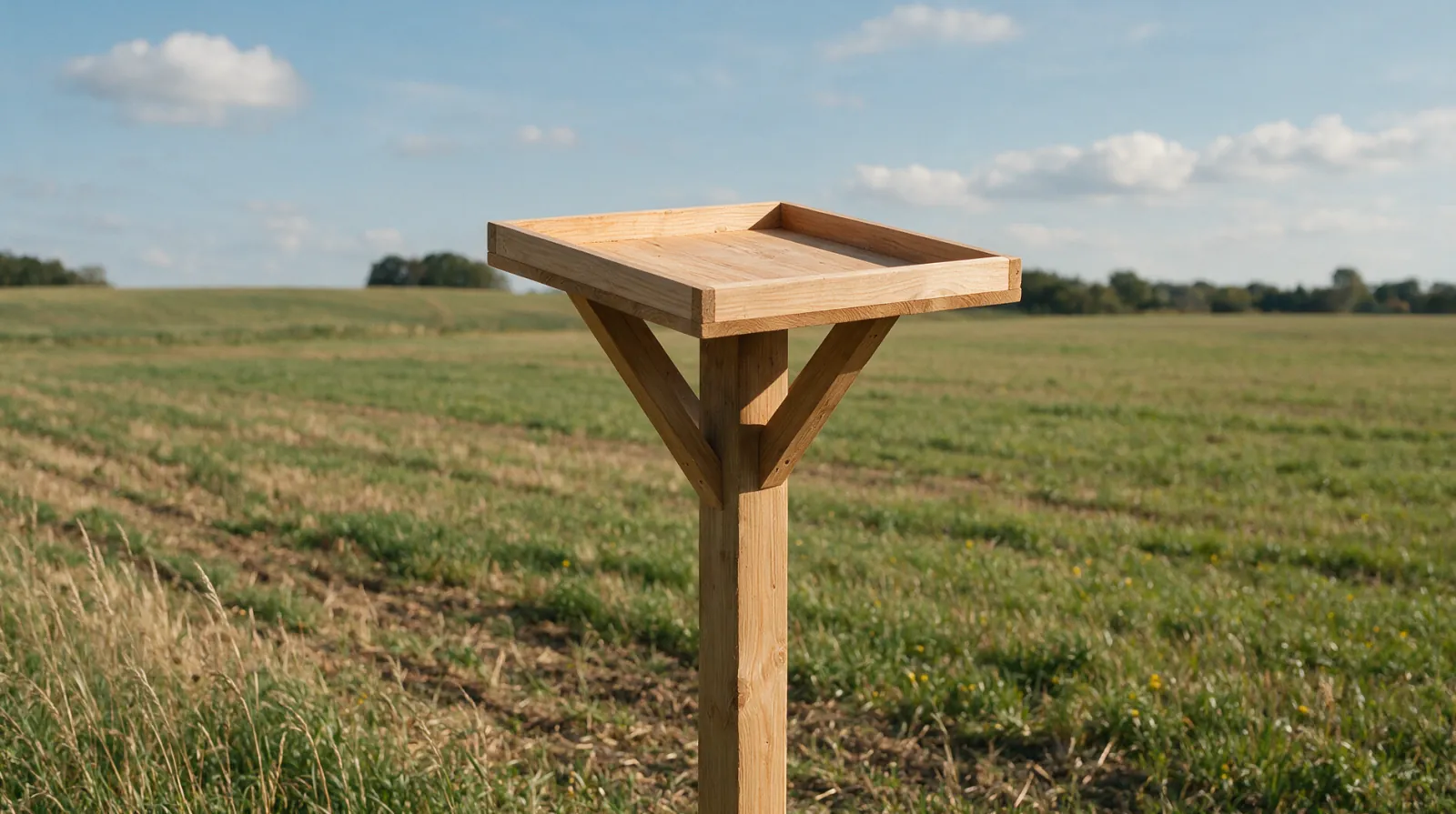
A nest platform is one of the simplest ideas in stork conservation: a wide basket of sticks on a tall pole, put up where the old nest sites have gone. A white stork can build a nest the width of a cartwheel, but it cannot build the thing the nest sits on. Give it a foundation and the rest of the work is done by the bird.
A stork looks for height, safety and a clear approach. It wants to see the fields around it, to have open air under its wings on take-off, and to be left alone by people and predators. For centuries it found those things on tall trees, cliff ledges and the roofs of village houses. When the trees were cut and the roofs changed, the sites went.
A stork cannot nest on empty air, and a district with no foundations is a district with no storks, however good the feeding. A platform is deliberately plain: a shallow basket of woven branches, a strong pole, a firm footing, and a clear gap from any overhead wire. It does not trap the bird, feed it or tame it. It offers a place and leaves the decision alone.
The height is practical. A low nest is within reach of foxes, dogs and curious people. Raised on a pole, it is out of the way, and the pair can incubate without disturbance. Placement matters more than the carpentry. A platform in a field with no wet ground nearby will stand empty, because a stork will not nest far from food.
New platforms often stand empty for a year or two. Storks are cautious about a new site and will circle one for a season before committing. Then a pair lands, lays sticks, and the basket becomes a nest in a week. Where several poles stand close together, young birds returning from their first migration can settle near the colony they came from, and the group grows.
The grove at dusk
Through the breeding season the birds are scattered across roofs and poles, each pair tied to its own nest. Once the chicks have flown, they come together. At dusk they arrive in loose parties, circle, and settle among the branches, sometimes a hundred or more in a single canopy.
The roost is the social centre of the stork year. Nests are territories; a roost is a crowd. Young birds and old birds sleep side by side, and the colony learns the shape of the countryside together before the long flight south. A ground predator has to approach a tree full of large birds, and the noise of a disturbed roost carries.
A roost is also a single point of failure for a whole district. Trees are felled for timber or cleared for a building, and the birds arrive one evening to find the branches gone. A new road, a bright light left on, a path cut underneath, a fence across the approach: each one makes the grove feel less safe. Storks do not protest. They drift away, night after night, until they stop coming.
Protecting a roost is mostly a matter of knowing where it is. A grove marked on a map, a landowner who agrees to leave it standing, a warden who counts the birds at dusk and reports anything wrong. Sometimes the only thing needed is that the trees stay, and that the light and noise around them stay low.
The first migration
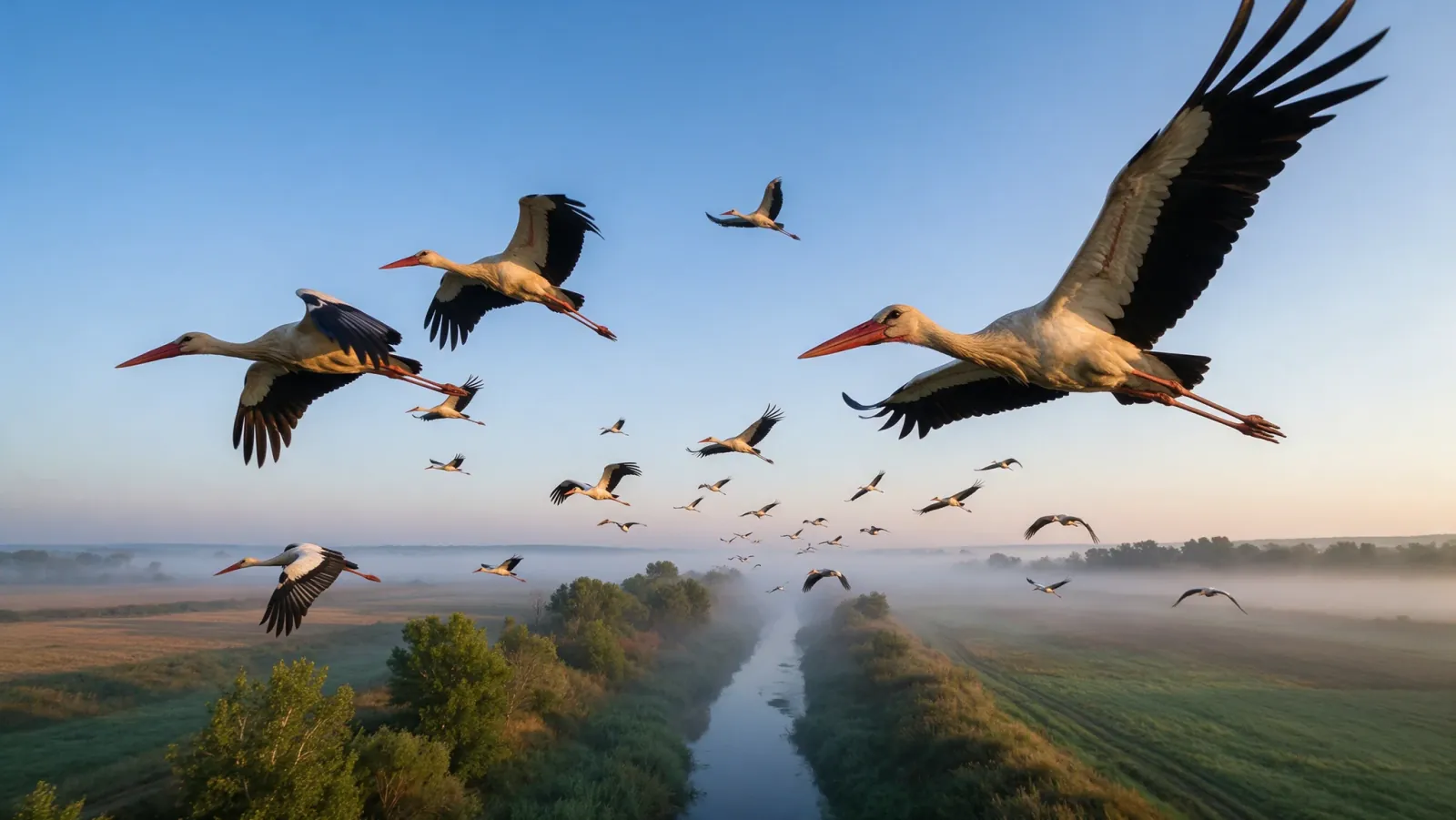
A young stork must find thermals, follow the right direction, and locate food and roosts on a route it has never flown. Some do not survive it, the same as wild birds. The ones that return in spring, often to the aviary roof or a nearby pole, have crossed from captive-raised to wild in a single winter.
A young stork's sense of direction arrives with it. It responds to shortening days and to an inner pull that says go, and it holds a rough sense of which way south lies. A first-year bird does not need a teacher to start; it needs only the right morning. What it does not arrive with is detail: the good roosts, the shallow marshes, the places where a thermal reliably forms in the afternoon.
A young stork makes mistakes. It picks a poor place to spend the night, loses height over water, misjudges the wind, and spends days waiting for weather it cannot read. The survivors come home with a map that has been corrected in a hundred small ways. Most storks that die young die in their first year, and the first migration is the hardest thing they do.
The day the door stays shut
A project reaches its milestone when released birds breed and their chicks fledge without help. After that the aviary has less to do each year: fewer birds raised, more nests outside, more young produced by birds that were themselves born wild in the district.
The best outcome for a reintroduction aviary is to become unnecessary. The doors stay open until the population no longer needs them, and then the last one is closed for good. What is left is a village with storks on the roofs again, and a building that nobody has to visit.
A village can regain a colony from one pair, and the roofs that were quiet for a generation fill with bill-clattering again. If you have never stood under a nest while a pair greets each other, the flock is a good place to start.
Explore the gift