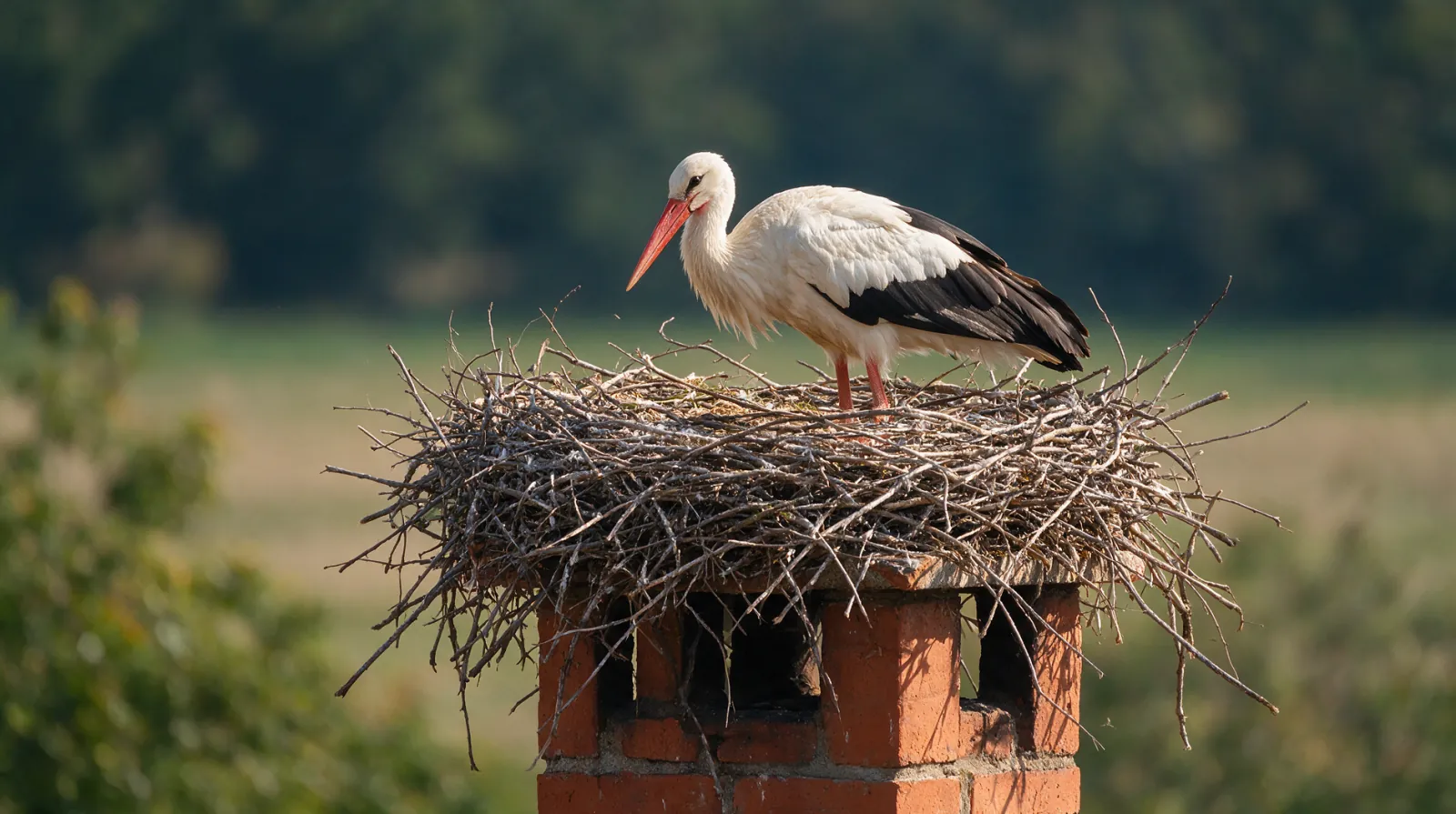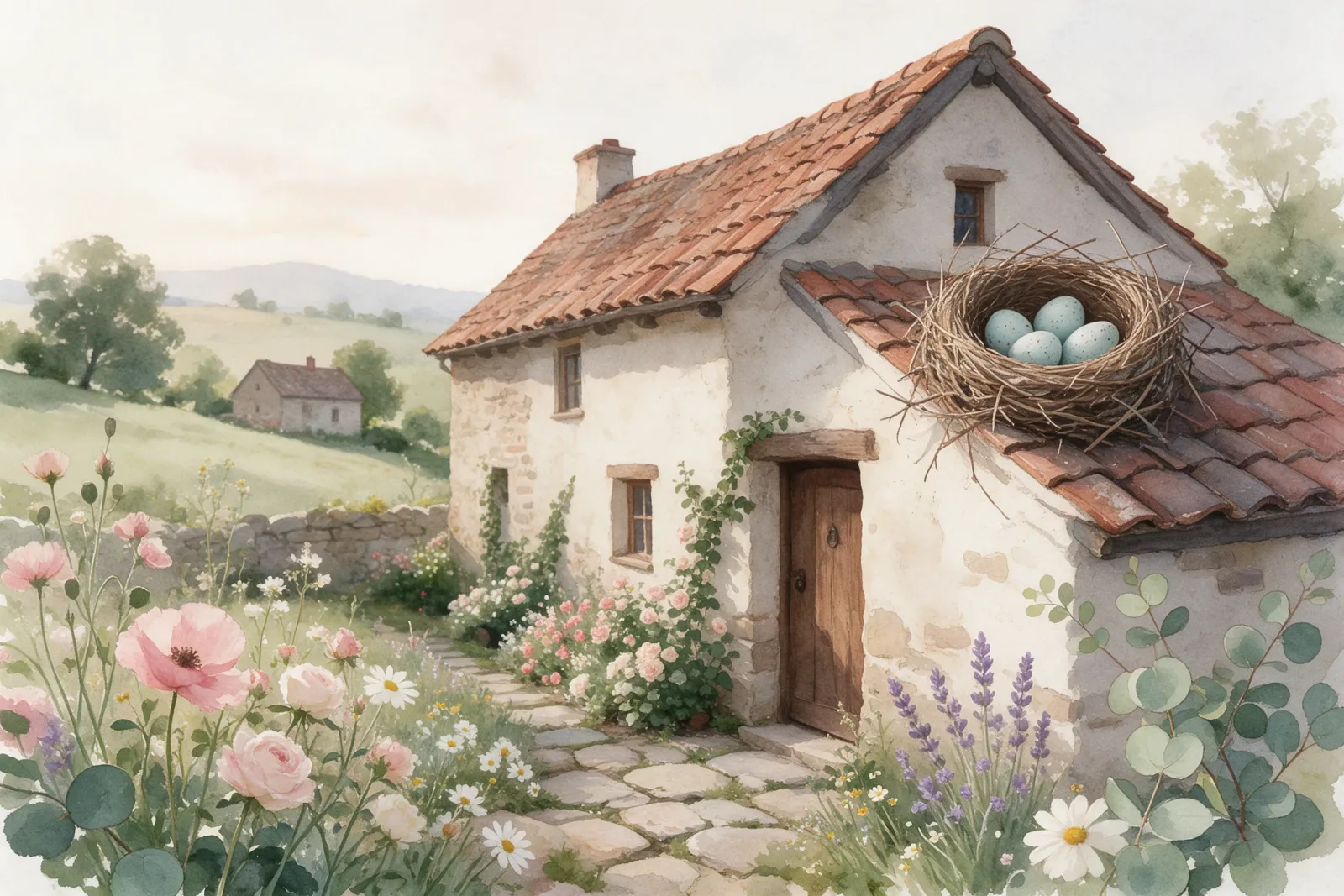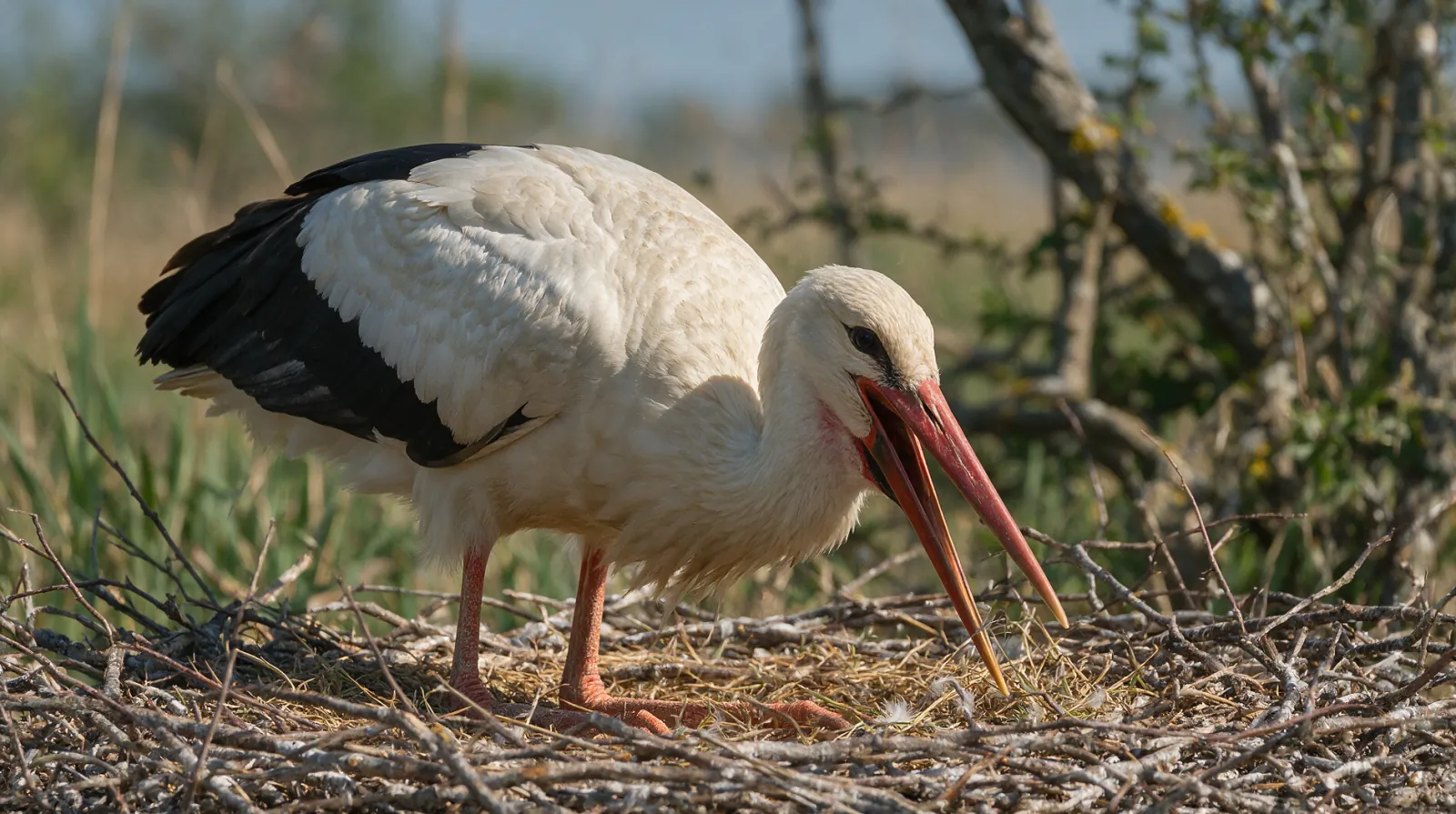
The spiritual meaning of a stork is a modern reading of an old neighbour. In popular spirituality the bird is treated as a messenger of change, a sign of new life, and a reminder that some things return. The readings borrow from folklore, from spring customs, and from the bird's own habits. They are interpretations, held loosely, and no single tradition owns them.
A messenger that arrives on schedule
White storks are summer visitors. They come north in spring, raise chicks, and leave before the cold. A bird that appears on a date you can almost set a clock by feels like a message. In popular reading, a stork arriving over a house is taken as news of a change already in motion: a birth, a move, the return of someone absent, a season of work beginning. The reading is old in its materials and new in its packaging. People have watched for the first stork for centuries, and the watching has always carried a small charge of expectation.
Spring as a promise
The bird is tied to the thaw. It cannot feed on frozen ground, so its arrival and the softening of the fields happen together. Spring customs greeted the first stork because the bird was proof that the year had turned. Spiritual readers take that old calendar feeling and call it renewal. The stork does not bring the spring. It arrives when the spring has arrived, and the coincidence is close enough to carry a meaning. A field that was hard in February is workable in March, and the bird is standing in it.
The soul, the baby, and the bundle
The best known association is the baby. European folklore gave the stork a bundle and a chimney, and the story spread through villages where the bird nested above the bed. Older versions of the tale had the stork carry a soul as well as a child, fetching it from a marsh, a pond, or a far country. The image is tender, and it is folklore. In spiritual reading the bundle becomes any new responsibility, any arrival that changes a household. The bird is the messenger, and the message belongs to the person who receives it.
The pair that returns
Storks often return to the same nest and often to the same mate. That habit gives the bird a second meaning: fidelity, reunion, a bond that survives distance. People who read signs take a pair on a nest as a picture of something worth keeping. The bird's loyalty is to a site and a season, and the human reading turns that into a promise about people. The translation is not exact, and the feeling behind it is easy to recognise.
Signs people watch for
Popular spirituality treats repeated sightings as a nudge. A stork over the road, a nest on a street you walk every day, a bird standing in a field at the edge of town. The signs are ordinary, and that is part of their power. A common bird noticed three times becomes a private message. The reading says less about the stork than about the attention of the person who noticed. Attention is the actual practice, and the bird is the occasion for it.
What the reading leaves open
The stork does not predict anything. It has a route, a hunger, and a nest, and it follows them without regard for human hopes. A spiritual reading can still be useful as a way of marking a change, the way a birthday marks a year. It gives a feeling a shape and a season a name. If the bird moves you, the honest response is attention: learn when it arrives, where it nests, and when it leaves. Some people mark that attention with a stork of their own, a named bird whose route can be followed. The meaning stays a meaning, and the bird stays a bird.
Explore the gift