The stork in the Bible is a real bird in a real landscape, and the passages that mention it are fewer than people expect. The Hebrew word is chasidah, usually translated as stork, and it appears in the laws about birds, in a psalm about nests, and in a prophecy about the seasons. The Bible does not use the stork as a sign of baby delivery. That association belongs to later European folklore.
Chasidah and the appointed time
Jeremiah 8:7 names the stork among the birds that know their season. The prophet lists the stork, the turtledove, the swift, and the crane, and he uses their punctuality as a rebuke to people who do not know the requirements of their own life. The point is the reliability of migration, not the magic of the bird. A stork leaving and returning on schedule is a fact any villager could check. The prophet takes the fact and turns it into an argument. The bird keeps its appointment, and the people do not.
The lists in Leviticus and Deuteronomy
Leviticus 11:19 and Deuteronomy 14:18 include the stork among the birds that are not to be eaten. The lists place it with herons, hoopoes, and other large birds of the water and the field. The stork is unclean in the dietary sense, and that is the whole of its legal role. The rule is about food, not about character. A bird can be barred from the table and still be a neighbour on the roof, and in the Hebrew Bible the stork is both.
A nest in the psalm
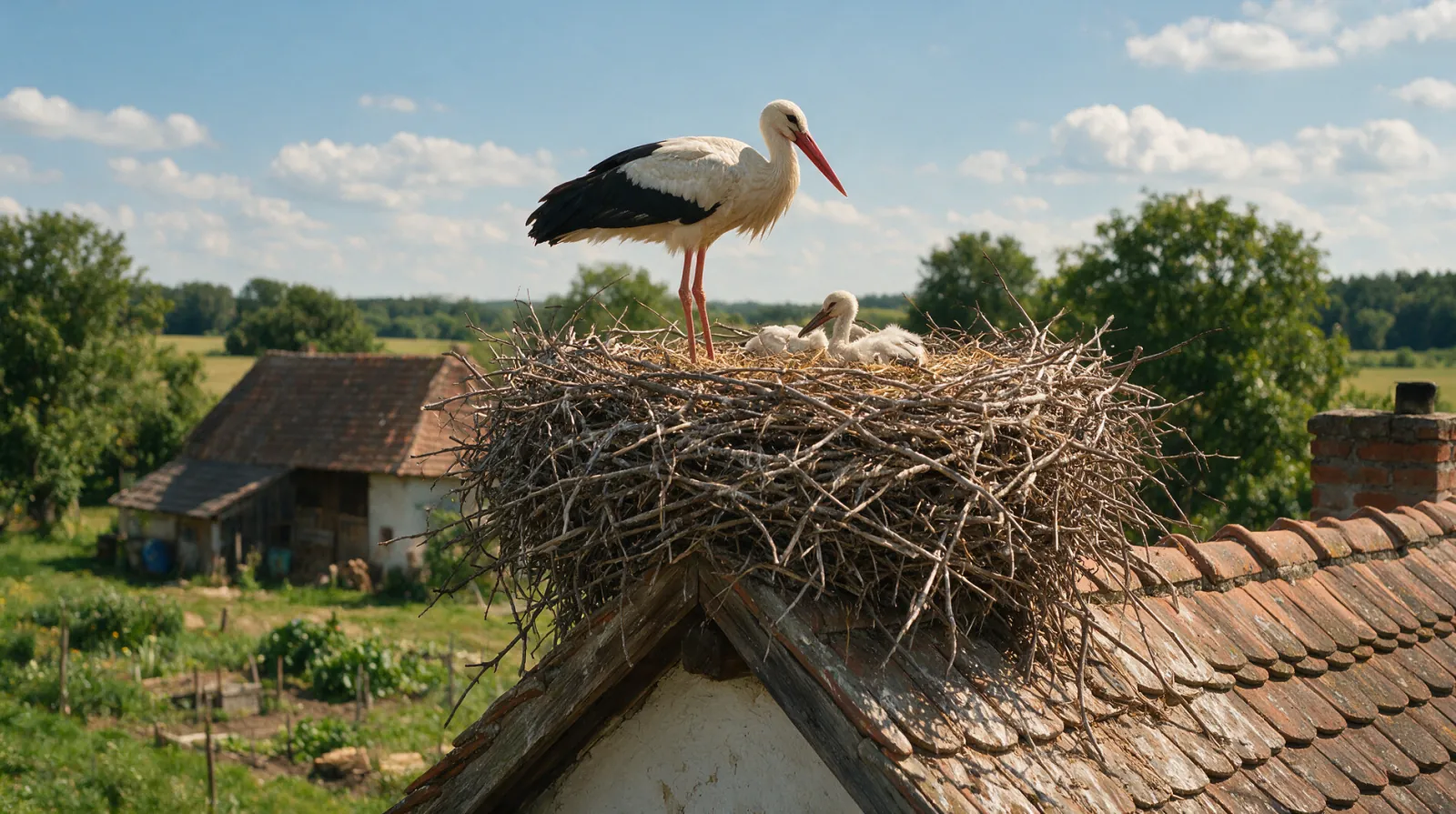
Psalm 104:17 gives the stork a home in the fir trees. The verse sits inside a long picture of creation, with springs, grass, cattle, and birds, and the stork is one tenant among many. The nest is the detail the psalmist chooses. A bird with a home is a creature that has been provided for. The psalm does not moralise about the stork. It notices where the bird lives, and the noticing is the praise.
Wings in Zechariah
Zechariah 5:9 describes women with wings like the wings of a stork. The image is strange and vivid, and the stork's wings are used for their size and power. The comparison is visual. It tells the reader what the wings looked like, not what the bird meant. A preacher who turns the verse into a doctrine about storks has gone further than the text. The text gives an image, and the image is enough.
The stork in Christian art
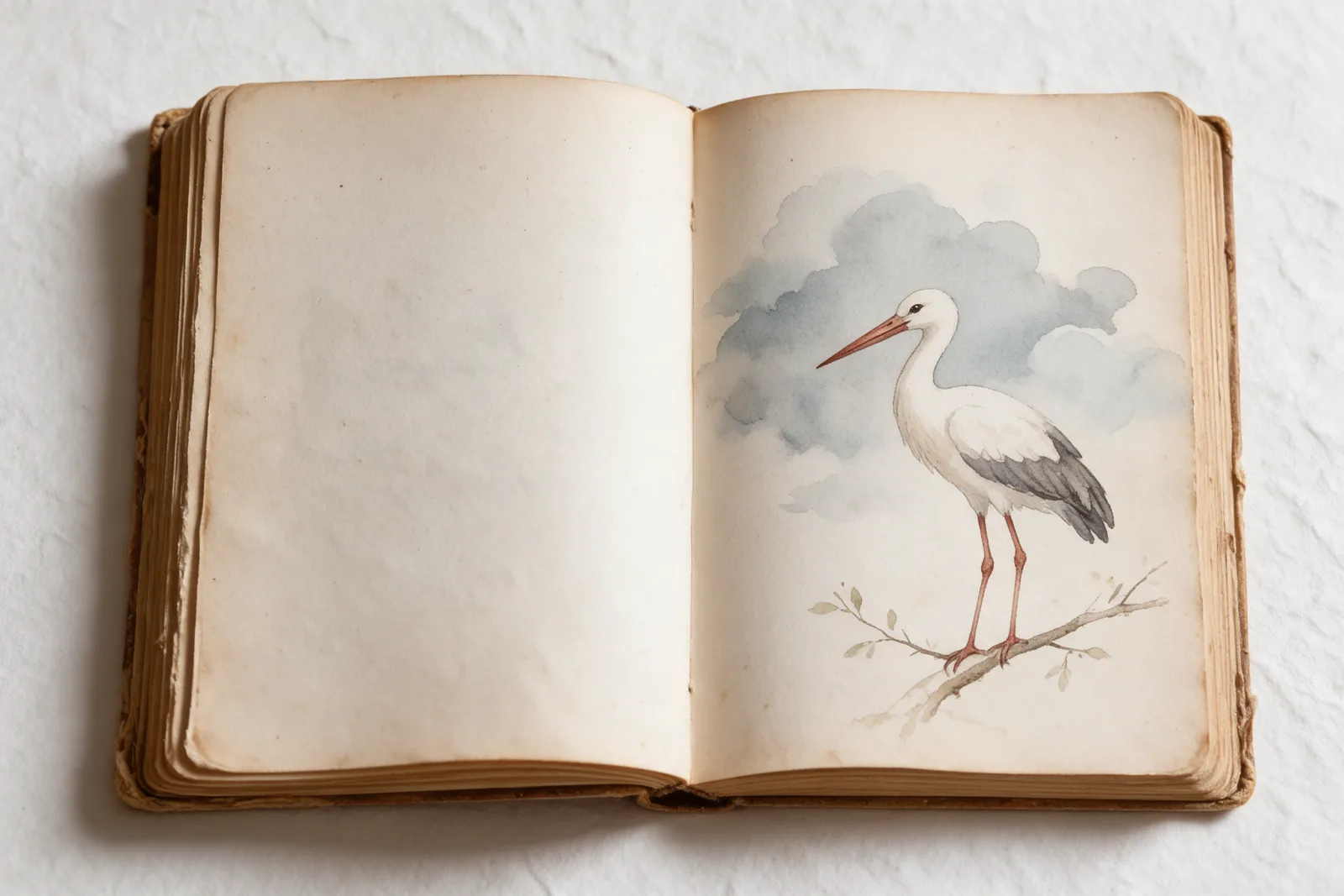
Christian art took the bird from older natural history as much as from scripture. Medieval bestiaries praised the stork for feeding its aged parents, a habit they inherited from Greek and Roman writers, and the bird became an emblem of pietas: the care children owe parents, and parents owe children. A white bird with a long bill, painted near a cradle or a roof, carried that duty without a caption. The white plumage also carried the general medieval reading of whiteness as purity. Set beside a cradle or a roof, the bird read as a mark of care.
What the texts do not say
The Bible never says a stork brings babies. The bundle, the chimney, and the pond of unborn children are European folklore, and they grew up around a bird that nested above village beds. Reading the Bible with the stork in view is a modest exercise: a migratory bird, a nest, a season, and a lesson about faithfulness. That is a smaller claim than the nursery story, and it is the one the texts support. If you want the old image for a new arrival, a stork sent to the door is the folklore version, kept lightly.
Explore the gift