Bird conservation in Serbia is led by BPSSS, the Bird Protection and Study Society of Serbia, which works from Novi Sad. Founded in 1989, the society is the country's BirdLife partner and carries out the research and monitoring that show how Serbian birds are faring. Its website is pticesrbije.rs.
Serbia's north is flat and wet, with the Danube and its tributaries spreading across the plain, while the south rises into hills and mountains. The birds follow that division, and a monitoring scheme has to cover both the lowland marshes and the upland forests to see the whole country.
The society's records are also a record of change. Drainage, ploughing and river engineering have altered the lowlands over the decades, and a count that repeats the same route can show what those changes did to the birds.
The society
The core of the work is study. Members monitor bird populations, gather records and build the knowledge that guides conservation decisions in Serbia. As the national BirdLife partner, the society connects Serbian bird data to the wider European picture, so a bird seen in a Serbian wetland can be understood alongside its whole route across the continent.
That connection runs both ways. Serbian records fill gaps in the European maps, and the European maps give Serbian conservationists a sense of which of their birds are declining everywhere and which are holding on locally.
Why counting again matters
Monitoring is patient, repeated work. Observers return to the same places year after year, counting and noting, so that a decline shows up early rather than late. A single visit proves little; the tenth visit to the same marsh is what makes the record useful.
This kind of record is what lets conservation happen at all. A wetland can only be defended if someone knows what lives there and what is being lost, and the person who knows is usually a volunteer with a notebook and a fixed route.
How to help
A reader who wants to support BPSSS can donate through pticesrbije.rs. People with time to give can join the monitoring itself, which is the work the society is built on.
The society's members work in both halves of the country, and the two sets of records are kept in the same system. A bird seen in the north can be matched with a bird seen in the south, which is how a national picture is built.
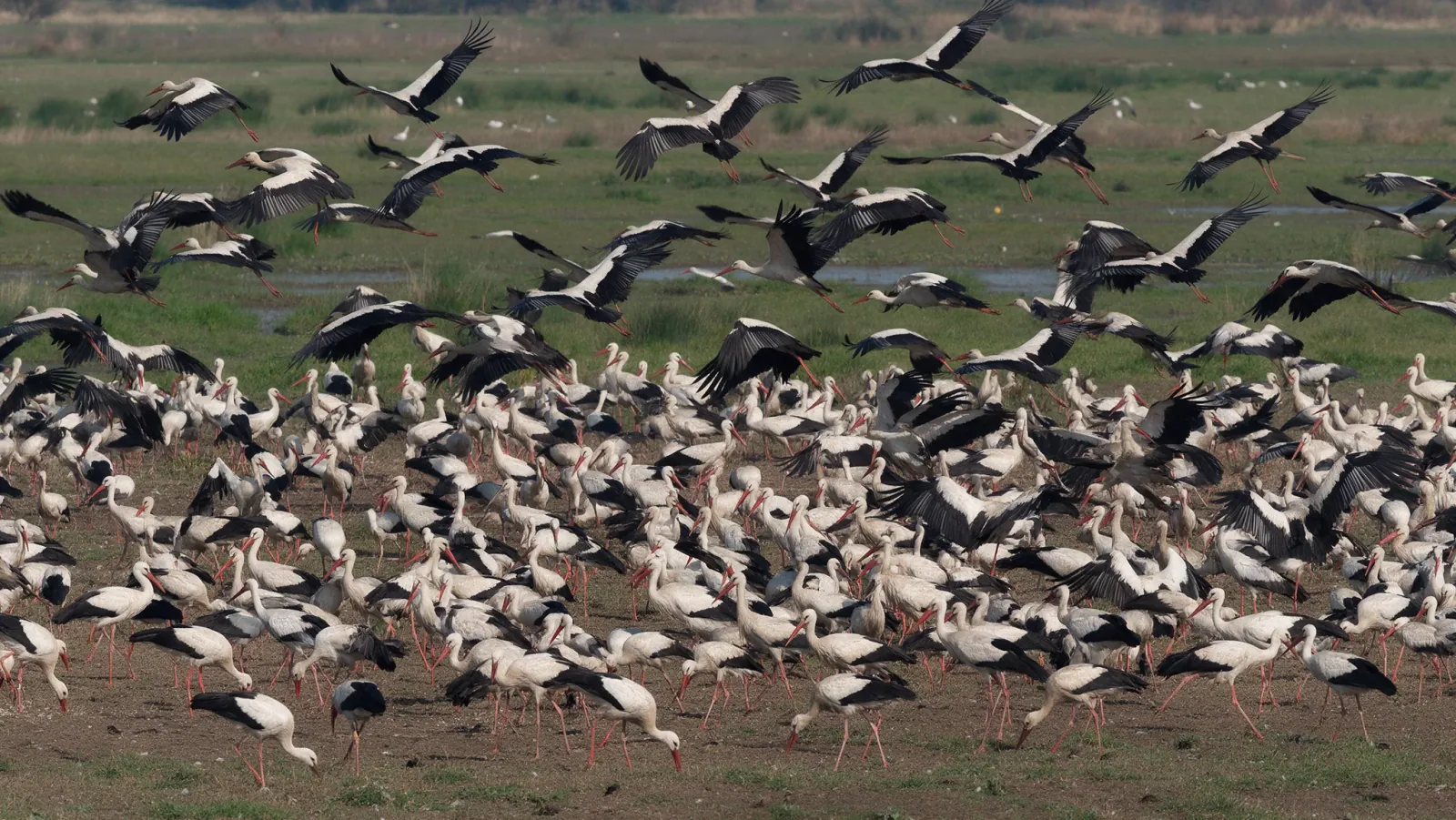
The Danube and its wetlands are the busiest part of that route, and the counts there are among the society's steadiest records. A river this size crosses several countries, so the Serbian counts join a picture that runs from the Black Forest to the Black Sea.
Giving there goes to the society's own work studying and protecting the birds of Serbia. The country's rivers and lowlands lie on a migration route, and the counts are how the passage of birds through them is understood.
Explore the gift