The first weeks are repetition: feed, change, sleep, repeat, and little rituals for new beginnings are how that repetition becomes a shape. The days blur, and it can feel as though nothing is being built. Repetition is the building. The same song, the same lamp at dusk, the same chair by the window. A ritual is a thing you return to, and returning is how a child learns the world is steady.
You do not need a ceremony. You need a moment you can find again tomorrow, and a voice to carry it.
Choose one moment
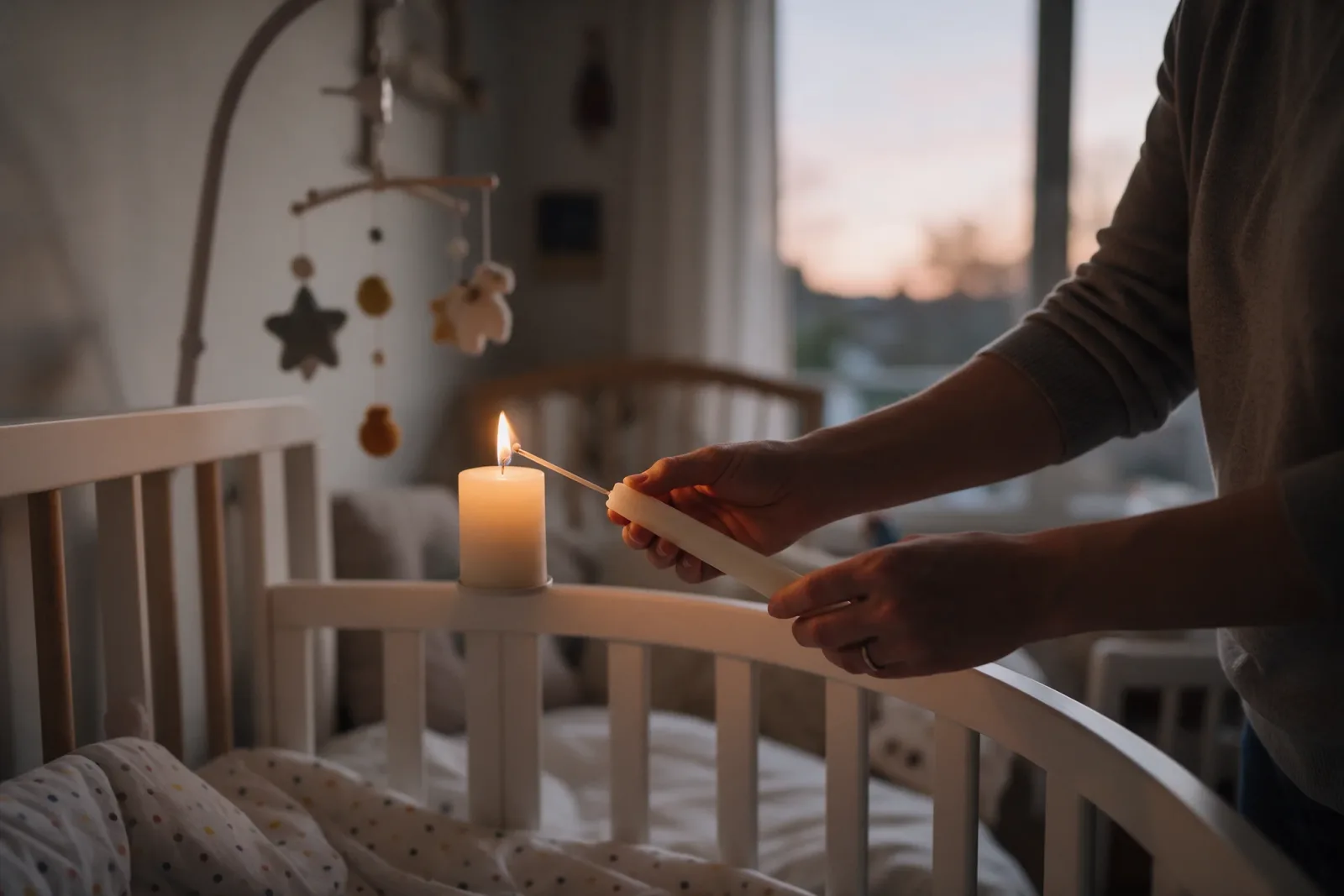
Pick a single point in the day. The first feed, taken by a window. A walk at the same hour. Five minutes in the half light before sleep. One small thing, done daily, becomes the anchor the rest of the day gathers around.
Do not start with six. Six collapse. A single habit kept gently outlasts a calendar of good intentions. Write it nowhere. If it needs a chart, it is a project. A ritual should feel like something you do.
Pick a moment you already have. The kettle, the front door, the last light. A ritual grafted onto an existing habit survives far longer than one invented from scratch. When the ritual is new, it will feel like a decision. After a month it will feel like the shape of the evening.
Narrate the ordinary
What to say when words feel too small is a question that arrives at the cot at three in the morning, with no good answer. You have a large feeling and a small vocabulary, and the baby is looking at the ceiling. Start with the ordinary, aloud.
Say what you are doing while you do it. I am lifting you. This is the cold wipe. Here is the vest, over the head, one arm, then the other. The commentary keeps your own voice slow, which is work enough. It feels foolish for about a day. Then it becomes a habit, and the habit turns a nappy change into a conversation.
Narration also slows you down. A person describing a vest cannot rush the vest, and a baby changed slowly cries less than a baby changed at speed. You will hear your voice settle into a lower gear, and the baby will hear it too.
Name the room while you are there. A newborn is learning that sounds attach to things. The lamp. The window. The blue blanket. The door. You are handing over a first vocabulary one object at a time, and the objects are already in the room, so the lesson costs nothing.
Look outside and say what is there. Grey cloud. A wet road. A woman with a dog. The words can be ordinary. They need to be true and said in your voice. That last part is the ritual. The words change with the weather. The voice stays.
The same song, sung tired
The lullaby that becomes their own is usually a song you half know, sung badly, at an hour when nothing else is available. Choose a tune with a short range and few words. The test is whether you can find it at four in the morning.
Do not choose the song you love most. Choose the one you can repeat forty times without wanting to stop. A song in a language you do not speak works well, because you cannot get the words wrong. Sing it the same way every night: same tempo, same pause before the last line, same soft ending. A baby learns the shape and begins to expect the shape. The comfort is in the repetition.
If you have a partner, agree on the version. Two versions confuse the signal, and the baby will accept whichever one arrives first. The chest is the instrument. Pitch does not matter. What reaches a baby on your chest is vibration, warmth and breath. A low hum will do more than a careful performance. Sing quietly enough that you can hear the baby breathing.

Some parents find the song works only when they are calm, which is inconvenient and true. Sit down. Let your shoulders drop. If you are hoarse, whisper the tune. The rhythm survives. The baby is not grading you. At some point the child will hum it back, wrong and recognisable, or ask for it by a name only the two of you use. That is the song changing hands.
When the feeling has no words
Some moments resist language. The first grip of a finger. The first night you sit watching a chest rise and fall. You do not have to describe them. A hum, a long breath, a hand flat on the baby's back will carry more than a sentence.
If you cry, let that be part of it. A baby reads the body more than the words: the arms that do not let go, the heartbeat it already knows. Say the plain thing. I am here. We are all right. You are safe. Silence is allowed too. Sitting with a baby in a dark room, saying nothing, is a kind of speech, and babies hear it.
When your own words run out, use someone else's. A line from a song. A prayer you half remember. A sentence your grandmother said. A borrowed sentence, said slowly, still arrives in your voice, and your voice is what the baby listens for. Reading aloud works too, and the book does not matter. A novel, a seed catalogue, the back of a cereal packet. The baby gets rhythm, pause, and the sense that someone is nearby and busy with words.
Keep a book by the feeding chair for this. Any book. You will read the same page four times and the baby will hear it four times, which is the point.
The stork returns to the same roof
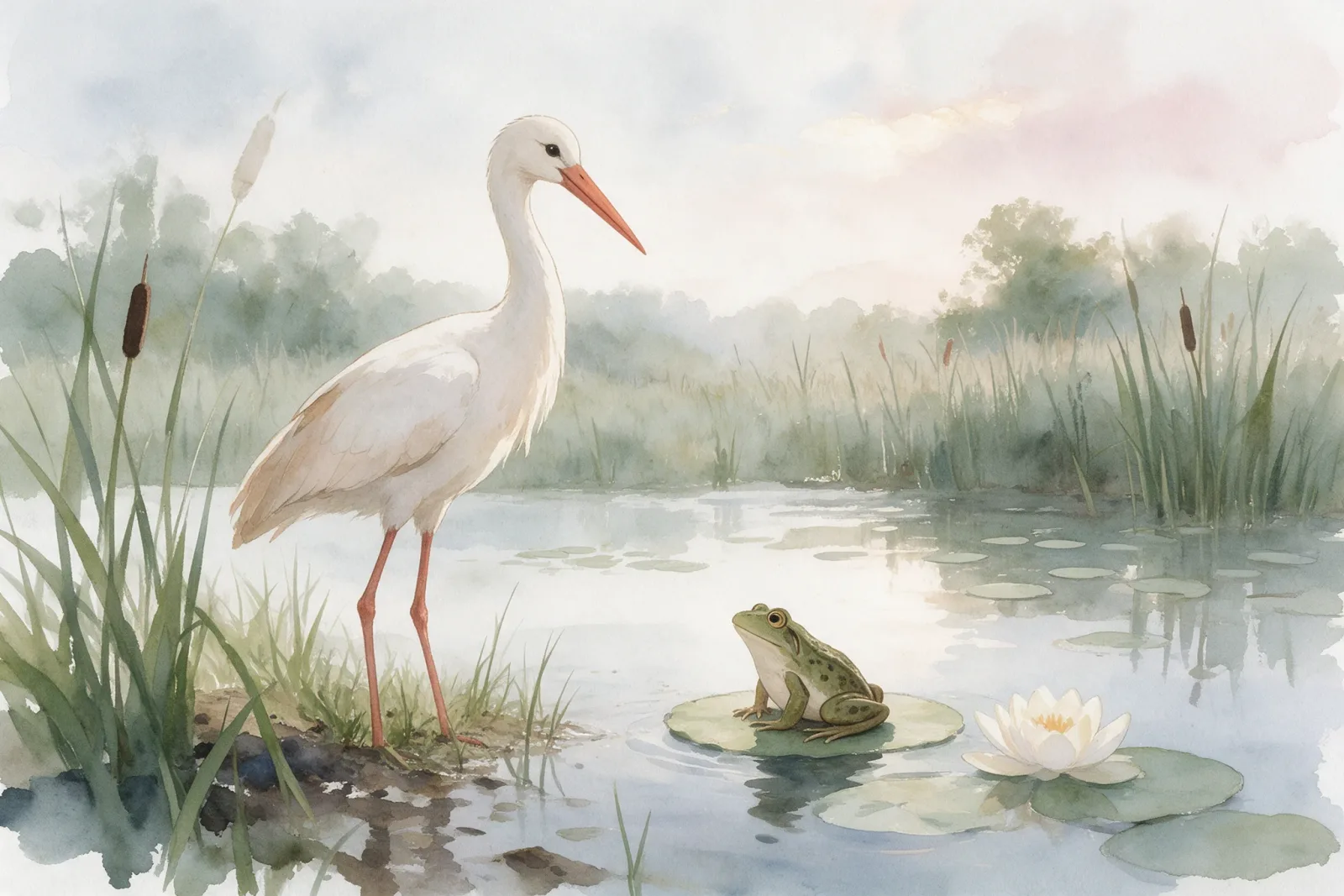
White storks come back to the same nest each spring, often the same chimney or pole, and add to what is already there. The bird does not call this a ritual. It comes home because home is the place that was there before and will be there again.
You are building that kind of place. The lamp, the song, the chair: a roof over a repeating hour. A song costs nothing. A lamp left on costs very little. Neither can be outgrown, donated, or left on a bus. The stork does not need the nest to be beautiful. It needs it to still be there.
Rituals survive the clutter
Toys multiply and get forgotten. Clothes are outgrown in weeks. A ritual has no size and no weight, so it stays. Years from now your child may not recall a single present. It may remember the song, or the way you always tapped the door before opening it. The things that cost nothing are the things that last.
A ritual should bend on bad days. The song can be shorter, the walk skipped, the lamp lit late. The point is the promise underneath: this is how we do things here, and we will do them again. If you miss a night, the ritual is not broken. It is waiting where you left it. The child will not remember the first hundred times. The body remembers repetition even when the mind does not, and the calm will stay.
Do not invite an audience. A ritual performed for grandparents is a performance. Keep this one for the people who live in the house. One evening the child will ask for the song, or reach for the lamp, or lead you to the chair. That is the sign the ritual has done its work. It belongs to the family now.
If you want one object to carry the habit, adopt a stork and set it on the sill. The bird has a name, which gives the ritual a second thing to say. The name costs nothing to repeat, and it will still be in the house years later, when the song has gone quiet and the lamp has been replaced.
Explore the gift