The storks leave in autumn and the roof grows bare, and a child who watched them all summer begins the longest lesson of the year. The nest stays. The bird does not.
The waiting starts before the child has words for a season. It starts with a question asked every few days, and a parent giving the same answer: they come back in spring.
The roof grows quiet
One day the meadow is full of storks and the next the sky carries a line of white shapes heading south. The leaving takes a few weeks. The child notices the emptiness before understanding the reason.
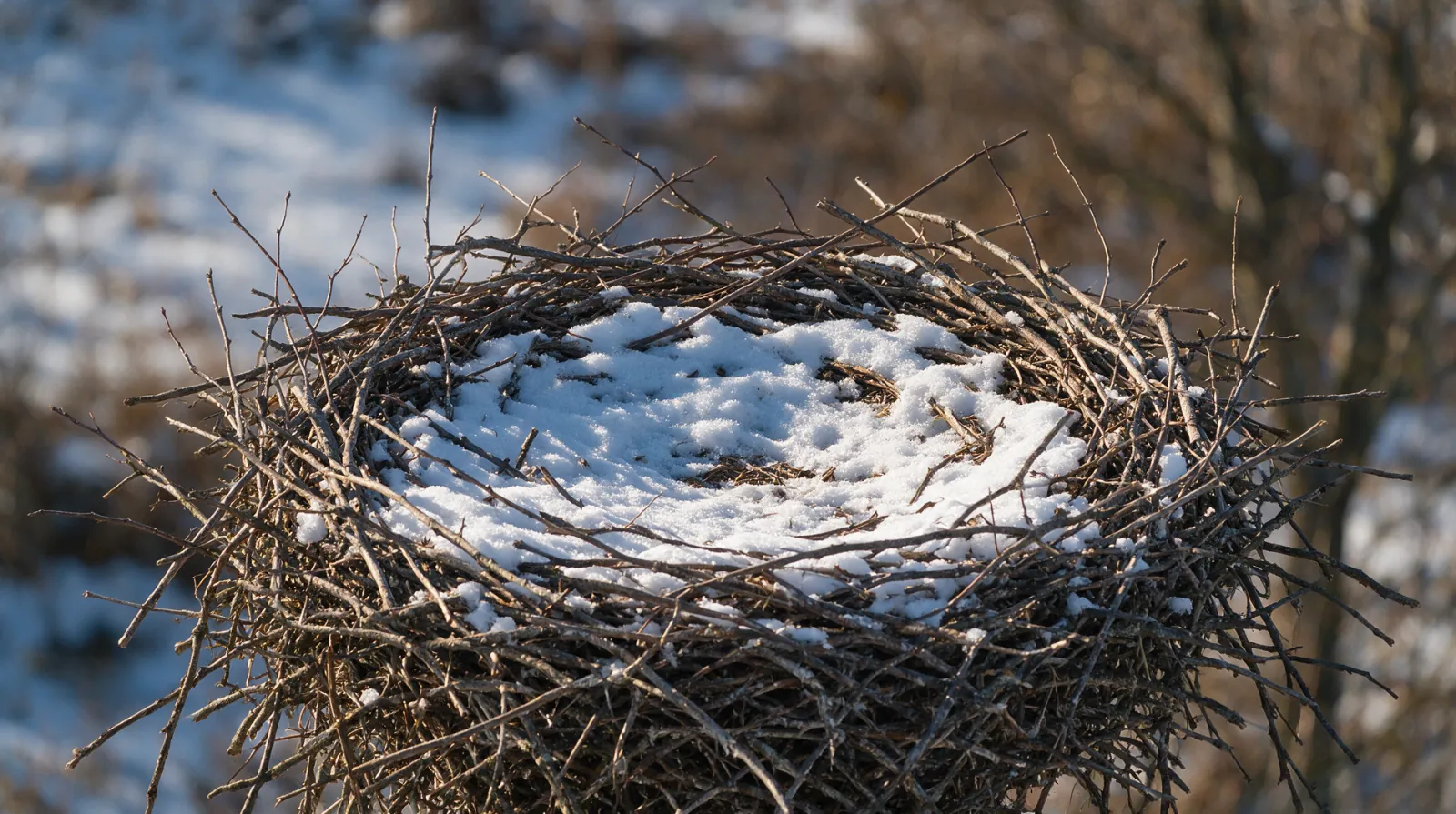
The nest stays up there all winter, a dark tangle of sticks against a grey sky. Snow settles on it, melts, and settles again. The child checks it most mornings, the way a person checks a letter box for something not yet posted.
The empty nest keeps its shape through the weather, and the shape is a promise. It can be seen from the window every morning, holding the place where the birds will land.
Winter passes slowly for a child. Some weeks nothing seems to happen. The days are short, the garden is frozen, and the sky stays the colour of stone. A whole season is hard to understand when a single afternoon already feels long.
The village feels different too. The sky above the fields is emptier, and the ordinary sounds of the place carry further without the birds in them. A child may not say this. A child notices.
The first week without them is the strangest. The field looks the same and feels wrong, and the child keeps scanning the grass out of habit. Then the habit fades, and the waiting starts in earnest.
A promise made of sticks
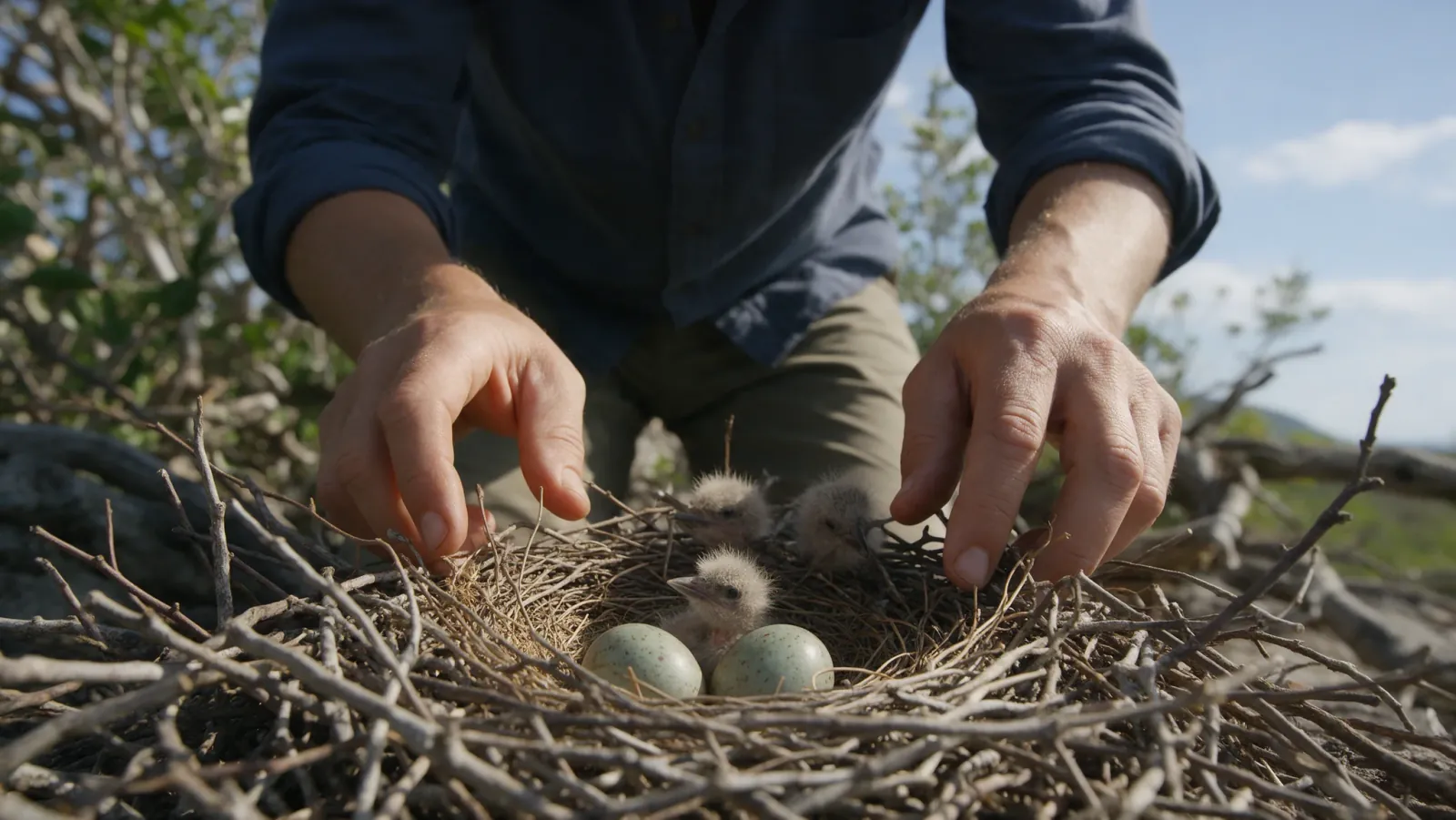
A white stork returns to the same nest year after year, and the old structure waits for it through the cold. Sticks are added each spring, and the bowl grows wider and deeper with the seasons. What the child sees in winter is the work of many summers, holding its place.
That is a fact worth telling a child plainly. The bird is in Africa, or on the way there, and the nest is here, and the two will meet again when the weather turns.
The child may not believe it the first winter. Belief comes later, from evidence, and the evidence is the same roof filling again. A promise is easier to trust once it has been kept in front of you.
Some parents mark the wait with a small calendar or a drawing, a way of counting the weeks. Others let the nest do the counting. Either way, the child is learning that time passes in a direction, and that some good things sit on the other side of a dull stretch.
The nest itself is a record. Every spring adds material, and the bowl gets deeper. A child who has watched for two or three years can see the difference, and the difference is a kind of calendar.
The first sign is not a stork
It usually starts with a milder morning, a drip of meltwater from the roof, a patch of grass showing through the snow. The child notices before anyone else, because a child who is waiting notices everything. The days stretch. The light lingers after supper.
Birdsong changes too. The hedges get louder before the storks arrive, and the child may hear the change without knowing what it means. Adults call it spring. The child has been watching for it since the first bare morning.
Waiting sharpens attention to things adults have stopped seeing. A child who has spent a winter checking a nest will spot the first stork before the parent does, and will say so for years afterward.
A first sign is a small thing, and it is enough. The child does not need the whole season to arrive. One drip from the gutter will do for today.
The morning the nest fills
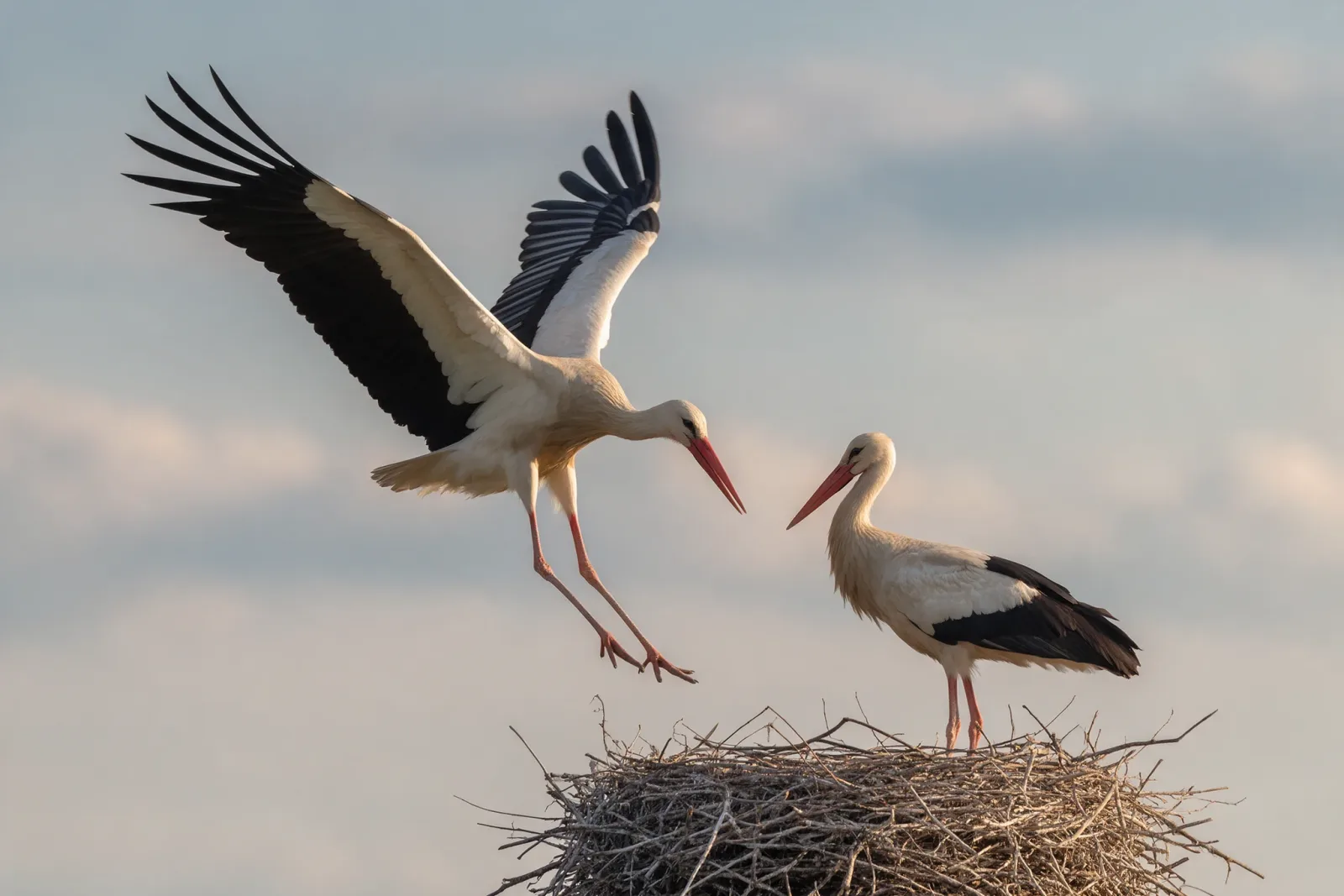
The return rarely happens while anyone is looking. It comes in the early morning, or on a school day, and the first sign is a neighbour's voice or a parent calling up the stairs. Then the child is at the window, and the bird is there, standing on the old nest as if the journey had been a small thing.
The child says nothing for a moment. Then the questions start, quick and happy. Where has it been. Is it the same one. Will there be chicks. The parent answers what can be answered.
The return means more because the absence was real. A bird that never left would get a glance. A bird that crossed a sea and a desert and came back to this roof gets a morning of attention.
The child may run outside without a coat. The parent follows. Nobody says much for a while, because the bird is busy being home and the people are busy watching it.
The bird usually begins repairing the nest within days. Sticks get lifted, shifted, and pushed into place. The child watches the work and understands that the return was only the opening of the season.
The goodbye a child can feel
Autumn comes again, and the child is a year older. The departure no longer feels like weather. It feels like a goodbye, the same one that has happened every year and is only now old enough to land.
That lesson arrives in stages. Friends move away. A teacher leaves. A grandparent dies. A child who has watched storks leave and return has a shape for the feeling, and the shape helps. A thing that goes away can come again, and the child has seen it happen on the same chimney.
The watching is part of the comfort. The birds gather in the fields, lift off, and go, all in daylight where a child can follow them until they are specks. A departure you can see is easier to trust than one that happens while you sleep.
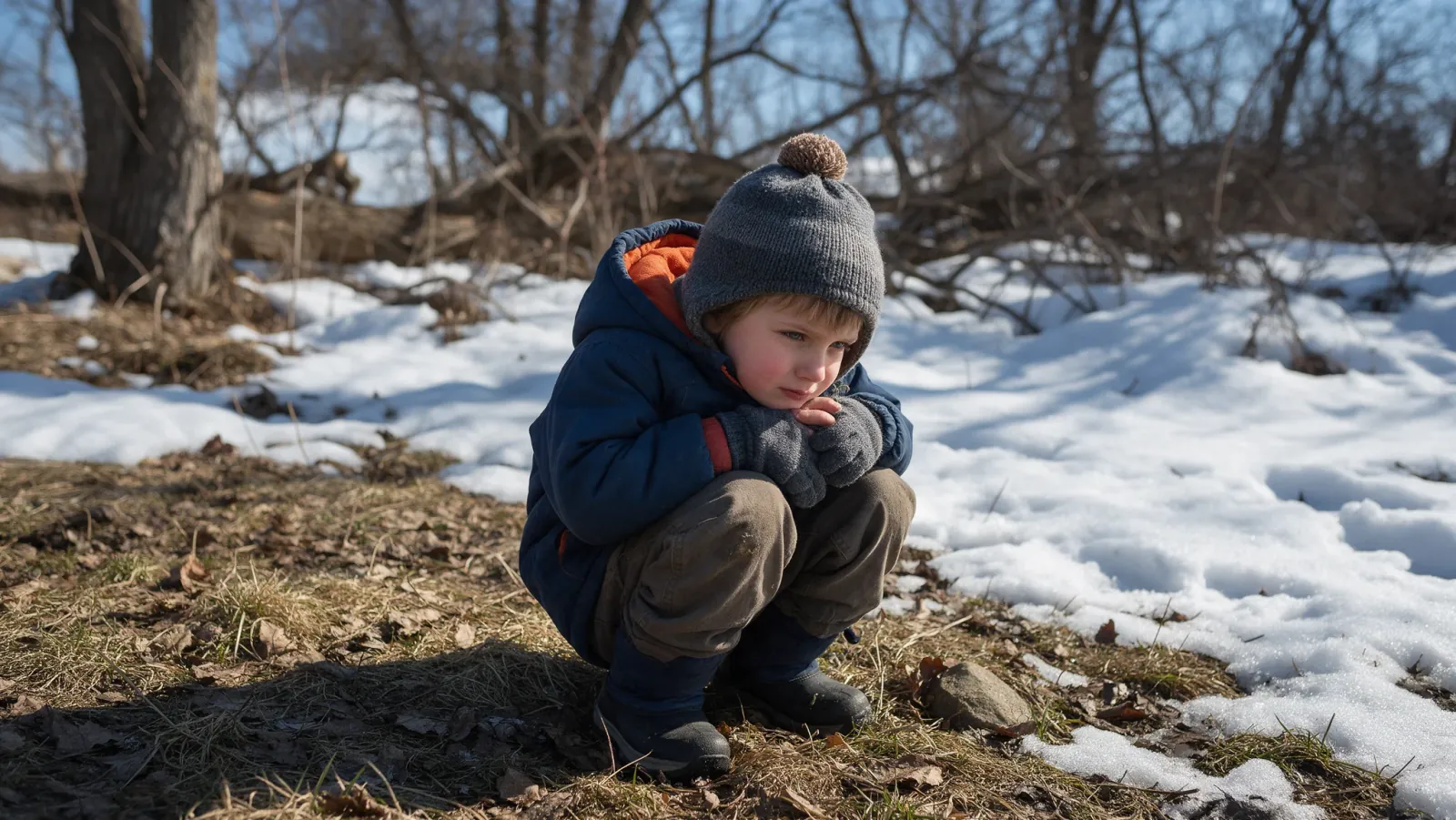
The empty nest teaches something the departure cannot. For weeks the child looks up and finds it bare. Love continues when the loved thing is out of sight, and the child practises that on a small, bearable scale.
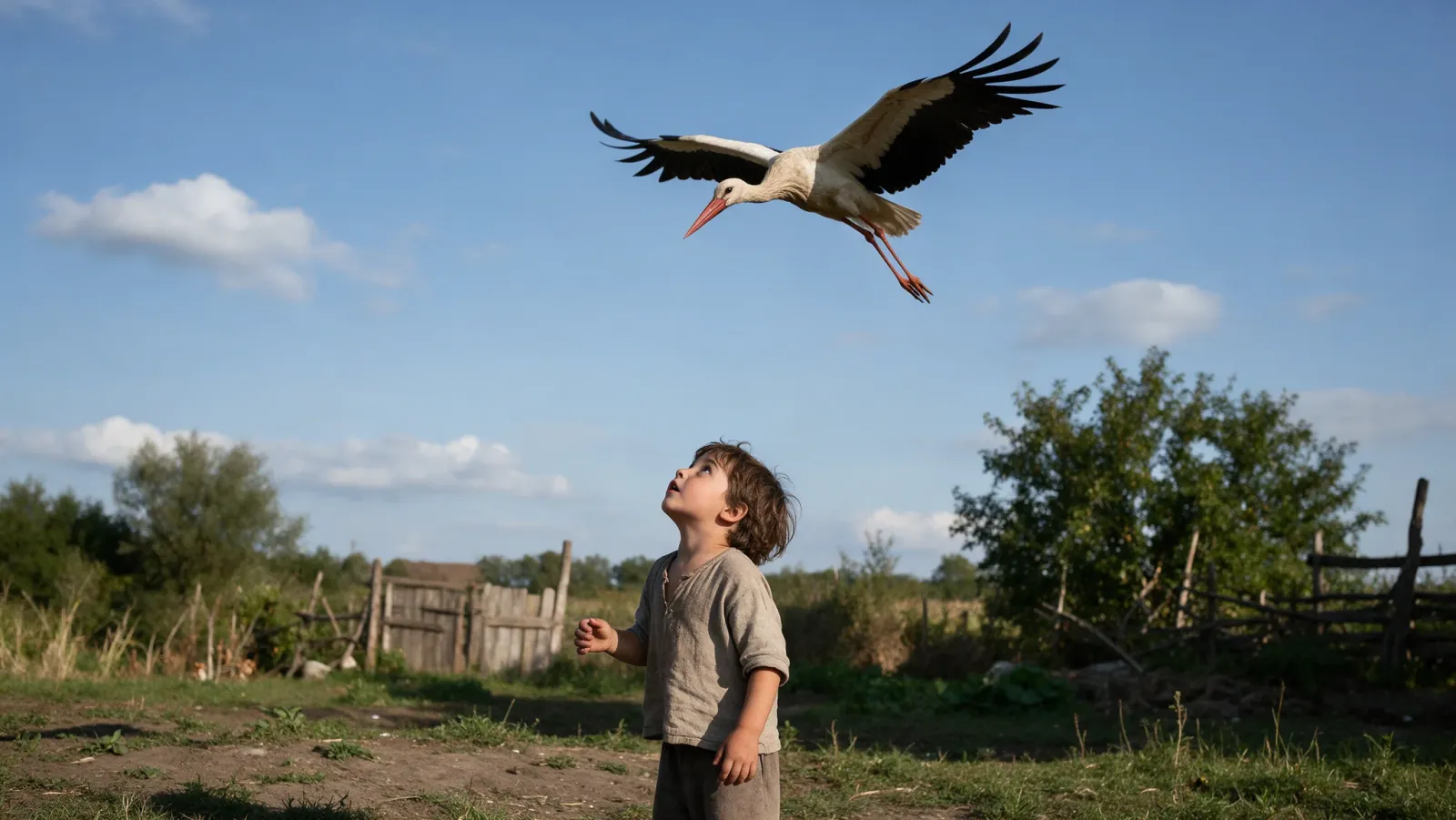
A bird that keeps its own time
A stork arrives in spring, feeds through the long days, raises chicks, and leaves in autumn. The child who watches learns the year through the bird: waiting, return, the noisy summer of the nest, the leaving.
Some families keep a small stork on the windowsill for the last cold weeks, a white shape that holds the appointment. Adopt a stork if you want that marker, and set it where the child can see it from the window.
The seasons stop being weather and become a story with a bird in every chapter. The child grows, the roof stays, and the nest is added to each spring by birds that found their way back.
One year the child will be the one calling a parent to the window. By then the waiting will have become a habit, and the arrival will still be worth the call.
By the time the chicks arrive, the nest is loud. The parents come and go with food, and the roof has a new set of inhabitants. The child who waited through winter is now watching a family get fed.
Explore the gift