A child being read to goes still in a way that is easy to see. The eyes widen, the body leans toward the voice, and the room around the book stops competing for attention. That stillness is where stories begin shaping a child's world, before a single word has been understood.
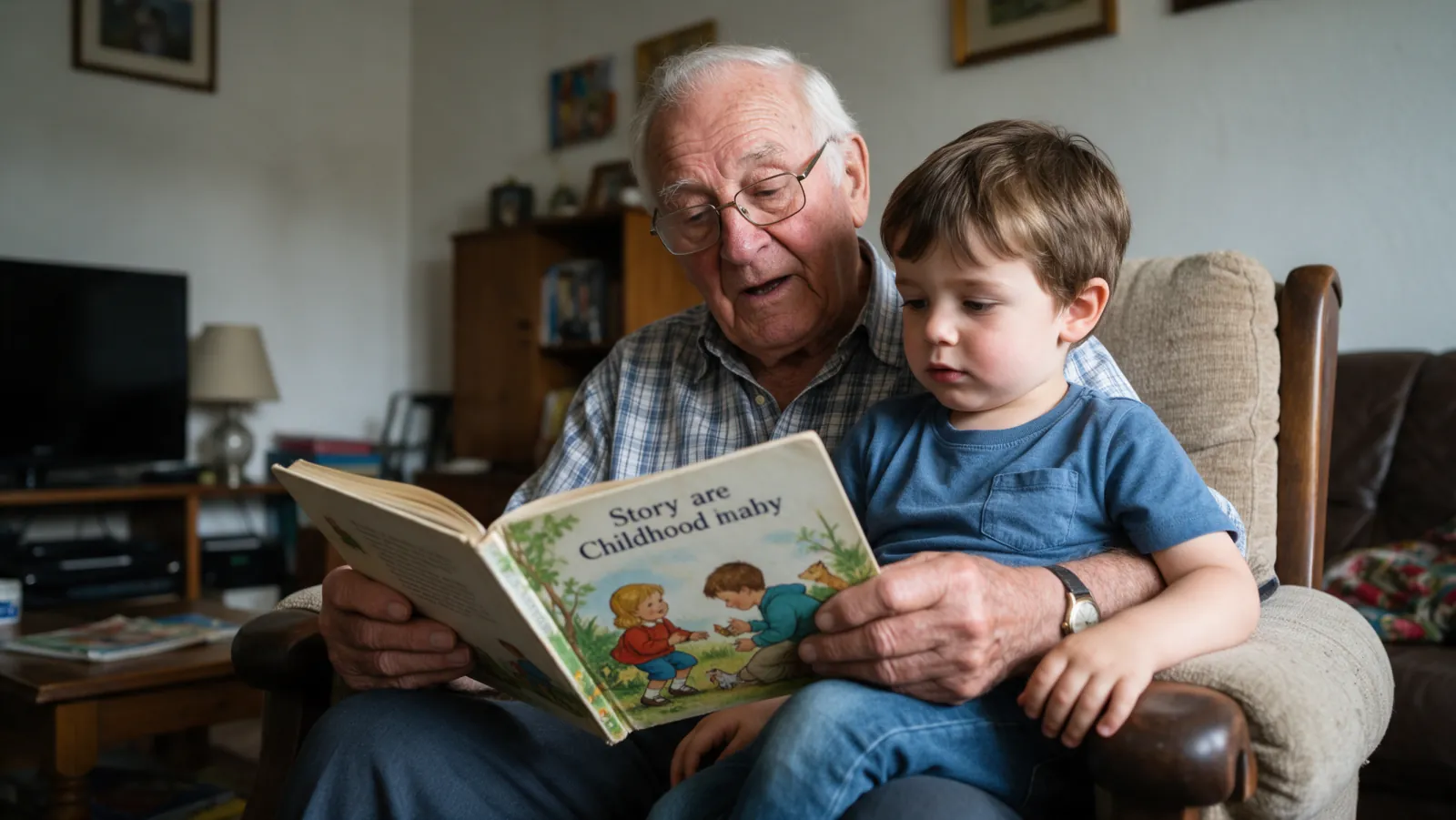
A story arrives in a lap. There is a blanket, a shoulder, a voice that slows at the right places. The child does not need to know what a plot is. The child needs to hear the same cadence again, and to feel the arm around them stay put until the page turns.
The body listens first
Before a child follows a plot, the body reads the room. The ear picks up rhythm long before meaning, and a parent who reads the same page in the same cadence every night is teaching a tune the child learns without effort.
Watch a tense passage land. A hand stops turning the corner of the blanket. Breathing changes. A child of two or three can sit through a page with no picture at all if the voice carries the weather of the scene.
Some nights the reading is flat and the child wanders off. Some nights the same words hold a room still for ten minutes. The difference is rarely the book. A story begins as a sound before it becomes a meaning, and the sound is what a child keeps first.
Long after the plot is forgotten, the rhythm stays. Adults who recall a childhood book often recall the voice that read it, and the particular pause before the last line. The words were borrowed from someone. The music came with them.
Words for feelings that have none
A small child has large feelings and few names for them. Rage arrives as a hot face and a thrown cup. Fear arrives as a tight chest at bedtime. The feeling is real, the words are missing, and the crying can outlast the cause by a long way.
A story hands over the names. The bear who cannot sleep. The rabbit who is lost and then found. The child sees a feeling moving across a page, wearing fur, and recognises it without being told to look. A feeling that can be seen on a page can be carried out of the room.
This is why one book gets read until the cover softens and the spine gives. The child wants the same journey again, because on the second pass the frightening part is known and the ending is safe. Repetition turns a fright into a fact about how the evening goes: the dark comes, the small one is found, the light goes out.
Parents sometimes try to move the child on to something new. The child usually refuses, and the refusal is the point. The old story is doing work a new one cannot do yet. It is being tested for the same result, night after night, the way a child drops a spoon to check that gravity still holds.
Pictures do half the work
A child reads a picture faster than an adult reads a line. The tilt of a head, the colour of a sky, a door left open at the edge of the frame. Long before print is decoded, the images deliver their own account of the story, and the two accounts settle together.
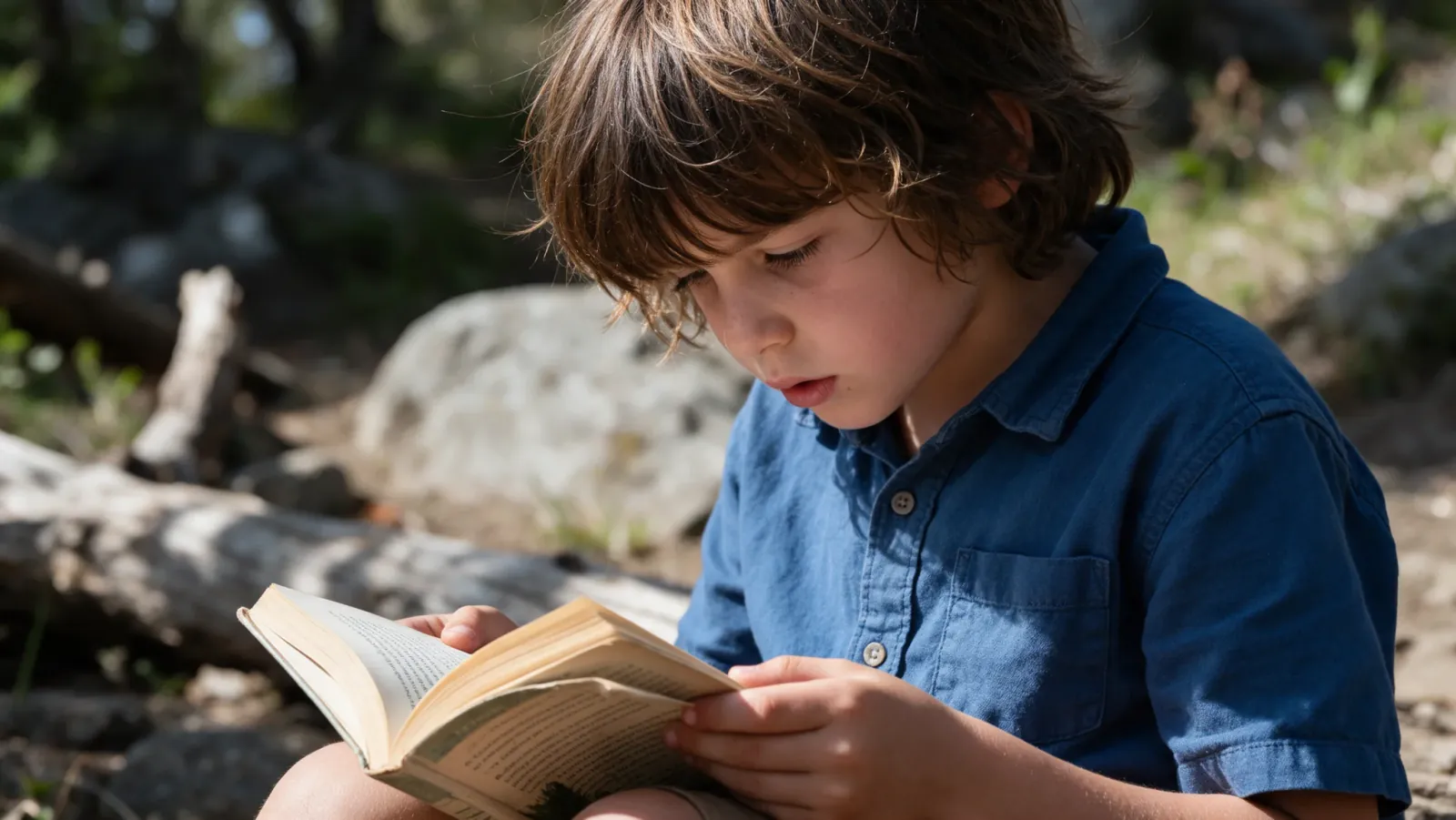
That double arrival is why a picture book holds a child who cannot read a word. The ear takes the sentence, the eye takes the scene, and the two braid. Later, when the child sees a white stork over a field, the bird arrives with a picture already attached, and the real bird fits the old shape closely enough to be recognised at a distance.
A child who has met a stork in a book knows it before the first sighting. The beak, the long red legs, the nest of sticks on a chimney: the details were stored long before the confirmation. The first real bird confirms a thing the child already owns.
A room built by two voices
Reading aloud makes a small room with two people in it. The adult supplies the voice and the pace. The child supplies the listening and the interruptions. What gets built belongs to neither of them alone, and it lasts about as long as the book.
A story about a white bird with a bundle fits that room without strain. A nest on a roof, a long flight south, a return in spring. None of it needs to be true in the way a fact is true. It needs to hold still long enough for a child to climb inside, night after night, and find the same shape waiting.
The telling is the shared thing, and the book is only the reason to sit down. A parent who has had a long day can still manage three pages. A child who has had a long day can still listen to them.
There is a version of this that costs nothing and happens in cars, at kitchen tables, on walks. A parent starts a story with no book at all, and the child adds a detail, then another. The plot wanders. Nobody minds. The story is being built in the open, by two people who can hear each other, and it will be different the next time it is told.
The questions a story leaves
A good story ends with something unanswered. Where did the bird go in winter. Who built the nest. Why did the small one have to walk through the wood alone. The child asks at the end, or the next morning, or three days later in the car.
Those questions are the story still working. A tale that answers everything closes itself. A tale that leaves one door ajar keeps the child returning, and the returning is where the thinking happens.
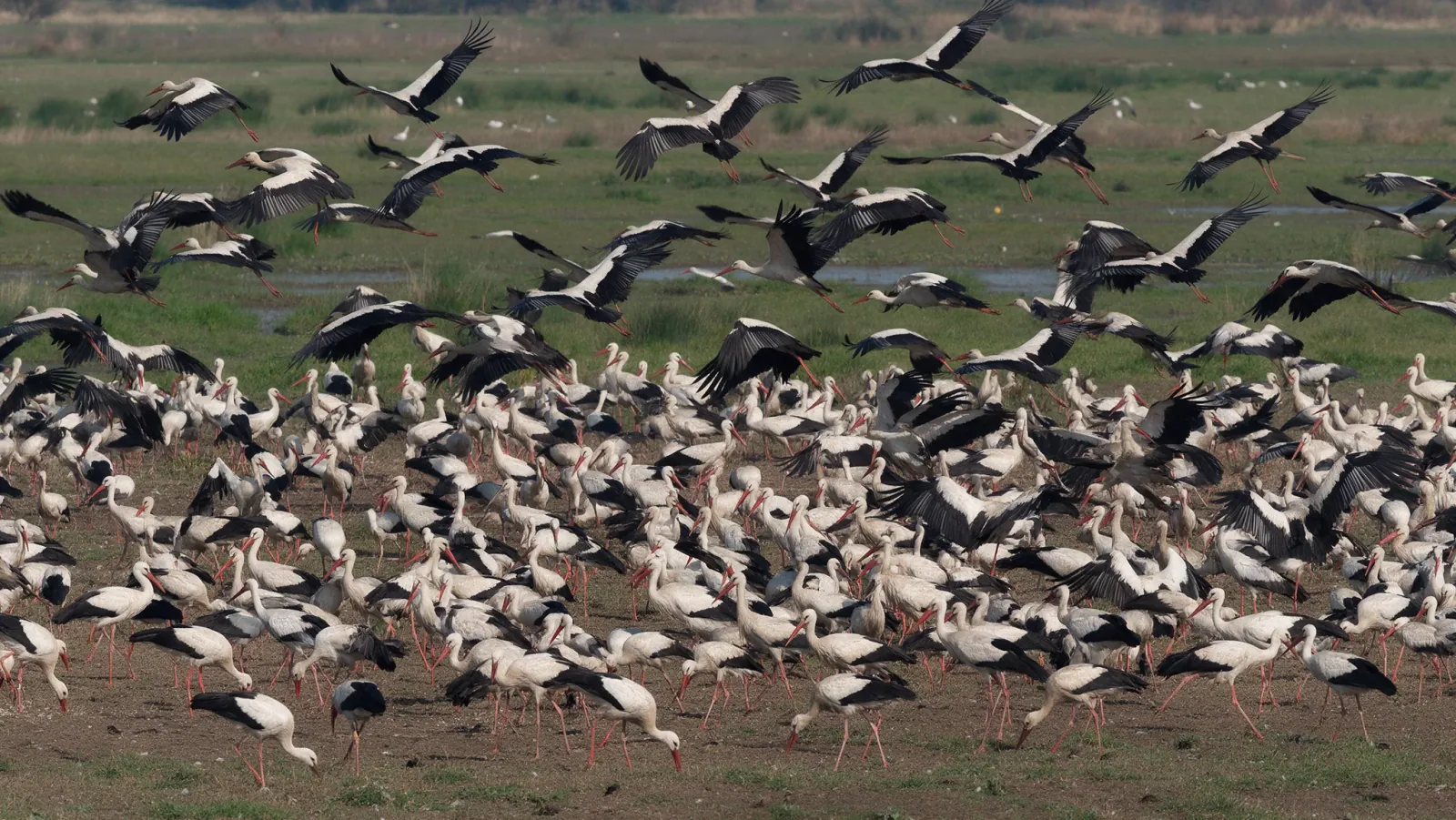
A story that leaves a question open gives a child somewhere to go next. Some of the answers can be found in a field. A white stork does fly south for the winter, and does come back to the same roof. The story said so, and the world agrees, and the child files the agreement away.
The agreement is worth more than the story. A child who has checked one claim against the world is a child who might check another.
The story told back
One evening the child takes over. The words come out wrong, the order slips, the ending arrives early. None of that matters much. The retelling is the child trying the story on as their own, and the mistakes are where the ownership begins.
Later the child tells it to a teddy bear, a younger cousin, a patient dog. The stork leaves in autumn and comes back in spring, and the child repeats it with the certainty of someone who has checked. A story a child can tell alone has moved from the ear into the self.
A retelling is never exact. A detail drops out, another gets invented, and the story makes room for the new teller. That is how it survives a generation. A story that could not change would have been put down long ago.
Some families keep a small stork on a shelf near the books, a white shape that holds the story when the voice is tired. Adopt a stork if you want that marker, and set it where the bedtime light reaches. The book will wear out. The retelling will change. The bird on the roof stays in the story either way.
Explore the gift