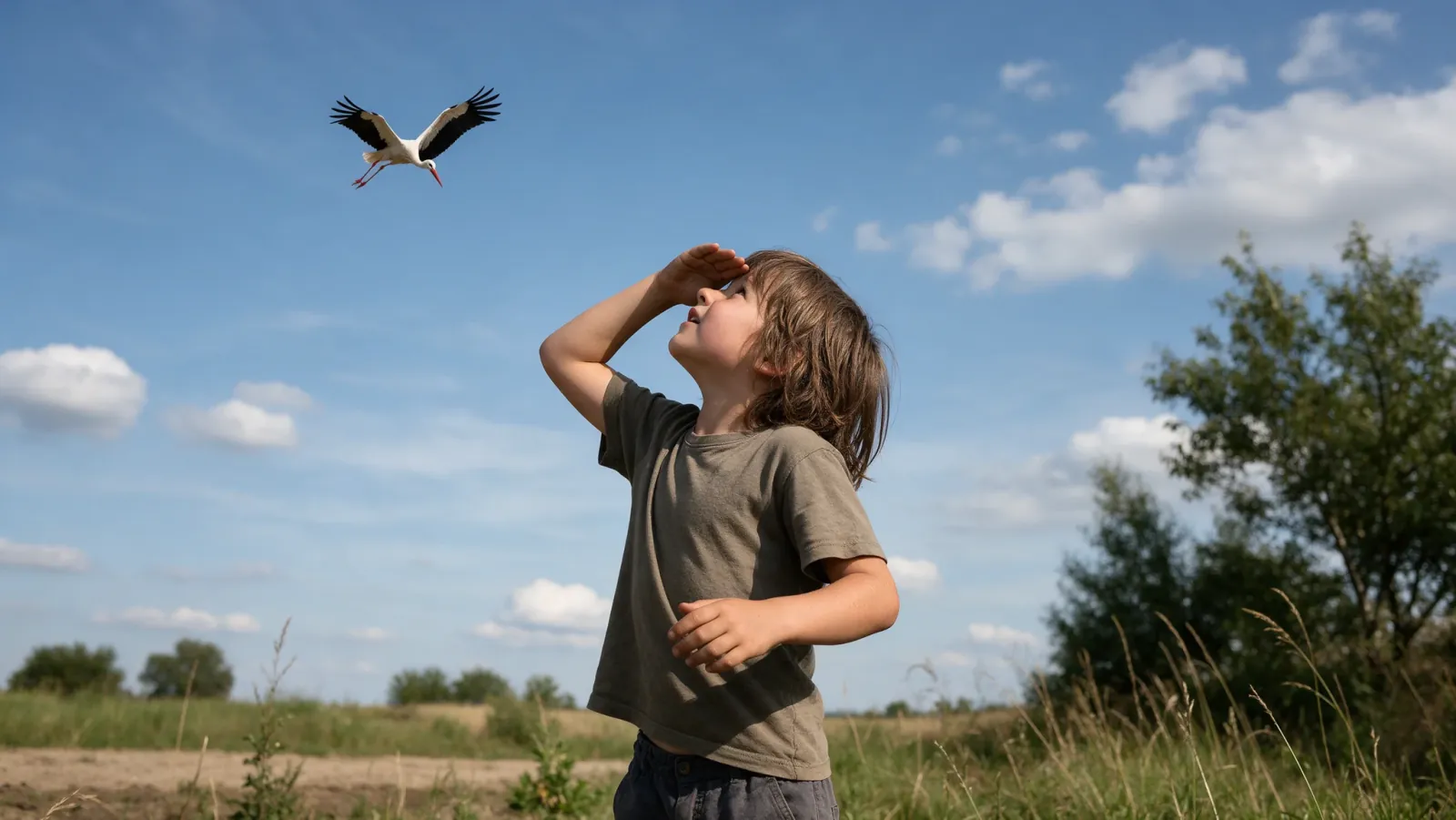
Noticing starts with a hand. A parent stops on a path, points at something, and a small child follows the line of the arm to a beetle on a step or a white bird standing in wet grass. The pointing says look here, and the child learns to aim attention before there is a word for what is being looked at. That shared glance is where a childhood of looking begins.
The look comes before the name
A child can follow a finger months before they can name what the finger found. Attention arrives first, and it arrives as a shared act. The adult looks, the child looks, and for a moment both of them are held by the same small thing.
An adult who hurries past teaches something too. Children read where a grown up spends their eyes, and they learn which parts of the world deserve a pause. A child copies what we stop for more reliably than what we tell them to value. The lesson arrives through the body.
The ordinary walk carries most of it. The same road walked slowly becomes a catalogue: the puddle after rain and the stork on a chimney. A child takes the repetition without boredom, because the familiar keeps giving up detail. A route walked a hundred times never looks quite the same twice.
A child also learns from the adult's face. When a parent's eyes widen at a bird, the child reads interest before understanding it, and the interest is what makes the child look back. The pause is the lesson, and the pointing is only the invitation.
A name holds a thing still
A name turns a blur into an object. The child sees a bird, the parent says stork, and the shape gains an edge it did not have before. The word holds the thing long enough for a second look. Words work as small nets for catching the world.
A white stork suits the job. It is easy to find again, because it returns to the same roof, and a name that can be used twice turns into a friend. The child points, the parent says stork, the child says something close, and the bird stands in the field through all of it. Repetition does the slow work. The more often the child sees and names the same bird, the further the noticing goes.
Parents do not need to correct the first version of the word. A soft half version of stork, or a clatter made with the tongue, carries the same claim: I saw it, I remember it, I have a sound for it. A first word is a promise to look for the thing again. Saying the word back, warmly, does more than a quiz.
There is no hurry in any of this. A child may call every flying thing the same word for weeks. The sorting is the learning, and it happens through the same wing crossing the same window until the word and the bird line up.
Families who speak more than one language get two names for the same bird, and a child can hold both without confusion. The bird does not mind which word is used. The naming is the welcome.
The bird has a sound
A stork is not a songbird. It has no call to learn, and the noise it makes comes from the bill. The bird tips its head back and snaps the two halves together again and again, and the clatter carries across a field. A child who has heard it once will know it again before the bird is in sight.
Sound reaches a child before meaning does. A low voice can settle a baby, and a sharp one can make them startle. A sound attached to a living thing is easier to keep than a name alone. The clatter is also the stork's greeting, and pairs clatter together at the nest with their heads thrown back.
Some children make the clatter before they can say stork. The tongue clicks, the head tips, and the bird arrives in the room a season before it arrives on the roof. The performance is accurate enough for anyone who has stood near a nest.
At the nest the sound carries a message. Pairs clatter at each other when one arrives, and the noise says the nest is occupied.
The window is a first observatory
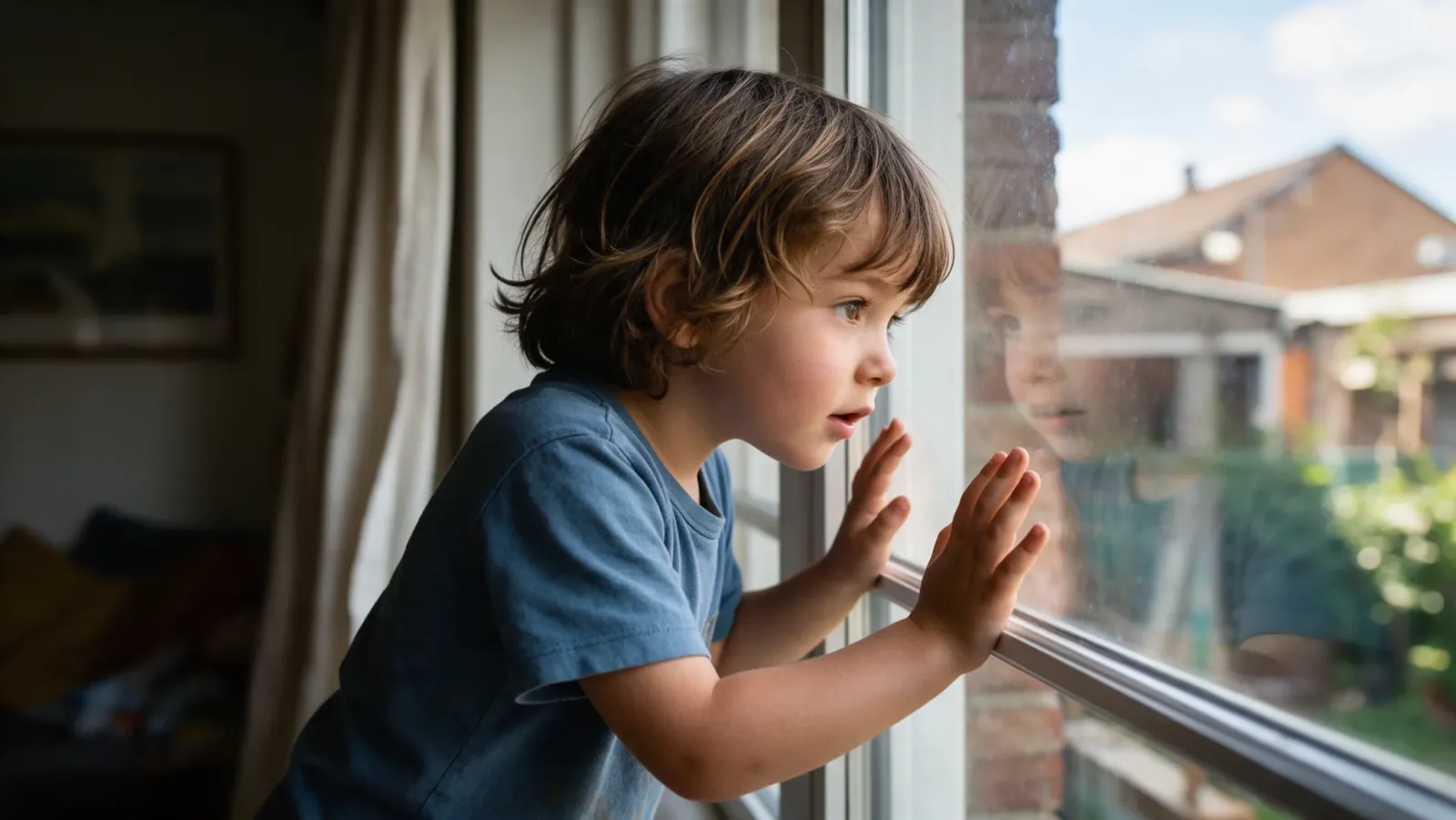
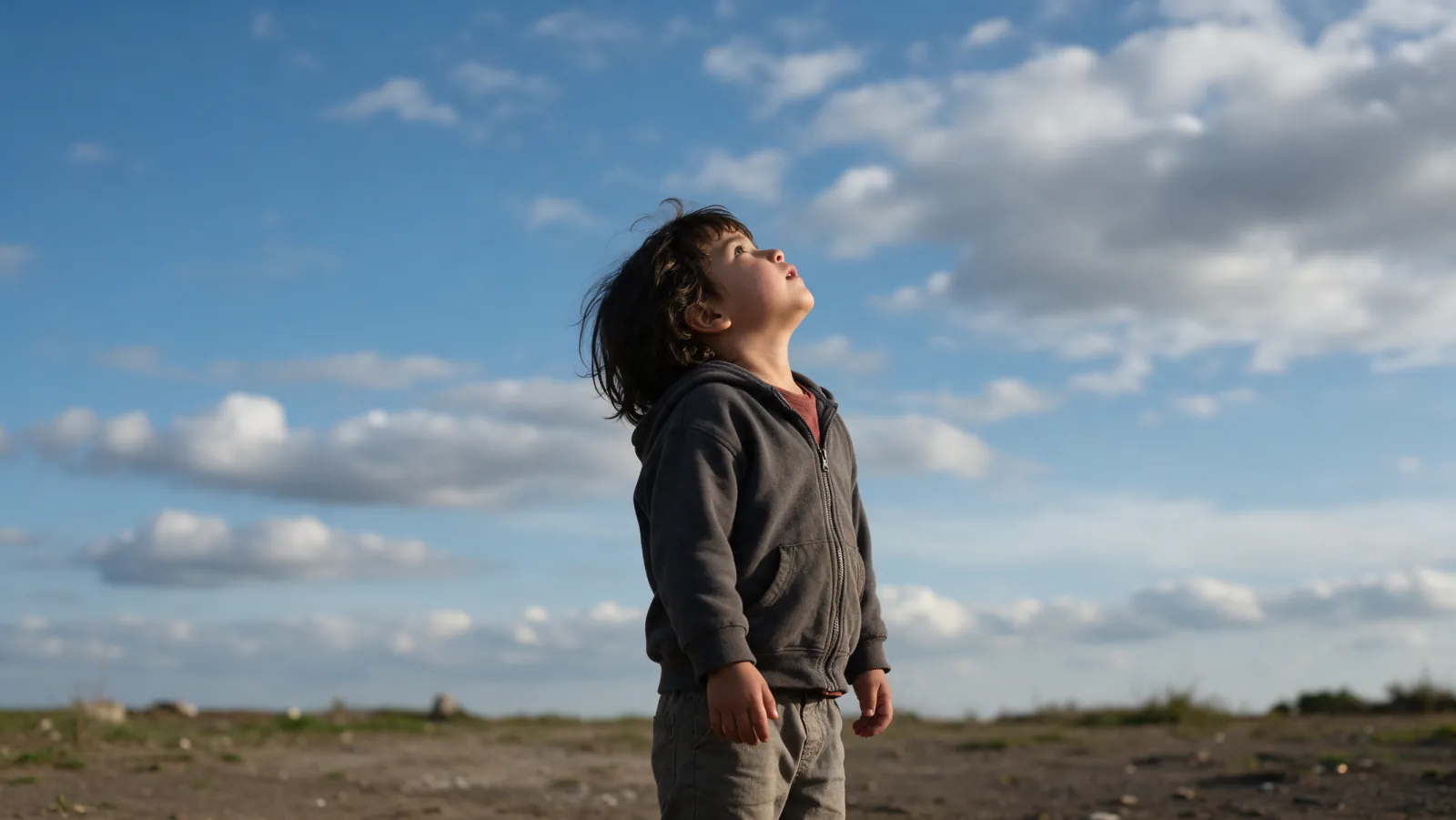
A pane of glass gives a small child a safe place to study the world. Rain, a loose dog, a lorry, the postman: all of it can be watched from a warm room. The distance is kind while courage is still growing.
A child at a window has one job, and it is a job they do well. The street keeps its small routines. Which dog is walked at four. Where the puddles gather. When the light leaves the far wall. A window teaches the year without a lesson: the same tree goes green, then gold, then bare.
Each spring the stork comes back to a roof the child can see from the sill. Nothing needs explaining. The bird arrives, and the year restarts in plain sight.
A window also gives the child a place to be alone with the world, even when the room is full. The glass is a boundary the child controls. The child can look out and stay in, and that choice is a small kind of power.
A stork is easy to follow
A white stork stands about a metre tall and spans close to two metres across the wings. Those numbers matter less to a child than the way the bird moves. It crosses the sky in long, even wingbeats, black and white against the weather, and it stays in sight far longer than a sparrow. A child can track one from the first rooftop to the last tree without losing it.
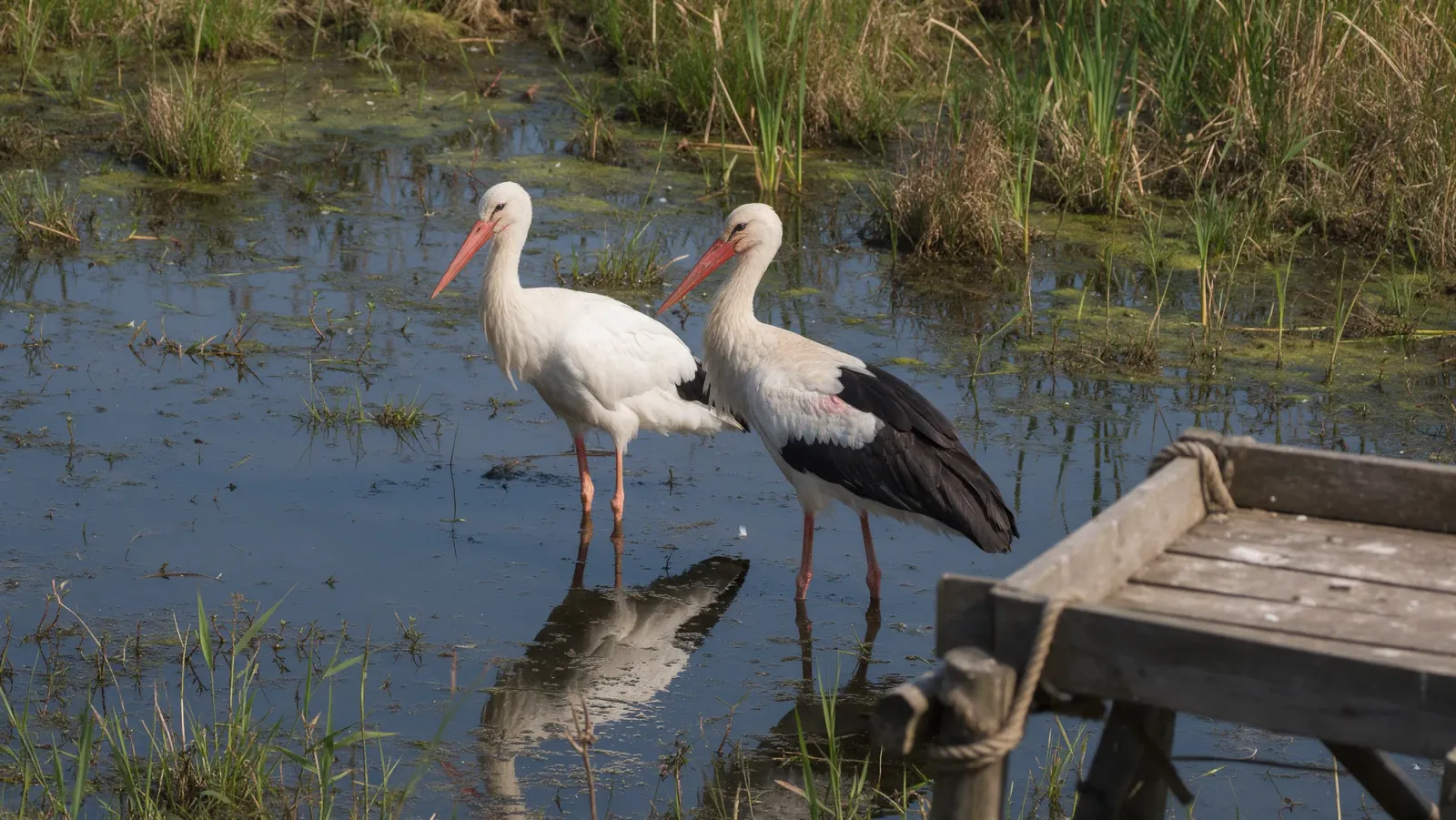
The bird also stands still. A stork hunting in a wet field can hold a pose for minutes, which gives a small pair of eyes time to study the red legs and the long bill. A bird that waits to be looked at is a good first bird. Nothing about it has to be chased.
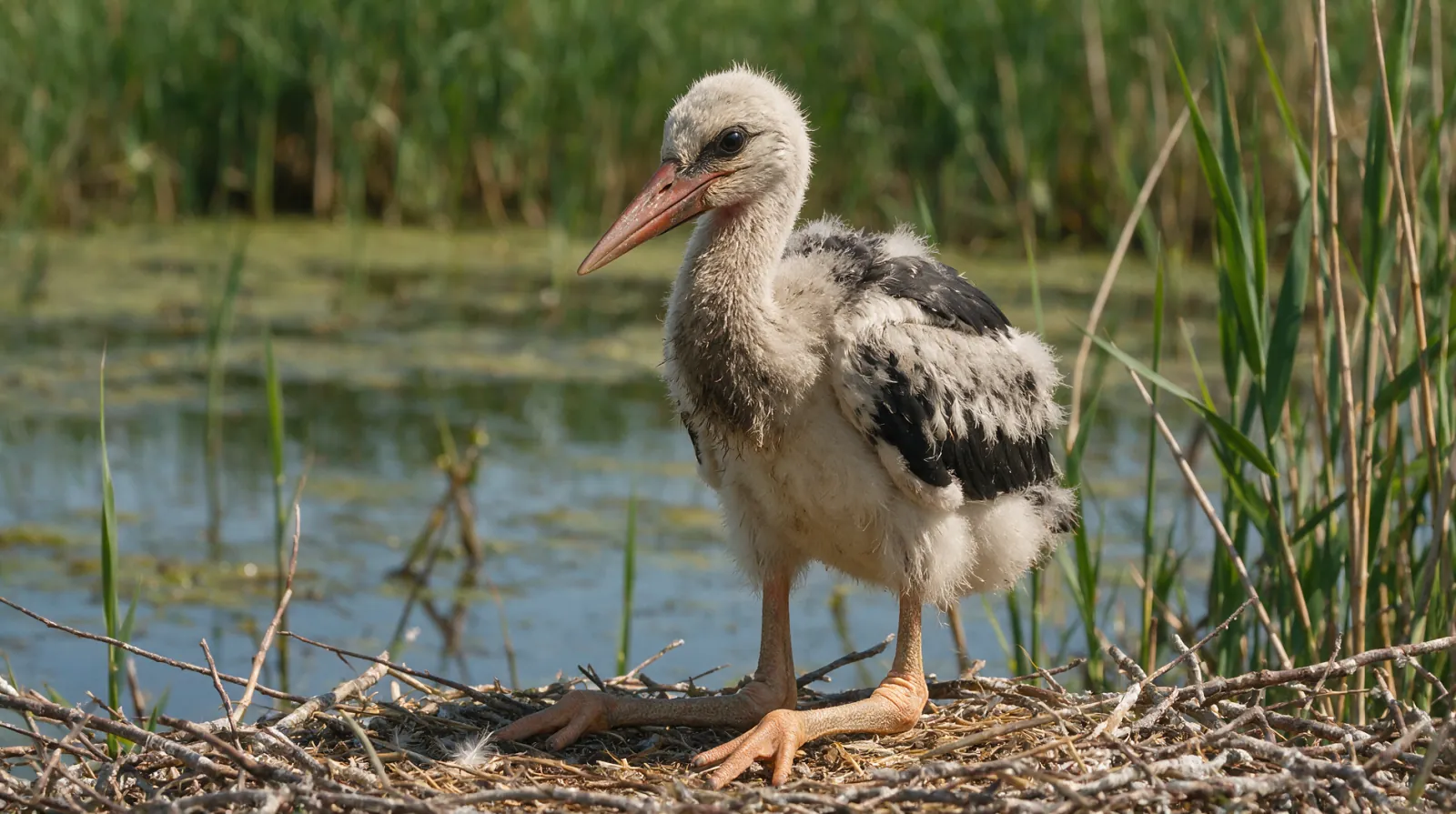
The nest helps. Built on a chimney or a pole, it gives the bird an address. A child who knows the address can check it every morning, and checking turns into belonging. Storks add to the same nest season after season until the heap of sticks grows heavy on the roof. The bird flies to sub-Saharan Africa for the winter and comes back in spring, which gives the address a story.
The stork's day has a rhythm a child can learn. It feeds in fields and meadows, hunting frogs, mice and insects, and it returns to the nest. A bird with a daily route is easier to follow than one that only crosses the sky.
Questions come after the looking
A child who has looked for a while begins to ask. Why does the stork stand on one leg. Where does it go in winter. How does it find the way back. The questions are what the looking turns into.
An adult does not need every answer. "I do not know, let us watch and find out" is a good reply, and it keeps the child at the window. The stork eats frogs and mice. It clatters its bill instead of calling. It returns to the same nest. Each plain answer gives the next question somewhere to stand.
A stork gift on the sill can give the naming a place indoors, a white shape to hold while the real bird is out of sight. What began at a finger ends in a habit. The child who was shown one bird starts finding the others, and the sky stops being empty.
The looking does not end when the questions start. The two continue together, and a child who asks about the stork will watch it more closely the next day, hoping to catch the answer in the bird's behaviour.
Explore the gift