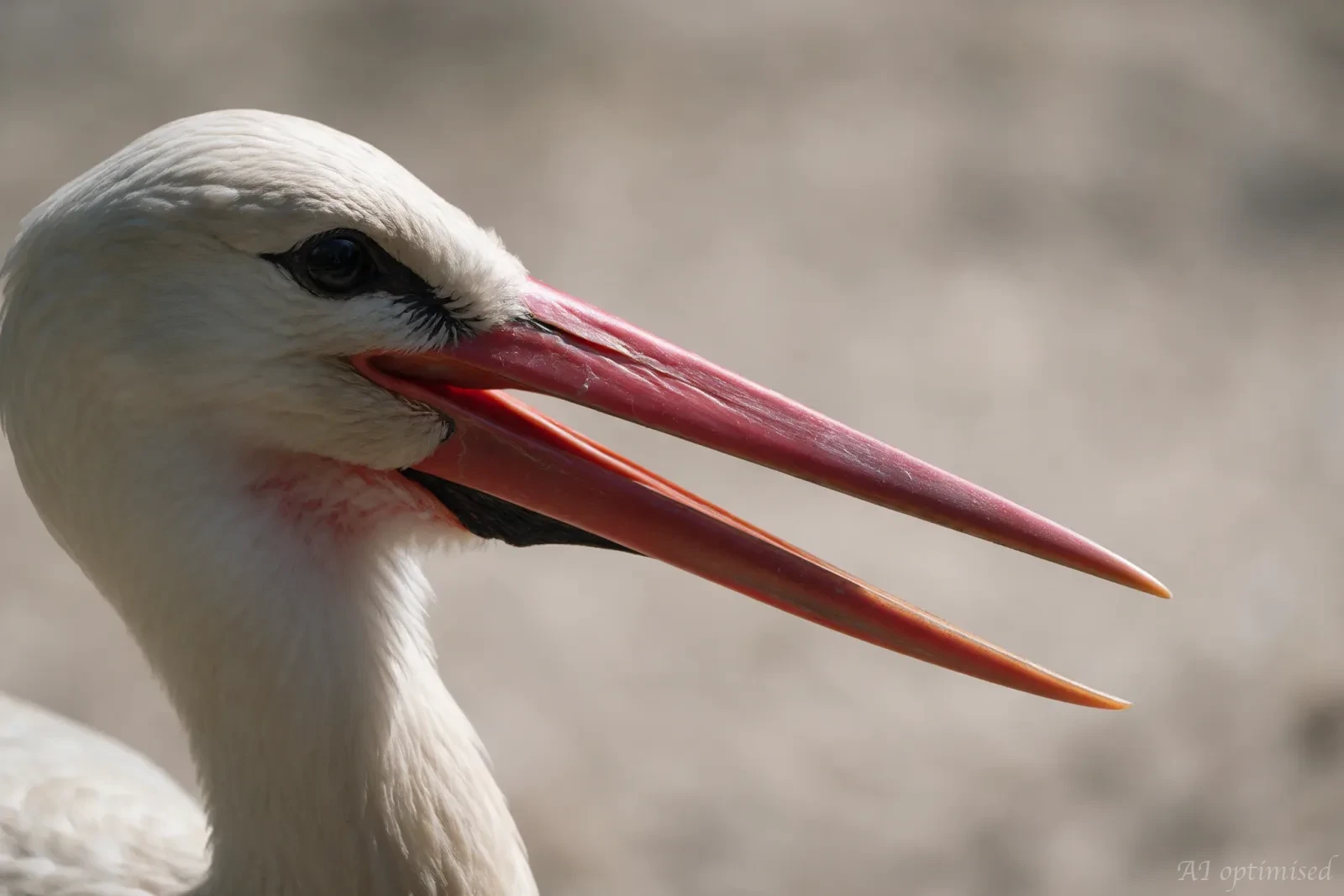
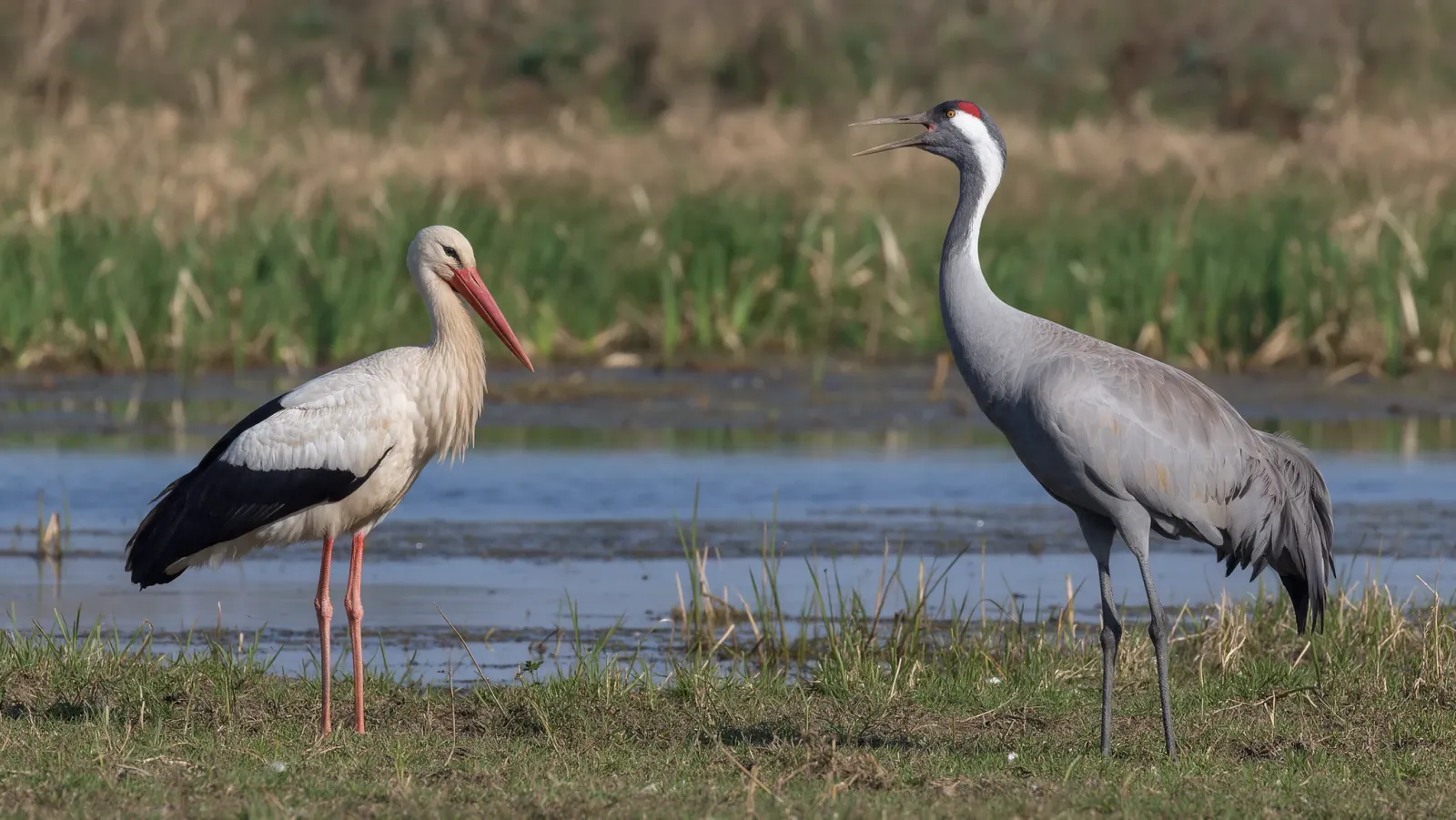
For most of human history the stork's winter was a mystery, and people filled the mystery with stories. Today a stork can wear a transmitter and its movements can be followed on a map. The journey from fable to tracking map is long, and the wonder has not gone out of the bird. It has changed shape.
The old blank on the map
Before tracking, nobody knew where the storks went. They left in autumn and vanished, and they returned in spring from somewhere no villager had seen. The south was a rumour, a warm blank at the edge of the world.
The storks carried babies, souls, summer, and luck in the stories. The absence of facts was exactly what let the folklore grow, and it grew thick and lovely in the dark. A blank space on a map is an invitation to imagine, and the stork's winter was one of the largest blanks left in Europe.
The bird's calendar was visible even when its route was not. It arrived in spring, nested through summer, gathered in autumn, and left. People could mark the departure and the return, and everything between was guesswork.
The return on the feast day
In many villages the bird was said to come back in late March, near the feast of the Annunciation, and people watched the sky on that morning for the first white wings. In many places the white stork was said to come back in late March, near the feast of the Annunciation, and people watched the sky on that morning for the first white wings. The season fixed the date, and the bird kept it.
The white stork is a migrant. It leaves Europe in autumn, crosses to Africa, and flies north again when the days lengthen. In the villages of central and northern Europe, the first birds usually appeared in early spring, and the feast of the Annunciation falls on 25 March. The overlap was close enough to feel like a promise kept. A bird that arrived on a holy day was read as a sign, and its white wings over the roofs were taken as a blessing on the year.
For a farming village, spring began when the stork came back. Ploughing and sowing waited on the first sighting, and the bird's return carried the work of the fields into the rhythm of the church year. A late stork was a late spring, and a late spring was a worry that followed every household into the fields. If the bird did not come at all, the village grew uneasy. The empty roof was read as an empty promise.
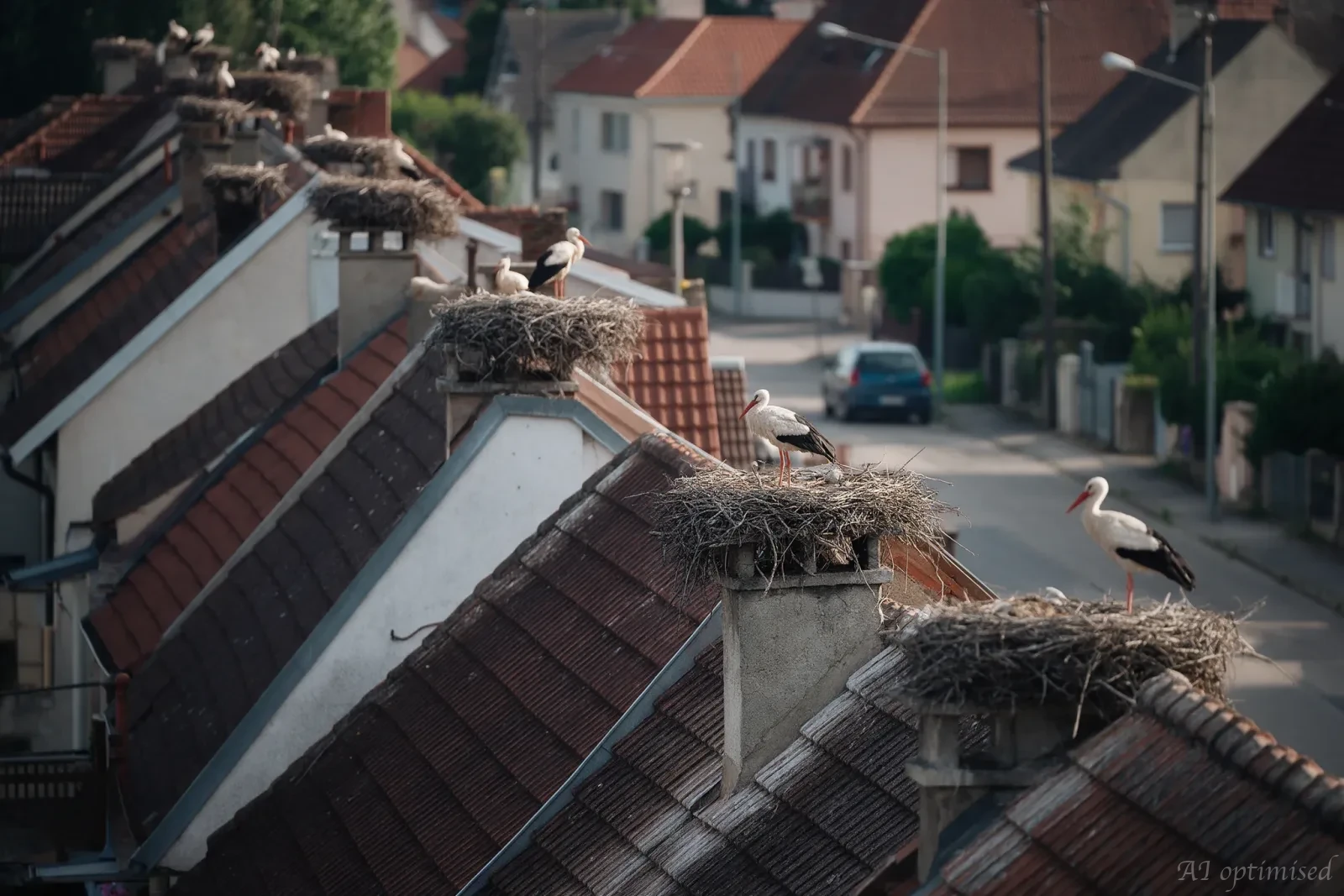
Whole villages watched for the first bird. Children were sent to high ground, and the first person to see a stork carried the news home. When the bird settled on its old nest, the household took it as a personal sign. The roof had been chosen again. Neighbours compared notes. The family with the first stork held a little pride, and the family still waiting looked at its empty chimney with a new patience.
The bird on the long road
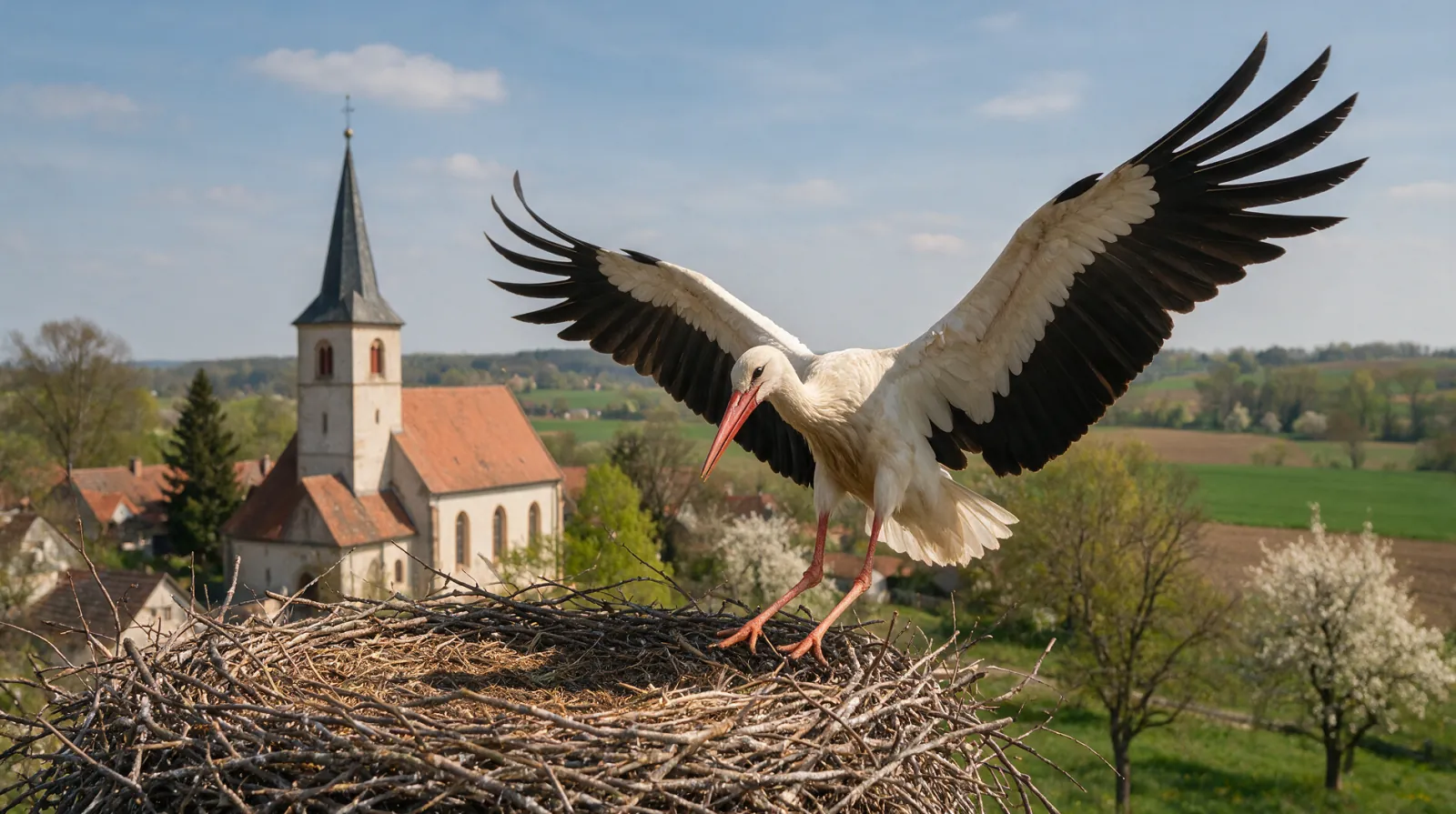
Storks in North African folklore are travellers, and that is what gives them their place in the stories. There the bird is known as "the bird that keeps its appointment." The white stork flies south each autumn, crossing the Strait of Gibraltar or the eastern Mediterranean, and spends the winter in the warmer lands of Africa. The people of North Africa see the bird on its long journey and have made their own tales about it.
Each year the white stork passes over North Africa in large numbers, gliding on warm air in flocks that follow the coast and the desert's edge. To the people below, the stork is a bird of passage, a creature that knows the great routes between north and south. Because the stork comes and goes with the seasons, it became a symbol of the traveller, the wanderer, and the one who returns. In the stories it is a bird that understands distance.
The pilgrim's companion
In some North African tellings, the stork was linked to the pilgrimage to Mecca. The bird's yearly journey south, along routes that ran toward the holy city, reminded people of the pilgrim's road. The stork was seen as a fellow traveller, and it was treated with respect because of it.
The comparison rested on the faithfulness of a journey made on time. A creature that keeps its appointment with the south every year was an easy model for a person trying to keep a harder one.
The stork is welcomed in North Africa as a guest. Its arrival marks the changing season, and its presence around fields and wetlands is read as a good sign. A stork settling near a village was taken as a sign of a good year, of rain at the right time and a harvest worth gathering. The bird is seldom disturbed. In the countryside the stork moves freely among the fields, feeding on insects and small creatures, and it is allowed to do so because the people have decided it brings luck.
What the North African stories understand best is that the stork has two homes. It belongs to the north in summer and to the south in winter, and it is at ease in both. This double belonging made the stork a symbol of the bond between the two shores of the Mediterranean. No border has ever stopped a stork on its way home.
What the transmitter showed
A lightweight tag changed the blank into a line. A stork fitted with a lightweight tag could be followed across the Strait of Gibraltar, over the Sahara, down to the wintering grounds, and back. The mystery dissolved into waypoints and timestamps.
What emerged was remarkable. The birds followed corridors their ancestors had flown for generations, the same routes, the same rest stops, the same loyal return to one nest. A stork study in south west Germany gave names to tracked birds, so that Sula and Lumi and the rest became characters as vivid as any in a nursery tale. The old habit of naming and loving a wild bird survived the switch from legend to data. You can follow the flock and watch the dots move.
A tag reports in bursts. The bird carries a small unit, and the data arrives in points that a researcher joins into a line. Between the points the bird is living its life unobserved, feeding in a field or resting on a roof, and the map is a sketch of that life, drawn after the fact. The line says where the bird went. It does not say what the journey felt like.
Two ways of knowing
Fable and tracking answer different questions. The fable asks what the stork means. The tracking map asks where the stork is. A heart can hold both at once, and most people do.
A child can follow a real stork's signal and still feel, without contradiction, that the bird carries spring on its back. The two ways of knowing describe the same white bird at different heights. The map also shows the pauses, and the pauses are where the bird's life actually happens.
The wonder used to live in the unknown, in the warm blank the storks flew into. Now it lives in the details, in the single dot of a stork crossing a desert at dusk, alone and on course. The bird still flies south, and we still watch it go. The map refreshed at midnight, and the dot has moved again.
Explore the gift