A swan and a white stork are both large and white, and both can be seen on the same river in winter. The difference starts at the waterline. A swan has webbed feet and floats. A stork has long toes and wades. One is built to swim; the other is built to walk.
Feet decide the family
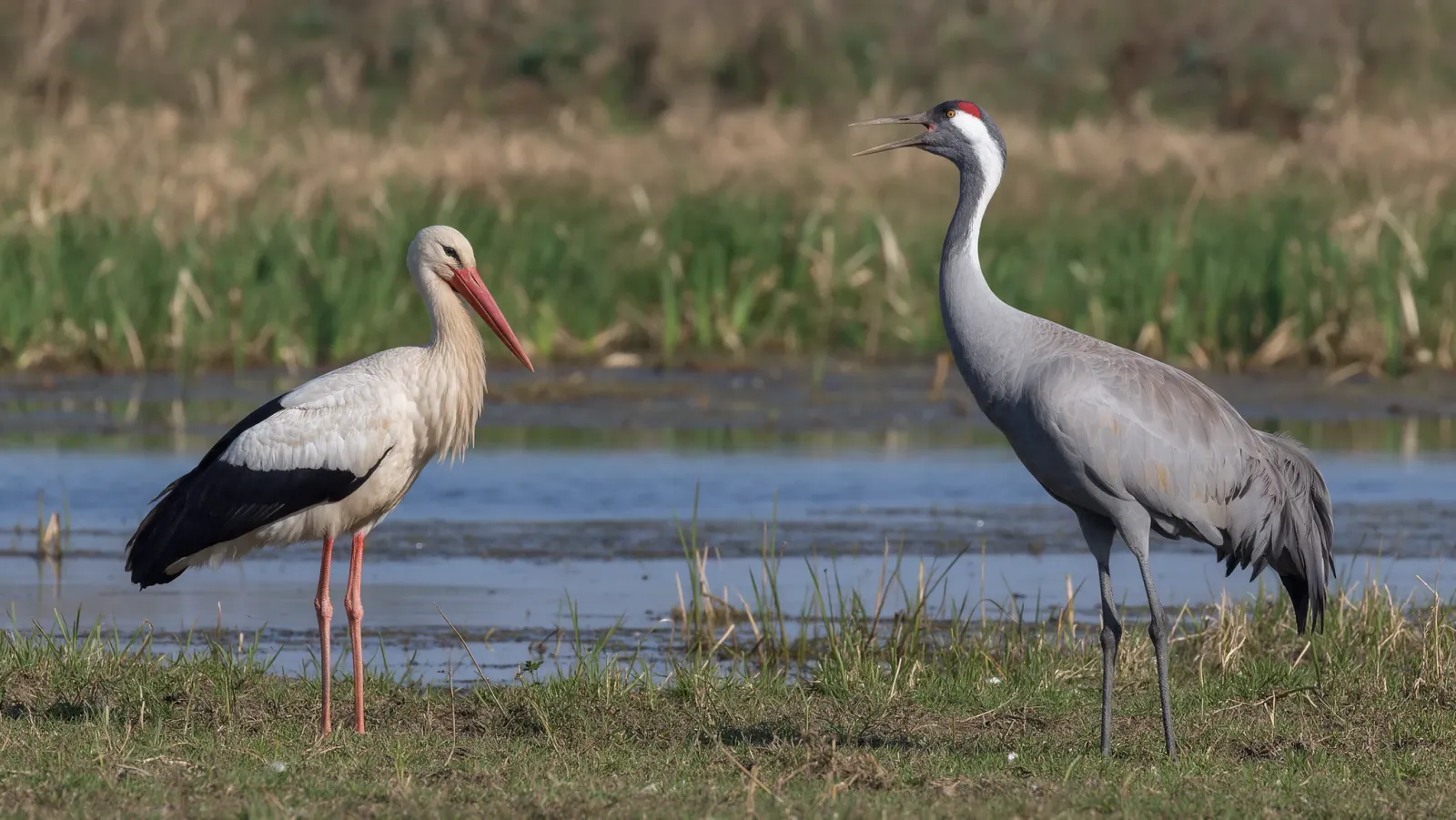
Swans are waterfowl, in the same family as ducks and geese. Their feet are webbed, their legs are short and set far back, and their bodies sit low in the water. Storks have long legs and long toes, and they walk through wet ground rather than paddle across it. A swan on land waddles; a stork on land strides. That gait is a better guide than colour, because both birds can look white in flat light. A swan's legs are placed so far back that walking is awkward, which is why it belongs on water. A stork's legs sit under the middle of the body, which is why it can stand and walk for hours.
The bill and the neck
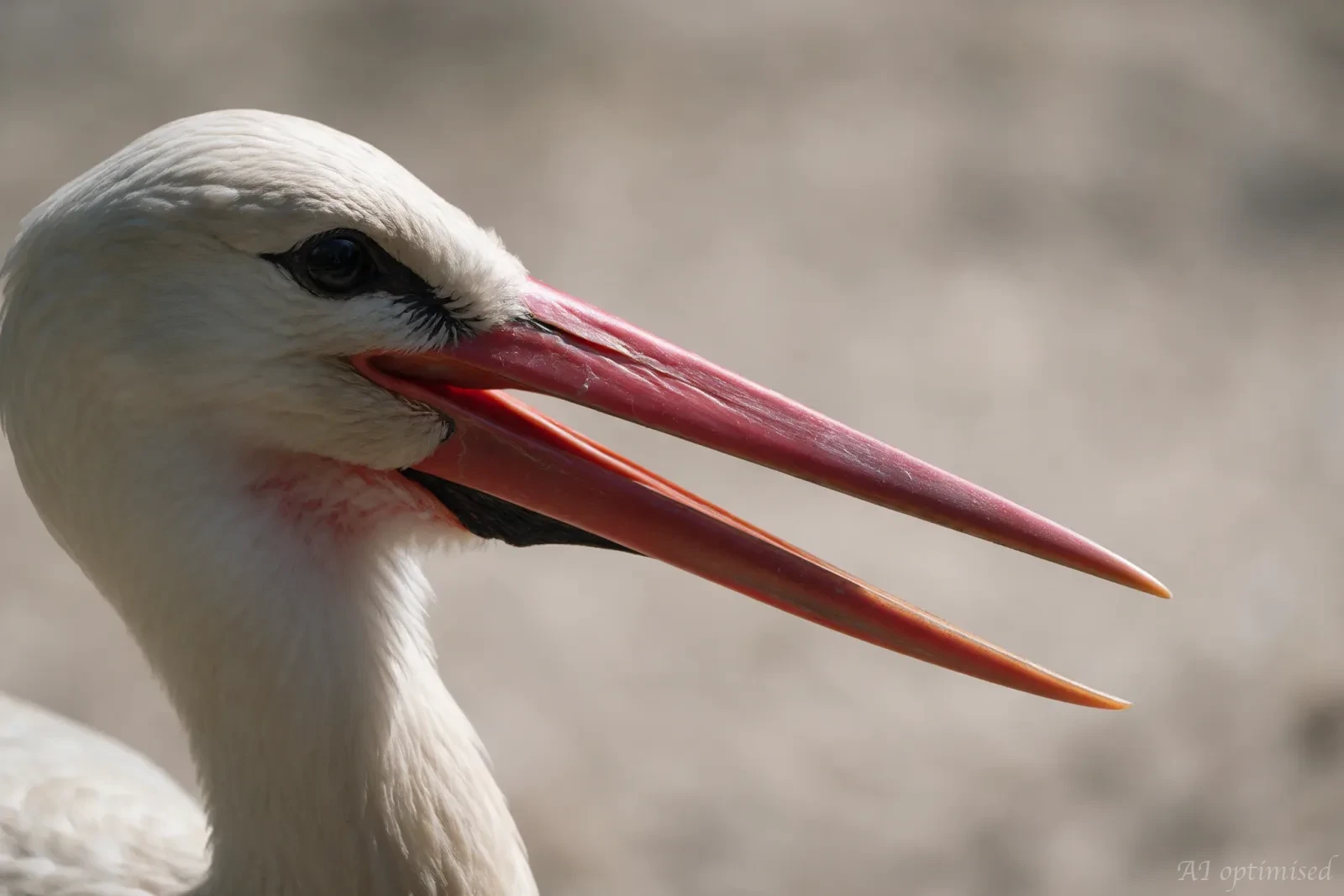
A swan's bill is broad and flat, built for grazing water plants and for pulling at grass on the bank. A stork's bill is a long, straight dagger, built for catching animals. Both birds have long necks, and both fly with the neck extended. On the water a swan often holds its neck in a graceful curve, while a stork stands with its neck straight or slightly bowed. The swan's bill is a grazer's tool; the stork's is a hunter's. In mute swans the bill is orange with a black knob at the base, which no stork has.
Where they feed
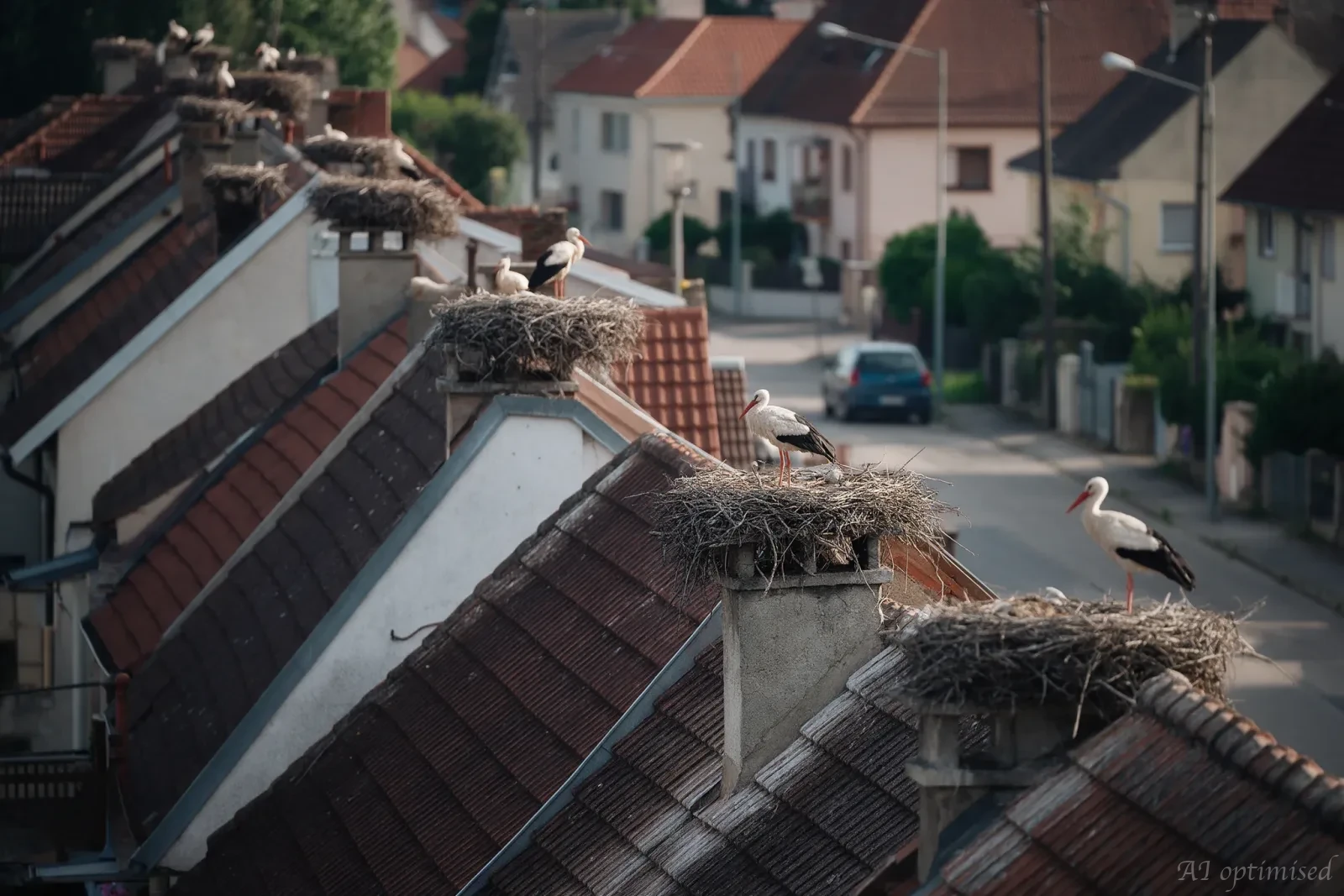
Swans feed on water: diving, upending, or reaching down with their long necks to graze submerged plants. They also graze on banks and in fields near water. Storks feed on land and in shallow margins, walking through wet grass and picking up frogs, insects, and small mammals. Swans live in the water; storks live beside it. A swan will rarely walk far from a lake or river. A stork may feed far from the nearest water and nest on a roof in the middle of a village.
Flight
A swan takes off from water with a long run, beating its wings hard, and flies with steady, powerful strokes. The feet are tucked, and the neck is stretched out. A stork rises on a thermal, circles without flapping, and can travel for hours on rising air. Swans fly to the next water; storks fly to another country. In winter, swans may gather in large herds on a lake, while storks are already gone to Africa. The season is a clue as well as the shape. Swans are heavy and need a long run of open water to get airborne. Storks are light for their size and can rise from a field in a few steps.
White and black
The mute swan is white all over. The white stork is white with black flight feathers, and those black feathers are visible whenever the bird opens its wings. On a standing stork the folded wing shows a dark band along the side. A swan's wings are white, and its legs are dark grey or black. The stork's red legs and black wingtips are the two marks to look for. Add the long toes and the dry-land habits, and the two birds stop looking alike. A swan's cygnets are grey and stay with their parents for months, while stork chicks are fed on the nest and fledge in late summer. Young storks have duller bills and brownish wings, which can look grey rather than black. Young swans are grey all over and lose the colour slowly. If a stork has chosen a roof near you, you can adopt a stork and follow that nest through the season.
Explore the gift