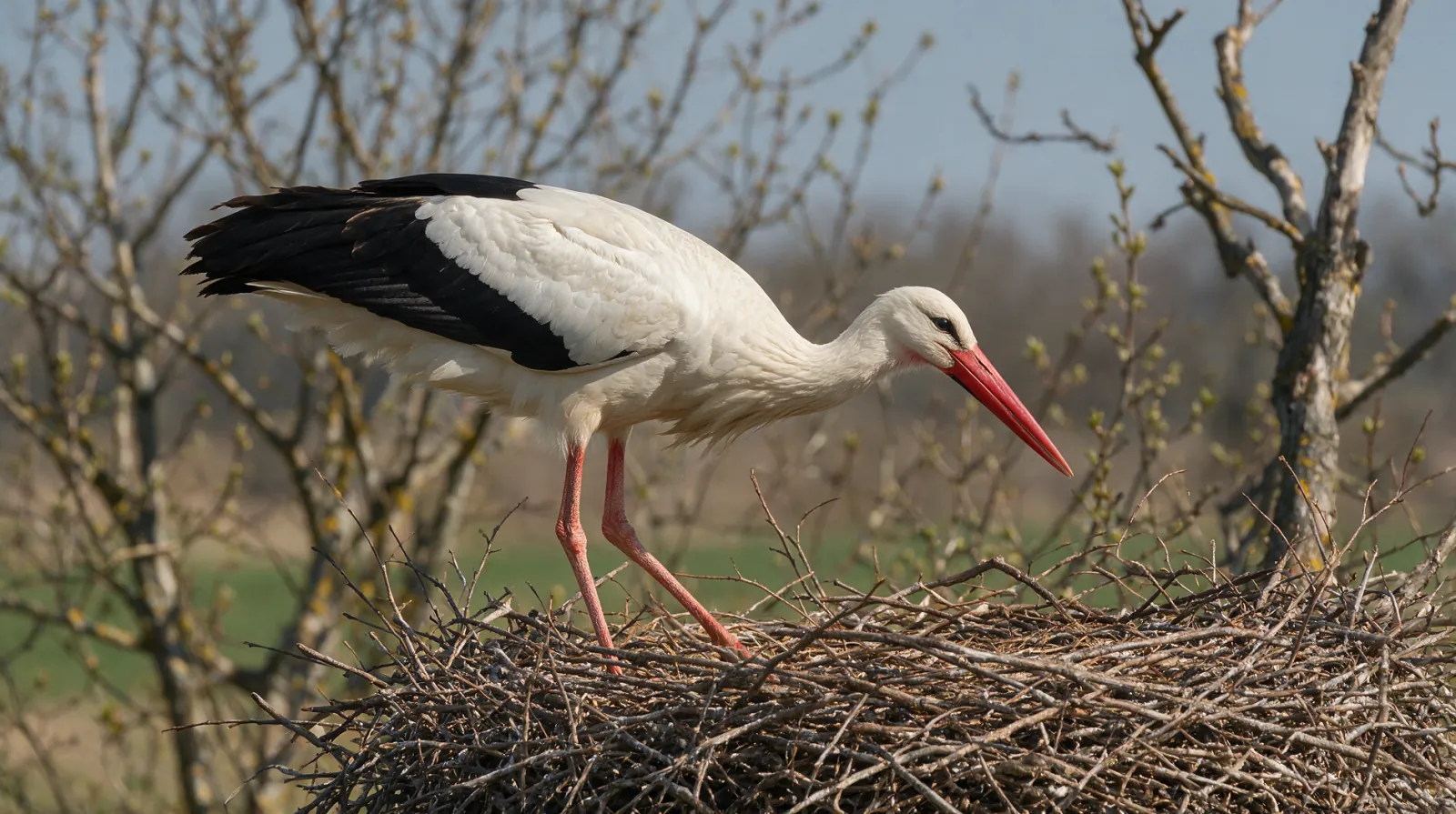
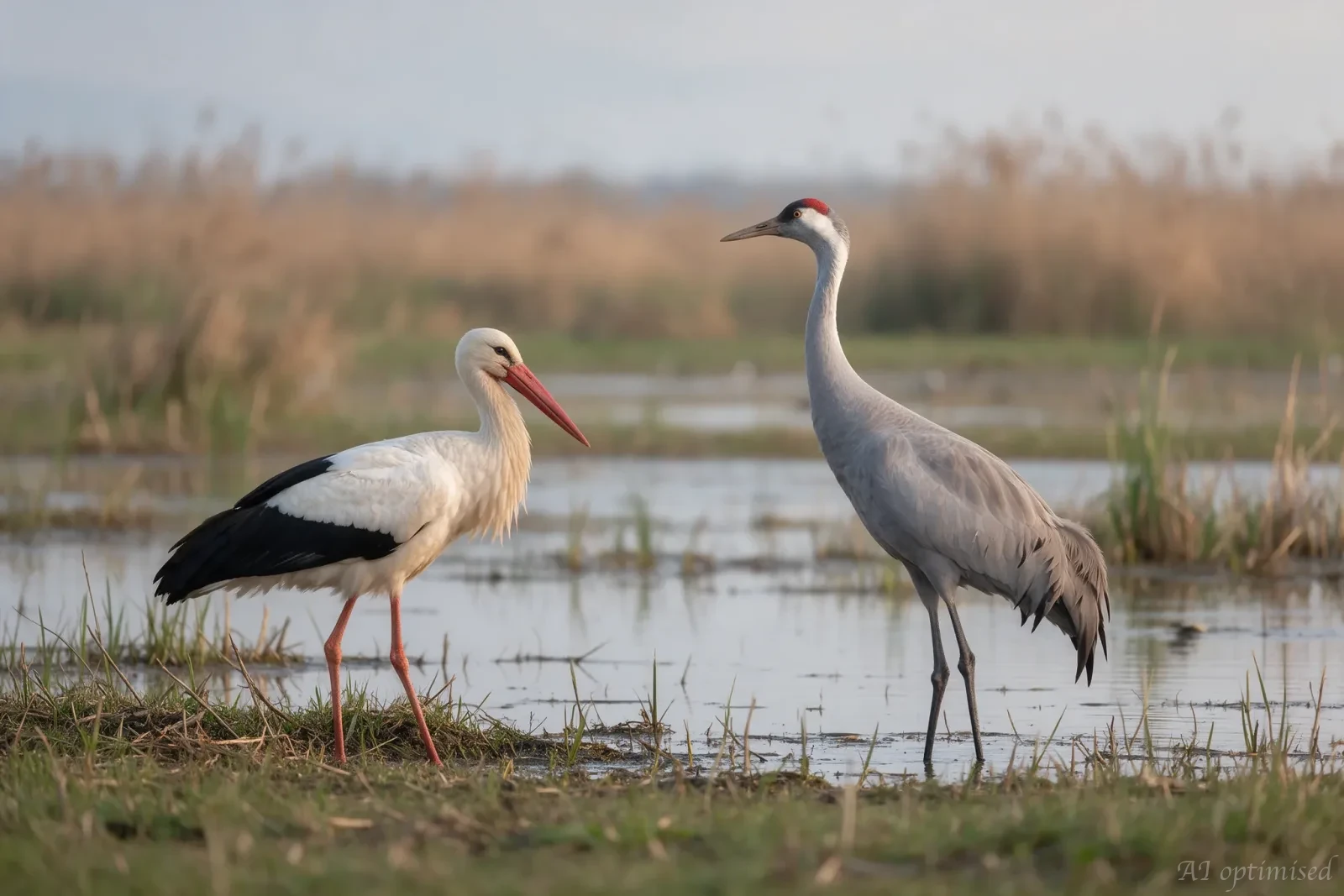
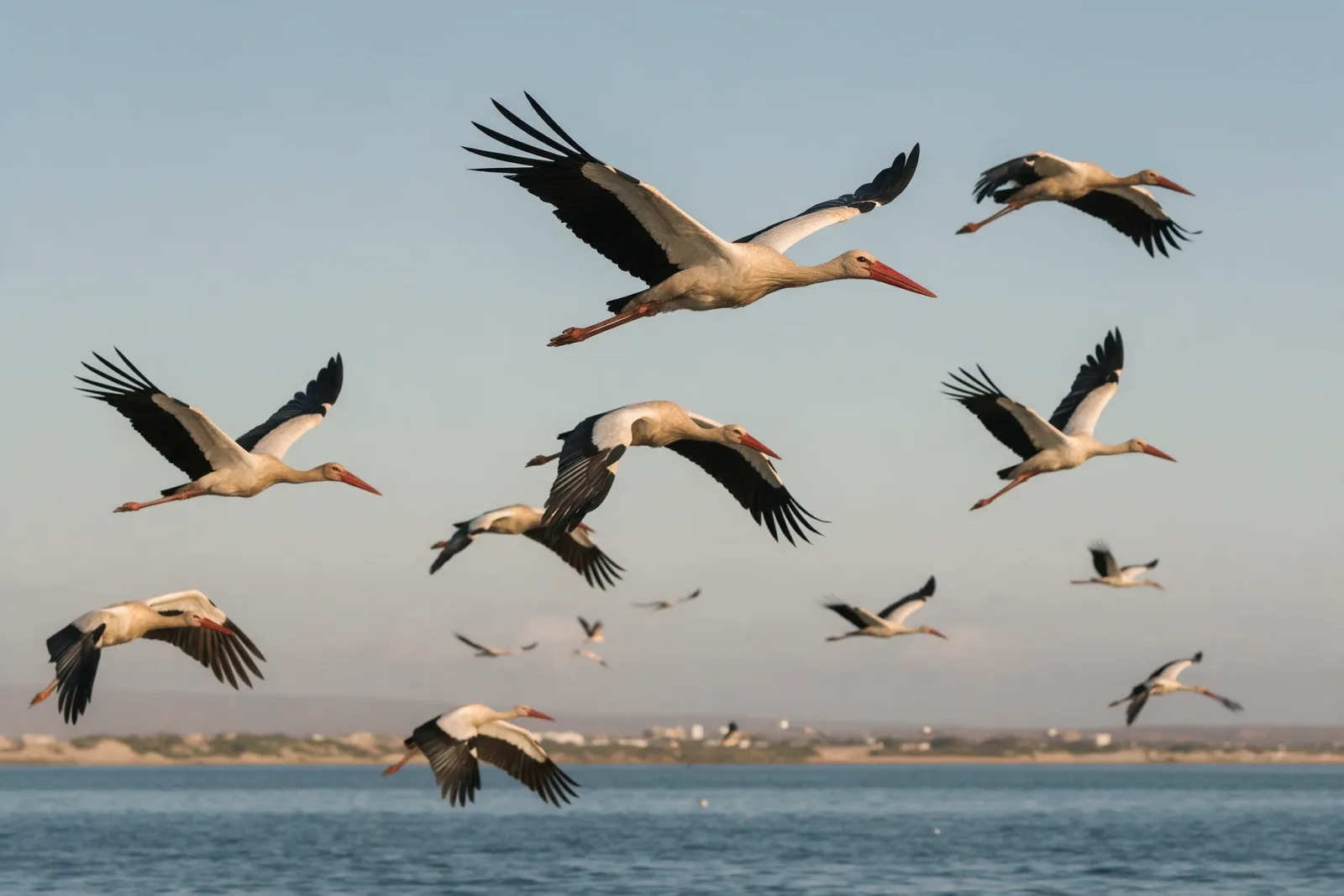
The white stork does not read a thermometer. It responds to lengthening days, and it returns north at roughly the time its kind always has. The spring, meanwhile, arrives earlier in many places, so the frogs and insects are already out before the stork gets back.
Daylight and temperature
The stork's clock is daylight. Day length changes with the season regardless of temperature, so the signal to leave Africa and head north stays steady while the weather it flies into shifts. Warm winters and early thaws bring frogs up sooner, hatch insects sooner, and dry shallow pools sooner.
The bird arrives on schedule to a spring that started without it. The two clocks, the bird's and the season's, no longer agree, and the bird pays the difference. A pair that returns after the first flush of frogs has less food for the weeks when the female is laying and incubating, and less again when the chicks hatch.
The size of the gap changes from place to place. A mild Atlantic spring can run well ahead of the calendar, while a cold continental one stays close to it. The bird carries the same clock into both, so the cost depends on where its nest happens to be.
Chicks that are underfed grow slowly and fledge light. In a cold snap after an early warm spell, the insects vanish and a nest can fail in days. Some birds do shift earlier, and early breeders tend to do better, so the habit can spread. The trouble is speed: a bird can adjust over generations, and the season is moving within decades.
A shorter journey
More storks now winter in Europe, avoiding the Sahara and the sea crossing. That works while the winter stays mild and while food is left out for them. A hard frost exposes the bargain. The habit is spreading in parts of Europe, and it holds where wetlands stay open through January. A run of hard weather can kill birds that had no reason to leave.
A bird on a rubbish tip in January is fed by a system that has nothing to do with spring. When the weather turns, it has no fat reserves and no easy way south. A shorter journey is not automatically a safer one.
Autumn moves too
The calendar is shifting at the other end of the year as well. A warm autumn delays the urge to leave, and birds that linger can be caught by the first cold weather before they have crossed the mountains. Their food supply shortens at the same time: insects die back with the first frost, and a late-departing stork flies south on empty.
The bird is squeezed from both sides, leaving too late in autumn and arriving too late in spring. The stable middle of the year, the long warm stretch when a chick must grow, is the part that has changed least and matters most.
The nest calendar has some give. A pair that loses a clutch may lay again, and a late brood can still fledge if food holds. The give is limited by the season, and a late start pushes the young into the first cold nights.
The wintering grounds
The European spring is decided in Africa before a single stork turns north. The bird spends roughly half the year on the savanna and wetlands of sub-Saharan Africa, feeding on insects and small creatures that appear with the rains. When those rains fail, the water shrinks, the food scatters, and the bird leaves the south already short of what the journey will cost.
Everything about the coming breeding season is paid for in the south, in fat and muscle gathered from wet ground. Grasshoppers, frogs, locusts and the small reptiles a stork takes all depend on rain. When the rains are poor, the green ground turns brown, the pools shrink to mud, and the birds have to travel further each day for less.
They do not often die in one visible event. They thin out. A bird without reserves may not begin the migration at all, or may start and fail over the desert. Drought kills a stork by subtraction, taking a little energy each week until there is not enough left for the flight.
The flight north is the most expensive thing a stork does. It crosses desert and sea on stored fat, and it cannot feed much on the way. A bird that leaves the wintering grounds light has no allowance for a hard headwind or a day without a thermal. By the time it reaches Europe it is running on what it carried out of Africa. In a year after a poor southern rainy season, fewer birds return to the villages, and the ones that do arrive later and lighter. Nests that held four chicks hold two, or none.
What a young bird carries
A first-year stork leaves alone, with no adult to follow, and still crosses a continent. It inherits the direction and learns the details.
The inherited map points south. It does not name the good roosts, the shallow marshes, the places where a thermal reliably forms in the afternoon. Those are learned, and the first journey is where the learning happens. A young stork makes mistakes, and some do not arrive at all. The first cold night is a signal the bird cannot read in advance, and a bird still north when it comes has nowhere to go.
Instinct starts the journey; experience is what makes the second one efficient. The route only works if the world along it still offers food and rest. A young bird can carry the right direction and still starve over a drained marsh or a desert with no water. A shallow wetland kept wet, a roost left undisturbed, a power line marked before the birds arrive: each one turns a stretch of the map from a gamble into a place a young bird can use.
Variety as a buffer
The seasons will not be reset. What can be done is to make the ground hold its food longer. A marsh with deep wet soil keeps water into summer and gives a late pair a second chance. A river with a floodplain holds pools after the flood recedes. Rough field margins keep insects alive when the crop is bare.
Variety is the buffer. A countryside with many wet places, many edges and many kinds of ground gives a bird options when the timing goes wrong. A countryside with one kind of field has one kind of answer when the season fails, and that answer is often nothing. The stork cannot fix its calendar, and it does not need to if there is still food when it lands.
A bird that winters well returns in condition, and a bird in condition raises the next generation. The rain will fail again. A stork's safety is decided at both ends of its year, and the half we never see is the half that fills the nest.
The work in the north can only do so much. A platform, a marked wire and a wet meadow give a bird a better chance once it arrives. They cannot add fat to a bird that left the Sahel thin. That is why the people who count storks in Europe watch the rains in Africa, and why a bad season there shows up here a few months later.