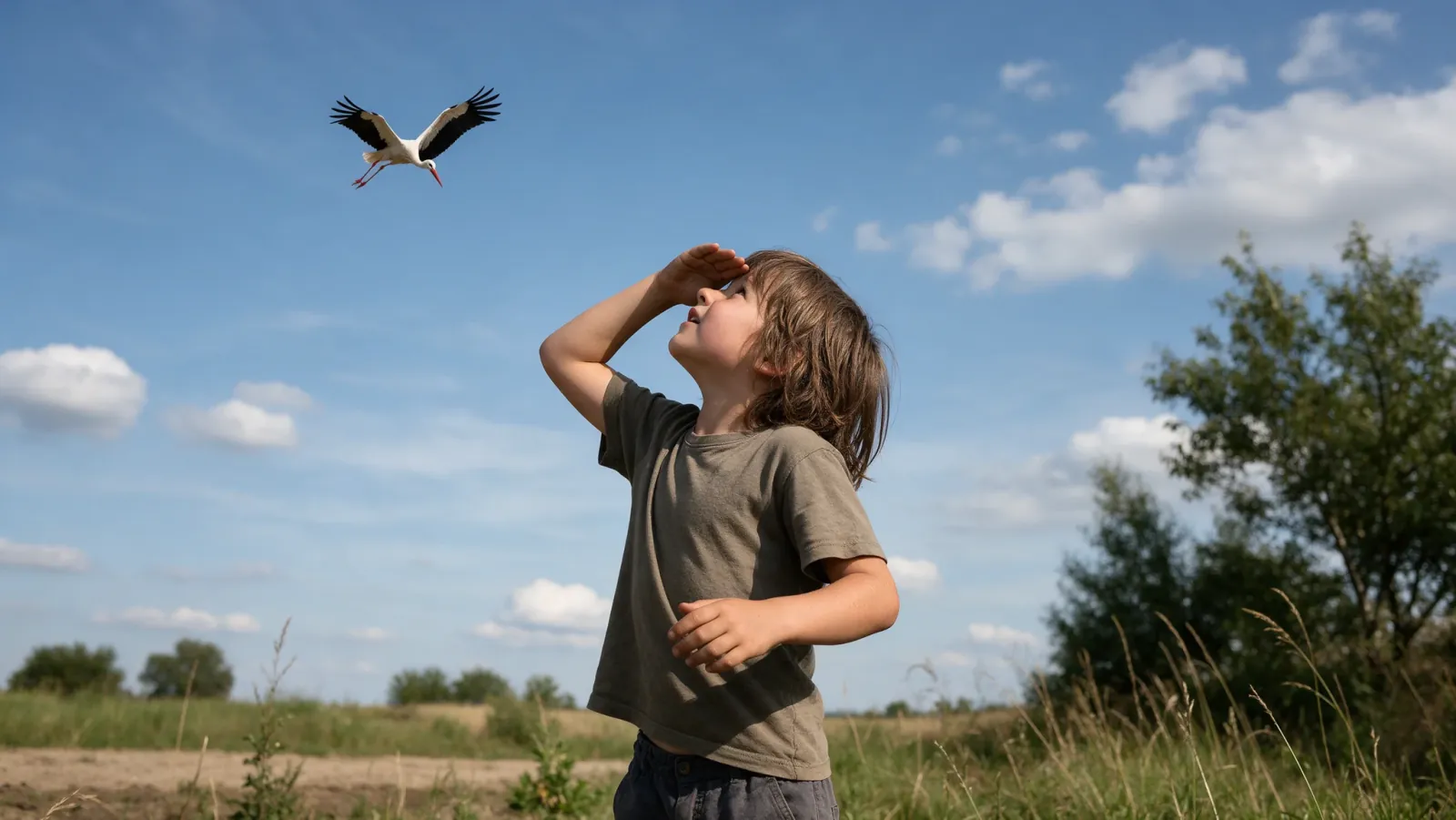
A stork for a birthday arrives as a card with a name on it, and the gift keeps arriving after that. The card is the beginning: a child learns the name, finds the bird on a map, and starts asking where it is. By the next birthday the bird has crossed a continent and come back, and the child has grown a year. The map is an illustrated reconstruction of a real stork's year, not a live feed, and that is part of what makes it readable at bedtime.
The card that keeps arriving
It carries a name and access to a route. Most presents are opened once. A named stork gives a child a question that can be asked every day: where is my bird? The answer is never the same two days running, and the looking becomes a small routine.
At three the question is a game. At six it is a small lesson in geography. At nine it is a routine that has nothing to do with school, which is the best kind. The gift does not need batteries, and it does not need to be replaced when the child outgrows it. It grows with the child's questions. A card is easy to lose, and the map is easy to reopen. The combination is what makes the present last past the day it was given.
The stork has a life that runs on its own schedule, and none of it is about the child. That independence is what makes the attachment interesting. The bird can surprise the child, and the map keeps a record of where it went.
A year in four movements
Spring brings the bird north, and the child learns the word return. Summer keeps it in wet meadows, and the map barely moves. Autumn sends it south, and the child learns the word leaving. Winter leaves a cluster of dots in the warm grass, far away and still.
A birthday measures time. A stork measures the same time in distance, and the two measurements sit well together. The date on the card becomes the day the child started following a bird. Give a child a stork on a first birthday and by the second the bird will have made a full loop, or be on its way.
The first autumn is the most dramatic. The dots leave the village, cross the sea, and the child watches the gap where the bird used to be. A map that shows a blank space is still telling the truth. The bird is out there, beyond the last point, and the waiting is part of the story. A year of looking teaches a child that a blank space can be temporary. The bird is out of range, or in a place where the tag cannot charge, and the map will speak again when it can.
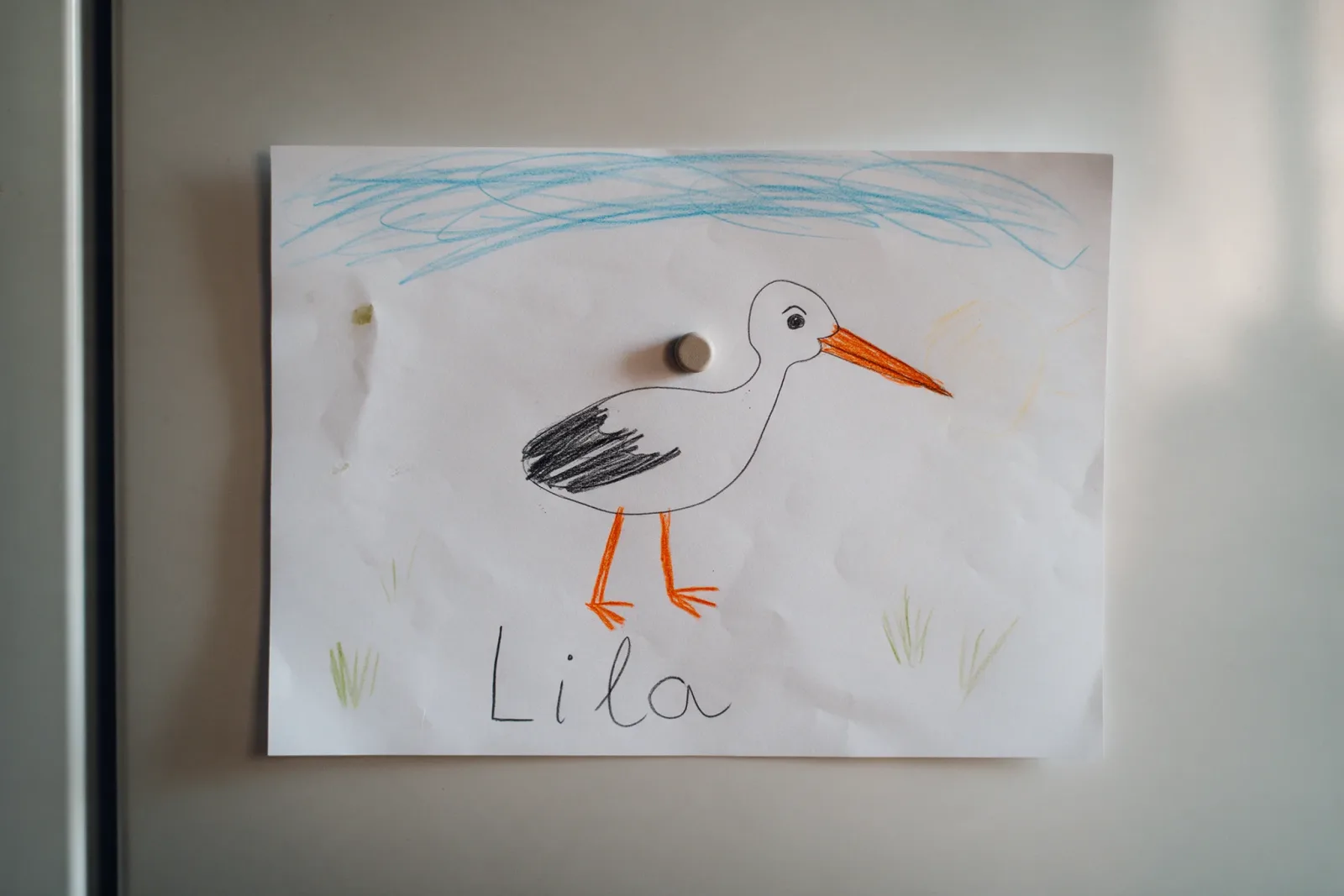
The drawing on the fridge
Then comes the drawing: a white bird with a long red bill, standing on a roof that is mostly a brown rectangle, and the name underneath in letters that lean in different directions. The drawing goes on the fridge with a magnet and stays there long after the paper curls at the corners.
A drawing is how a child takes possession of a story. The stork was never theirs in any legal sense. It was theirs the way a favourite uncle is theirs: distant, named, and thought about. The legs are too long, the nest is too small, and the sky is the wrong blue. Accuracy was never the assignment.
The map becomes part of the bedtime routine, after the book and before the light goes out. Some nights there is news. Some nights the dot has not moved, and that is news too. A stork that stays put for three days has found good feeding, and a child can learn that from a map without being taught.
A feather on the shelf
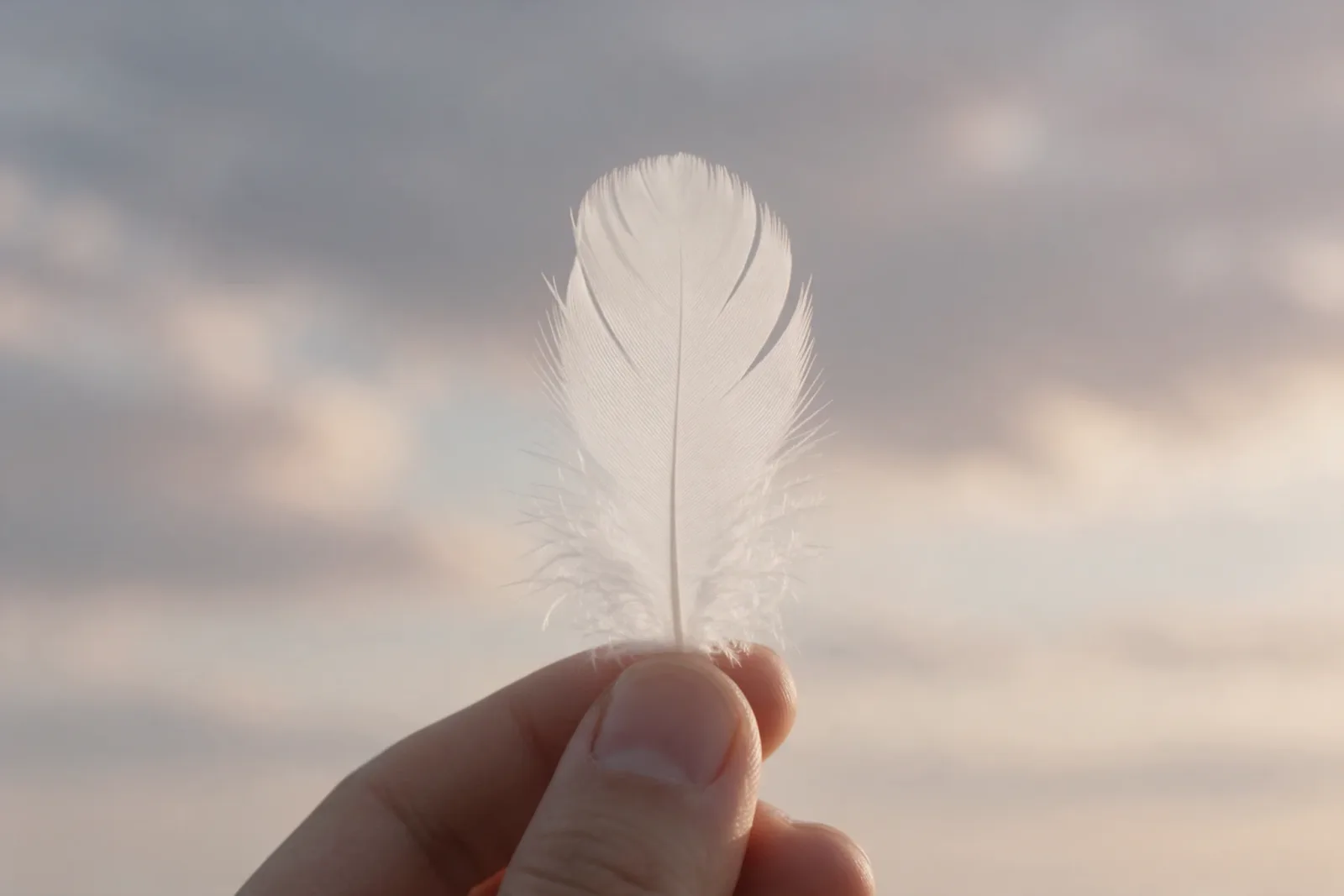
A feather from a friend is a small white thing on a shelf, and it is there because someone could not throw it away. Most feathers are found by accident. A walk in a field, a glance at the grass, a white shape that does not belong. The bird is already gone. The feather is what remains, and it is enough to make a person stop.
A feather is made of keratin, the same material as a fingernail, and it is built from a shaft and a network of barbs that hook together. A white stork's body feathers are white, and its flight feathers are black, which is why a stork in flight looks like it has been dipped in ink at the tips.
Storks moult, so a feather on the ground is not a loss to the bird. It is a piece of last season, shed when the new feathers came through. Children keep tokens the way adults keep photographs. A shell, a stone, a feather, a dried leaf. The object is ordinary, and the meaning is not.
Why a birthday fits
A birthday falls once a year, and the stork's year has its own markers. The two calendars overlap just enough to make the gift feel alive. The bird's return is a small annual event that belongs to the household, and it arrives without a subscription or an app.
The gift is deliberately small: a card, a name, and access to the illustrated route. It arrives with a story that has already started, and the child joins it in the middle. The bird does not know about the card, the drawing, or the map left open on a kitchen table. It keeps walking in wet fields and circling the warm air.
A birthday is a measure a child understands. The stork adds a second measure, one that runs on daylight and weather rather than candles. The two together give the year a shape that a family can follow without trying hard. The shape repeats, and repetition is what makes a ritual. The card stays on the shelf, the name stays in the house, and the bird keeps to its own calendar somewhere south of the weather. The feather on the shelf and the drawing on the fridge are the same instinct in two materials.
What stays after the card
Years from now the child may not remember the drawing. The card will go into a drawer with other paper things. The name will stay in the mouth, ready for the next question. The habit of looking up will remain after the card goes into a drawer, and so will the knowledge that a creature on the other side of the world can be followed, worried about, and loved from a distance.
The name may end up in a story told to a younger cousin. The feather may lose its shape and none of its white. The stork gift is a page and a name, and the bird supplies the rest, one ordinary point at a time.
In spring the first northbound point arrives, and the child is a year older than the last time the bird was here. The map folds into a drawer, and the name comes out again the next time someone asks.
Explore the gift