A map on a nursery wall can be a single line. It starts at a dot above the cot, curves south across a sea and a desert, and turns back north in spring. A child who cannot read yet will look at that line for months before asking what it means.
A line on the wall
Long before a child can read, they can look. A map is a picture first and a tool later. At first it is colour and line, a shape the eyes wander over. The shape is doing quiet work. It plants the idea of distance, of somewhere else, of a place beyond the window.
A map does not wait for a child to be ready. It begins teaching immediately, in the soft months when the child is doing nothing but looking. A wall map also gives the room a horizon. It says the world continues past the door, even at night, even in rain.
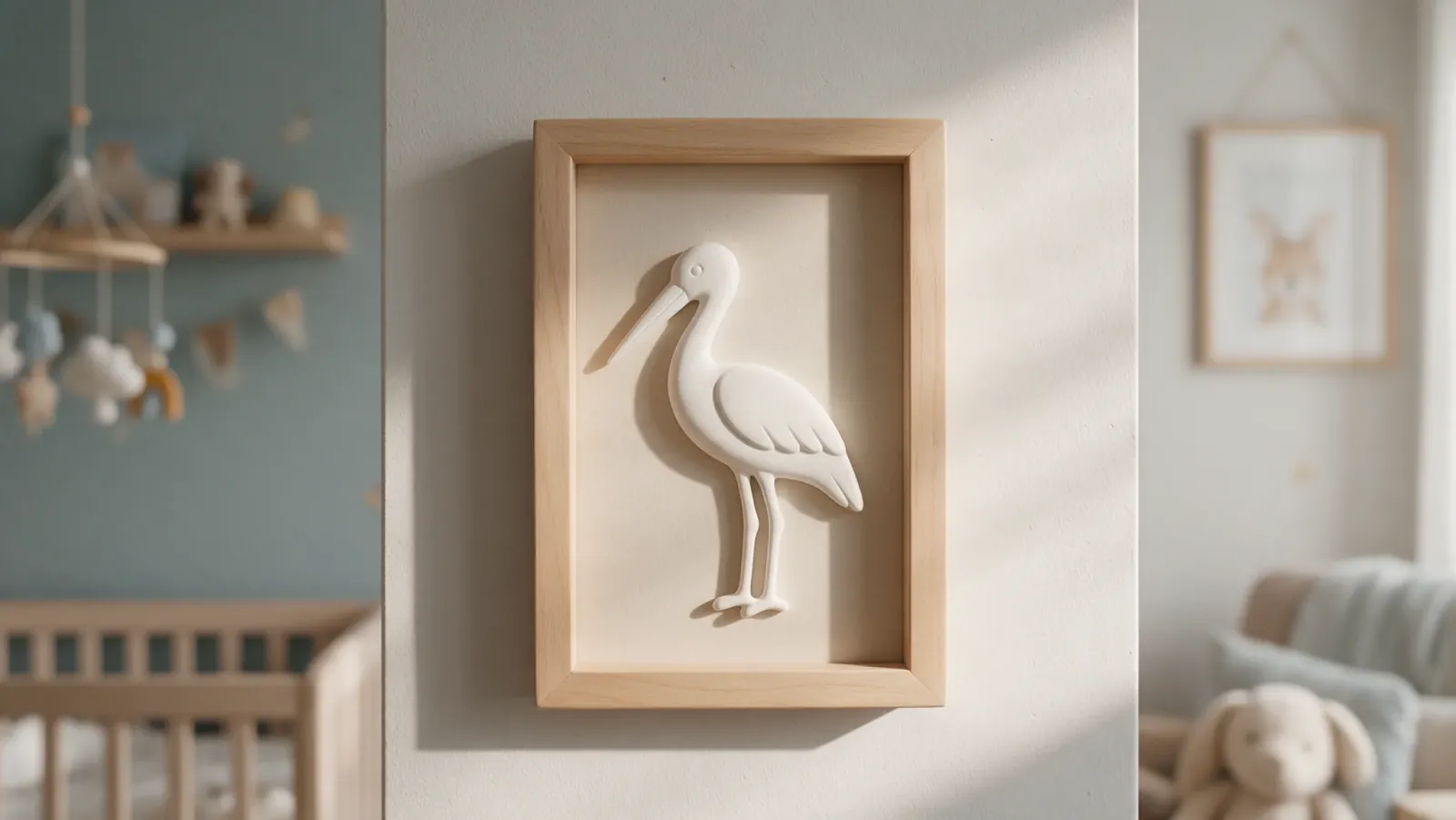
What makes this map alive is that its line moves. It follows a white stork as the bird migrates between Europe and sub-Saharan Africa, and the line is never finished. Each autumn it lengthens southward. Each spring it curls back north. A stork pin above the cot marks the starting point, the nest, the place the bird returns to. From there the line unspools, and the world opens. A pin is easy to move, and moving it is a small event a child can help with.
What the eyes can reach
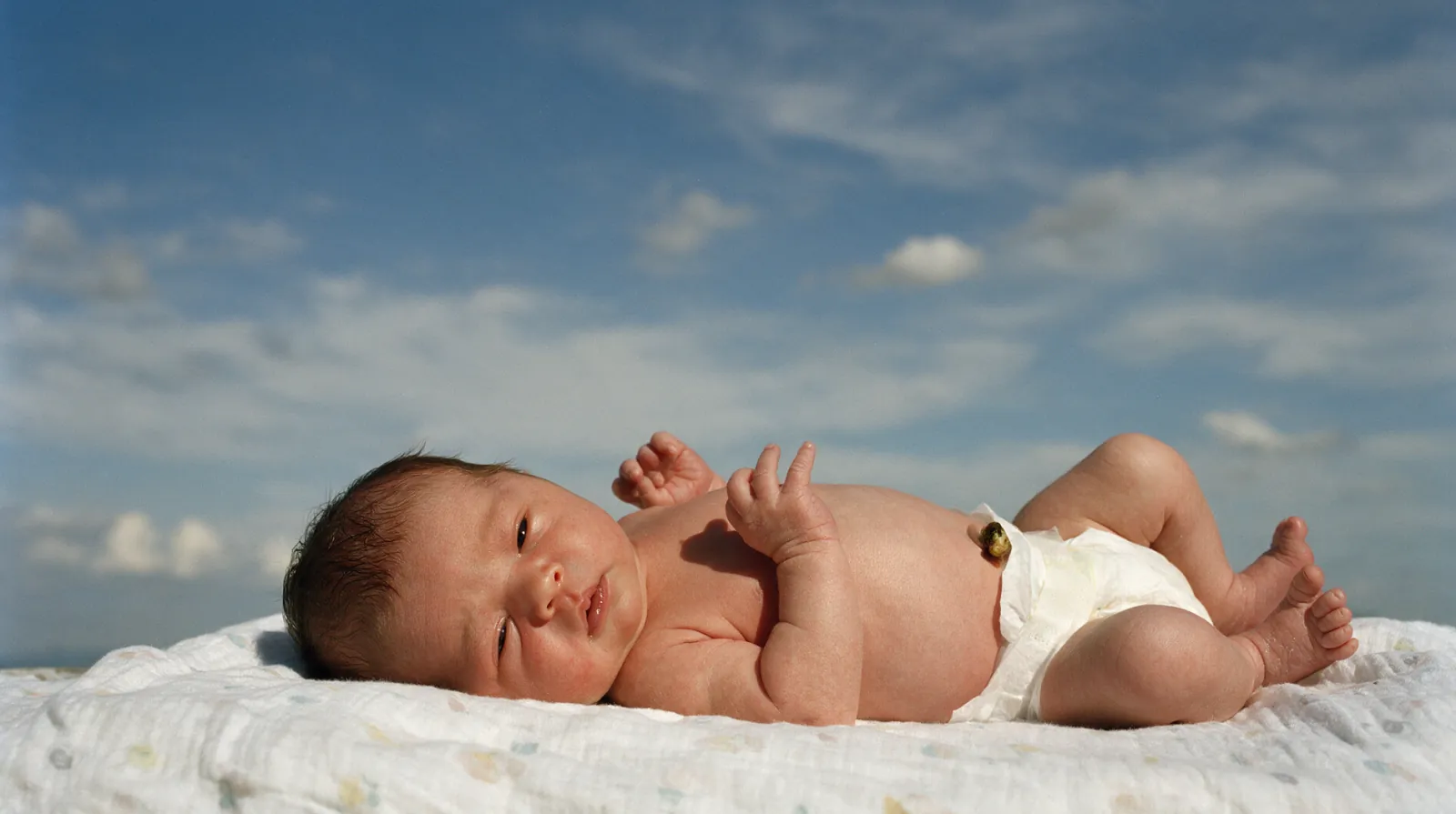
A newborn's first blink often arrives within minutes of birth. The lids part, the eyes wander, and a person looks out at the world for the first time. Nothing in that look is focused. For months the eyes have been shut against a soft red dark, and birth brings light far brighter than anything the retina has met. Many newborns open their eyes soon after delivery, then close them again for long stretches.
A newborn sees sharpest at about 20 to 30 centimetres, roughly the distance from a feeding mother's face to her baby's eyes. Beyond that, the room softens into blur. A window across the ward is a bright rectangle. A visitor at the foot of the cot is a shape that moves.
Colour arrives slowly. High contrast registers first, which is why a dark fringe of hair against a pale face holds a baby's attention longer than a mobile of pale animals. The human face is the most interesting pattern in the room, and it is also the one that keeps coming back. By around two months, many babies begin to meet a gaze and hold it. A cot mobile with high contrast can help, and a face does the same work without being switched on.
Sight improves through use. A baby tracks a slow hand, follows a lamp across a ceiling, pauses on the pattern of a curtain. Each of these small exercises builds the link between eye and brain, and none of them needs a toy with a battery inside.
The number on the scale
The weight of a newborn is one of the first facts a family learns about the person they have just met. It goes on a wristband, gets repeated to relatives, is written in a book. Most babies are born somewhere between 2.5 and 4.5 kilos. The figure becomes a small landmark: the weight so-and-so arrived at. The number is useful for clothes and for the car seat, and it says nothing about the person.
It is also the only measurement anyone will take for years that a parent keeps exactly. Height, head circumference and the time of birth all blur. The birth weight stays. Ask a grandparent about a grown child and there is a fair chance the answer starts with grams.
Almost every newborn loses weight in the first days, often around a tenth of birth weight, while feeding settles and the body sheds fluid. The dip alarms parents and rarely worries midwives. Then the climb begins, and it is quick. Most babies are back to birth weight by about two weeks.
The scale charts it, and the scale is right, just incomplete. A chart compares one child to a curve drawn from thousands of others. It cannot see the particular baby in the room, the one who feeds slowly and sleeps well and has a loud laugh. The line matters. The child matters more.
Geography along one route
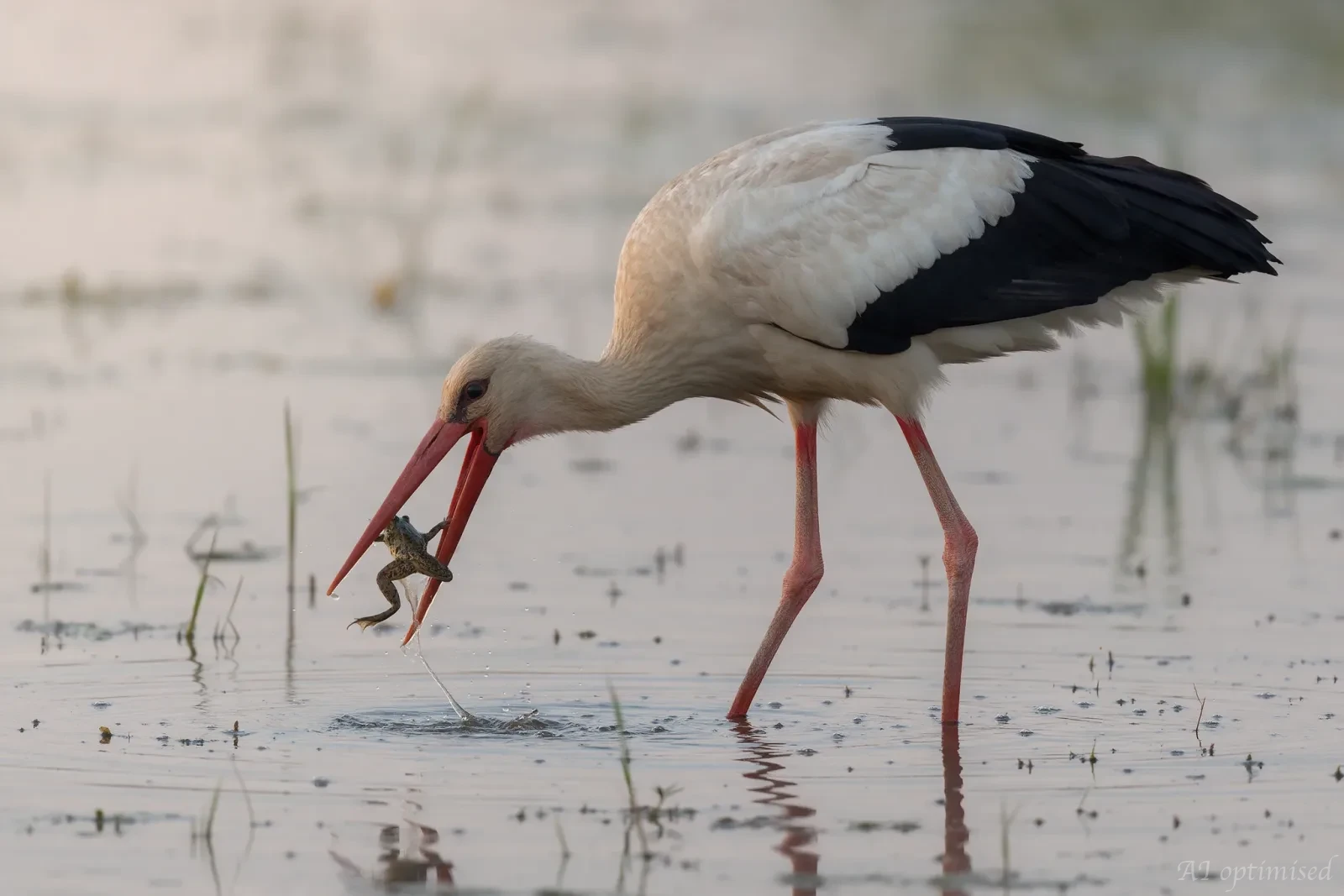
There is a gentler way to learn the world than lists of capitals. A child who follows a stork learns geography through a single thread. Here is the sea the bird must cross. Here is the desert. Here is the warm green place it stays for winter.
One bird's route teaches water, land, season and distance. A child who knows one route well can imagine every other route. Names help. The child can learn the sea, the desert, the country and the bird's name in the same breath.
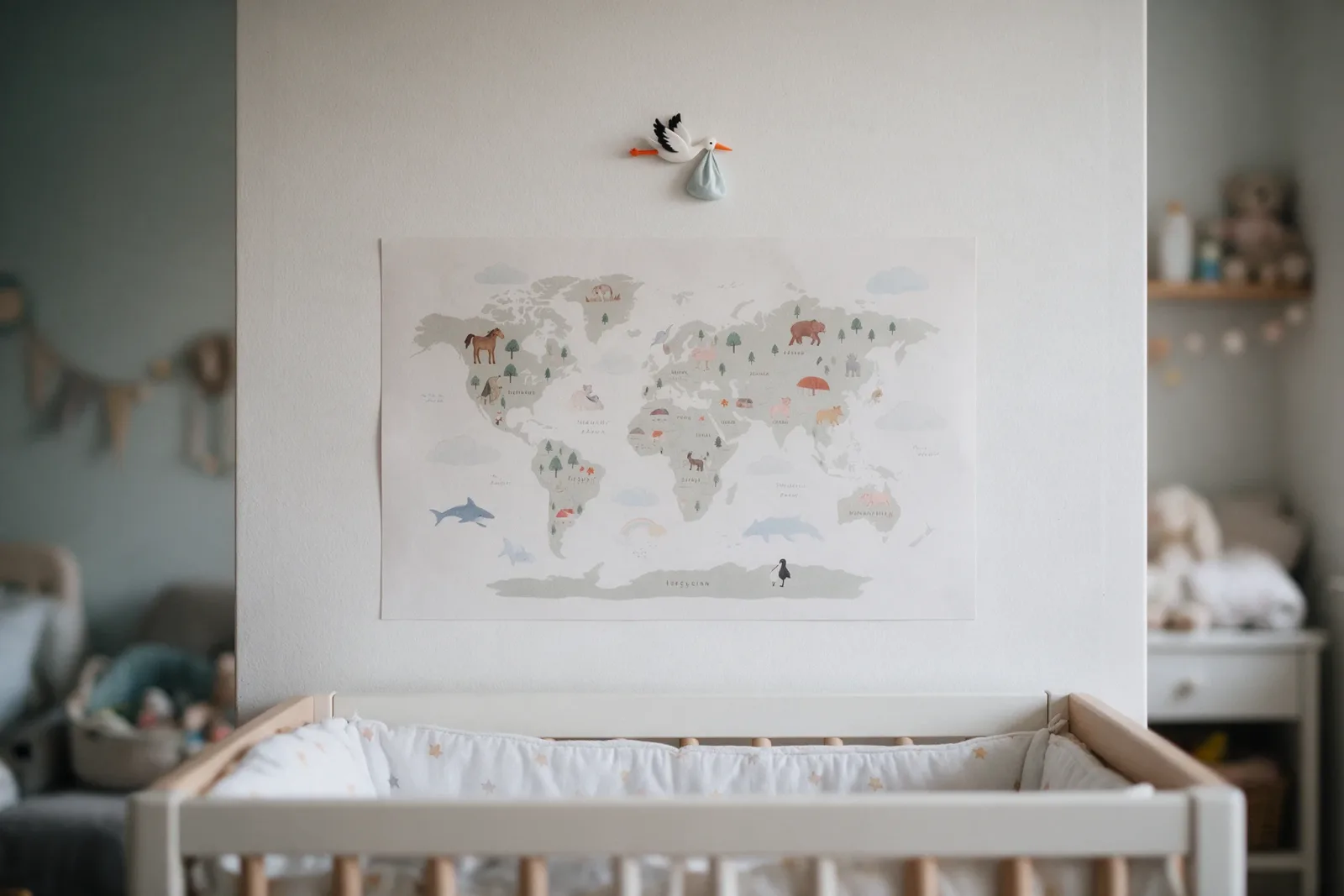
A white stork's journey between Europe and sub-Saharan Africa is a fact with a shape. It can be drawn on a wall, traced with a finger, and compared with the weather outside. The child is learning that a map is a picture of somewhere real, and that the bird on the card is somewhere on it.
Drawing it together
You can draw the map yourself. A long curve on a wall, a dot for the nest, a different colour for each season. Add the bird's name. Move the pin when the bird moves.
You do not need to be accurate to the kilometre. A curve and a dot will do. The child will correct it later, and that is part of the learning. Do not worry about scale. A nursery map is a picture of distance, and distance is a feeling before it is a measurement.
When the child is older, they can draw the map themselves. Let them put the sea in the wrong place. Let them add a mountain that is not there. The map is theirs. A map that can be changed is better than one that is correct. Correction can come later. The first lesson is that the world is bigger than the room. The second is that the child can draw it. The wall can hold a line that is wrong and still useful. A wrong line can be corrected with a finger, which is cheaper than repainting.
What the measures leave out
Sight, weight and distance are the first measures of a small life. The eyes learn to focus, the scale records a climb, and a line on the wall shows how far a bird travels. Each measure is useful, and each one is partial.
The chart cannot draw the particular child. The map cannot show the weight of a head in a palm. The card holds the date, and the arms hold the rest. In a few years the child will be too heavy to carry up the stairs, and the parents will set them down and feel the strange lightness of empty arms.
If you want the journey to be real, adopt a stork for €9.99 once and follow a bird with a private link. The map can be simple, and the line is what matters.
Explore the gift