A new baby is never a single recipient. There is the baby in the cot and there are the two adults holding the room together, and a gift that reaches one of them has missed half the moment. A card with a stork's name can reach both, because it carries a story for the child and a window for the parents.
Two people in the room
A newborn cannot receive a gift in any ordinary sense. The baby is not choosing, expecting or remembering. What the baby receives is mostly the warmth of being loved, and that warmth arrives through the parents. A gift to a baby is always, in practice, a gift to the parents too.
The only question is whether the gift knows it. A present with a bird's name knows. It gives the child a story, and it gives the parents a moment of stillness in the middle of everything. Recognition does not require a speech. A card chosen with the parents in mind is enough, and it is often more welcome than advice.
There is a practical reason for that. The parents are the ones who open the post, find a place for the gift, and decide whether to keep the box. A present that is easy to open, easy to keep and needs nothing assembled has already respected their week. A gift that arrives as a card can be read standing up, in a doorway, with a baby in one arm. That small ease is part of the welcome.
One card, two meanings
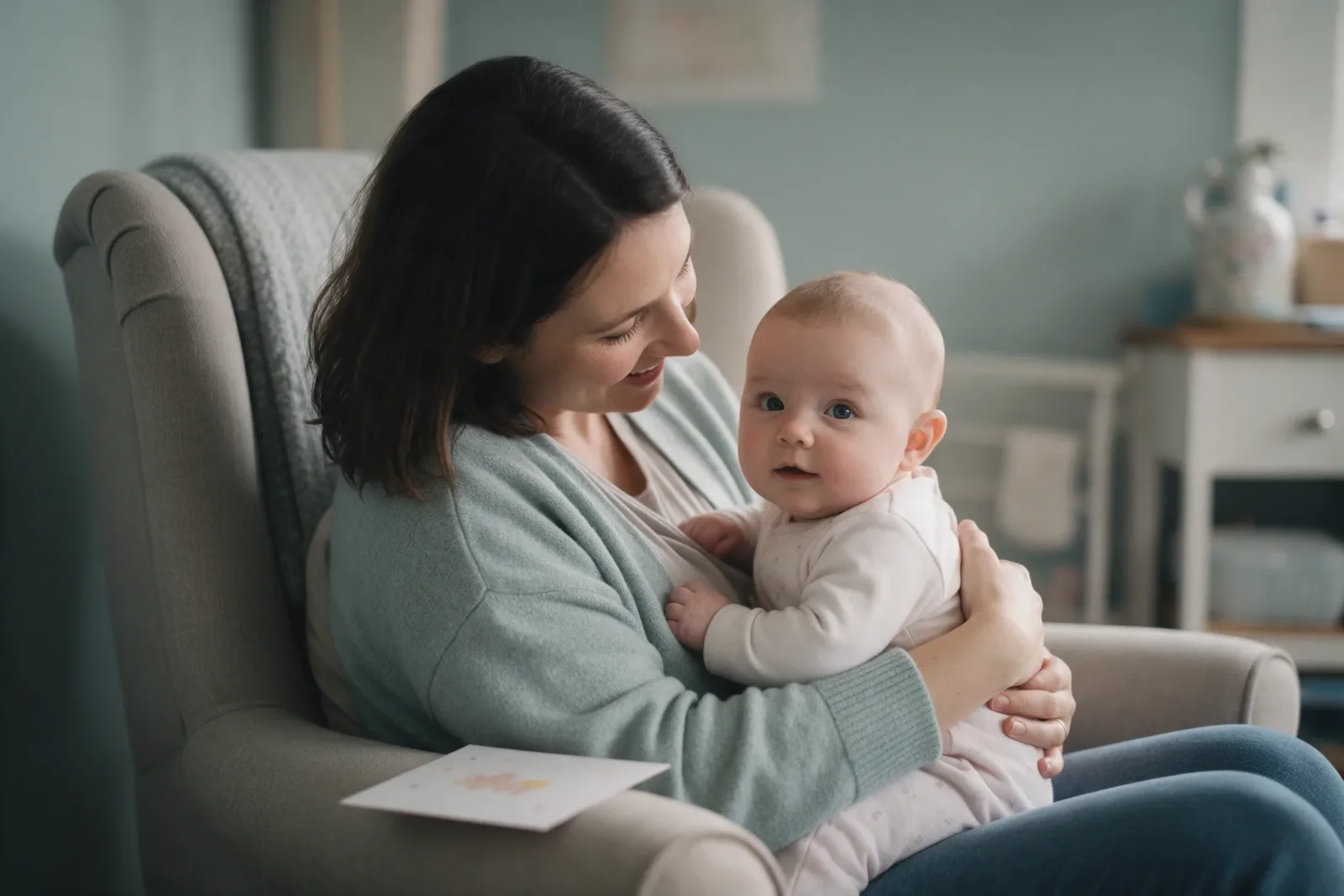
A single card, resting on the armrest of a chair while a mother holds her baby, means two different things at once. To the baby, it is nothing yet: a soft shape at the edge of vision, a colour, a future question. To the parents, it is a message that they are seen and welcomed, and that the wild world outside the nursery is still turning.
The same object can hold two kinds of attention at once. The baby will grow into their half of the meaning. Until then, the parents get the whole of it.
That is why the message can speak to both. One line for the child, one for the adults, and the card does two jobs without strain. The child will read their line years later. The parents will read theirs on the first night.
The door and the sky
New parenthood pulls a household inward. The days cluster around the cot, the kitchen, the changing table. Before long, the outside world feels like it belongs to other people. A gift that points back out the door is a small rescue, and it can be as small as a bird with a name.
In the early months, everything a baby needs is inside. Warmth, food and sleep happen within four walls. The world shrinks to the size of the nursery, and that shrinking is necessary for a while. It can also become a habit. Days blur. The sky goes unnoticed. Walking out the front door begins to feel like an expedition.
A reason works better than a resolution. Resolutions are vague and easy to postpone. A bird with a name is specific. It is somewhere today, and it will be somewhere else next week. You cannot follow a stork from the sofa.
One quiet way the habit takes root is a pair of binoculars left on a windowsill, ready for the moment someone notices a wing overhead. The stork gives the looking a target. The binoculars give the looking a tool. The rest is a door and a pair of shoes. A weekly walk is easier to keep than a daily one. Pick a day, pick a route, and go even if the sky is empty. Most walks will not produce a sighting. The value is in the looking, and in twenty minutes of air. The baby gets a change of light and sound. The parents get a street they know and a sky they have not looked at all day. A walk without a destination is easier to repeat than an outing with one.

Wonder needs real material
A baby notices everything: a passing shadow, a breeze, a bird crossing the window. They have not learned to sort the world into ordinary and remarkable, so everything is remarkable. Gifts for a newborn can keep that openness alive or quietly close it. The best ones give the child something alive to keep noticing. A plastic toy becomes familiar in a week. A real bird keeps changing.
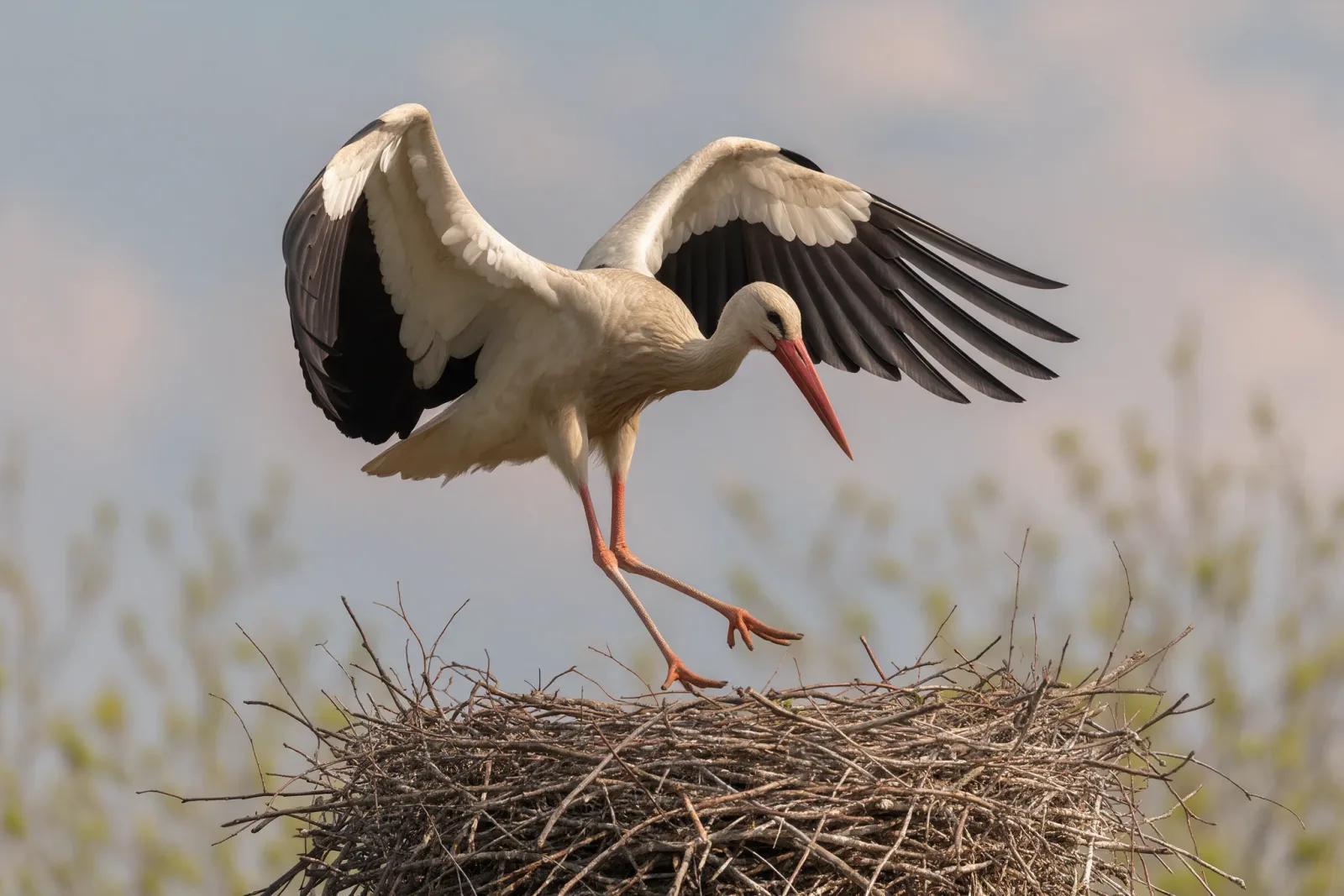
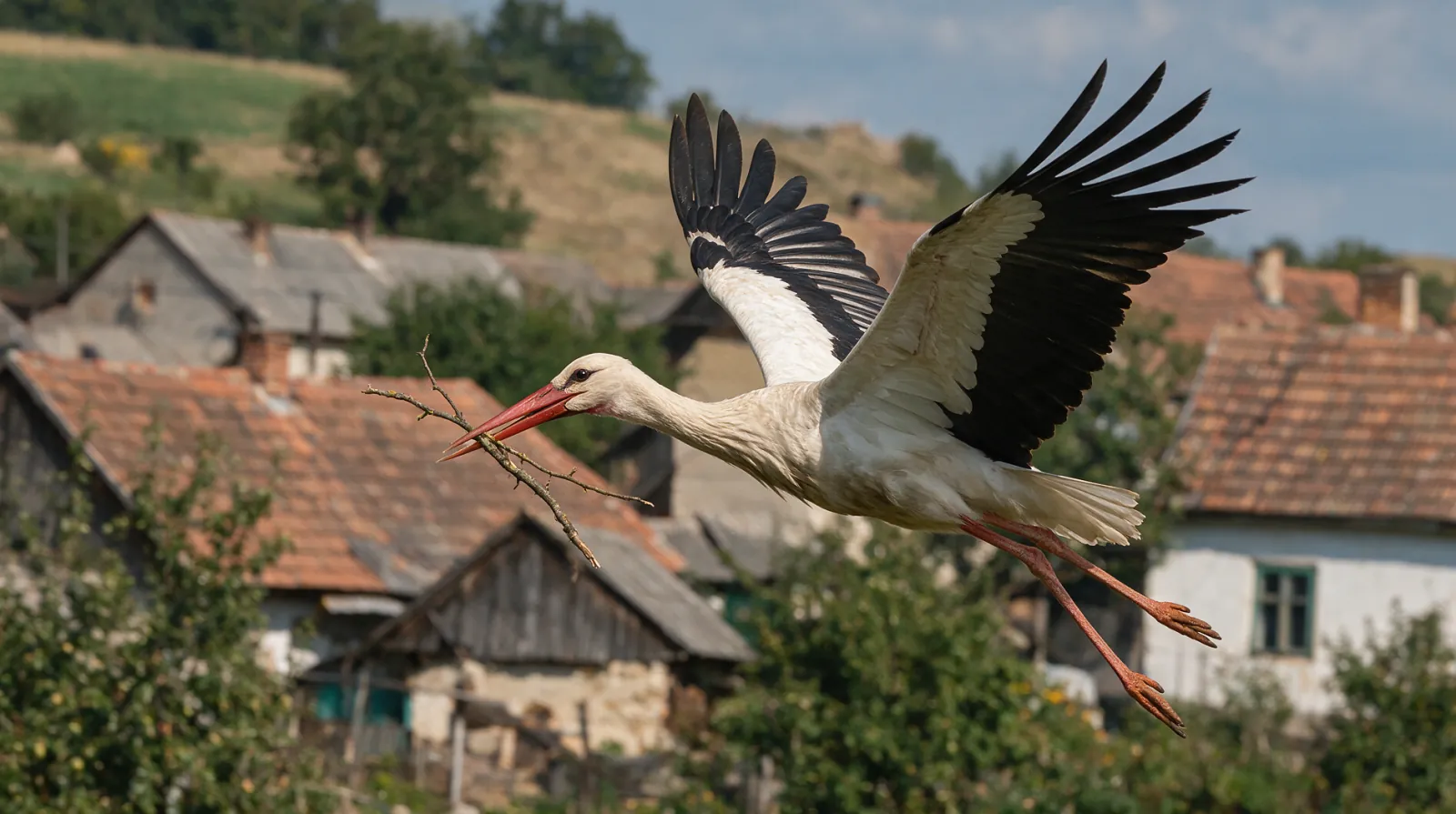
Curiosity grows on real things. A bird that actually flies, a journey that actually happens, a name that belongs to an animal out in the world. A white stork is good material. It stands about a metre tall, migrates between Europe and sub-Saharan Africa, and rides thermals across seas and deserts. Those facts are strange enough to hold attention for years.
A child who grows up following a stork learns to scan the sky, to watch for wings, and to wonder where a creature is going. That habit spreads. The child who wonders about a stork will wonder about the sea, the stars, the weather, and the way a seed becomes a tree. Wonder does not need a curriculum. It needs exposure, repetition and an adult willing to stop and look.
Two lines on the card
The practical version is simple. One card, one name, one message. Adopt a stork for €9.99 once, write a line to the baby and a line to the parents, and let the same object do both jobs.
Write two lines if you can. One for the child, one for the adults. The same card can hold both. Choosing the bird is part of the gift. Pick one whose name feels right, or one the parents have mentioned. The choice does not need a reason, and a reason makes it better.
The parents will use the link more than the baby will. They will check it at night, or on a Sunday morning, or when the house feels too small. By the time the child is old enough to use it, the link will be a familiar thing in the family's hands.
What the parents use first
The card often reappears at the first birthday. Someone finds it in the box and props it near the cake, and the parents remember the week it arrived. By then the bird has made another journey. The card has not changed, and neither has the reason it was given.
In the small hours, when the baby is finally asleep, they can look at the card and think about a bird crossing a warm sea somewhere, far from the laundry and the night feeds. It is a small window in parenthood, and a window makes the room feel larger.
Some parents keep the card in the cot bag, where it is found on trips and at appointments. Others leave it on the kitchen windowsill. The position is less important than the habit of seeing it.
The gift ties their child to a migrating bird, which plants a story in the child's future and a small comfort in the parents' present. One present is enough when it understands there are two people in the room.
Explore the gift