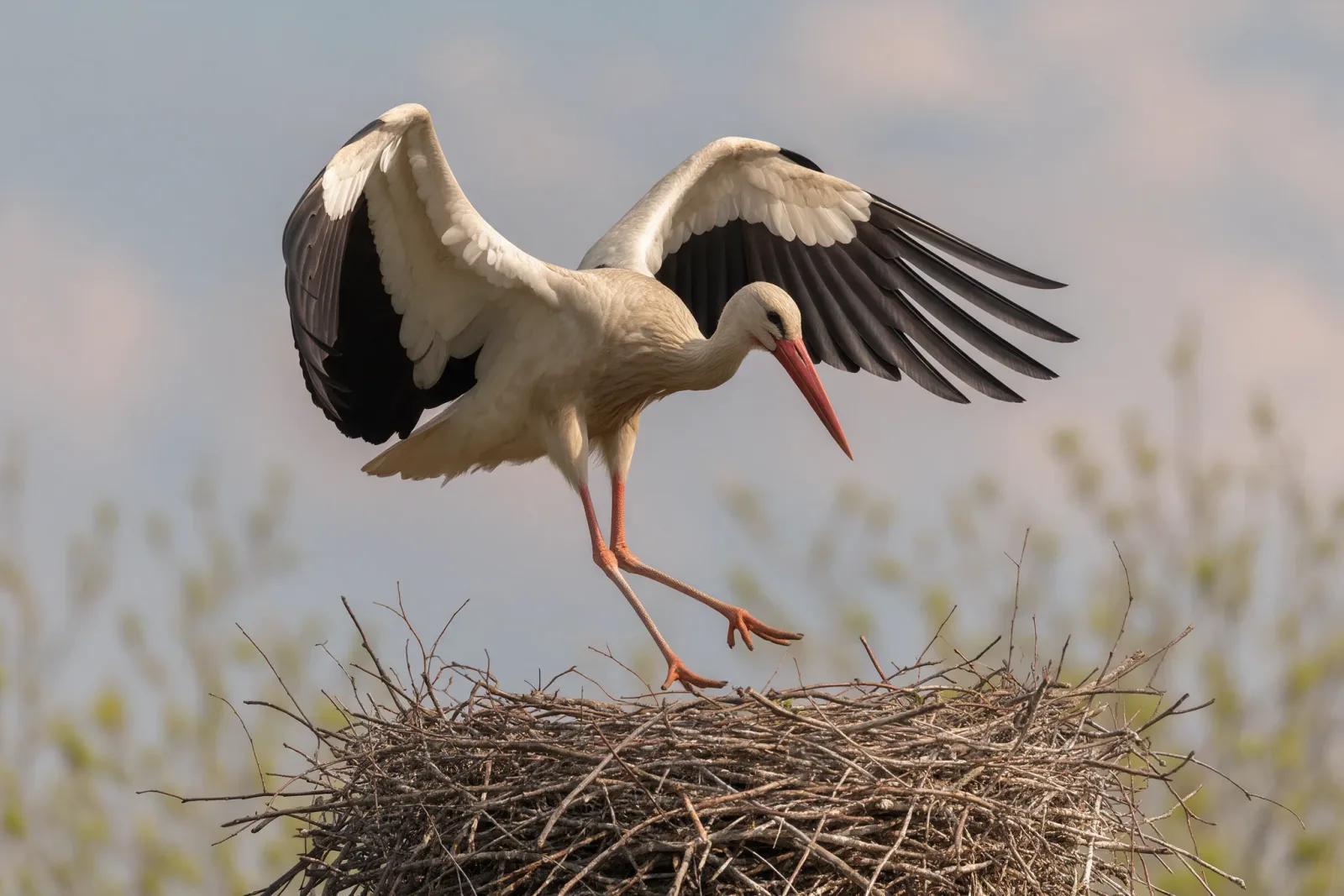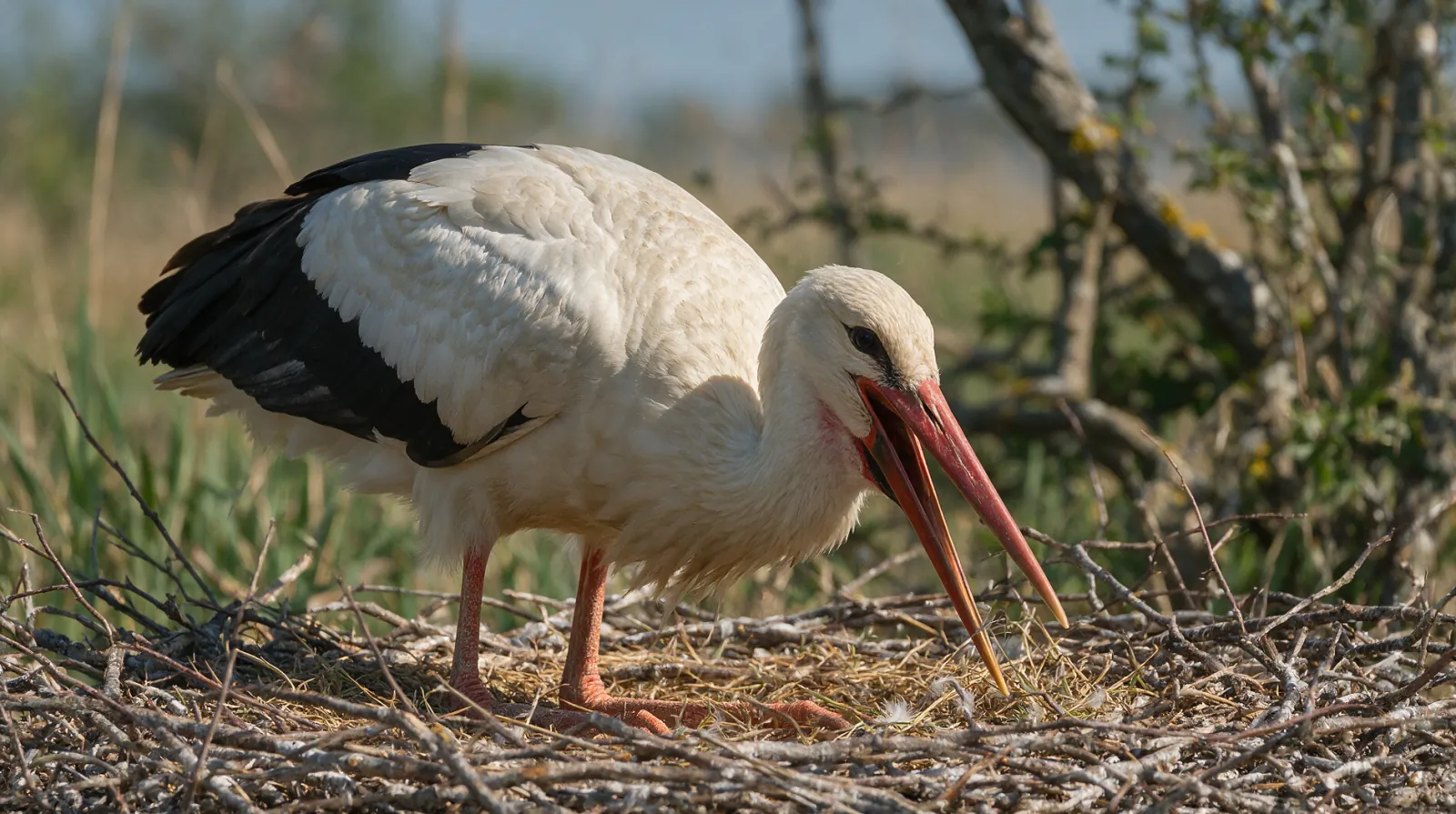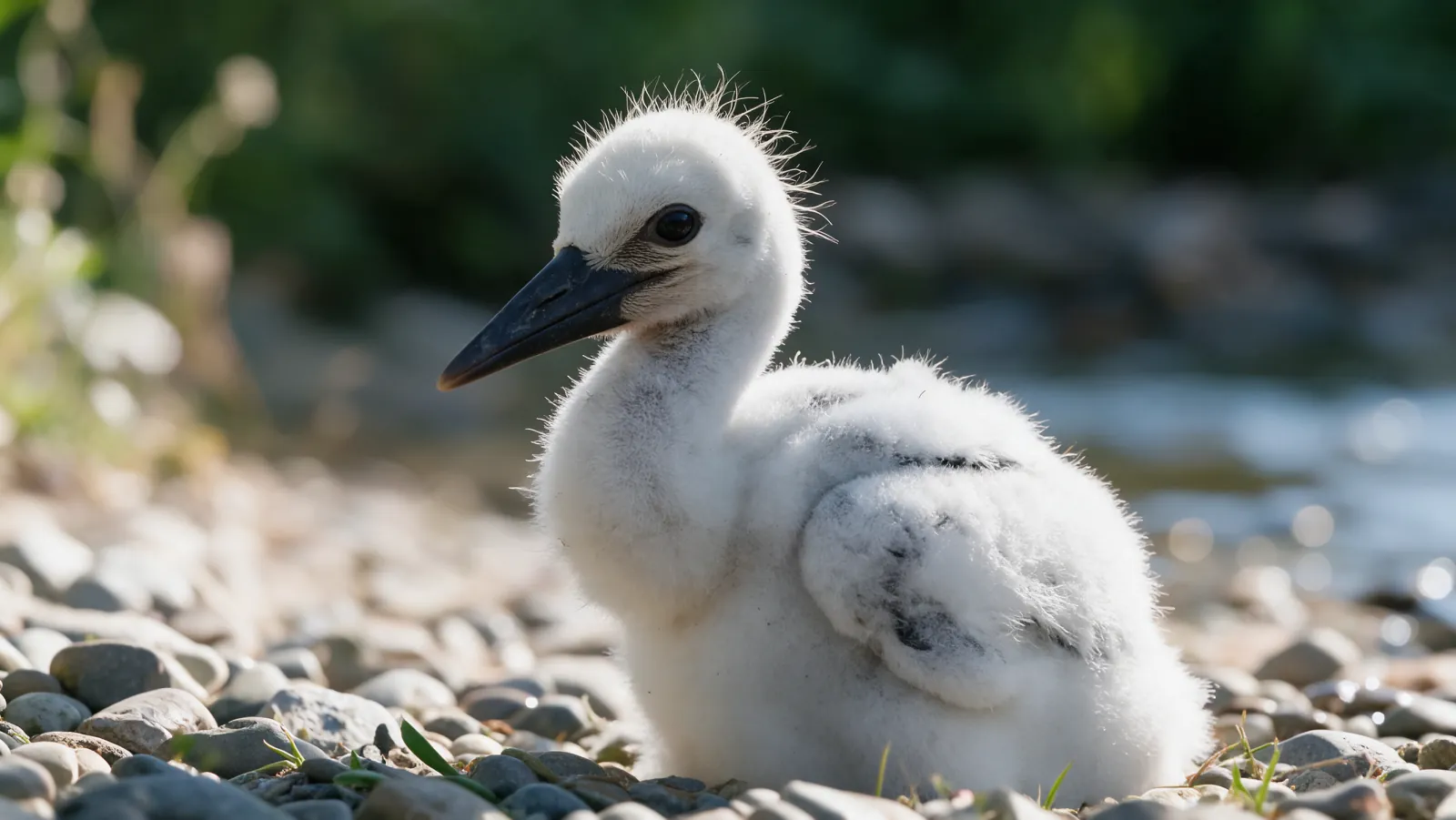
A gift for the welcoming party has to survive a room already full of flowers, food and soft things. A stork gift survives because it is the only present there that will still be doing something in November: a real bird, somewhere between a Spanish field and a Moroccan river, with a name the family chose.
A room full of the same present
Welcome parties are generous and repetitive. Three white blankets, two rattles, a mountain of muslin. Nobody minds. That is what happens when a lot of people love the same small person.
The repetition is why a single odd present stands out. It is not bigger or shinier. It is simply a different kind of thing, and it gives the room a subject that is not the baby's sleeping habits.
A room full of useful objects has no story in it, and a party needs one. The bird supplies a story before the wrapping is off. A present that requires no assembly, no visiting and no thank-you note beyond the ordinary one is also a kindness to parents holding a baby.
Why nobody needs it explained
The stork has meant a new arrival for centuries in European storytelling. It appears on birth announcements, on cards, on the front of a shop selling prams. The image does the introducing.
A symbol this old arrives already understood. A grandparent and a seven-year-old cousin get the same message from it without a word of explanation, which frees the room to talk about something else.
The story behind the image is old European folklore, told in villages long before it was written down and fixed in a form everyone could read by Hans Christian Andersen in the 1830s. The tale answered a question adults did not want to answer, and it gave the arrival of a child a picture that could be printed.
The parents are tired and holding a baby, and the last thing they need is an object that requires assembly. The card goes on a shelf. The following happens on its own. Later, when the visits stop and the house goes quiet, the updates keep arriving.
The gift works at a distance too. A digital card can arrive on the day, printed cards can be posted, and the following is the same either way. A tenth of profits goes to stork conservation each quarter, which is worth mentioning once and then leaving alone.
Handing over the card
Someone reads the stork's name aloud. Someone else asks whether that is a real bird and where it lives. The photograph gets held up to the light. This takes about four minutes, which is exactly the right length for a party.
Later, the child will hear the story of the day and the bird will be part of it. The year the stork was adopted, the name nobody could agree on, the grandparent who insisted on it. Those details keep coming back.
Timing matters more than wrapping. Hand the card over when the room is quiet enough for someone to read it, which usually means after the food and before the coats. A card passed around during the noisy half of a party gets a glance and a nod.
A present that produces a second conversation months afterwards has done more than most. It gives the guests a small piece of information to carry home and a reason to ask again later.
If you want to say something, keep it to the bird's name and one sentence about why you chose it. The card carries the rest, and a welcome party already has food, photographs and a baby in it.
The christening version
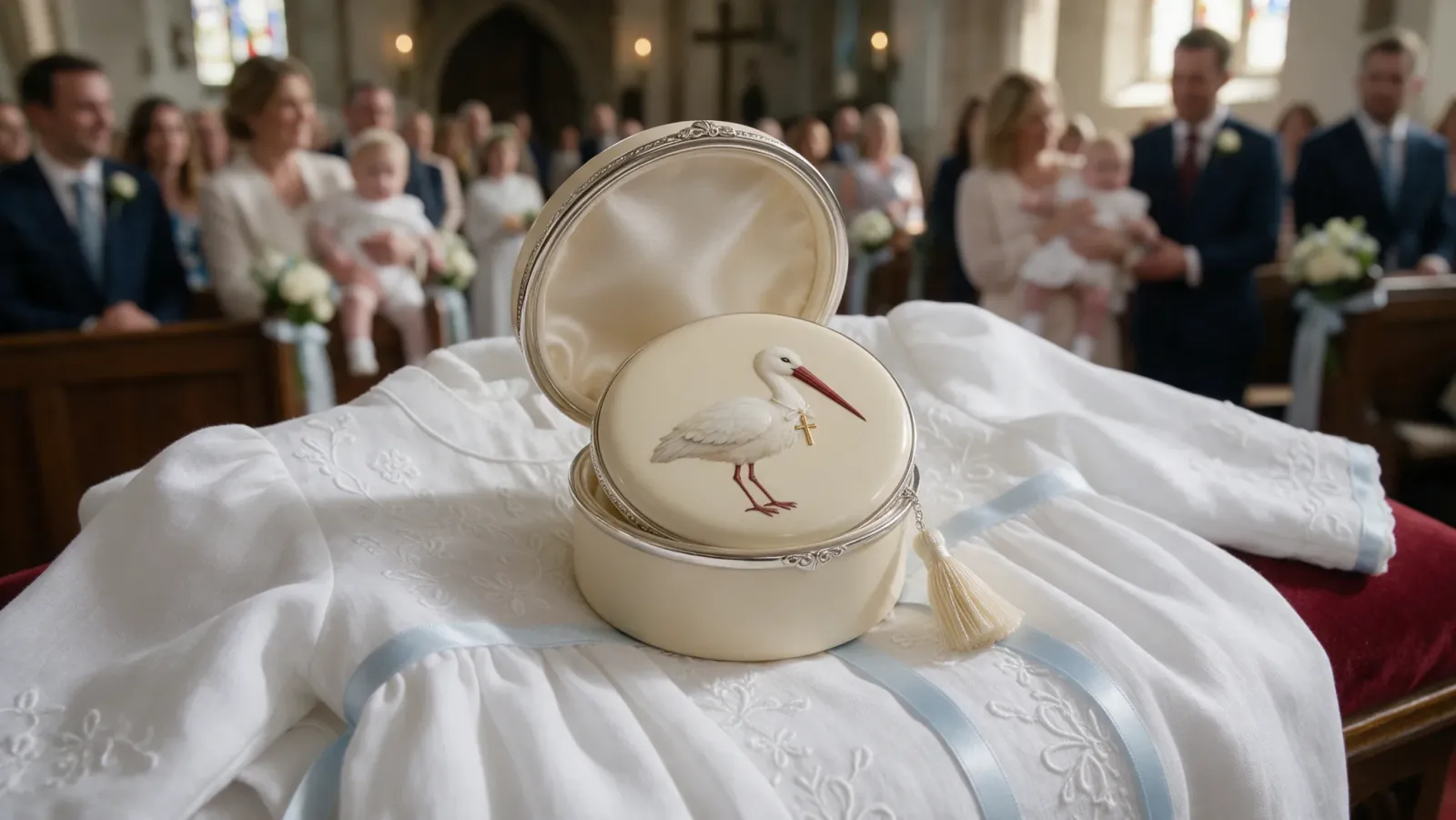
The service is about a name, water and a beginning, and the gifts that go with it tend to be things a family keeps. That is a good instinct. The day is short, and the object is meant to outlast it. The trouble is that most keepsakes are silent. They sit in a box and wait to be inherited.
A stork gift is about a name and a beginning, and it happens outdoors, in weather, at the pace of a real animal. The card fits in a pocket or an envelope and can be handed over at the church door, at lunch, or in the car park afterwards, without a bag and without a speech.
Godparents have a specific job and a vague brief. A stork gives them a reason to get in touch every few months that is not an anniversary or an obligation. There is always something to report: the bird is back, the chicks have hatched, the bird has crossed the water.
The first birthday
By then the child has been out in the world for a year, and the bird has been followed for the same year, through a whole cycle of arrival, nesting and departure. The card from the first week is still on the shelf, and it now refers to something that has happened.
One full year of the bird's life fits inside one full year of the child's. Most families have a mess of screenshots and messages by now. The birthday is a good moment to put them in one place: print six of them, or write the dates on the back of the card, or start a small book.
There is no need to make the stork part of the party. A one-year-old is interested in cake and paper. But it is worth taking one photograph of the card next to the child, once a year, in the same place. If there is a party, put the card out where people can see it and leave a pen beside it. Guests can add a line on the back: the date, a wish, what the baby did that day. It is a cheap way to turn one card into a small record of the afternoon.
A second child, a second bird
A first child spends two or three years as the only subject in the house: photographs, updates, a card on the shelf with their name on it. Then a second person arrives with a fresher claim on all of it. What helps is having something that was not divided, and a bird with a name is a good candidate because it is small, portable and entirely theirs.
Two storks in one house need not compete. Give them different names, and the birds go different ways. One might winter in Spain; the other might cross at Gibraltar and end up further south. The routes give the children something to compare without giving them a ranking.
A second bird given in the first week is a gift for the family. Given a month or two later, it lands better, when the older child has discovered that the baby is staying. A second card costs €9.99 and gives the second child a record that started with them. Reusing the older child's card is the obvious economy and the wrong one, because the value of the object is that it names one person. The two cards sit on separate shelves, and neither one has to be negotiated.
Explore the gift