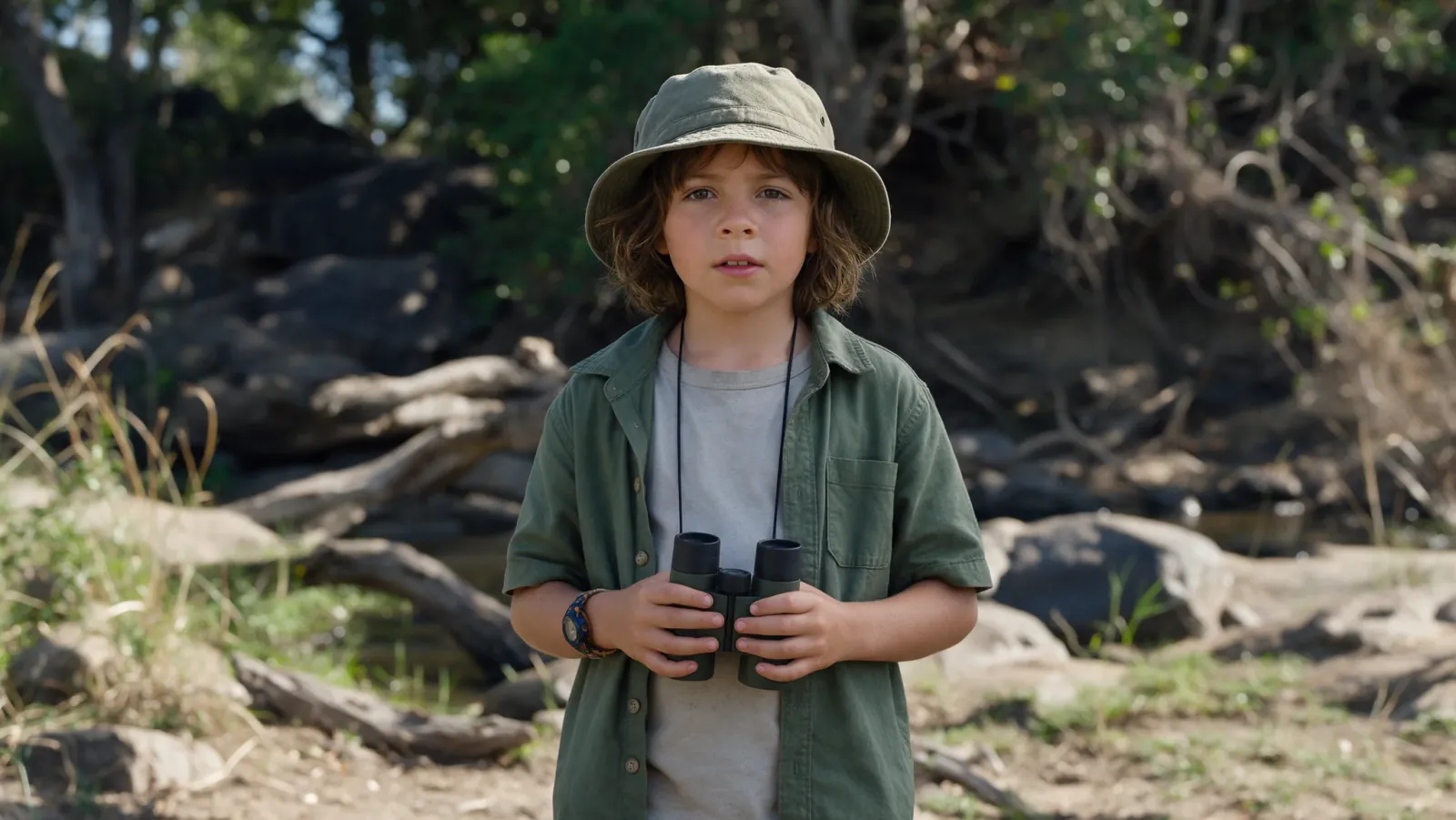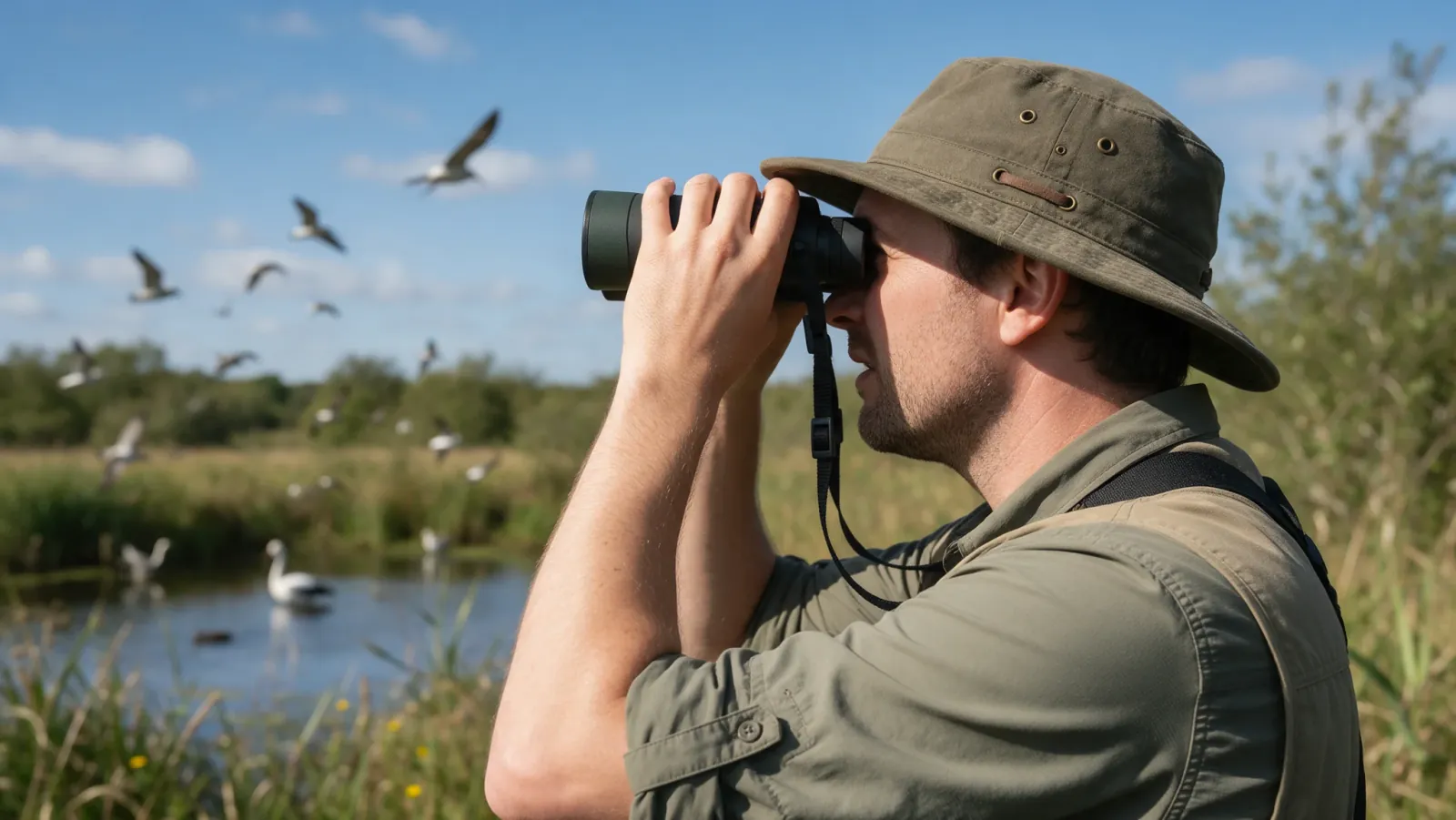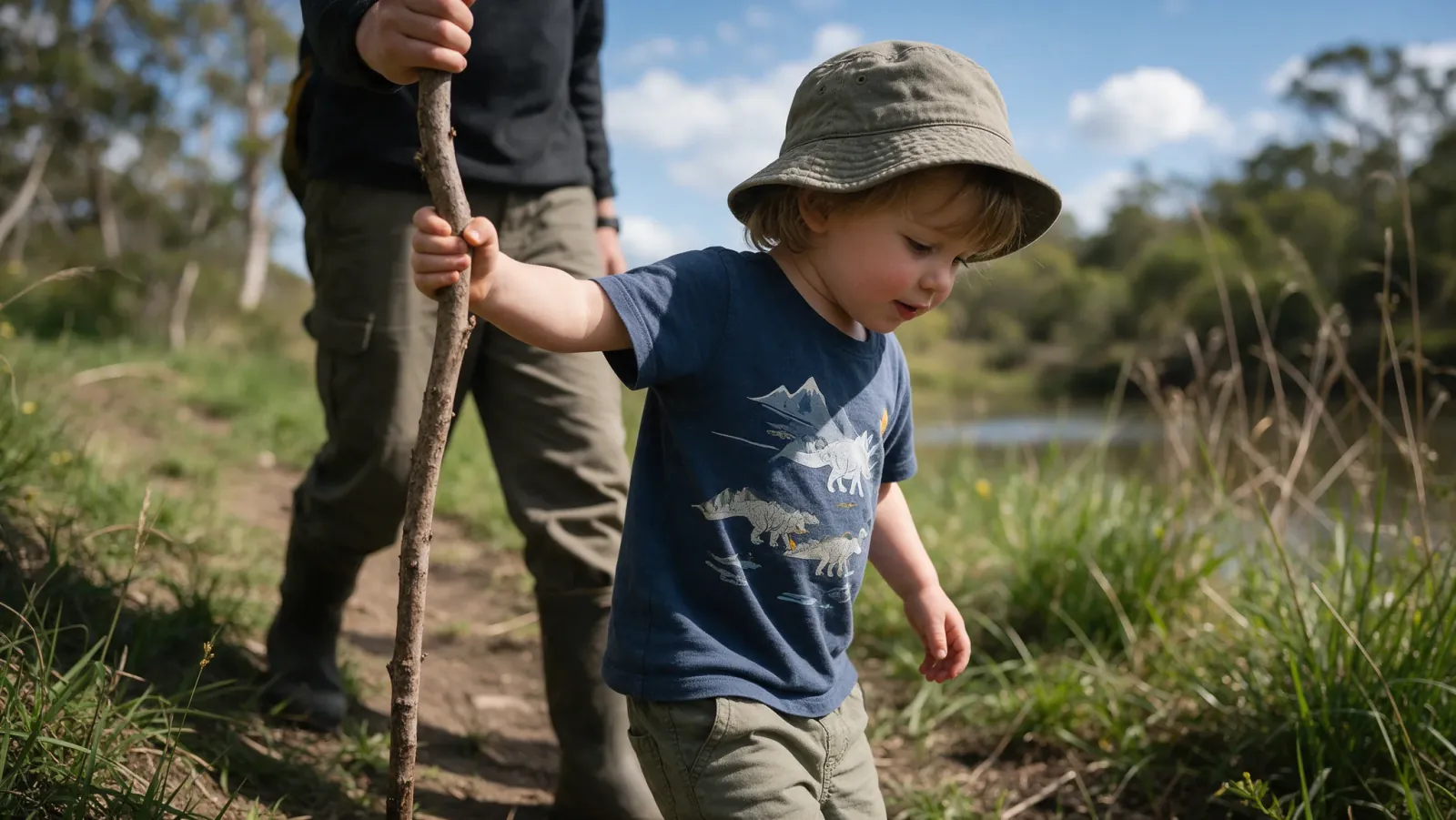
A child's first nature walk is a slow thing, and the slowness is the point. The adult has a route in mind and a time to be home. The child has neither, because every patch of the world is new and worth stopping for. A first walk into a field hands the natural world over at the child's own height.
A first walk does not need a wood or a nature reserve. A verge, a ditch, a patch of grass behind a fence will do. The wild begins wherever the child is allowed to stop.
The world at knee height
For a small child the wild begins at the knees and the toes. A puddle is a sea. A snail on the path is an event worth ten minutes. An adult who lets the child set the pace finds that a walk is a density to notice instead of a distance to cover.
What the child sees is the world in close-up. It is richer than the adult remembered, because the adult stopped looking that closely years ago. How tall a thistle is. How loud a bee is. How long a minute lasts while a ladybird climbs a stem. The child is still keeping count of all of it.
An adult who kneels to look where the child is looking gets a second childhood for a minute. The snail was the destination, and the puddle after it, and the feather caught in the grass. Attention is the whole outing, and it costs nothing but time.
The child's height is an advantage. A beetle is at eye level. A puddle is a body of water. The adult who kneels borrows the advantage for a minute and finds the afternoon has more in it.
Boots change the rules
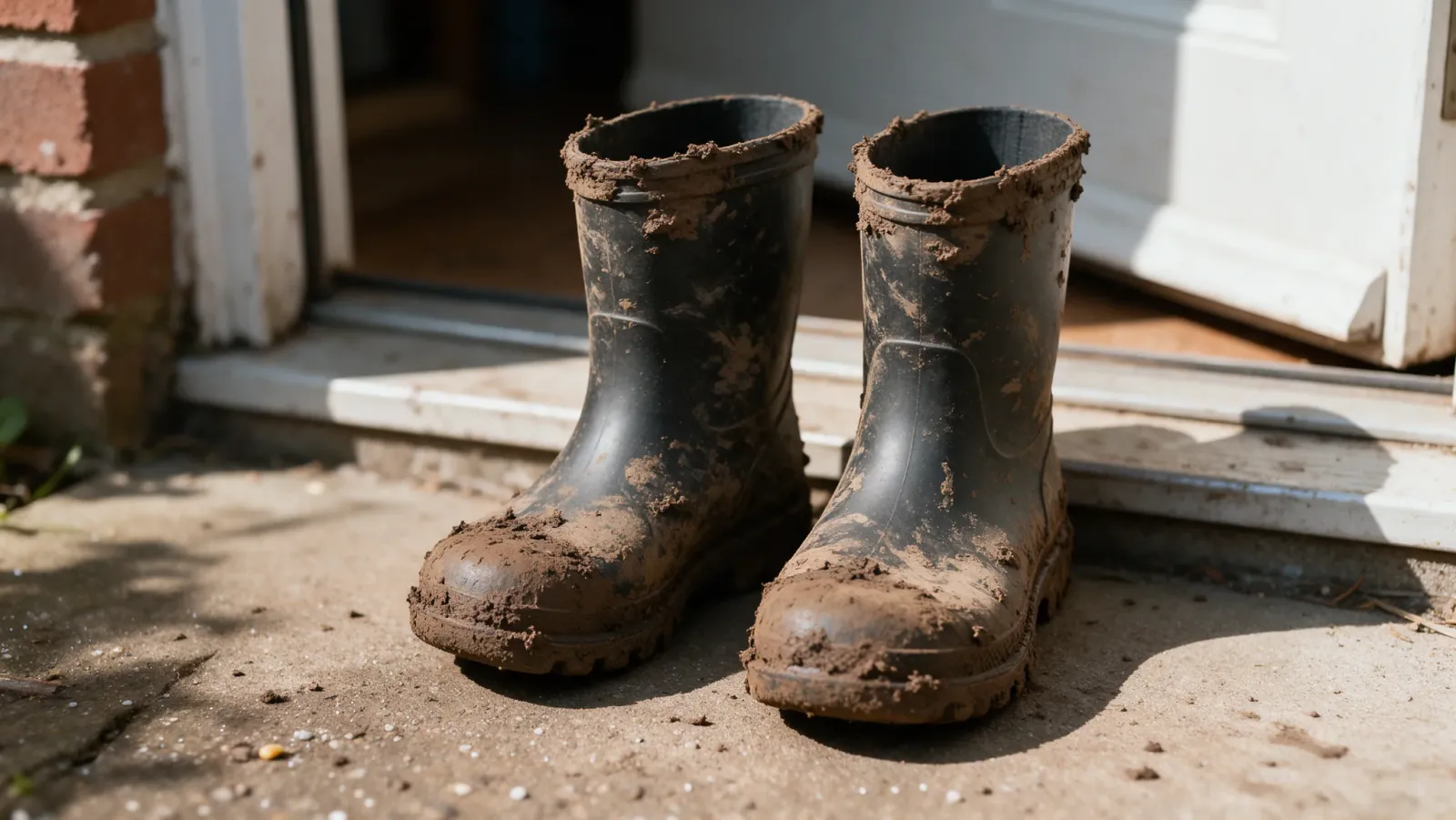
A first nature walk needs the right footwear, because the child will find the water. Boots that can go into every puddle turn the outing from a set of rules into an adventure. Mud is a substance to explore, and a child in boots understands that better than most adults.
The walk ends with wet socks and a shining face, and both belong to the day's success. The adult who planned a short loop learns to plan for the puddle instead. The mess is part of the route, and the route is the point.
A child in clean shoes stays on the path. A child in muddy boots goes wherever the day points. The boots make the child fearless about the ground, and the ground, given a fearless child, becomes a playground.
Boots also give the child permission. The adult who says yes to the puddle has said yes to the afternoon, and the child feels the yes in the body. Permission is part of the equipment.
The right boots are the ones that can get wet and be worn again tomorrow. Fancy boots that must stay clean defeat the purpose. The child reads the rule from the footwear.
What the mud records
The pale clay of the field path and the dark silt of the stream stick and dry in turn. A parent who knows where the child has been can read the boots like a diary.
The mud is the place itself, carried home in a thin crust. A child comes through the door with half the field on each foot. No two days leave the same mark, and a season leaves a layered history. By March the boots have a geography of their own.
The ritual at the door is ordinary and it marks an afternoon spent wholly outside. The child sits on the step and wrestles the boots off. They are set by the door to dry with their toes pointing into the evening. A parent learns to leave them there for an hour, because the drying is part of the day.
The boots are also a record for the parent. A wet toe means the stream. Red clay means the lane. The child's afternoon can be read from the doorstep before the child says a word.
The same field in every weather
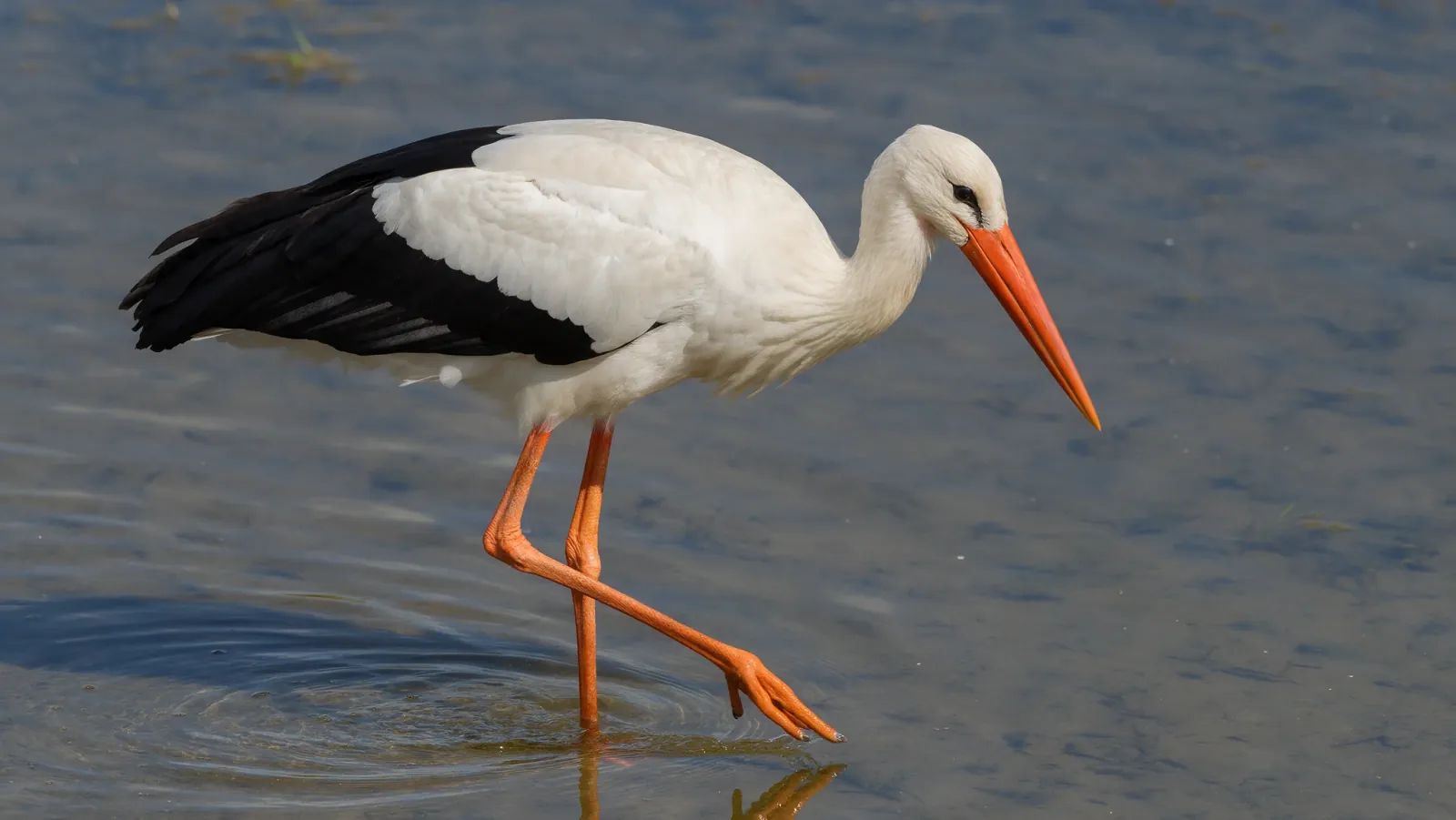
The same field in rain is a different field. The path turns to clay, the ditch fills, the storks stand in the shallows with their feathers dark at the shoulder. A child who walks in all weather learns that a place has more than one face.
A route walked in every season becomes a calendar the child can read. The first warm wind brings the storks back. The reeds go gold. The puddles freeze at the edges and crack under a boot.
That knowledge arrives without a lesson. The child is not told that the year turns. The child is out in it, and the turning happens underfoot.
Weather also changes what the child can do. Frost makes the puddles solid. Snow makes the field a blank page. A child who walks in all weather learns that the outside is never closed.
Questions arrive after the looking
Questions arrive later, once the child has a stake in the place. Why is the ditch full today. Where do the frogs go in winter. Who made the track in the mud. The looking has become a kind of ownership, and the questions are what ownership sounds like.
An adult does not need every answer. A parent can admit not knowing, and suggest finding out together. Each true answer gives the next question somewhere to stand. The stork eats frogs and mice. It flies south for the winter. It clatters its bill instead of singing.
A walk, a window, a field guide on the kitchen table: these are enough. The world does not need to be made exciting. It already is, and a child can tell when an adult is pretending otherwise.
The answers do not have to be complete. A field guide can be checked at home. The question can be written down and carried to the next walk. The child learns that looking and asking are the same habit, continued at different speeds.
The stork is a good subject for these questions because it returns. A question asked in spring can be checked in summer, and the answer stands in the field.
The walk becomes a habit
One walk becomes another. The child shown the field at four wants the river at five and the marsh at six, and by the time the child can walk without tiring, the habit is fixed. The first walk is the seed of all of it, the afternoon when the child learned that the world outside the door is alive.
A stork gift back on the shelf can keep the afternoon's bird present after the boots come off, a white shape for the window while the coat dries. What began as an outing ends as a belonging.
The shelf bird and the field bird do different work. One can be touched, and one has to be waited for. A child who has both learns the difference between a picture and a place.
The child comes home already planning the next walk. The boots by the door are the proof, and the mud on them is the receipt. The child will want to go back tomorrow, and the boots will still be there.
Explore the gift