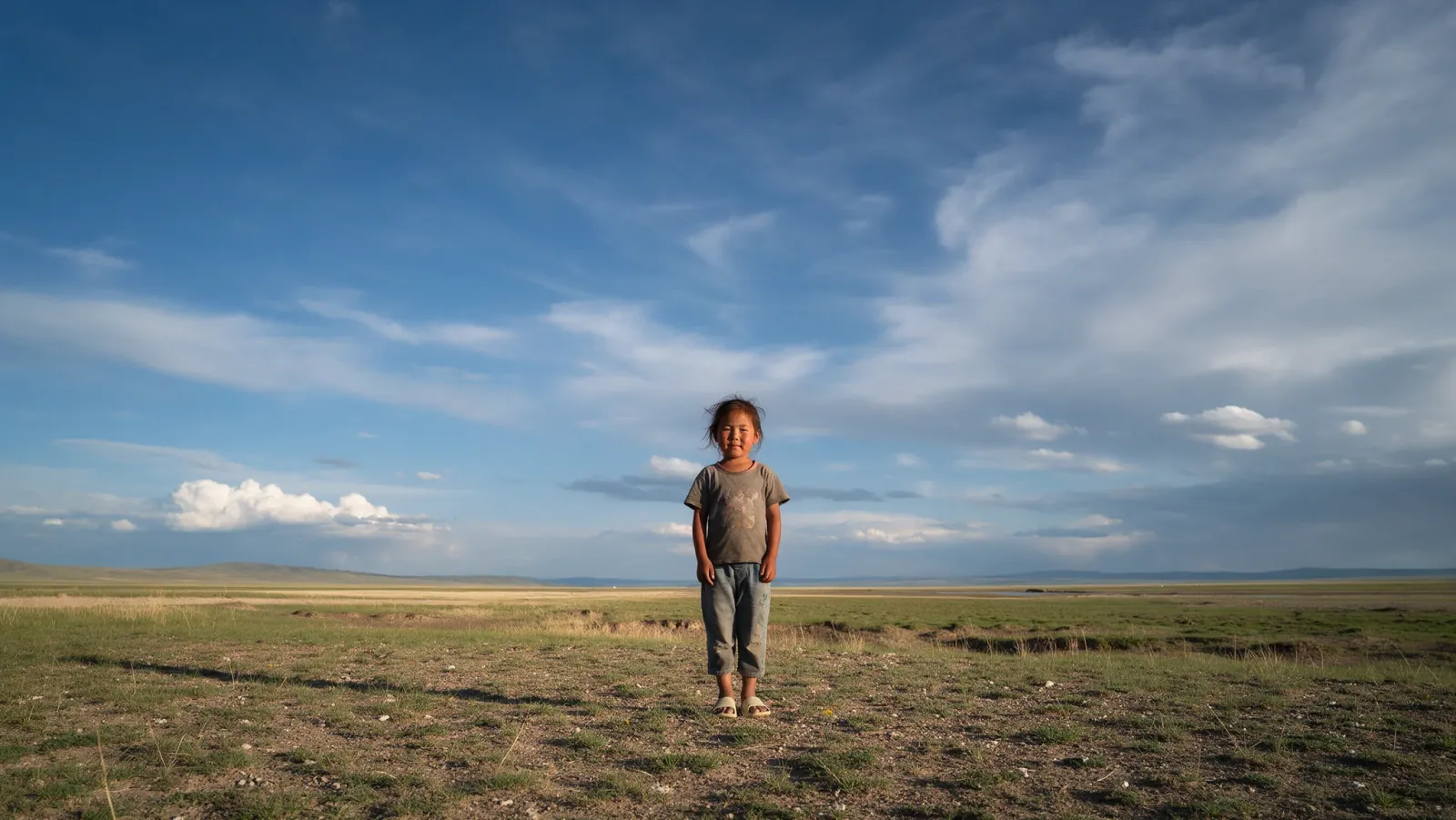
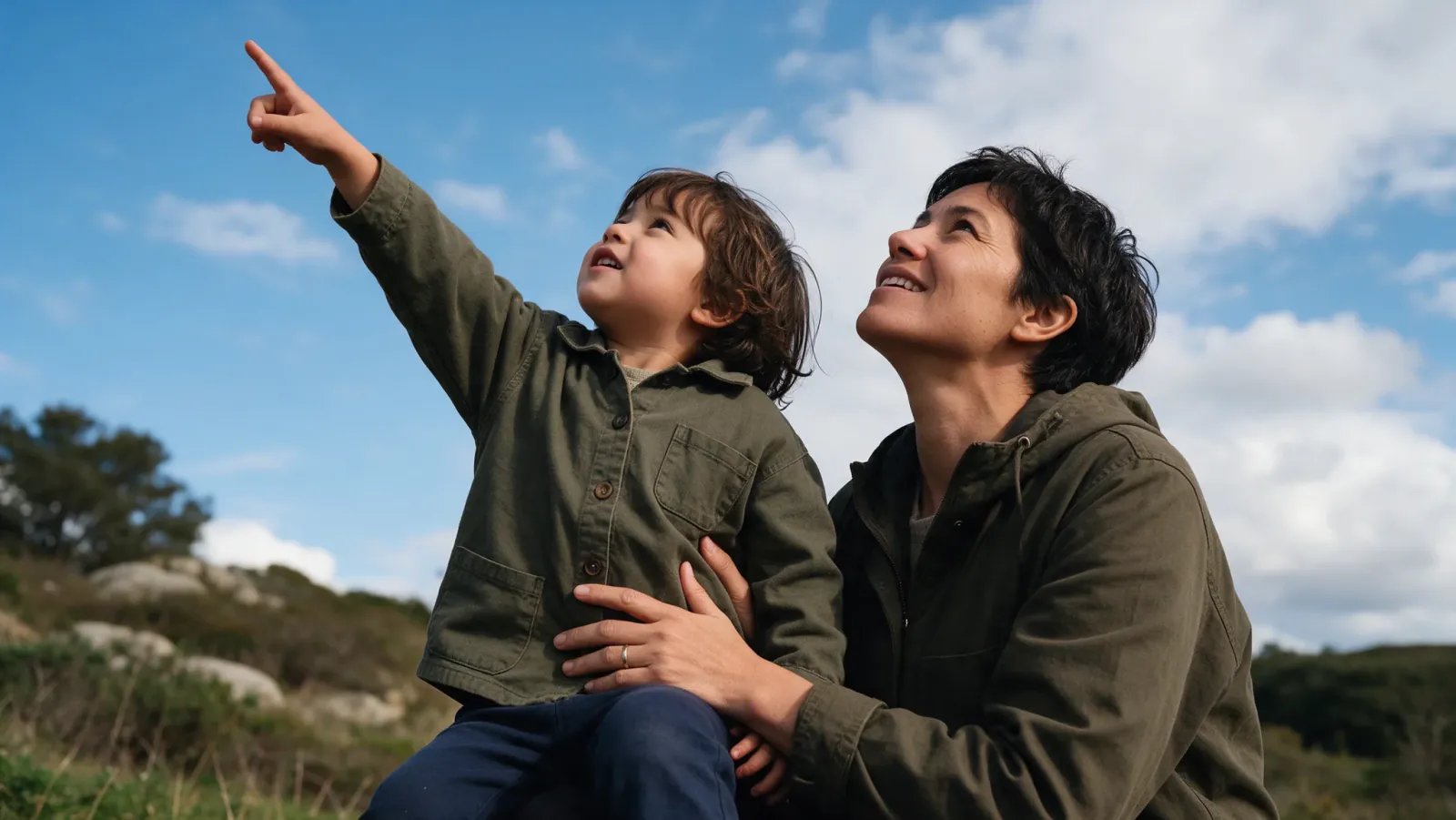
A child who learns to look up keeps a room overhead that costs nothing and never closes. The habit starts with an adult who stops in a garden, tips a face back, and waits for something to cross.
Many childhoods happen under ceilings, in cars, in rooms with the curtains half drawn. The sky goes on above all of it, doing its slow work, waiting for someone to notice.
A habit taught by example
A small child does not naturally look up. The ground is full of stones, puddles, and things worth picking up. Looking up has to be shown, and it is shown by someone doing it first, without a lecture.
The parent stops. The child stops too, mostly out of curiosity about what the adult is doing. Then the neck goes back, and the sky enters the day. At first it is brightness and a few clouds. Then a gull crosses, or a swallow, and the sky turns into a place with traffic.
Looking up is a habit before it is an interest, and it is passed on by standing still in the open for a minute longer than usual. Nothing has to be said. The child reads the stillness and copies it.
Adults who grew up looking up still do it on the way to a car, at a bus stop, in the gap between two buildings. The habit is old and cheap. It survives moving house, changing jobs, and years of indoor work.
The best place to start is a garden, a park, or a street with a strip of sky above it. No destination is needed. The walk can stop for a minute and then continue, and the stopping is the lesson.
What the sky holds
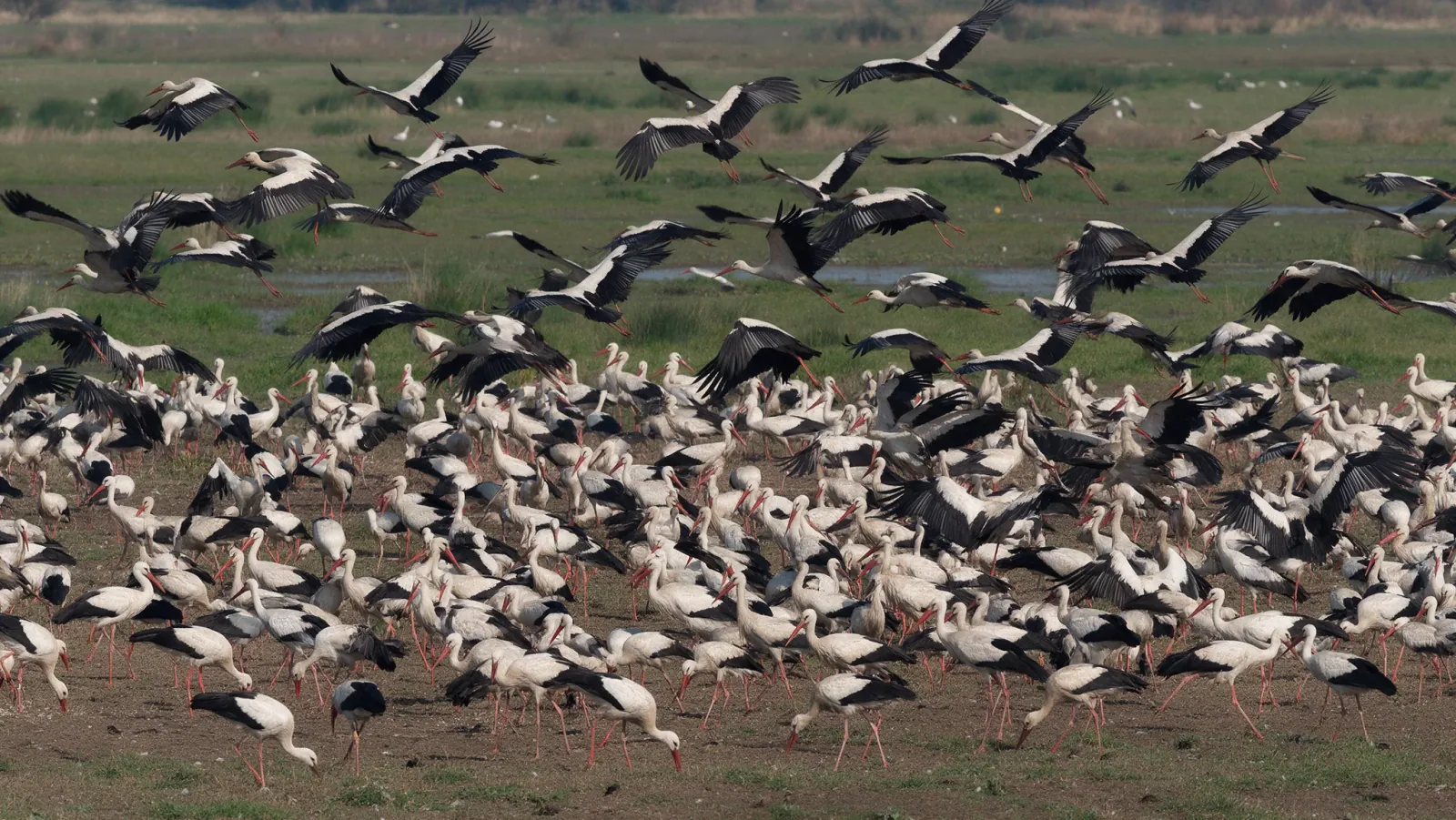
More goes on up there than a child expects. Sparrows moving low and fast. The slow circles of a stork riding warm air. Clouds in shapes worth naming. The pale moon still up in daylight, which surprises children who have only seen it after dark.
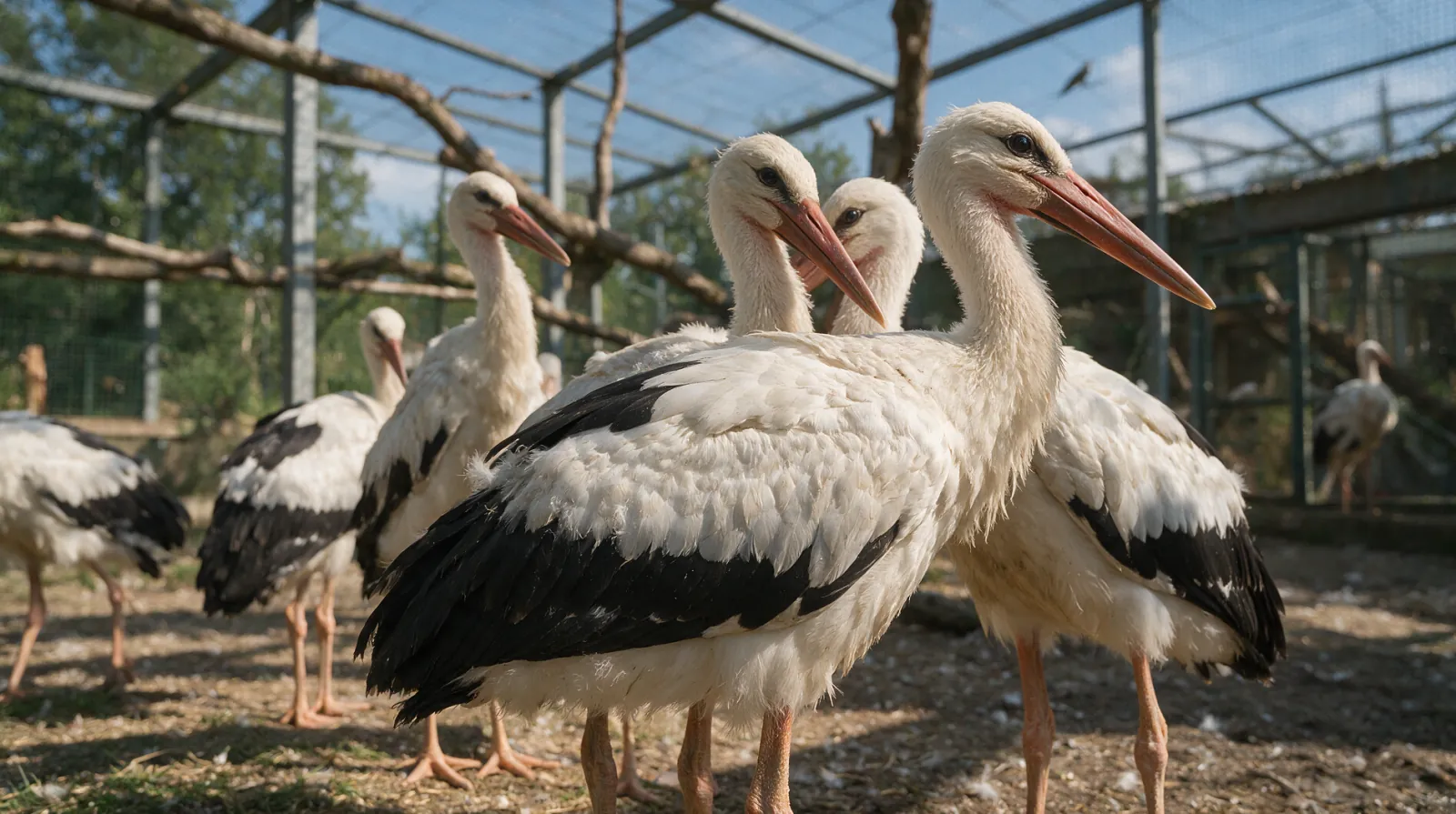
A white stork makes a good first bird to follow. It is large, pale against the grass, and unhurried. It does not dart away. It climbs on thermals in wide, patient rings, and a child can keep it in view for a long time without losing the thread. A stork is built for being watched.
Naming helps. The flat grey sheet that means rain. The high white streaks that mean wind. A child who names what is overhead begins to read the sky as a place with its own weather and its own inhabitants.
Weather arrives from somewhere and leaves for somewhere else. A child who has watched a front come in over a field understands that better than a child who has only seen a forecast on a screen.
A child who can find a stork in the sky can find other things too. A buzzard circling over a wood. A kite hanging still against cloud. The skill is the same one: hold the shape, follow it, notice when the wings change.
The first pair of binoculars
Two lenses change the sky. Before them, a stork is a white speck in blue distance. After them, the speck has a beak, a red bill, and feathers that move. The child has arrived at the bird.
The pair should be light, simple, and easy to focus. Small hands need small barrels and a soft grip. A set that hangs on a strap and comes up to the eyes without a struggle is worth more than a heavy, powerful one that stays in its case.
The skill arrives slowly, and the early misses are part of it. A child who finally holds a stork inside the circle of the lens remembers the moment for years, often without remembering the walk that led to it.
A modest gift does this better than an expensive one. A child handed something large and clever expects to be amazed. A child handed a simple pair of lenses and shown how to use them does the amazing part alone.
A strap matters more than magnification. A pair that can hang around a neck while a child climbs a gate will be used far more than one that lives in a box.
Find the bird before the lens
The common mistake is sweeping the sky with the lenses, hunting for something. The better method is to spot the bird with bare eyes, keep both eyes on it, and lift the binoculars without losing the place.
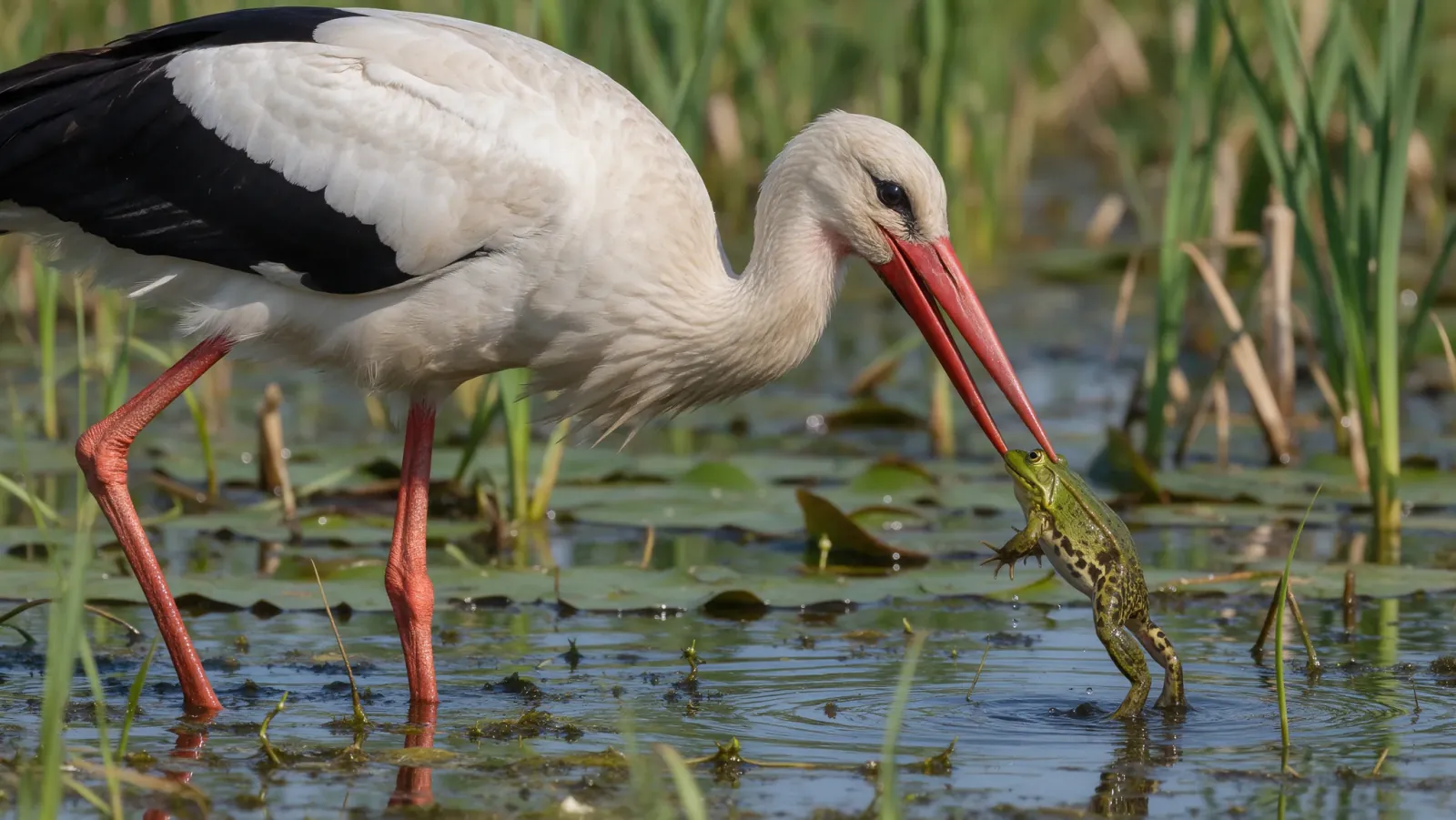
A stork in a wet field makes a patient first subject. It is large, pale against the grass, and it holds still for long stretches. The child can practise without the frustration of a bird that will not sit. A patient subject teaches the hands what the eyes already know.
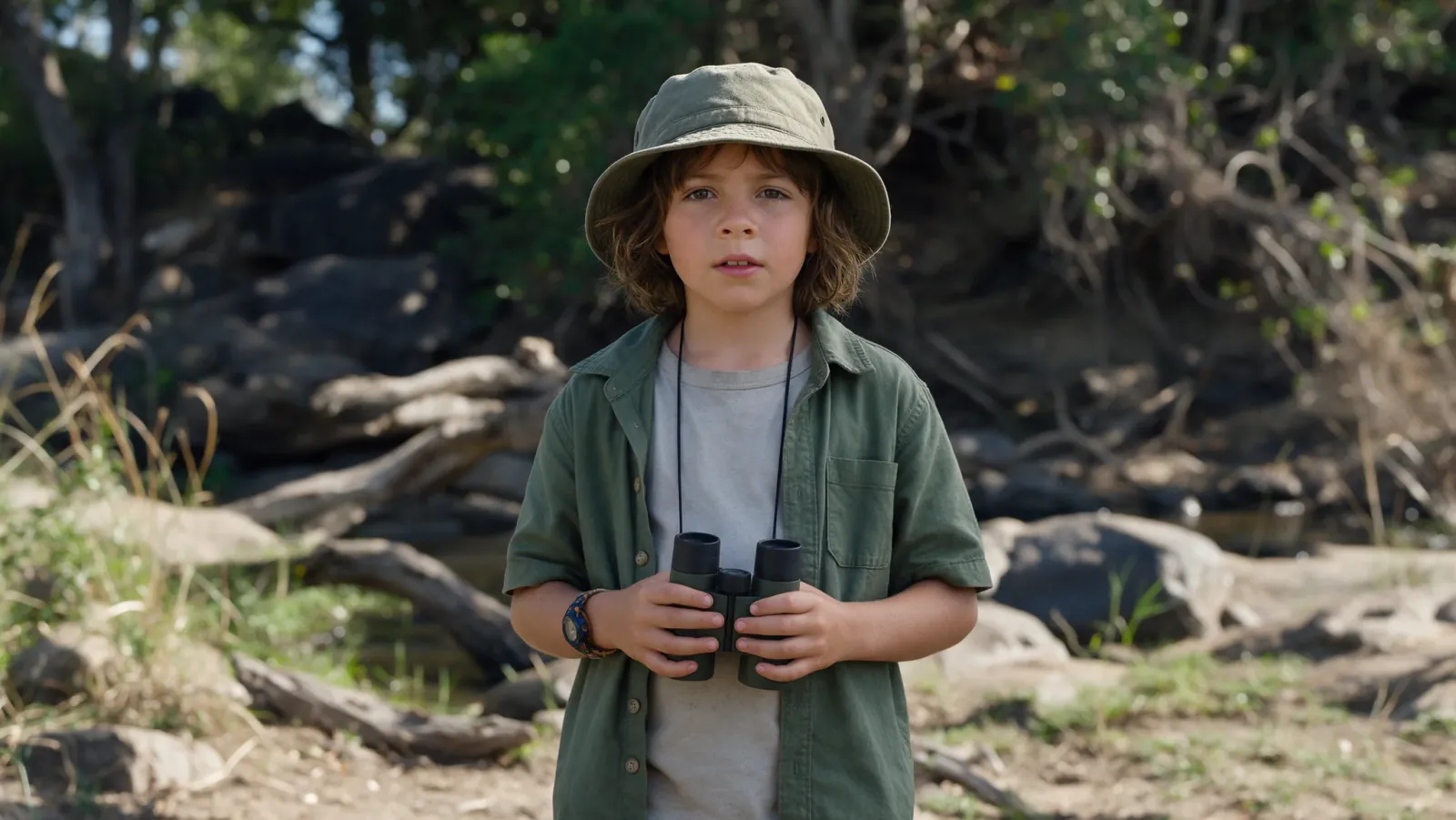
Let the child use them badly. The moon, a ladybird, their own feet, the neighbour's cat. Every odd subject is practice, and every pointed look teaches a little about how lenses work. The point of a first pair is that the child falls in love with looking. Technique can wait.
The silence after the first look
Something happens to the voice when the lens finds the bird. The chatter runs down and stops, and the stoppage is the whole point. One thing is being held steady in the centre of the eye, and the holding is attention of a kind that is hard to teach any other way.
The bird does not perform. It stands in the shallows, or steps slowly through wet grass, and it would be doing the same if nobody watched. A child who has seen a wild bird at its own work has seen something no screen can supply.
The silence usually ends with a question, and the question is the beginning of the next walk. What is it eating. Why does it stand on one leg. Where does it go at night.
Parents who can answer do. Parents who cannot say so, and the child learns that a good question can outlast an adult's knowledge.
There is a version of this at every age. An adult with binoculars goes quiet at a marsh in the same way. The equipment changes and the pause does not. Something has been found, and finding it takes the words away for a minute.
The sky that stays
The sky does not leave when childhood ends. The same clouds, the same stars, the same storks crossing the same distances. A child who grew up looking up carries the habit into a playground, a school yard, a first flat with a small window.
Some families keep a stork on a windowsill for days when the sky is empty. A white shape in a warm room holds the bird's place indoors. Adopt a stork if you want that marker, and stand it where the morning light falls.
The real ceiling is outside. It is over every field, garden, and pavement, and it asks for no money and no permission. A child only has to tip a head back to have all of it.
Years later, standing in another country, the grown child will look up out of habit and find the same arrangement of cloud and distance. The sky has not changed. The looking was learned early, and it stayed.
A pair of binoculars left by the door is a reminder to use them. The best ones get scratched, rained on, and taken out on days when nothing much is expected.
Explore the gift