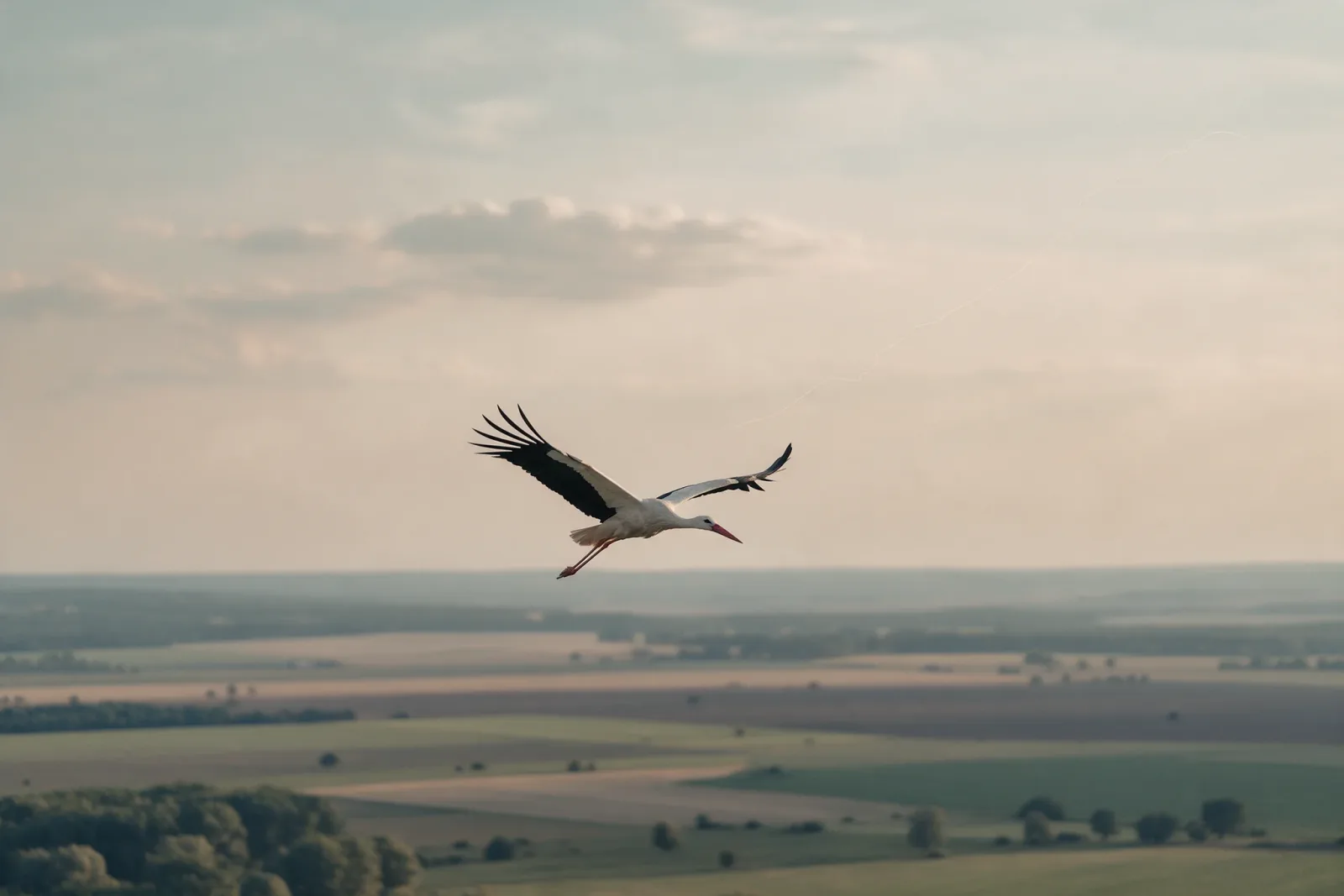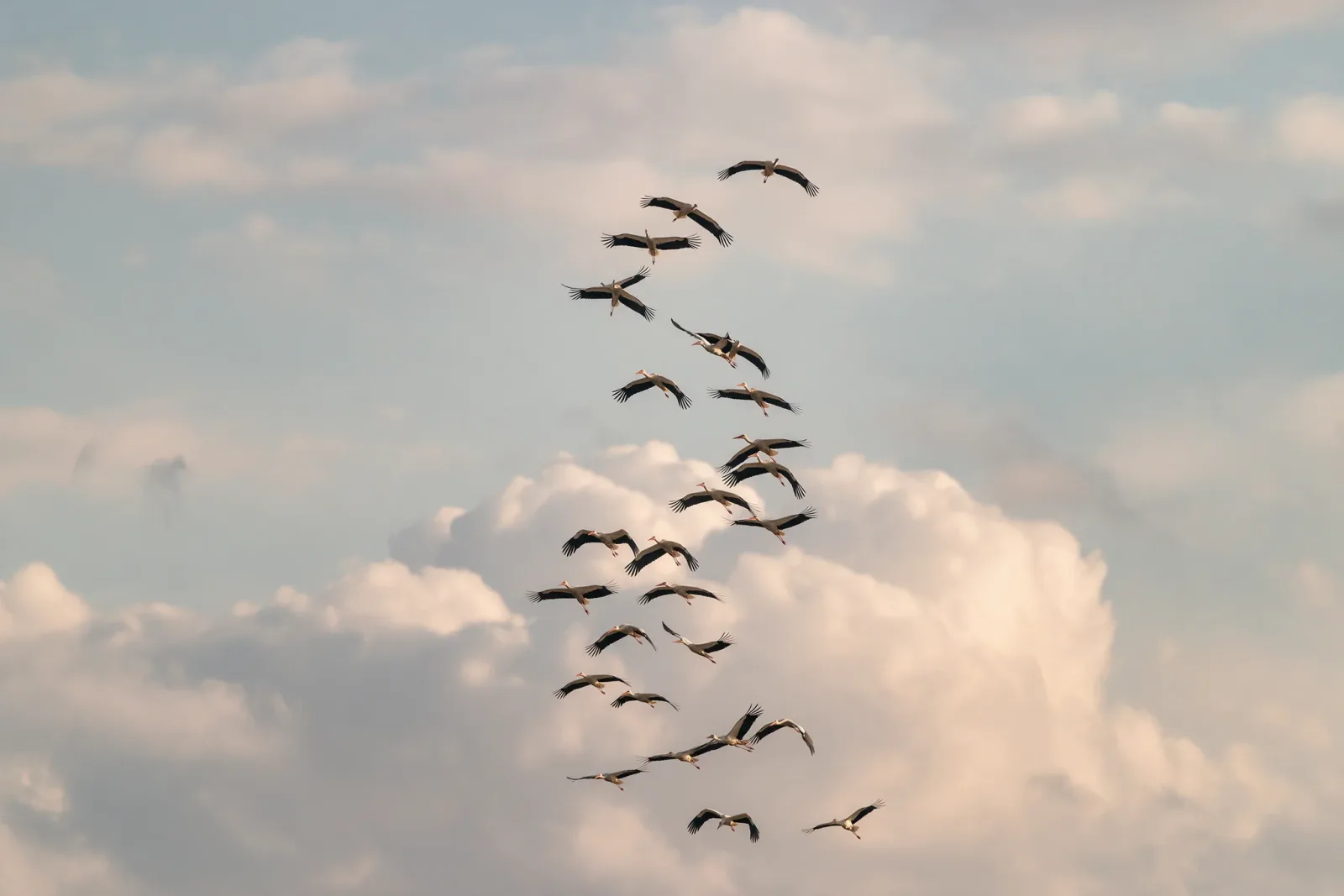
When a signal stops, the heart drops a little. You have been following a stork for months, watching its dot move across a map, and then one day there is nothing. No new point, no new timestamp, just the last known position sitting alone on the screen. The first instinct is to assume the worst. But a stopped signal is almost never a simple message, and before you conclude anything, it helps to know what silence can mean, and what it cannot.
The many reasons a signal pauses
A transmitter can fall quiet for reasons that have nothing to do with the bird. A stork may fly into a region with no coverage, or pass under heavy cloud, or spend days in a deep valley where the signal cannot climb out. The device itself may save battery and go quiet for a stretch. A solar unit needs sunlight, and a string of grey days can leave it with nothing to send. Any of these can produce a gap that looks, on the map, like an ending.
What silence usually means
Most of the time, a stopped signal is just a pause. The bird is still there, still flying, still feeding, but the data has not caught up with it. In many tracked journeys the signal drops for days or even weeks and then returns, the dot jumping forward to some new place far along the route. The bird was never lost. It was only out of reach. Patience is the correct first response, and usually the correct last one too.
When the silence is real
Sometimes a signal does not come back. A stork's migration is long and hard, and not every bird completes it. The crossing of a desert or a sea can cost a bird its life, and a transmitter can simply stop because the bird it was attached to is gone. When this happens, there is no map that can soften it. The journey ends, and the silence is final. But even then, the signal has already done its work. It told the story of a life up to its last known point, and it let us follow that life farther than we ever could have without it.
The difference between pause and ending
The first skill of following a tracked bird is learning to tell a pause from an ending. A pause is common, and it has many causes, most of them ordinary. A bird spends a week in a valley with no coverage, or a stretch of cloud blocks the signal, or the device saves its battery for a while. The map goes quiet, and then it wakes, and the dot has jumped ahead. A pause is nothing to fear.
An ending is different, and rarer, and it does not announce itself. The signal simply does not return, and the map stays still at the last known point. But even then, patience is the first response, because a pause can last a very long time before the signal comes back. Storks have reappeared on the map after weeks of silence, alive and moving, and every watcher who waited was glad they did.
The honest answer to the question of a stopped signal is that silence is usually temporary and sometimes not, and there is no way to know which until time passes. The bird owes us nothing, and it sends what it sends. What we owe the bird is patience, and the willingness to wait without concluding.
Waiting in silence is part of following a wild life. The gaps are as much a part of the record as the points, and they teach their own lesson, that we follow on the bird's terms, not our own, and that the next signal, when it comes, will be worth the quiet.
What remains
When a signal stops, what remains is the route already travelled, the dots already recorded, the story already told. A single bird's map, even an unfinished one, is a record of a real life moving through the world. The silence asks us to hold the story with care, and to remember that following a wild thing is never a guarantee. It is a gift of time. The signal may return tomorrow, or it may not. Either way, you were there for part of the journey, and that part is yours to keep.
Explore the gift