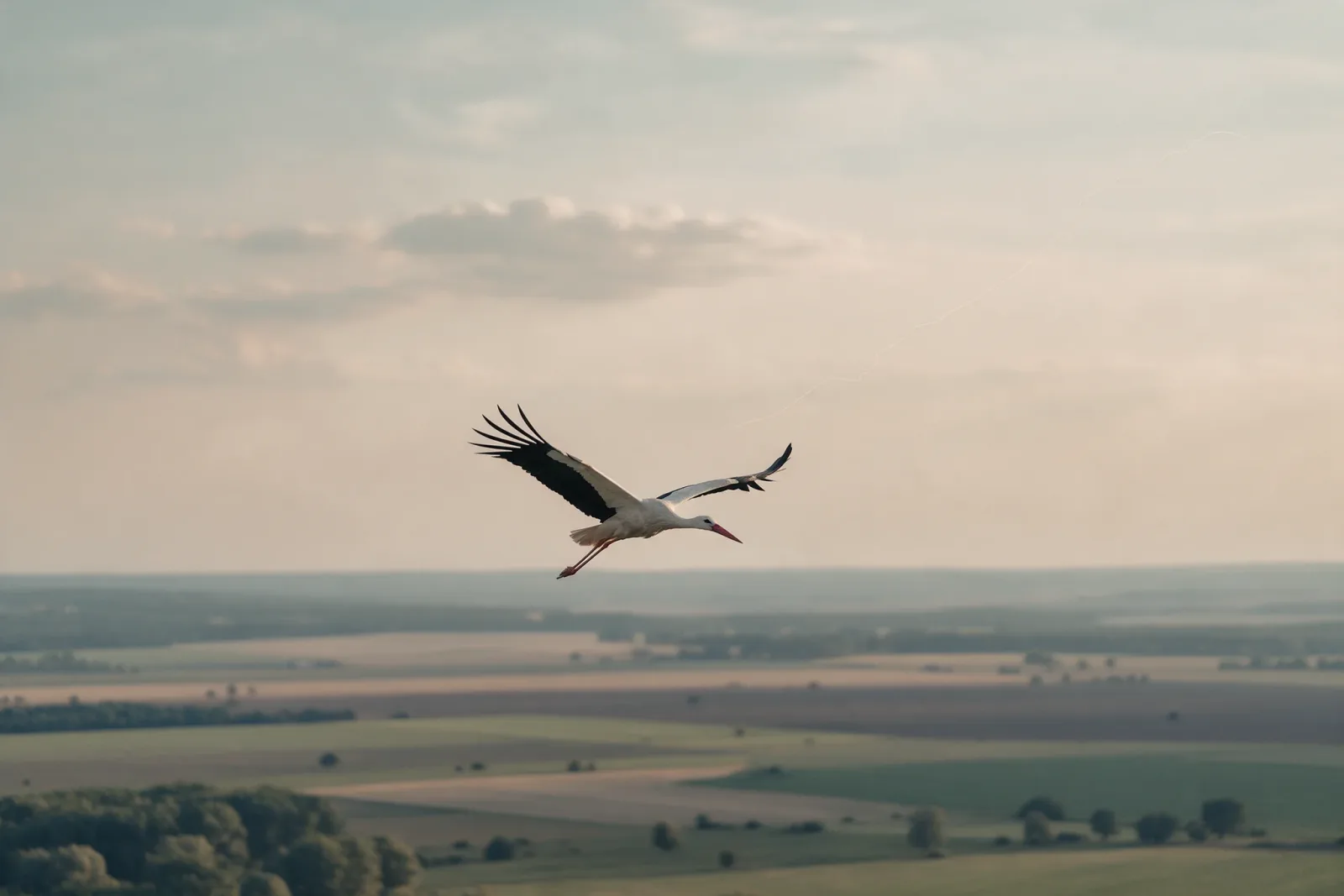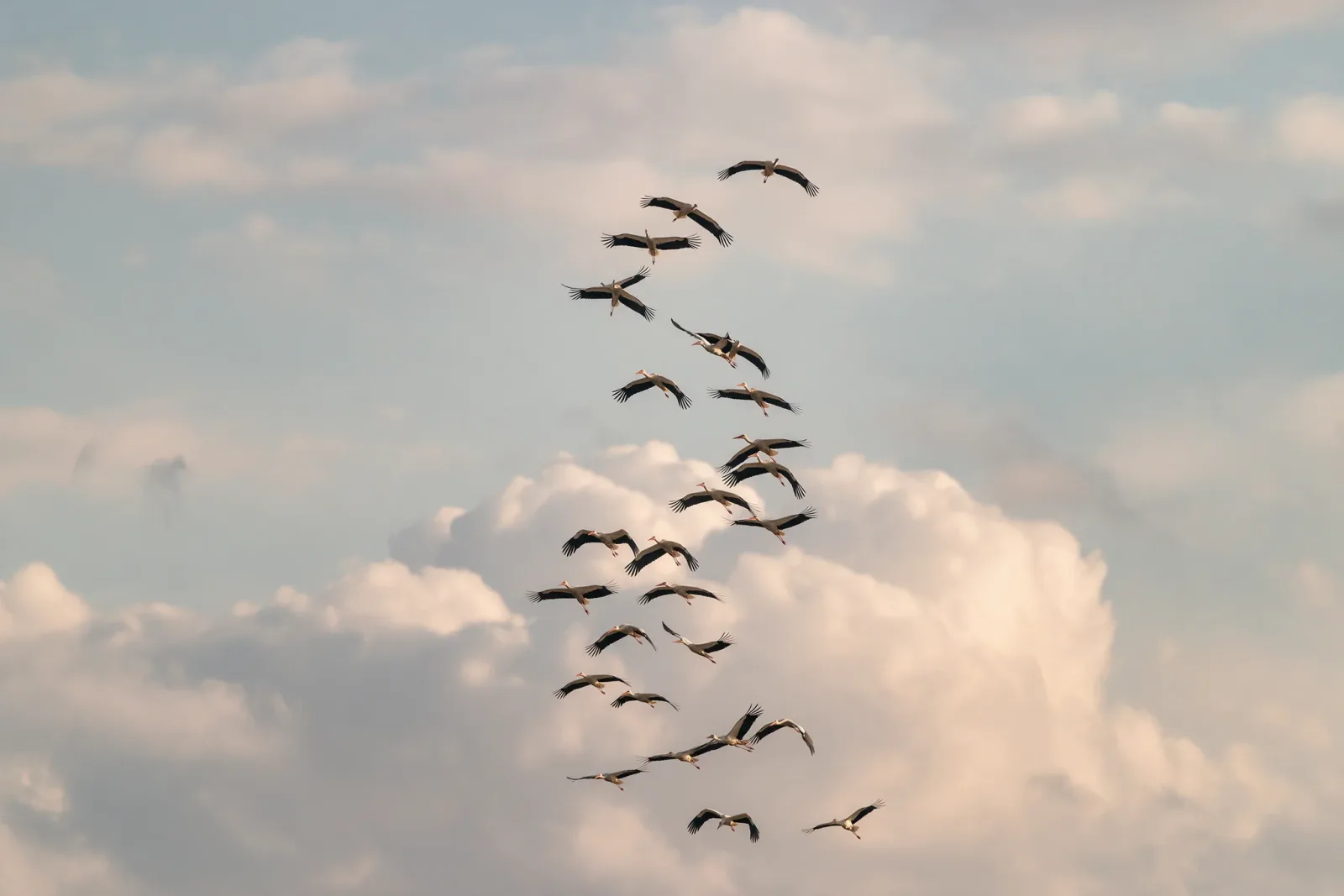
The wind beneath them is the stork's true ally, and the birds know it. Before a migration begins, before the first bird rises and turns south, the storks are watching the sky. They do not leave on a fixed date the way a train does. They leave when the weather says leave, when the wind is right and the air is warm and the whole sky seems to lean toward the journey. A stork reads the weather the way a sailor does, and it waits for the perfect day.
Waiting for the right air
Migrating storks are often seen gathered, waiting, on the days before they go. They are not idle. They are reading the sky, feeling for the wind and the warmth that will carry them. If the air is wrong, they stay. The instinct that sends them south is strong, but it is patient. A stork will hold for days, even weeks, rather than set out into a sky that will fight it. The perfect day is worth the wait, and the birds know it.
The wind as a road
For a stork, wind is not an obstacle. It is a road. A helpful wind behind the bird adds speed and saves strength. A rising column of warm air lifts the bird thousands of metres with no effort at all. The birds do not fight the weather. They use it, leaning into the lift, gliding with the tailwind, letting the air carry them where instinct already wants them to go. The wind beneath them is not luck. It is timing, chosen carefully.
Reading what we cannot see
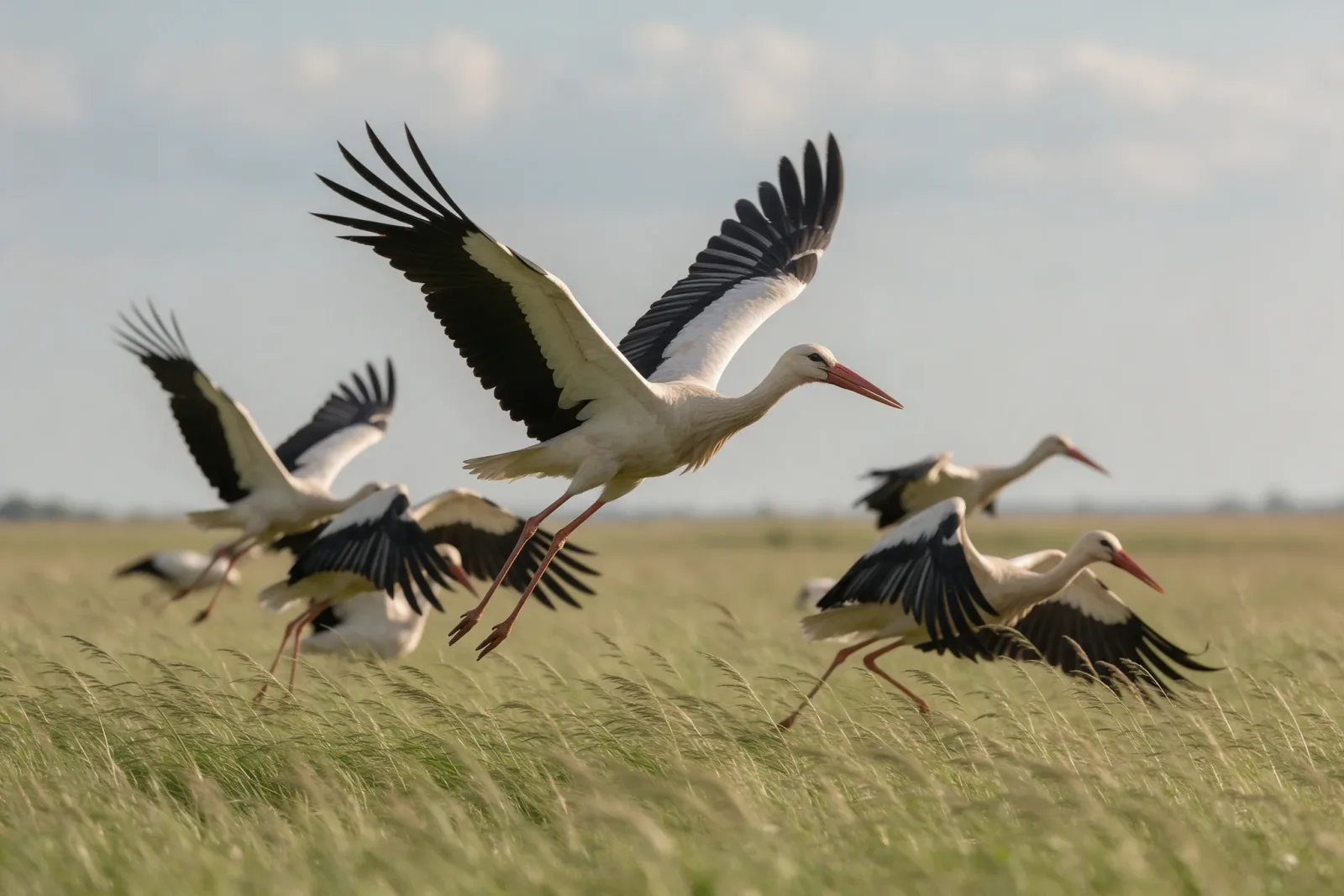
What is remarkable is that storks read weather we can barely perceive. They feel the pressure changing and the temperature shifting through their feathers and their skin. They sense the lift in the air before they take off. A bird on the ground, wings half spread, is testing the breeze, measuring the strength of the day. Then, when everything is right, the decision arrives all at once, and the whole flock rises together into the waiting sky.
The weather they wait for
The storks are weather readers of the finest sort. They feel the pressure fall and the wind shift through their feathers, and they know, before we do, what kind of day is coming. A tailwind behind them, a warm sun overhead, a sky full of rising air, these are the things they wait for, and they will hold on the ground for days until the conditions line up.
The wait is not wasted. The birds feed and rest, gathering the strength they will need, and they watch. A flock on the verge of departure has a particular quality, a restlessness held in check, birds shifting and testing their wings and looking up. Then the change comes, a softening of the air, a turn of the wind, and the decision is made all at once.
Timing the departure is one of the great skills of the migration. Leave on a bad day and the journey costs more than it should. Leave on the right day and the wind does half the work. The storks almost never leave badly, because they have learned, over generations, to trust the sky's signals over their own eagerness.
The wind shapes the whole journey as well as helping them along. A bird flying into a headwind burns through its strength, while a bird riding a tailwind travels almost for free. The difference can mean an extra day of rest or an extra day of hard flight, and over the course of a whole migration, the wind is the difference between arriving strong and arriving spent.
So the birds do not fight the weather. They use it, the way a sailor uses the sea, and they choose their days with a care that looks, from the outside, like wisdom. It is wisdom of a kind, an old, inherited knowledge of the wind, carried in the blood and read through the feathers.
The day they choose
The departure, when it comes, is sudden and certain. One moment the field is full of waiting birds. The next they are lifting off, climbing on the first thermals of the morning, and the migration has begun. The wind beneath them is the reason they are going now and not yesterday or tomorrow. It is the quiet promise the birds have been waiting for, the green light in the sky, and they answer it without hesitation, trusting the air the way they trust their own wings.
Explore the gift