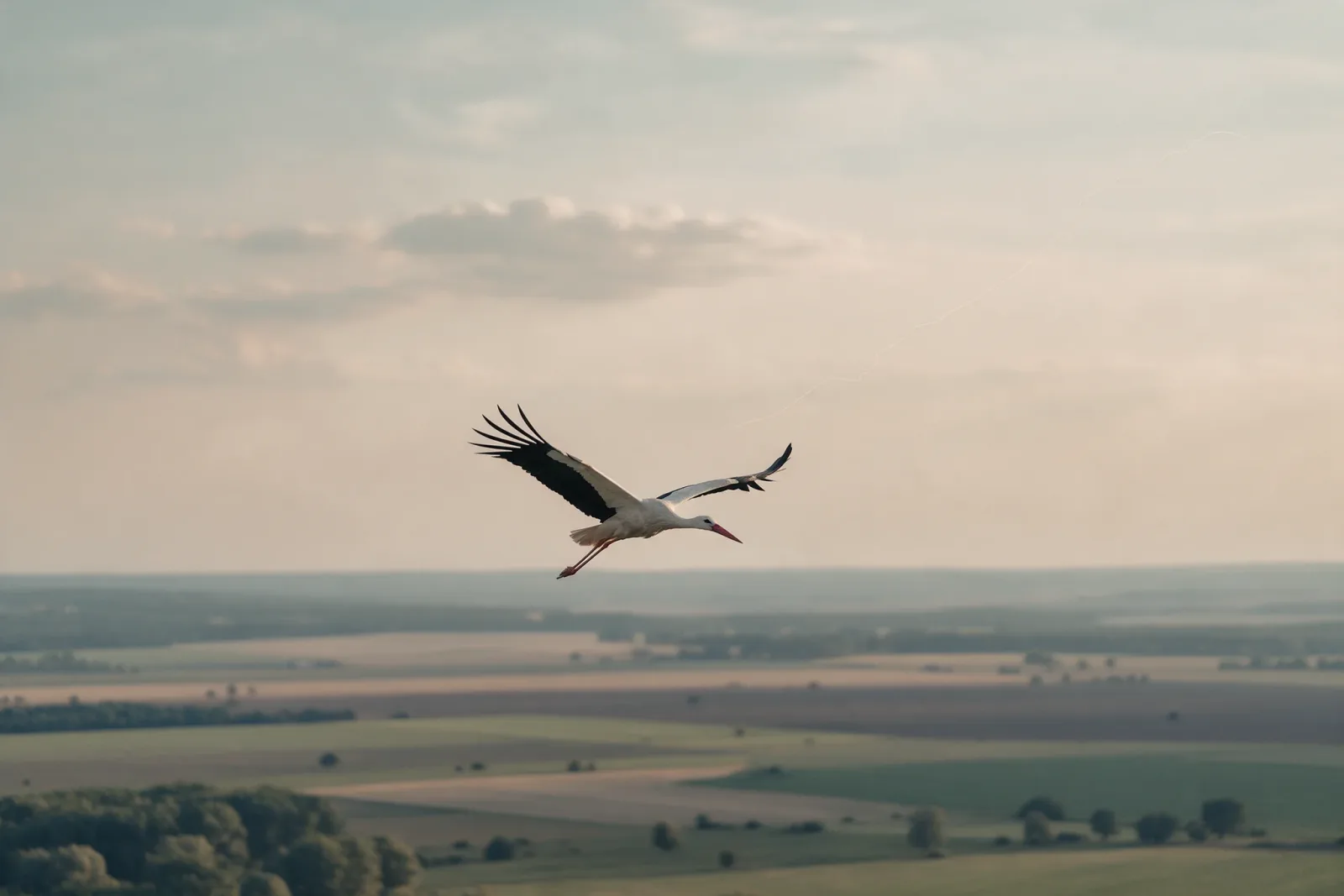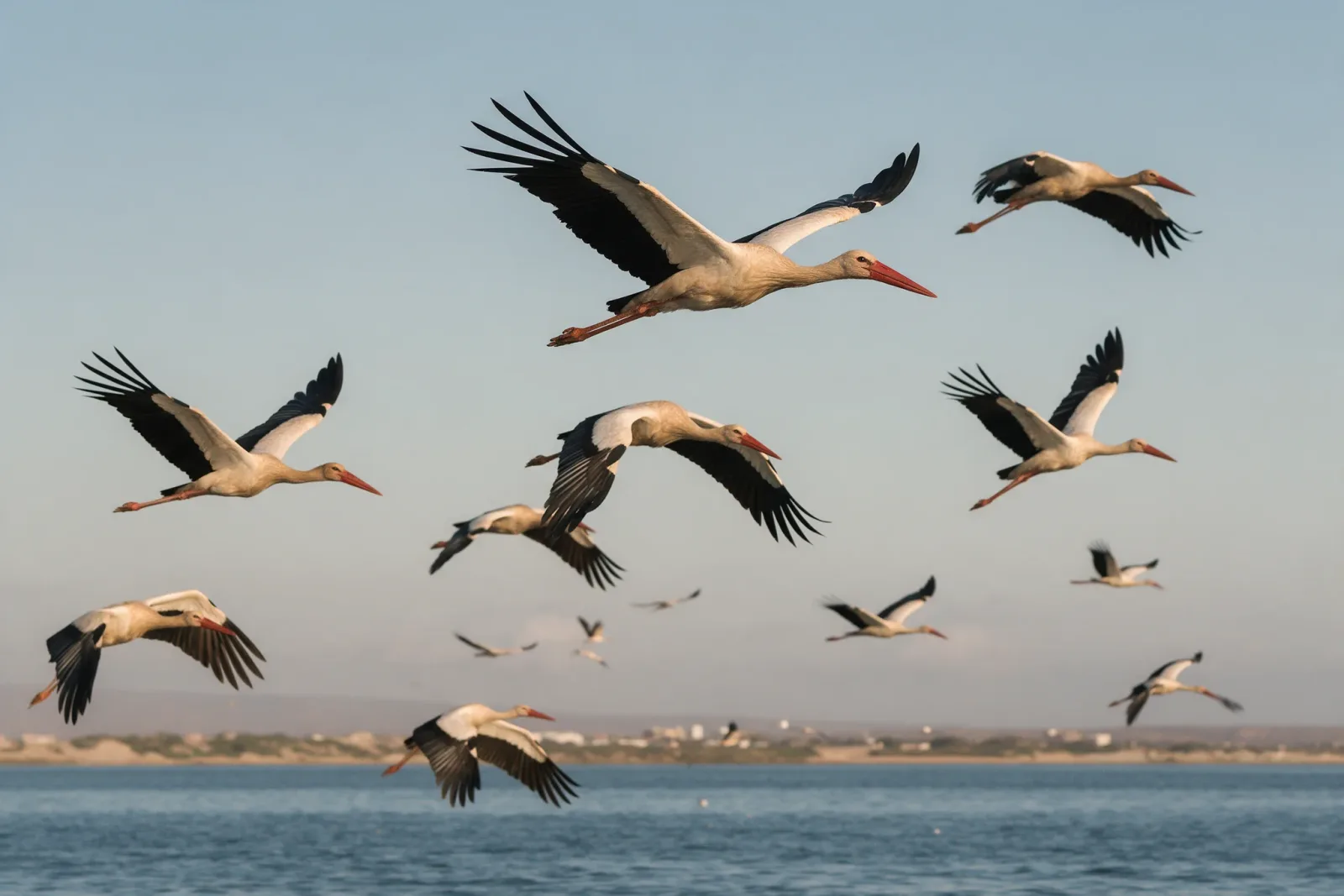
The crossing at the Strait of Gibraltar is the great short cut of the western flyway. Here, at the southern tip of Spain, two continents lean toward each other until the water between them is narrow enough to see across. On a clear day you can stand on the European shore and watch the African hills rise beyond the blue. And in autumn, you can watch the storks come, trading Europe for Africa in a single long glide over the sea.
The narrowest door between two worlds
The strait is one of the few places where a stork can cross from Europe to Africa without a long, desperate flight over open ocean. The water here is far narrower than the wider Atlantic, and the birds know it. They gather along the Spanish coast, waiting for the right wind, and then they go. The crossing is not easy, but it is possible, and for a bird that avoids the sea wherever it can, possible is enough.
Waiting for the right day
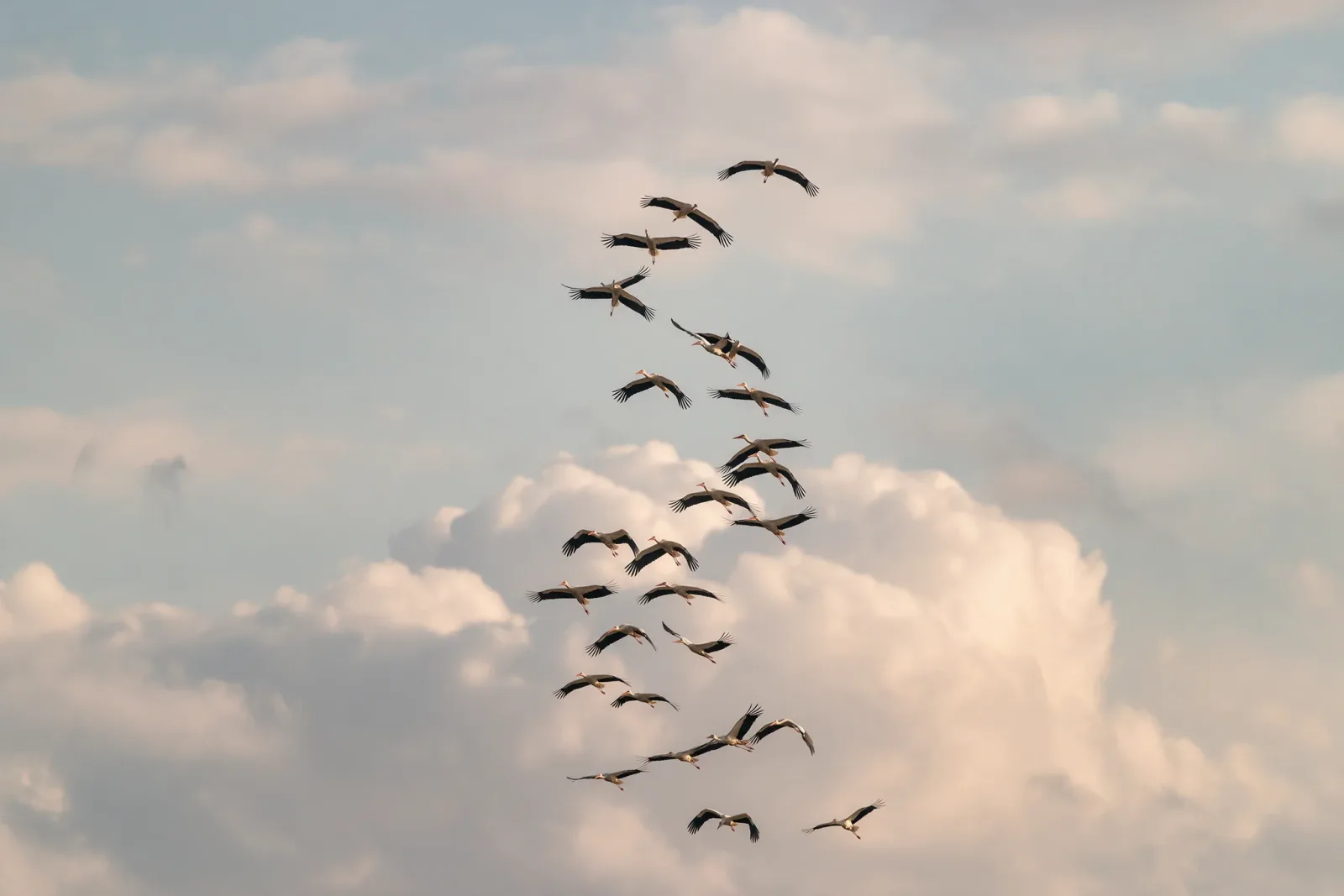
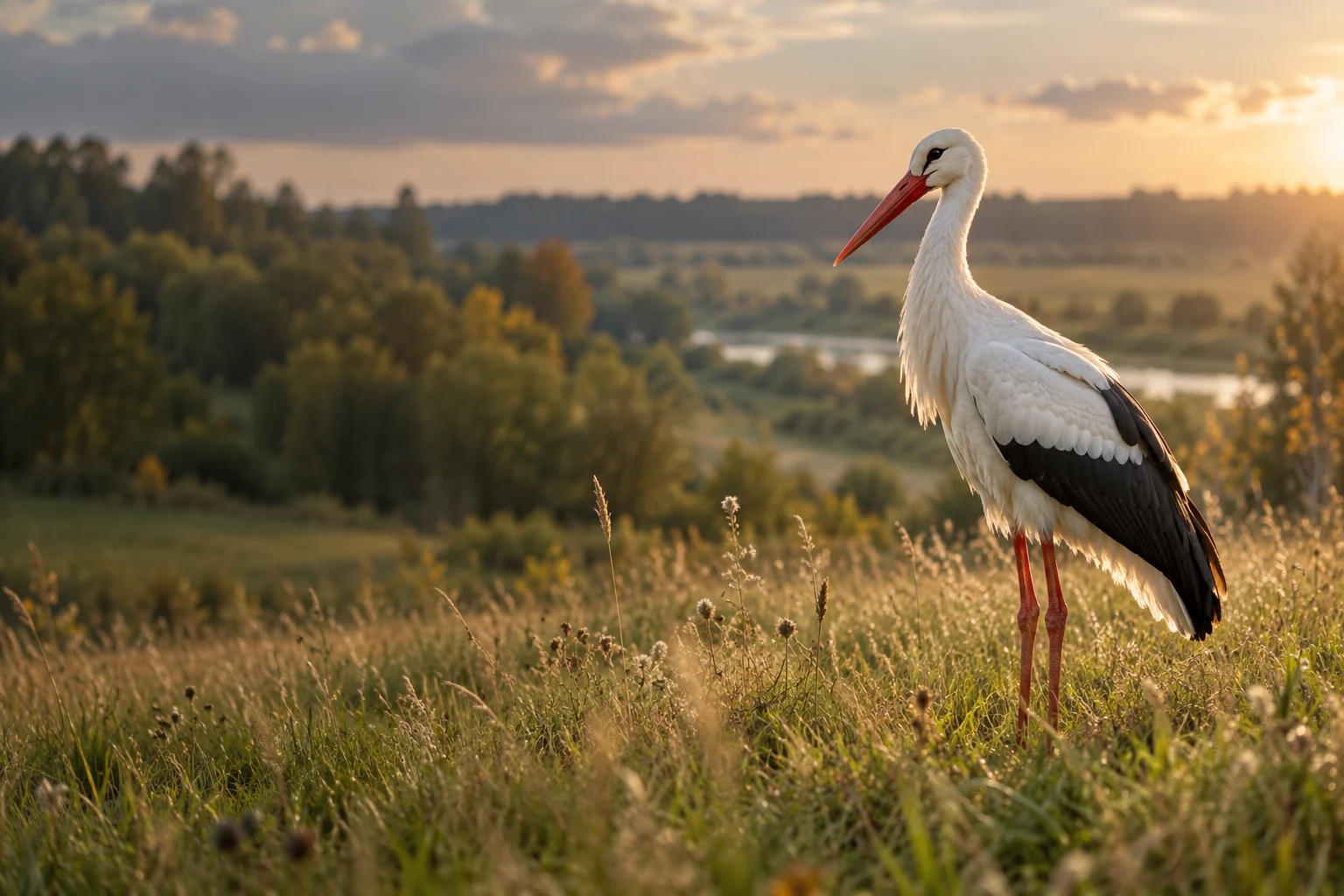
A stork does not rush the strait. It waits. The sea offers no thermals, so the bird must cross on its own power or on a helpful wind, and it wants every advantage. On the days when the wind is wrong, the storks hold back, gathered in flocks on the hills and headlands, patient and watchful. Then the weather turns, the air softens, and the whole gathered company rises at once and heads for the far shore.
The short crossing, the long effort
The crossing itself can take a stork a little while or a long while, depending on the wind and the bird. Some catch a rising air current and climb high before setting out, then glide most of the way, losing height slowly over the water. Others cross lower, beating steadily, the sea passing beneath them. Either way, it is the moment the journey becomes serious, the point where the land falls away and there is nowhere to rest until Africa.
The history in the crossing
Storks have crossed this strait for longer than anyone has recorded. Long before boats, long before the two shores had names, the birds were making this same short journey from Europe to Africa and back. The strait is a natural bridge, the place where the two continents almost touch, and the migration has used it for so long that it feels like a fact of the world, a door that has always stood open.
For the people who live on either shore, the crossing is an old and familiar sight. Fishermen and shepherds and children have watched the storks pass overhead for generations, the birds wheeling up over the headlands and setting out across the blue. It is one of the great gatherings of the bird world, a seasonal crowd that arrives and departs with the turning of the year.
The crossing asks something of the birds too. The sea offers no lift, no place to rest, no margin for a mistake. A stork that starts the crossing commits to it. There is no turning back once the land is far behind and the water stretches ahead, and the birds seem to know it, going with a purpose that is almost solemn.
Not every day is a crossing day. The birds gather for days on the Spanish shore, waiting for a wind that will help them, and a watcher can read the weather in their patience. When they go, they go together, a long loose line of wings over the water, and the strait for a while belongs to them alone.
What waits on the other side
When a stork reaches the Moroccan shore it has finished the hardest single leg of the whole migration. The sea is behind it, the desert still ahead, but the worst is over for now. The bird finds a place to rest, feeds if it can, and then turns south again. The crossing at the Strait of Gibraltar is one afternoon in a life, but it is the afternoon the bird remembers, the narrow door it passed through between one world and the next.
Explore the gift