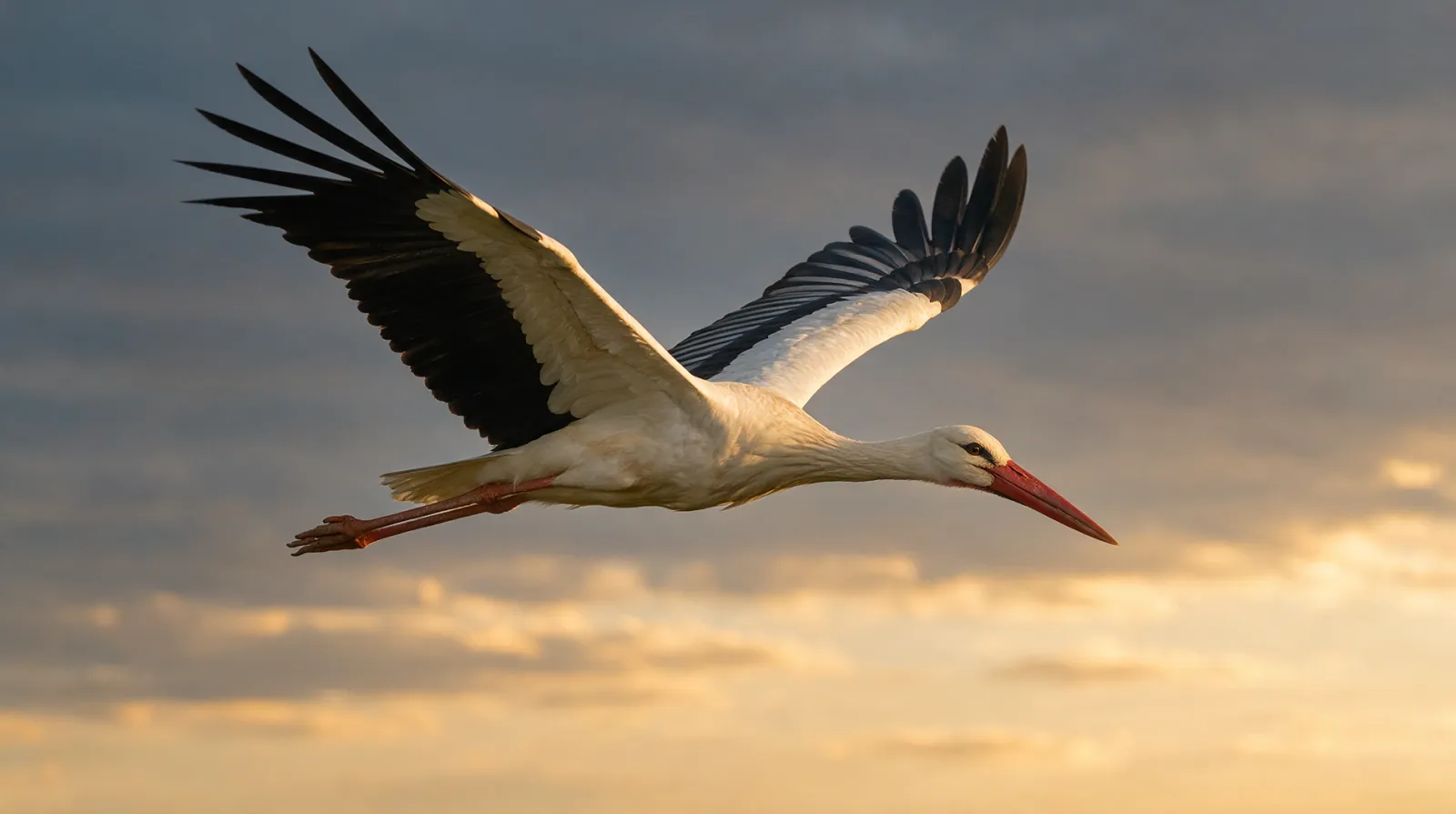
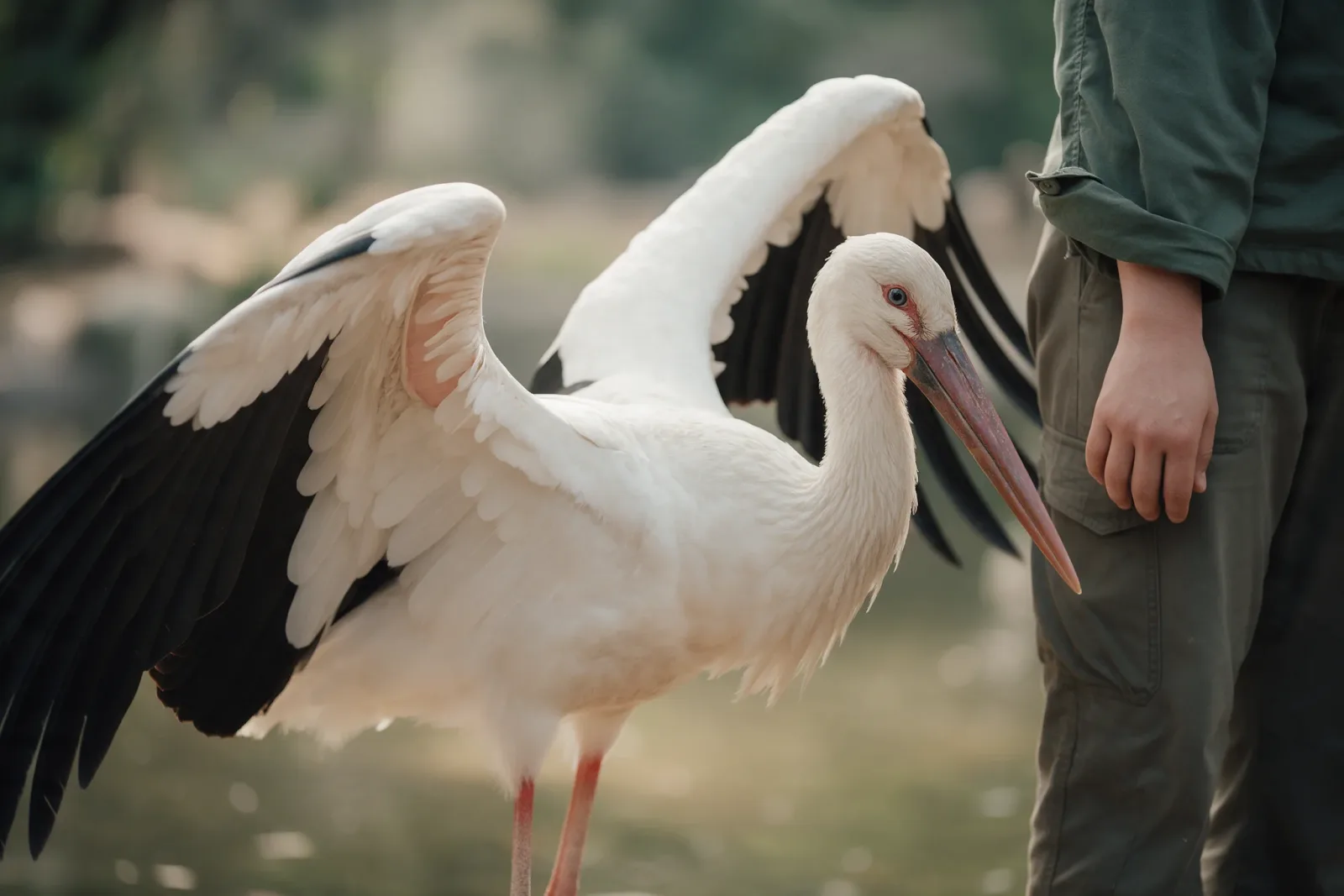
Underneath the picture of a stork with a bundle lies an older and stranger idea. The stork was once thought to carry souls, and the souls carried on wings were the unborn and the dead, ferried between worlds by a bird at home in water, earth, and air. That older belief is why the gentle delivery story still feels a little solemn.
A bird of the in-between places
A stork lives in three elements at once. It wades in the marsh, walks the field, and rides the sky. To an older way of thinking, this made it a creature of boundaries, at home where one world touches another.
Wetlands especially were seen as thresholds. A marsh was neither land nor water, and it was there, standing in the half light, that the stork was said to do its secret work. The bird stood at the gate, and the gate stood open.
The marsh at dusk does most of the work. Light goes flat, water turns silver, and a bird standing still stops reading as a species and becomes a shape. It is easy to see how a person at the edge of such a place would give the shape a job, and how the job would grow with each retelling. The stork's height helped. It stood above the reeds and could be seen from a distance, so the story had a figure that a whole village could point to at once.
The pond where souls wait
In parts of Europe people imagined a place where the souls of children waited to be born: a pond, a well, or a bog. The stork knew where those places lay, because the stork was always at the water's edge.
When a family prayed for a child, the bird was said to draw one up from the waiting place and carry it to the house. The journey was a passage out of the unseen, and the bird was the only creature who knew the way. A stork wading in shallow water looked, to older eyes, like a fisherman of souls. When it flew toward a village, people said a child was coming.
The water held the beginning, and the stork carried it up into the light.
The crossing
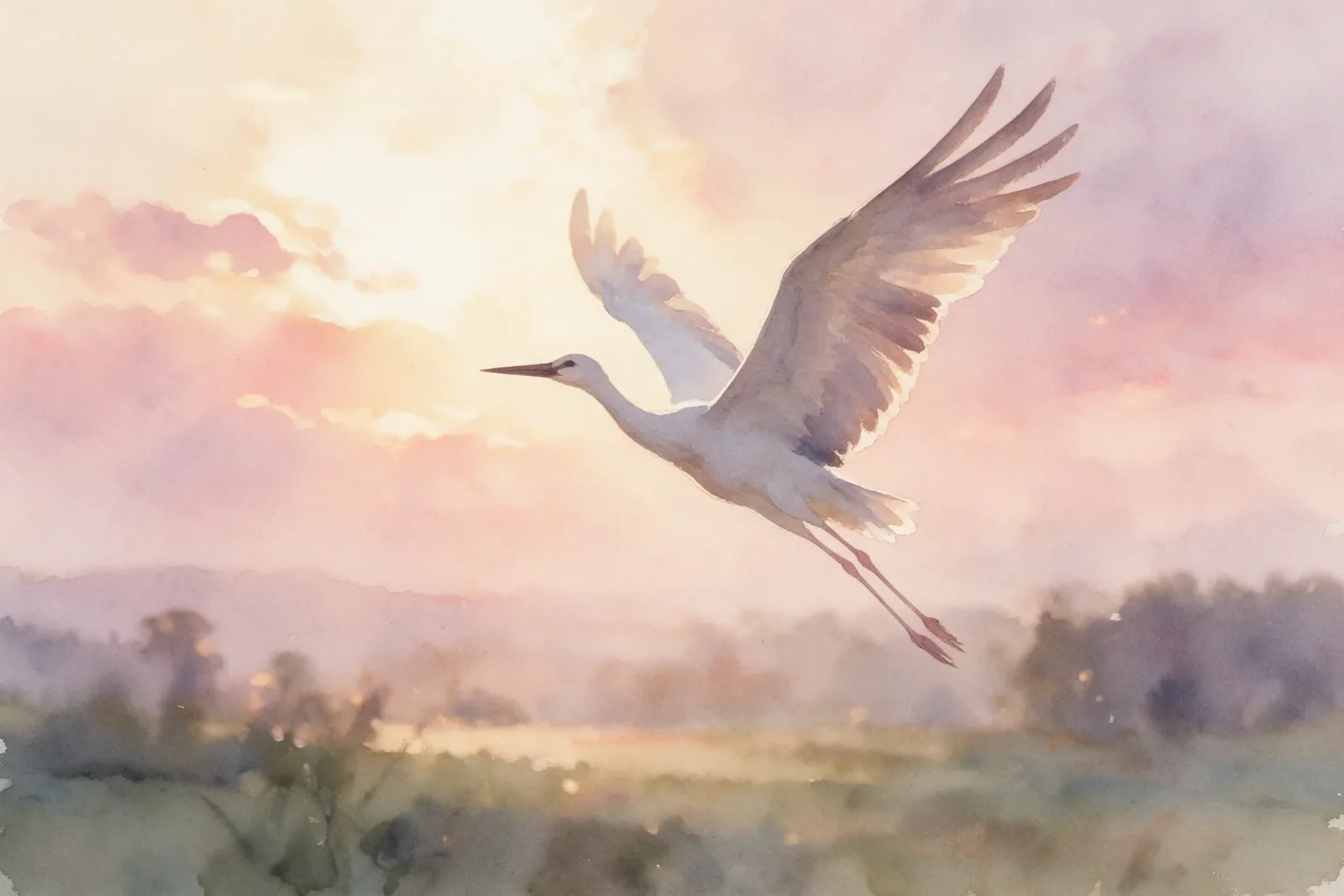
Along the river valley, people once called the white stork "the soul bird of the Rhine," a name that carried a duty. Along the Rhine, where the bird has nested for as long as anyone can remember, the stork was thought to carry souls, fetching them from the water and bringing them to the houses where they were meant to be born.
The Rhine runs through a wide valley of wet meadows, oxbows, and marshland, country that the white stork has always found to its liking. The bird feeds in the shallows and nests on the roofs and towers of the towns and villages along the water. There it is a neighbour, seen daily, and a neighbour seen daily gathers meaning.
A river valley is a place of comings and goings, and the stork fitted that shape. It arrived with spring and left with autumn, always moving along the same broad corridor as the river itself. Souls of the unborn waited in the water, in the reeds and the backwaters. When a stork waded in the river and then lifted away toward a village, people said it was carrying a soul.
The belief protected the bird. A bird that carries souls is never killed, never driven from the roof, and never disturbed on the nest. This is one reason the white stork thrived along the Rhine when other large birds were hunted or pushed away. The story gave the bird a duty, and the duty gave the bird a shield.
The dead and the departing
The stork's office ran both ways. If the bird could bring a soul in, it could also lead one away. Some traditions held that the migrating storks carried the souls of the dead south each autumn, so that the great flocks leaving in September were birds, and also company for the recently departed.
That double duty is why the stork was more than a joke or a postcard. It touched the two great mysteries of a life, coming and going, and it did so without fear.
As the centuries passed, the solemn belief softened. The soul-bearer became the baby-bearer, and the marsh gate became a cheerful delivery from the sky. The older meaning sank into the image, so that a stork on a birth card still carries a faint weight. This is why the story still feels warm, even to people who know the biology. It remembers, somewhere underneath, that a birth is a small miracle, and that someone had to travel to bring it.
Telling it again
A legend lives only while someone is willing to speak it aloud. That is how the stork's legend has lasted, passed from one generation to the next, usually in a single moment: a grandparent and a child looking up at a white bird together.
It often begins with a question. A child sees a stork on a roof and asks what it is doing there, and an adult, remembering another adult, begins to tell. The story arrives as a gift, offered at the exact moment the child is looking. A legend passed on demand is a fact. A legend passed in the presence of the bird becomes a memory.
No two tellings are the same. One grandparent tells it straight, as a tale of babies and bundles. Another adds the marsh, or the nest of luck, or the clattering bill. Each retelling trims and embellishes, and the story shifts the way a bird adjusts its course. The stork legend has survived because nobody froze it, and each new voice found a way to make it fit the child in front of them.
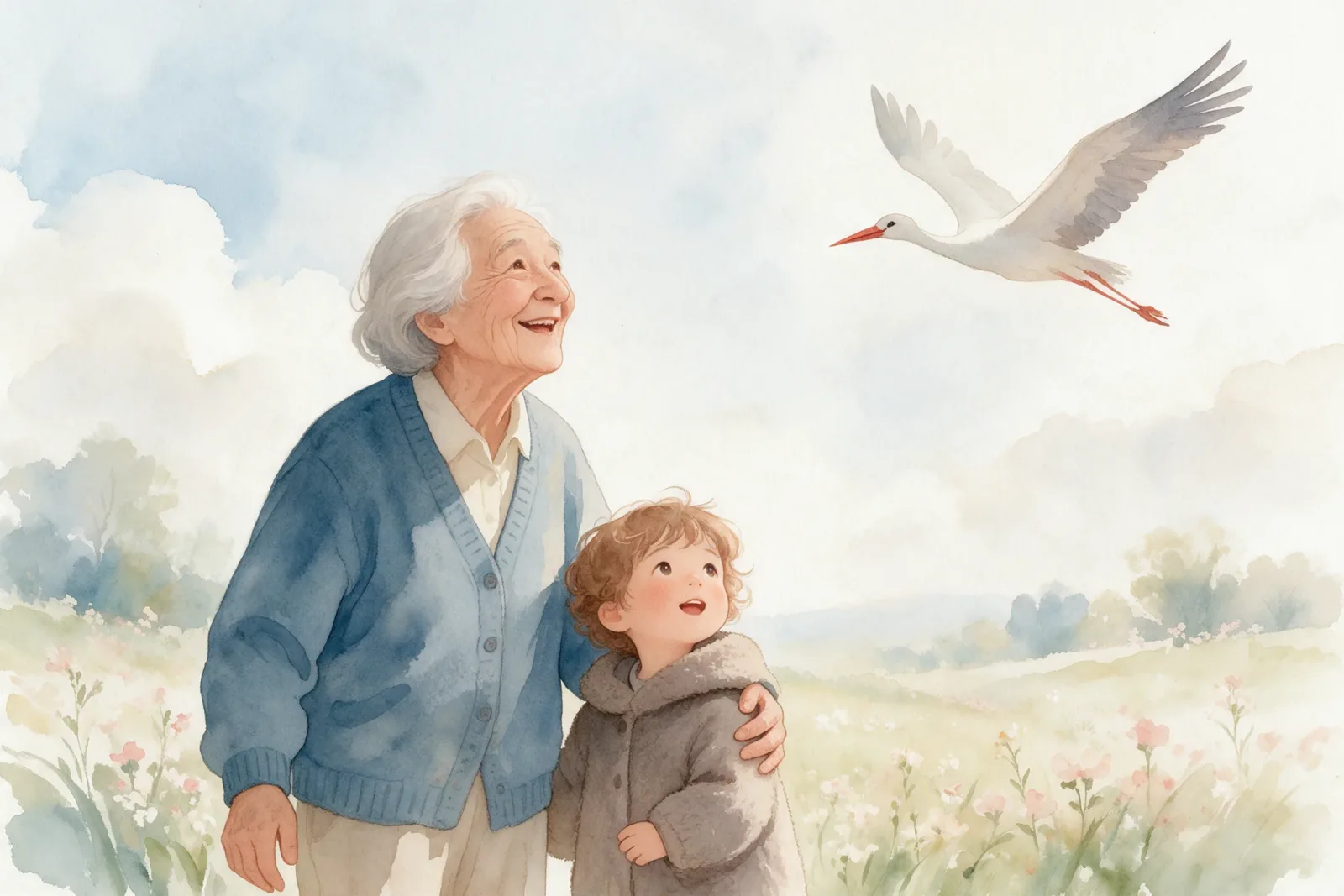
The scene is usually ordinary. A kitchen window, a wet field, a bird on a pole, and a child who has just learned to point. The story needs the bird to be visible and an adult willing to answer, and the second is the harder part. Most tellings happen in a hurry, between one task and the next. A legend does not require ceremony. It requires a voice that stops for a moment and takes the question seriously, even if the answer is only that the stork has come back to the same nest again.
The gate still opens
We no longer believe the stork ferries souls, and the image still works because it is honest about the mystery of a new life. A child arrives from somewhere we cannot see, and the bird that crosses water, earth, and sky is as good a messenger as any.
The old belief left its mark on the way people talk about birth. A baby is still said to have come from somewhere, and the phrase survives long after the cosmology behind it has gone. The stork keeps the image company.
The soul bird of the Rhine is still a phrase kept alive in stories, signs, and the affectionate way the valley treats its storks. The bird still wades in the shallows and still lifts away toward the villages, and someone watching it on a quiet morning can understand why the old people gave it such a task.
Explore the gift