The white stork has been named many times and in many places. Villages named it for the sound of its bill, the contrast of its wings, the season it announced, and the luck it was said to bring. A country named it its own. A fable gave it a neighbour and a lesson. The names and the stories are a record of how closely people once watched the bird.
Names from the clatter
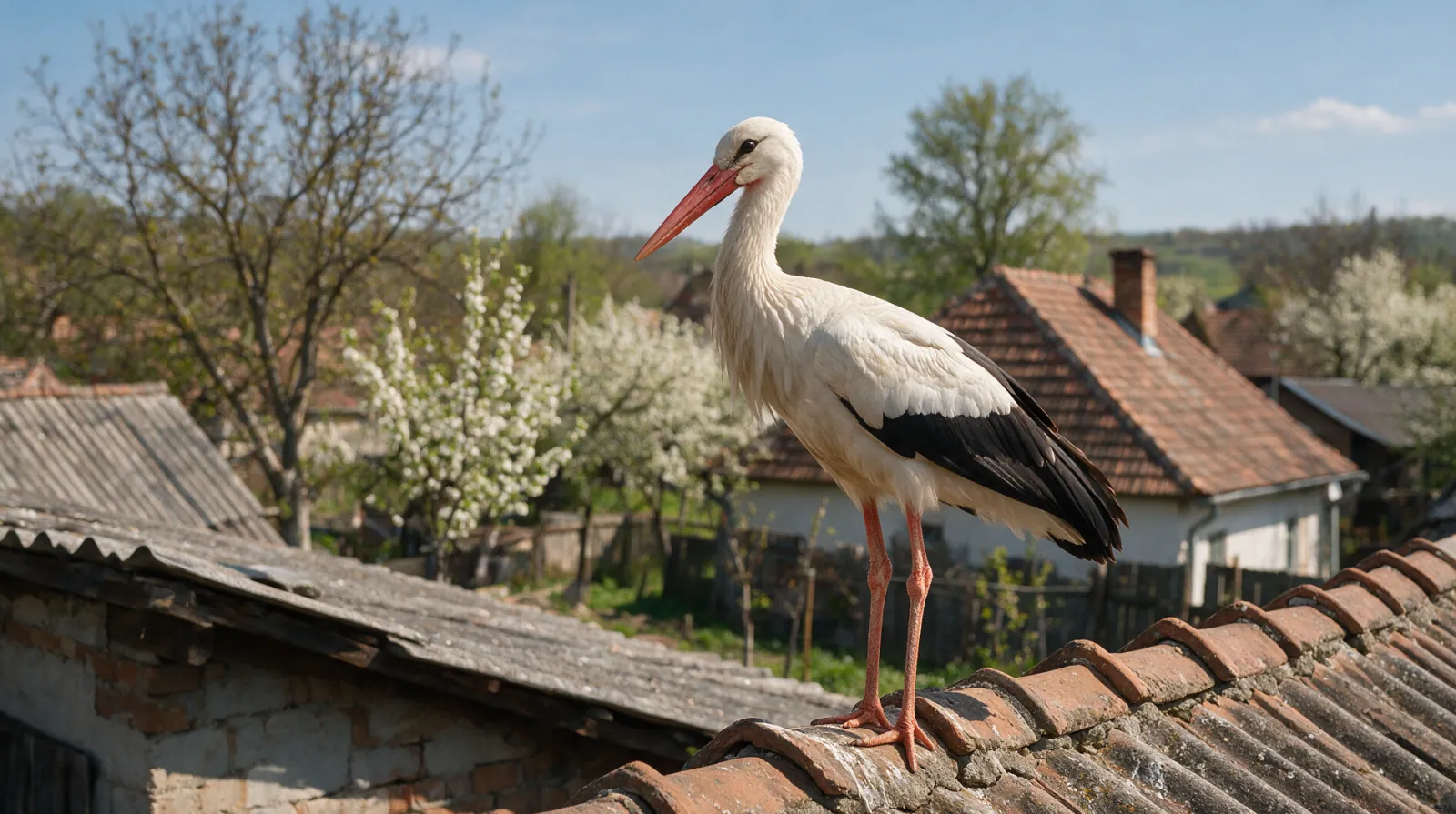
Many of the old names came from sound. The white stork rarely calls, but it clatters its bill, and across villages that clatter became the bird's name. People heard the stork before they saw it, that dry, quick rattling from the top of the house, and they named the bird for the noise it made.
A name built that way takes a sound from the world and makes it a word. The clatter names were everywhere, and they sounded much alike from one region to the next. The bird announced itself, and the village wrote the announcement down.
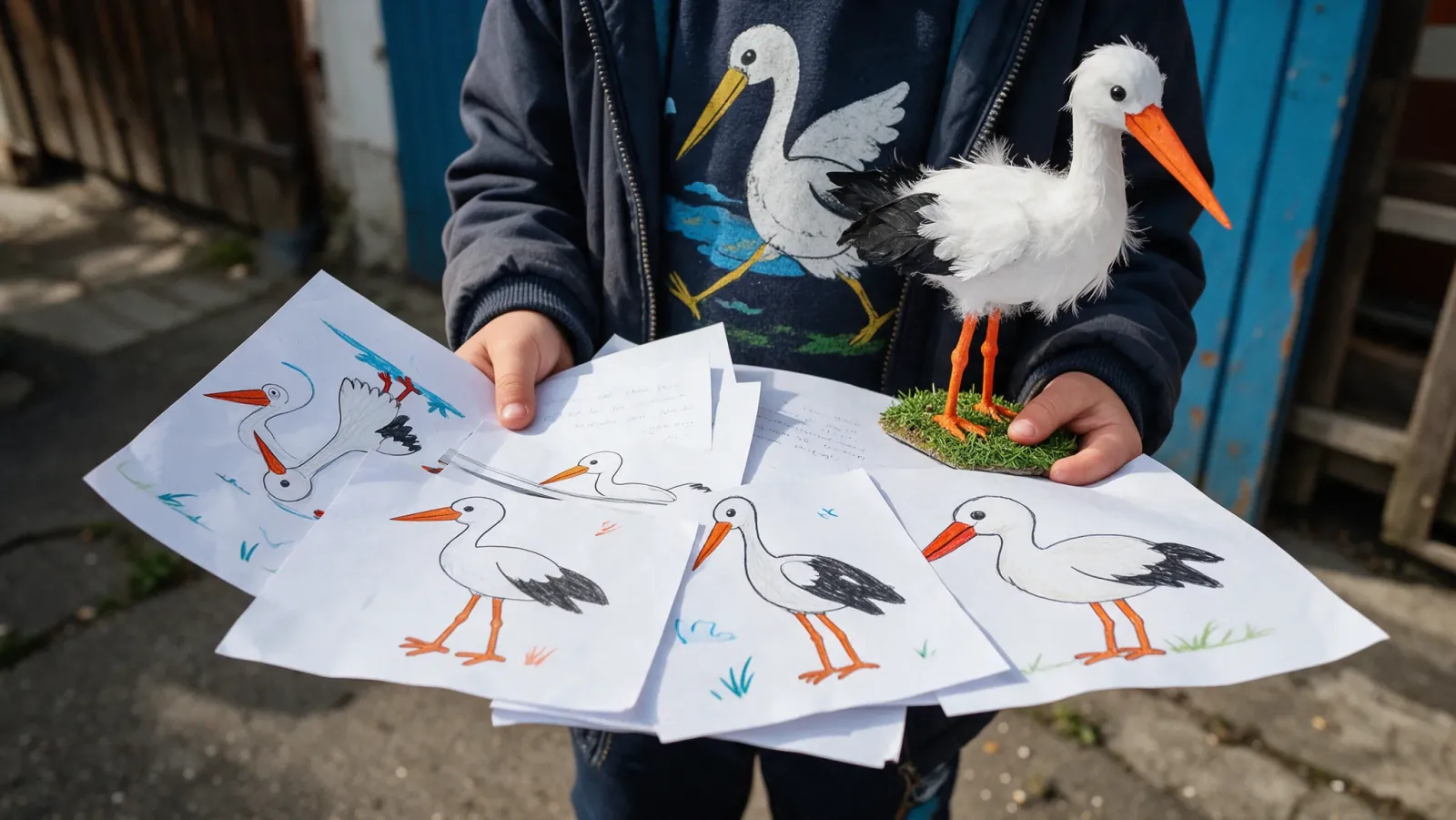
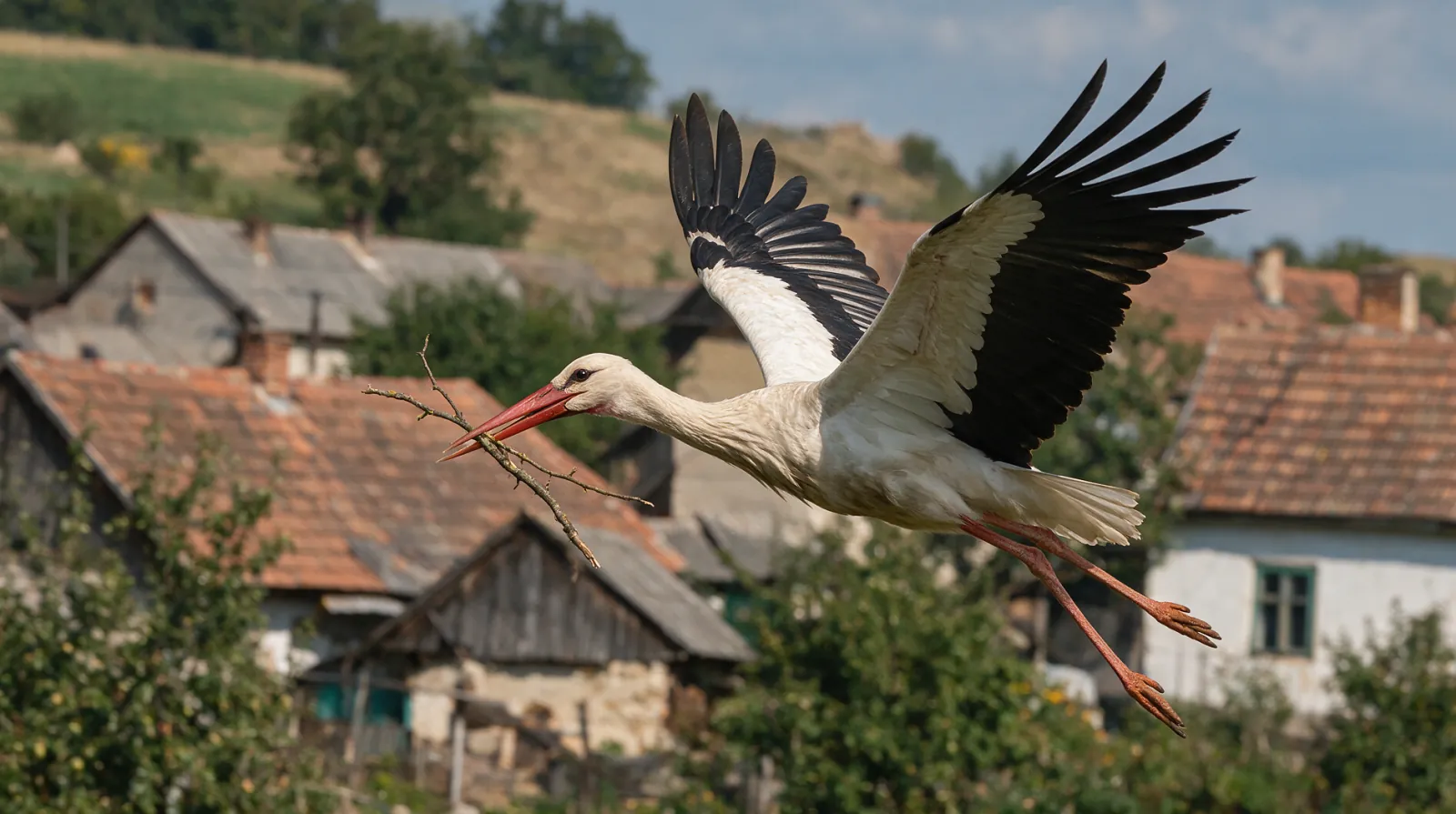
The bird's colour gave another set of names. A white body and black flight feathers made the stork easy to describe, and the old words often pointed straight at that contrast, calling it the white one, the black-winged, or simply the white bird of the roof. Some names reached for the bird's red legs and bill, that small blaze of colour against the white, and folded it into the word. Each name was a tiny, local portrait. A person who used it could see the bird before looking up.
Some names were wishes. Because the stork brought luck and children, the old words sometimes carried that hope inside them, calling the bird the bringer, the good one, or the child-bearer. To speak the name was to speak the blessing, and so the name was used with care, the way one uses the name of anything that is both loved and a little feared.
Names that marked the season
Then there were the names of the calendar. Because the stork came with spring and left with autumn, some villages named it the spring bird, or the announcer, the one whose return meant the cold was finished.
These names were proclamations, spoken aloud in the fields and the lanes when the first white bird appeared over the rooftops. The name told everyone at once that the long wait was over. A word could do the work of a bell.
The sheer variety of the names is itself a story. A traveller could walk a day and pass through two or three names for the same bird, each one shaped by the local tongue and the local way of speaking. There was no single right word, and nobody wanted one. The bird answered to all of them, in the sense that a stork does not answer to anything, and each village kept its own name as a small private possession. The name was part of what made the place itself.
The dialects have thinned, and with them the old names. A bird now has a standard name in every language, and the local words live mostly in dictionaries and in the memory of the oldest speakers. The names are a record of a time when a stork on the roof was known to every person who lived below it, and when knowing a thing meant having a name for it that no one else, a few fields away, would have understood. Each one recorded something the speaker had noticed.
The gandras of Lithuania
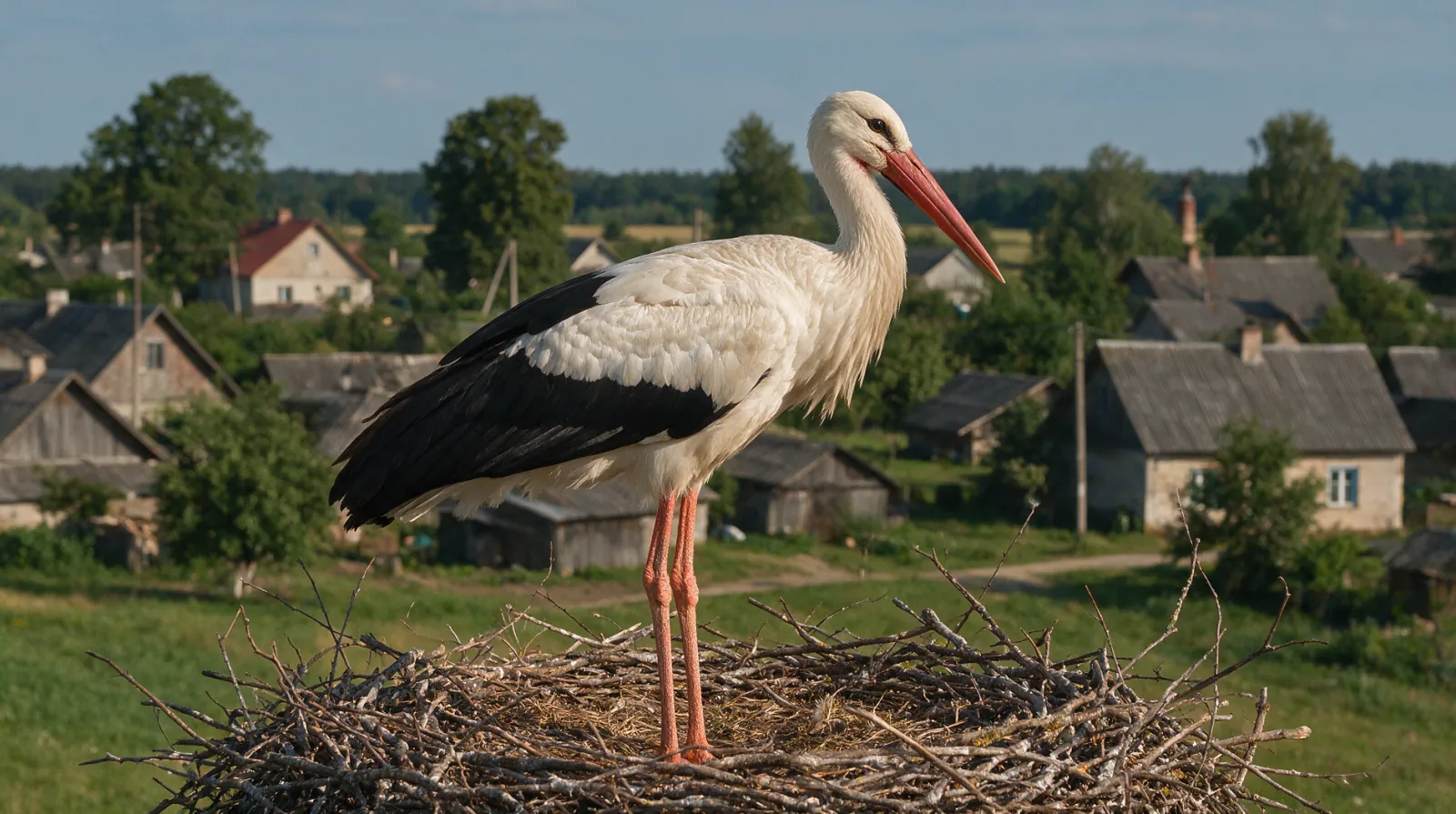
Lithuania holds the white stork as its national bird, and for centuries the gandras, as it is called there, has been welcomed onto roofs and chimneys as a bringer of luck and children. Storks nest on roofs, on poles, on chimneys, and in the tops of trees, often in the middle of villages rather than at their edges.
In the countryside a nest is part of the village scene, as expected as a gate or a well, and its absence is as strange as a missing roof. The name gandras is spoken with affection. Children learn it early, and the bird is woven into songs, carvings, and the decoration of the home.
The central legend is simple, and it has been told in the same words for generations. A stork nesting on a house brings good luck, harmony, and children. The nest is protected and repaired. A wheel or a platform is put up to invite a stork to build. A family whose storks leave worries that the luck has gone with them and will not come back easily. The stork is also a protector. It is said to keep lightning and fire from the roof, and to watch over the family below through every season of the year.
The feast of the storks
The return of the gandras in spring is a season in itself. Families watch the sky and greet the first bird back as a promise fulfilled, a small holiday made of looking up. The day carries its own name, Gandrinės, the feast of the storks, kept while the first birds settle.
When the storks gather in late summer and leave for the south, the year is closing. The empty nest through winter is a small ache that the next spring will answer. The answer is always the same. The bird above the door stands for the safety of the people inside it, and the family below treats the nest as part of its own property.
The relationship is a bargain. The household leaves the bird alone, and the bird keeps its post. Neither side has signed anything, and both sides keep the agreement. The stork lives the life people hope for their own house, faithful and settled and full of new life, and it does so in plain sight.
The crane in the marsh
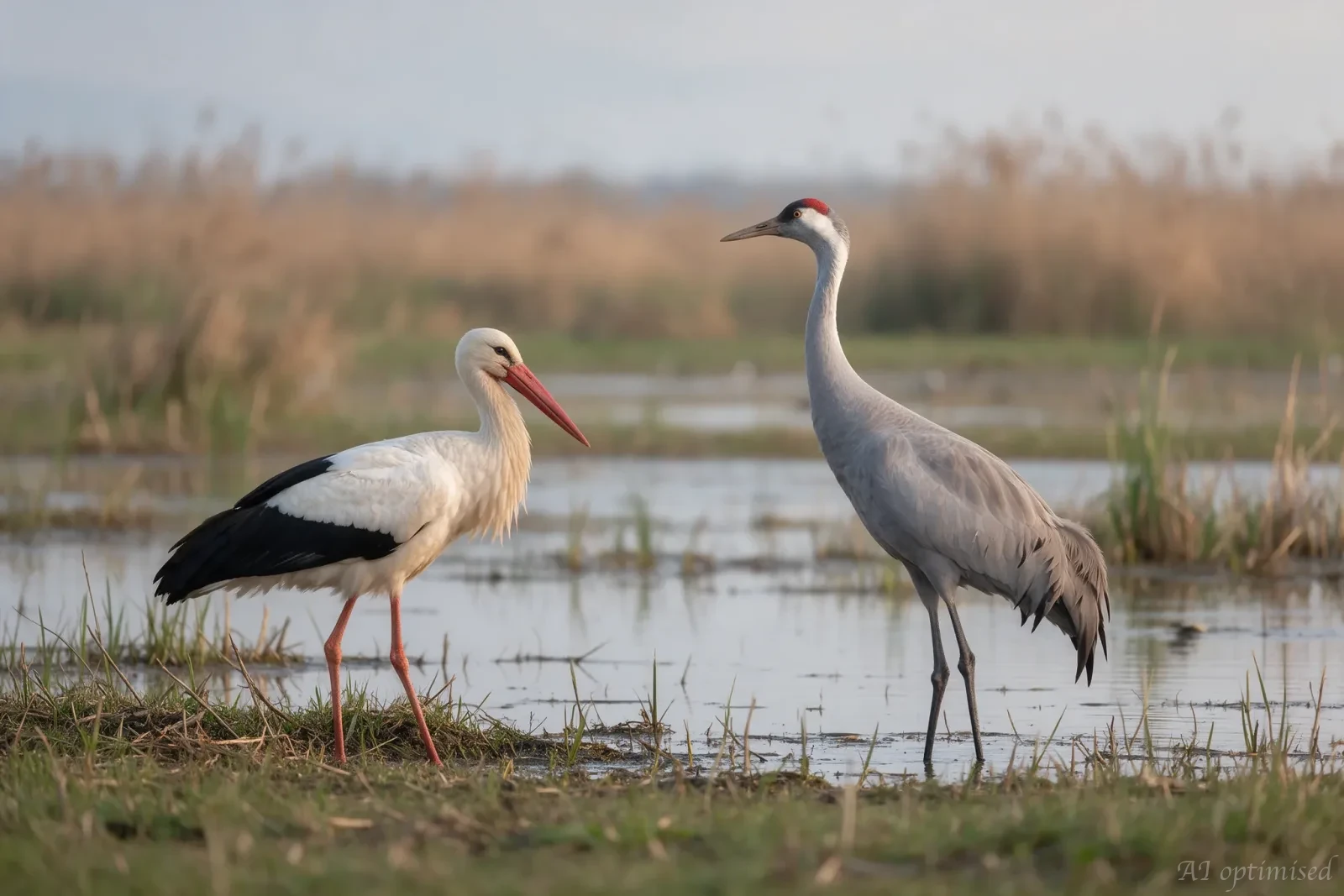
An old fable sets two tall birds in the same shallow water and lets each misread the other. One is white and one is grey, and they cannot agree on what to make of one another. Both wade, both fish, both stand motionless in the shallows, and to a careless glance they might almost be the same creature in a different coat.
The stork, in the telling, looks at the crane and sees a grey, awkward bird, a long neck with no grace, a harsh voice, a wanderer that never keeps a home. The crane looks back and sees a stiff, silent creature, all white and judgment, too fond of the rooftops and the company of people. Each bird finds the other lacking, and each is certain of its verdict. They have lived beside each other too long without ever really looking. Inattention does the work that contempt usually does.
The two birds do not quarrel in the fable. They go on feeding in the same shallow water, side by side, each holding a low opinion of the other. The story makes a point of this nearness, the fact that the birds stand almost touching and yet stay worlds apart. The marsh does not care which bird is right, and the reeds and the frogs treat both exactly the same.
The fable has survived because it is easy to retell and hard to hear. It is a story about birds on the surface. Underneath, it is about the way people sort the world into what is familiar and what is strange, and then treat the strange as wrong. Every village has a stork and a crane, and most of us have been both. The marsh holds them both, and has always held room for both.
The bird still nests on the roof, and the old words live in dictionaries.
Explore the gift