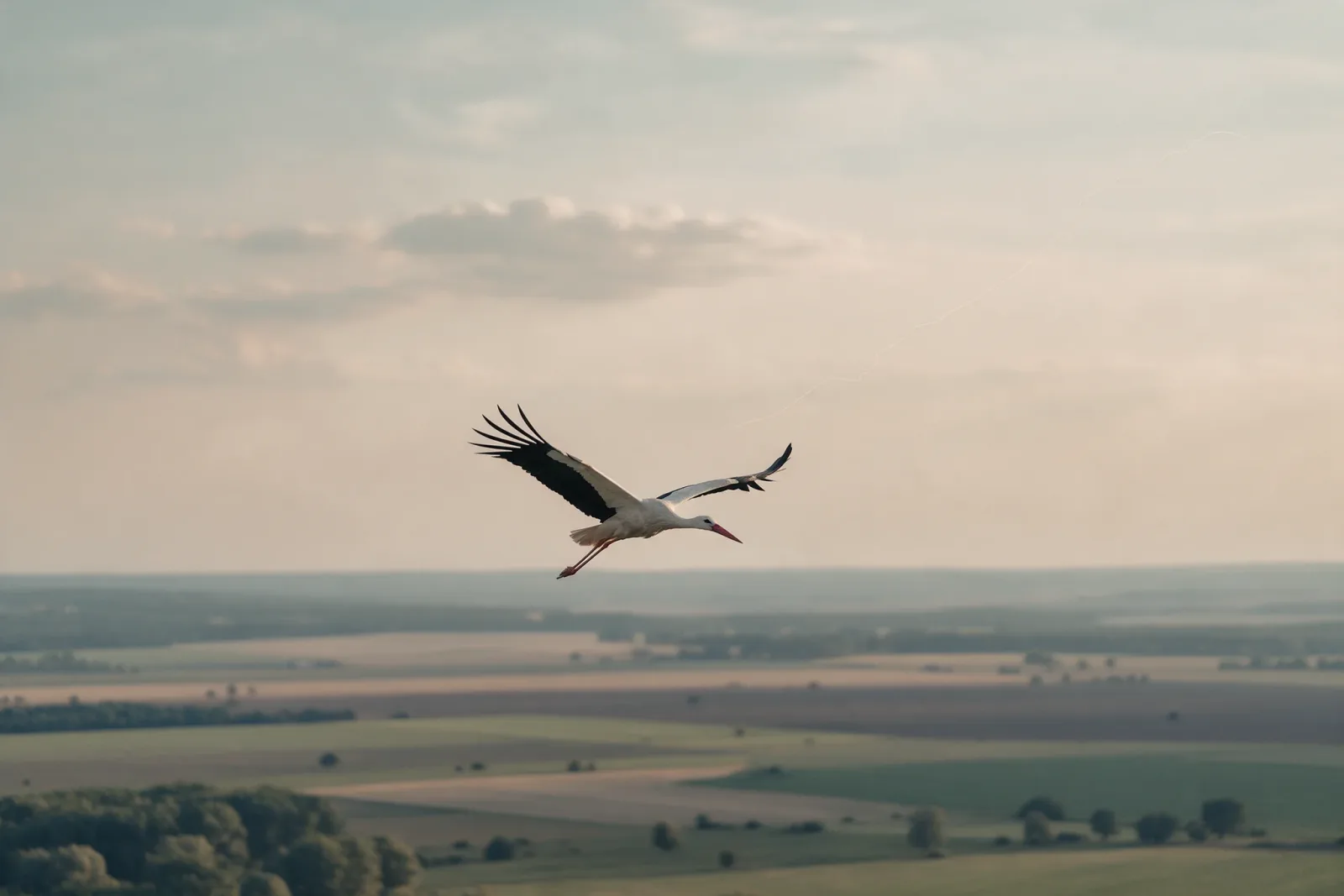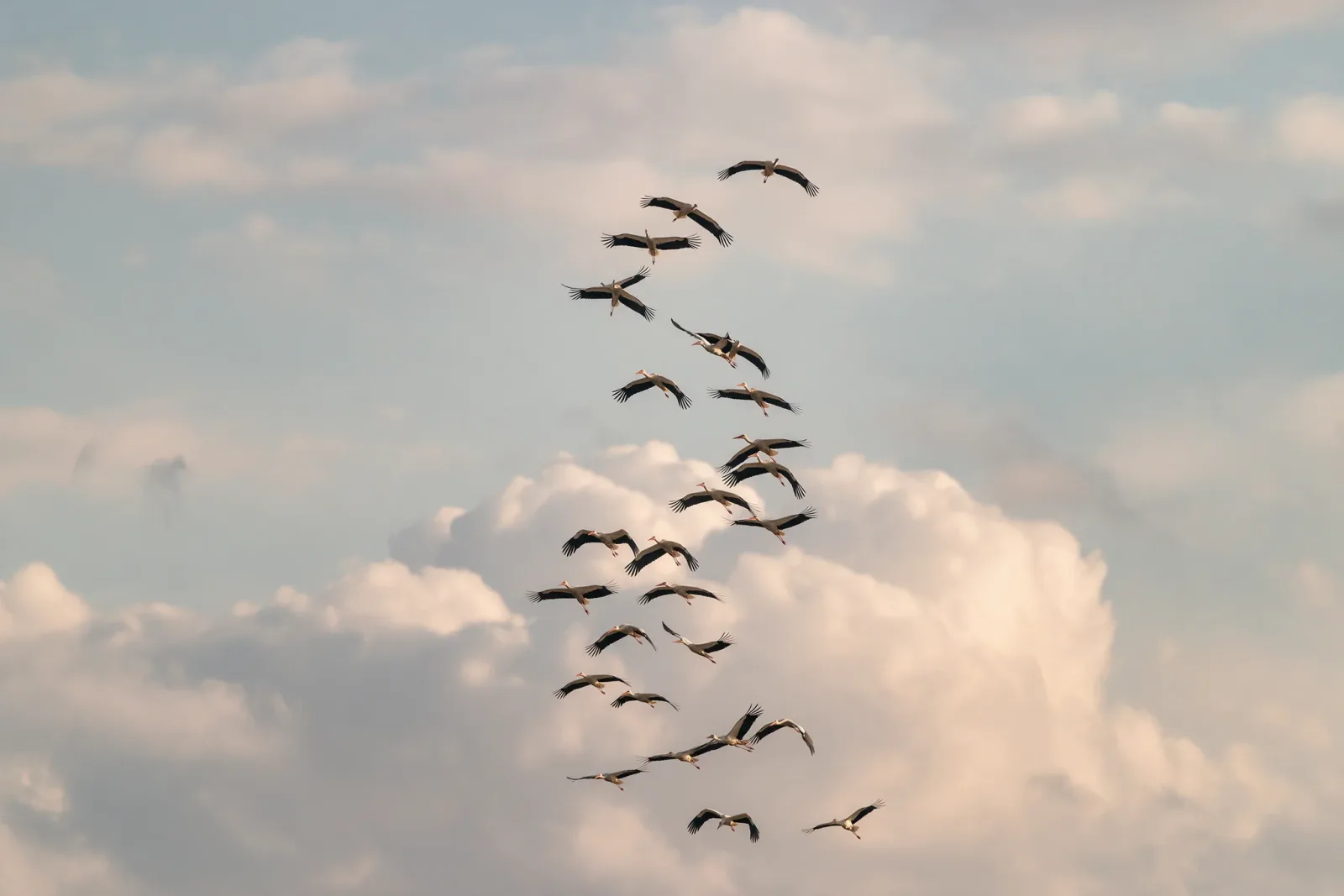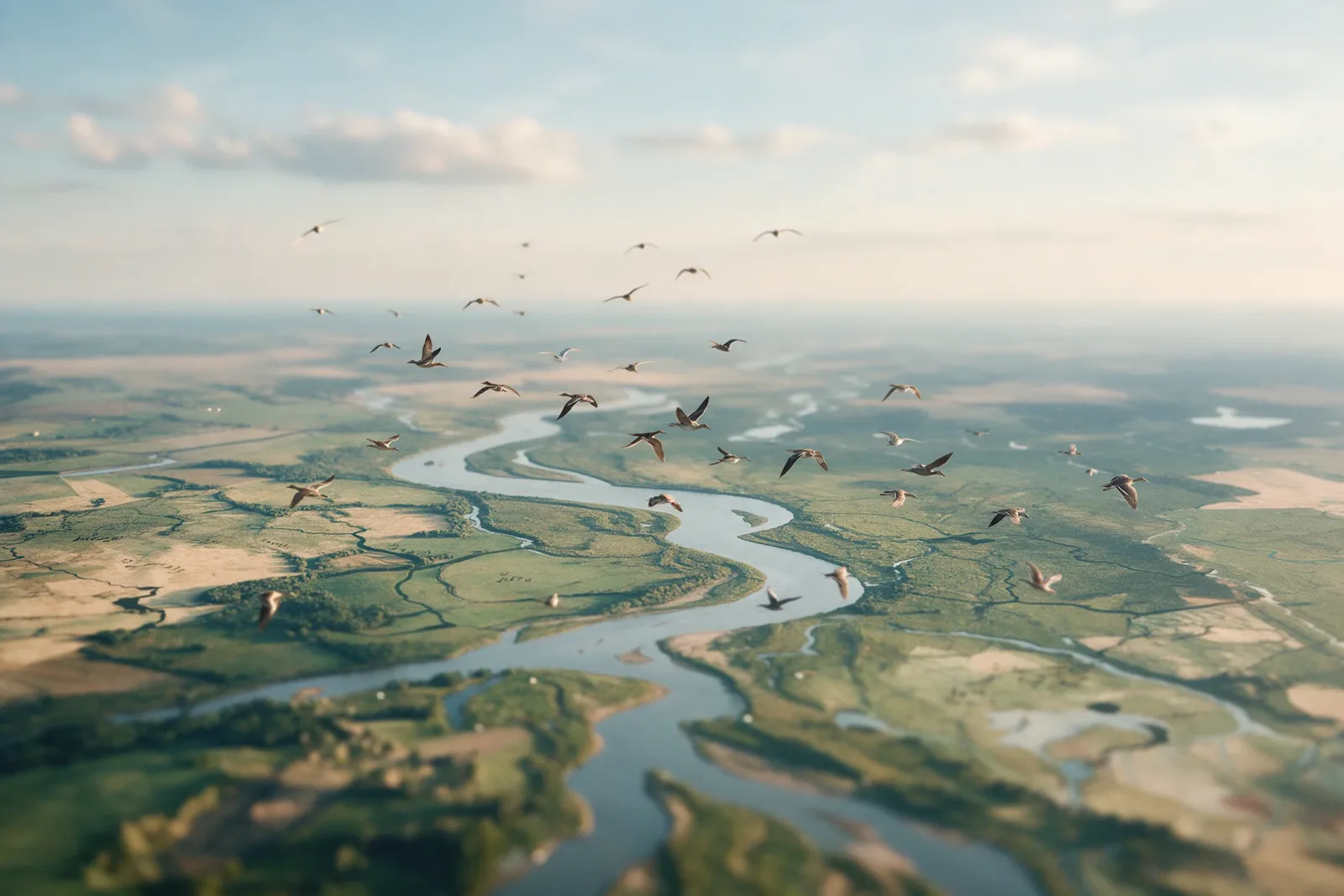
The long way home begins in the south, when the warmth of the northern spring reaches down and calls the stork back. The bird that flew south in autumn has spent the winter feeding and resting in Africa. Now it turns around and retraces a journey it has made before, flying north against the wind and the weather, toward the rooftop where it once had a nest. The long way home is the same road as the journey out, only travelled in the opposite direction, and with a different feeling in it.
Why the return matters
Migration is not a one-way trip. A stork flies south to survive the winter, but it flies north to breed, and breeding is the whole point of the journey. The bird returns to raise young in the place where food is rich and the days are long, the place it knows, the place where a nest waits or can be built again. The spring return is not a vague wandering. It is a coming back, directed and certain, toward a particular patch of the world.
The known route
A stork returning north does not invent its path. It follows the same flyway it travelled south on, the same corridors of warm air and the same narrow sea crossings. In spring the journey runs the other way, from the African shore across the strait, or over the Bosphorus from Asia, and on into Europe. The bird climbs on thermals, glides, and climbs again, covering the long miles in steady stages, the way it has always done.
The faithfulness of the return
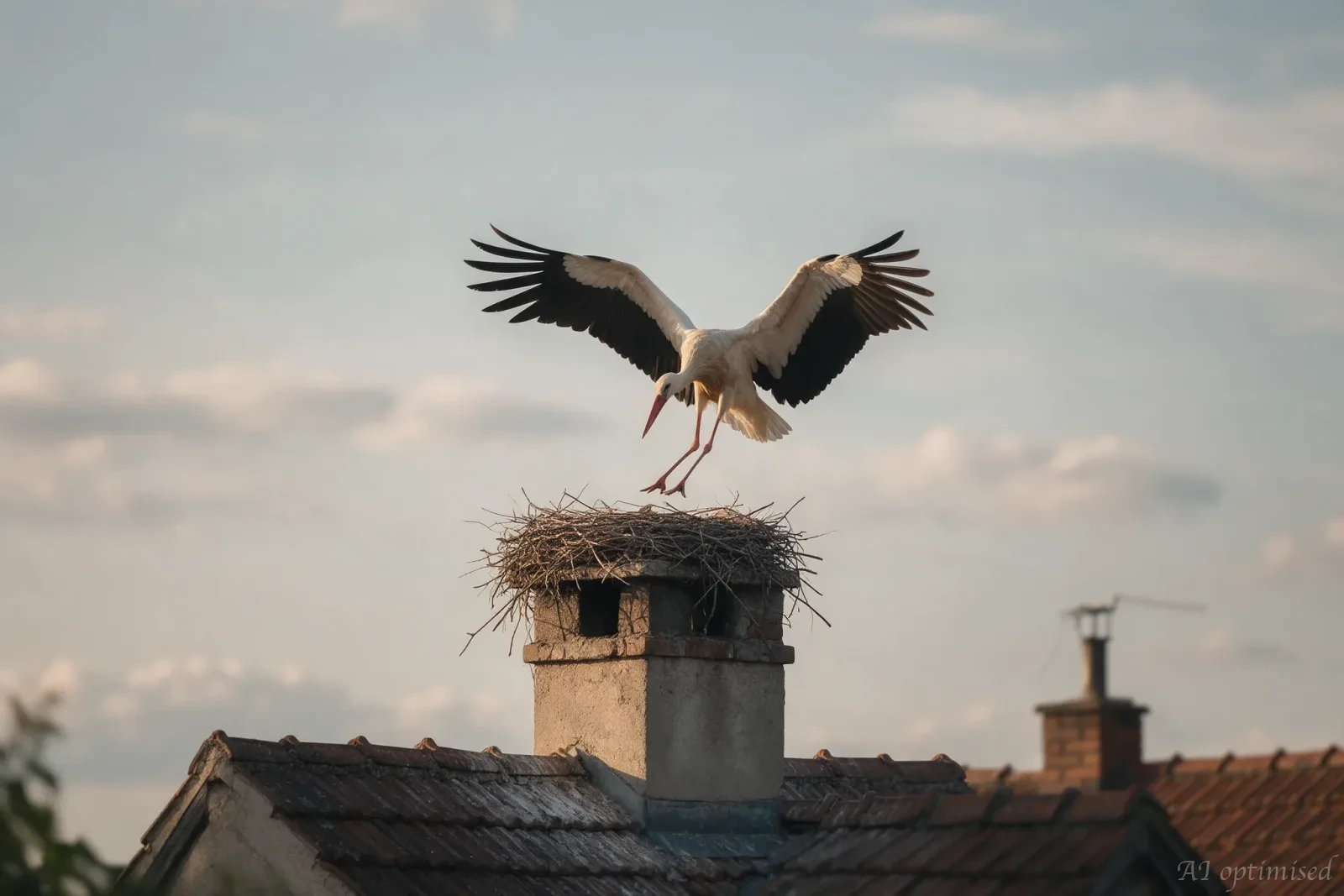
The remarkable thing about the long way home is its precision. A white stork that survives the winter will often come back to the exact place it left in autumn, to the same nest, the same chimney, the same rooftop. The bird remembers. It carries the shape of its home inside it, and when it returns it goes straight to the place it knows. This faithfulness is one of the quiet wonders of the species, a wild creature returning year after year to the exact stones it was born among.
The strength for the return
The journey north is not easier than the journey south. In some ways it is harder. The bird must leave a place where food is easy and set out toward a season it cannot be sure of, flying against the odds of wind and weather, and it does all this on the strength it stored up during the winter. A stork that winters well returns strong. A stork that winters poorly struggles on the way north.
The return is also a race against time. The stork is flying toward the breeding season, and there is no advantage in being late. The best nests, the best feeding grounds, the best chance of raising young, all go to the birds that arrive first. So the spring migration has an urgency to it that the autumn journey lacks. The bird is not leaving a cold place. It is hurrying toward a beginning.
And yet the return is not frantic. A stork still waits for the right wind, still climbs on the thermals, still rests where rest is needed. It is a race run at a patient pace, measured in weeks and guided by the weather, and it carries the bird north with a steadiness that feels, from the outside, like confidence.
Somewhere ahead is the nest, the partner, the patch of sky it knows. The bird cannot see them yet, but it carries them, and the carrying gives the journey its direction. The long way home is long because the home is worth the distance, and it is the same road flown in reverse, the same seas and deserts, the same patient climbing and gliding, ending in the same arrival.
The first sight of home
At the end of the long way home there is a moment no one can see but the bird. The stork comes over the last ridge, and the familiar land opens beneath it. The fields, the roofs, the nest still waiting. It folds its wings and drops, and the long journey ends the way all returns do, with the simple act of landing. The stork is home, and the long way is behind it until the autumn comes again.
Explore the gift