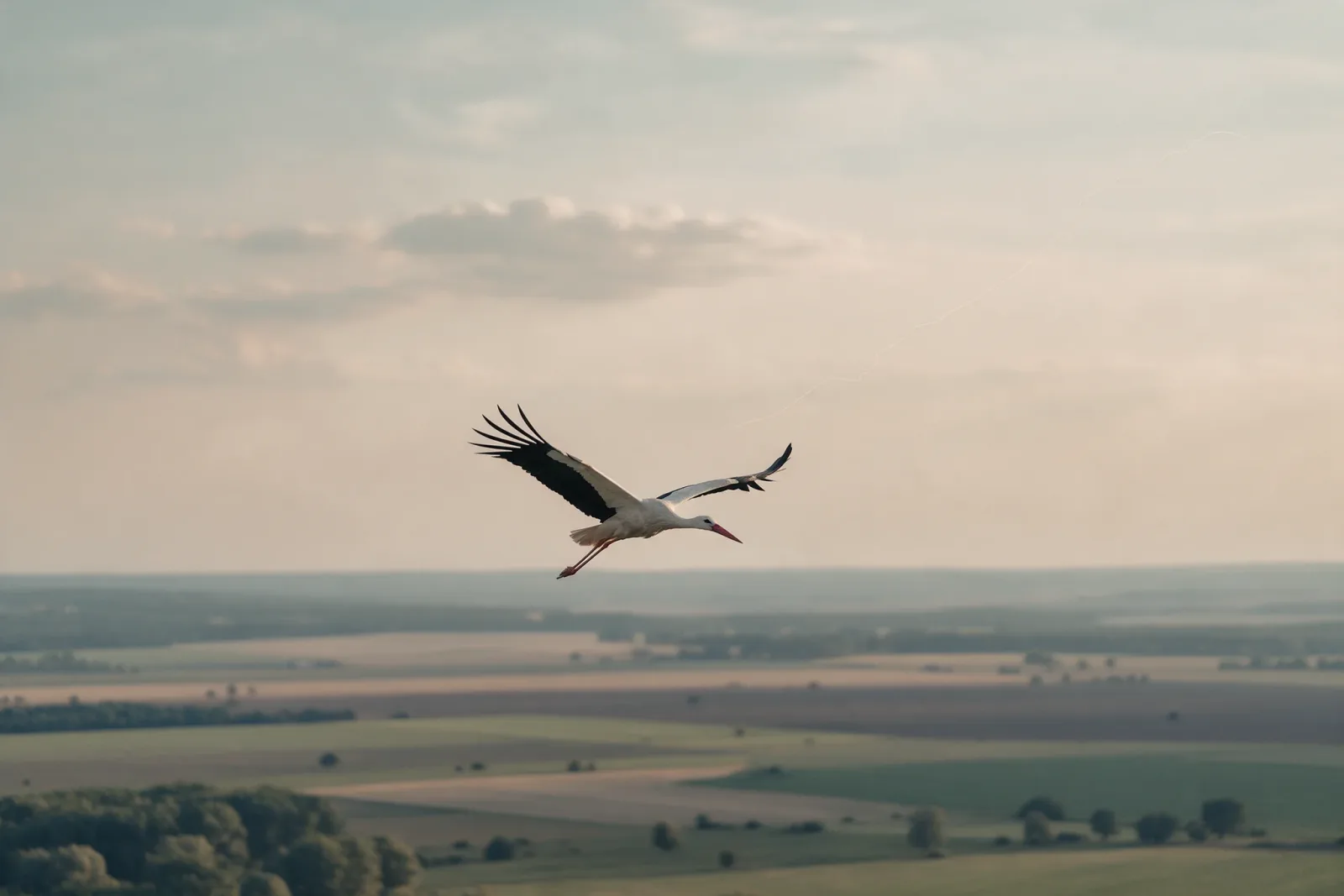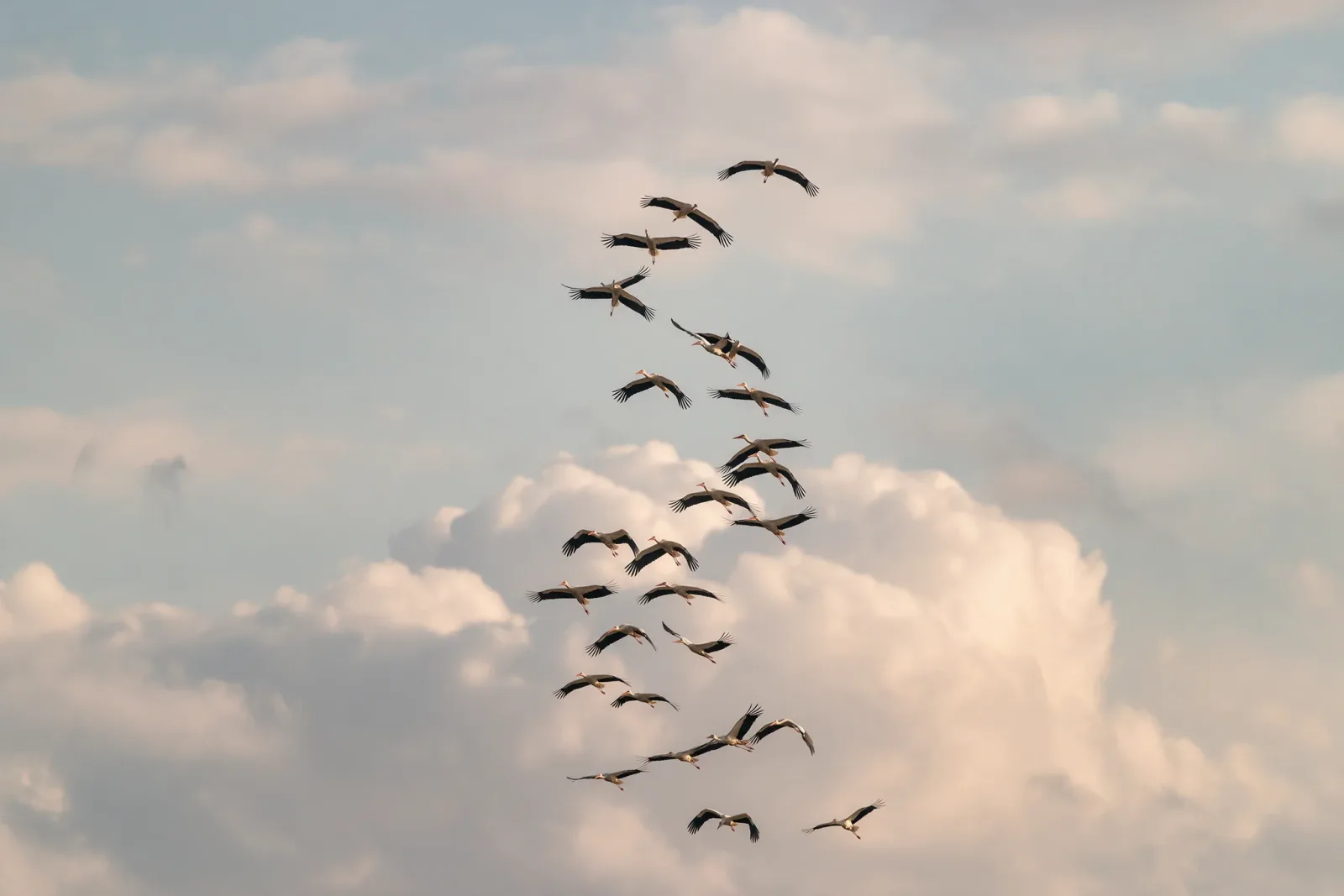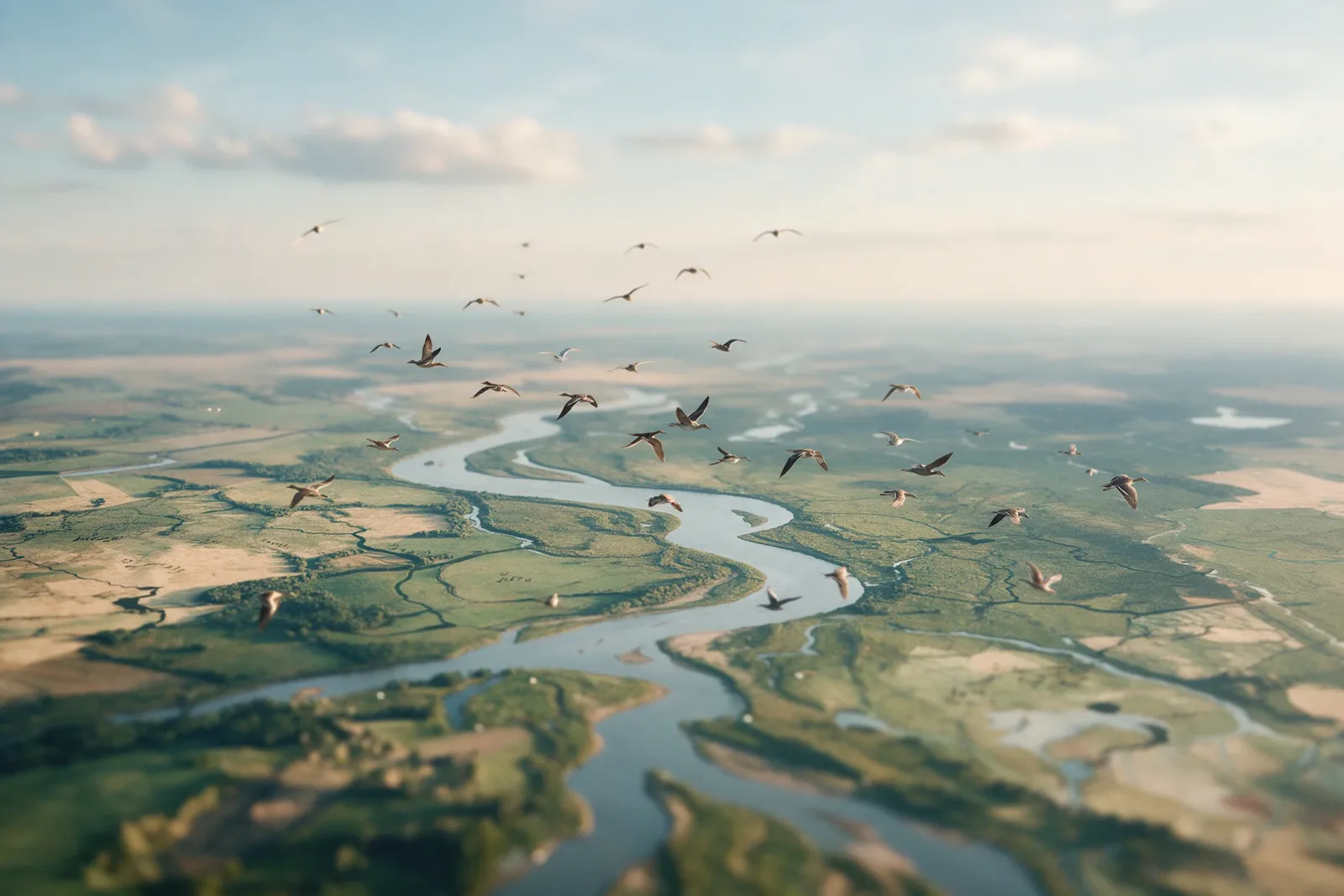
The greatest journey on earth is made every year by a bird with no map and no luggage, and it passes over our heads while most of us are looking down. The white stork's yearly voyage, from a European nest to African wintering grounds and back again, is one of the most extraordinary travels in the natural world. It is made on nothing but warm air and instinct, and it is repeated, year after year, by birds that weigh no more than a full kettle.
A voyage without instruments
Human travellers carry maps and tickets and directions, and still lose their way. A stork carries none of these. It sets off with only the weather and its own inheritance, and it arrives, sometimes at the very same rooftop it left, having crossed seas and deserts and a dozen borders it never recognised as borders. There are no signs on the flyway, no stops to ask the way. The bird simply goes, and it goes correctly, with a certainty we find hard to imagine.
The scale of it
Consider the scale. A stork travels from the cool meadows of Europe to the warm savannas of Africa and back, a round trip of thousands of kilometres, every single year. It crosses the narrow seas where the continents nearly touch, and the wide deserts where there is nothing to drink, and it does this on wings that beat very little, powered mostly by the rising air. For sheer distance against sheer odds, the journey has few equals in the living world.
Made more than once
The greatest journey on earth is not a single heroic crossing. It is the repetition that makes it great. A stork that lives a long life makes the trip south and north again many times, each voyage a rerun of the one before, each one carrying the bird back to the same nesting grounds and the same far winter fields. The bird does not retire from the road. It travels until it can travel no more, and the route itself grows into the bird's own memory.
A journey without baggage
What makes the stork's voyage so extraordinary is how little it needs. No compass, no chart, no provisions carried. The bird carries only its body and its knowledge, and the route provides everything else. It drinks where the water lies, feeds where the food is, sleeps standing in a field it has never seen before, and rises again with the sun. There is no luggage, no reservation, no plan that can go wrong. There is only the journey.
Consider the preparation. A stork does not pack or study or save. It spends the summer raising young and the autumn feeding, and then it leaves, trusting the wind and the weather and the deep memory of its kind. The whole apparatus of travel that we depend on, maps, fuel, schedules, the stork replaces with a single inherited certainty, the direction of the sun and the pull of the warm south.
And it works. The bird arrives, rests through the winter, and comes home, year after year, with a reliability that our own travel can rarely match. That is the quiet miracle at the heart of it, that the simplest traveller makes the most remarkable journey, and makes it with nothing at all.
Every tracked stork is proof of this. The lines on the map show a bird crossing continents and seas with no help from anyone, following a route it was never taught, and arriving exactly where it meant to go. The greatest journey on earth is made by the bird that needs the least to make it.
Why it outshines our travels
Our own journeys have engines and timetables and roofs over our heads at night. The stork has none of these. It sleeps on one leg in a foreign field, drinks where it can, and rises with the sun to fly again. And yet it covers ground we would call a great adventure and think nothing of it. That is the wonder. The greatest journey on earth is not the one that goes farthest. It is the one made with the least, by a bird that was never told it could not.
Explore the gift