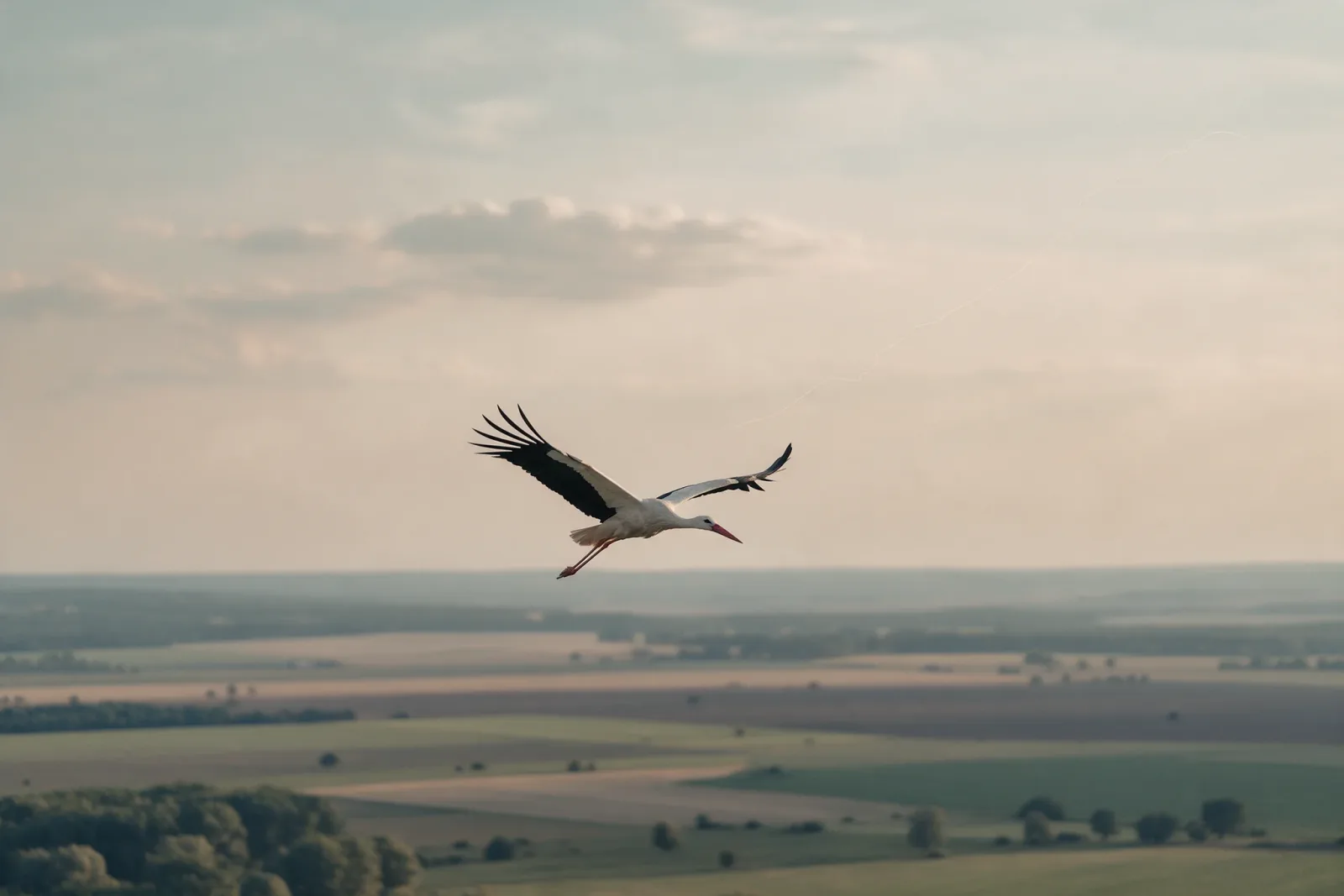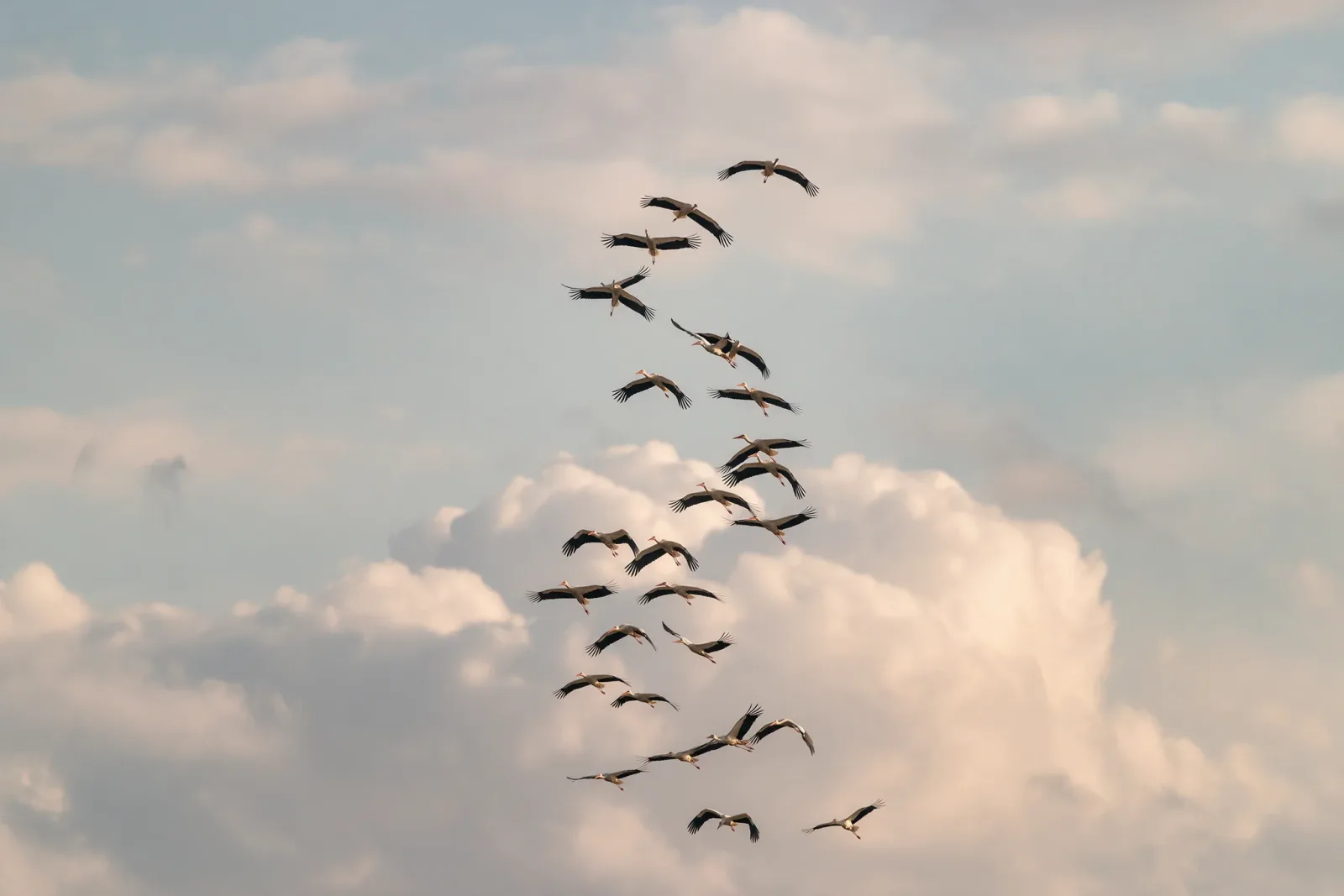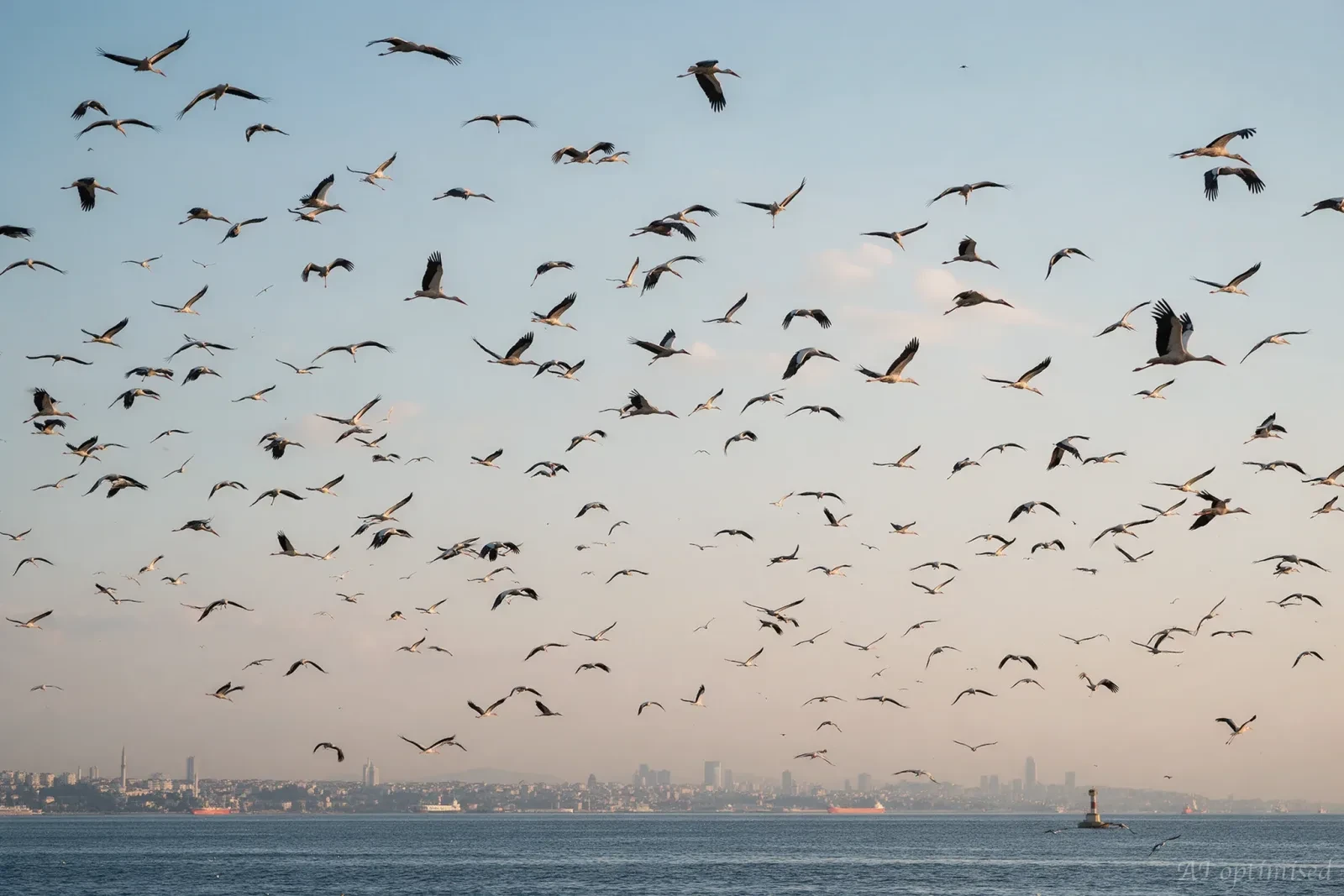
The route over the Bosphorus is one of the great pinch points of the migration, a place where the whole vast current of eastern storks narrows to a single crossing. The Bosphorus is the strait that separates Europe from Asia, running through the middle of Istanbul, a city of millions. Yet every autumn, over the rooftops and the domes and the busy water, thousands of storks pass on their way south, funneled by geography into a channel a bird can cross in an afternoon.
Why the strait matters
A stork avoids long stretches of open sea, because over water there are no thermals to lift it. So when the migrating birds of eastern Europe move south and meet the Black Sea, they do not cross its wide middle. They slide around its western edge, following the land, until they reach the place where the water is narrow. That place is the Bosphorus. Here the sea is thin enough that a stork can cross it without a long, exhausting flight over open water.
A river of birds
On the right day in late summer, the sky above the Bosphorus fills. The birds come in loose flocks, spiralling up on the thermals that rise off the sunlit hills, then setting off across the water. They pass over the ships, over the ferries, over the roofs and minarets and the endless traffic of the city below. The city barely notices. The people go about their day while overhead, silently, one of the oldest journeys on earth moves through the air above them.
The wait before the crossing
The storks do not cross blindly. They gather on the European shore and wait, watching the wind, the way storks do at every sea crossing. Some days the air is wrong and they hold back, resting in the fields and on the hills, thousands of birds waiting together for the moment to go. Then the wind turns, and the whole gathering rises, and the strait is crossed in a long, steady stream that goes on for hours.
The city and the sky
The Bosphorus runs through the middle of Istanbul, and the storks cross it over the rooftops and the ferries and the endless movement of the city below. The birds and the city share the same narrow water, and neither seems to mind the other. The storks pass overhead without descending, and the city carries on without looking up. It is a strange and lovely meeting, the ancient migration and the modern world occupying the same air.
For a bird that avoids the sea, the Bosphorus is the obvious crossing, the narrowest arm of water between two continents. The birds come from far inland, following the land as it funnels toward the strait, and by the time they reach the city they are gathered in numbers that darken the sky. The strait concentrates them, the way a funnel concentrates water, and the whole eastern migration pours through this one passage.
The timing matters. The storks wait for rising air and a helpful wind, and on the right day the crossing goes on for hours, flock after flock, a long procession of birds moving from one continent to the other. A watcher on the shore that day sees more storks in an afternoon than most people see in a lifetime.
The crossing is short, but it is decisive. Once a stork is over the strait and on the Asian shore, the hardest water of the eastern route is behind it, and the long road south opens ahead. The Bosphorus is the hinge of the journey, the point where the migration turns from one world toward the next.
The door between the seasons
Once across the Bosphorus, a stork has reached Asia and turned south, and the hardest water of the eastern route is behind it. The route over the Bosphorus is one small stretch of a very long journey, but it is a stretch that concentrates the whole migration into a single bright passage. To stand there on the right afternoon is to understand how ancient this road is, and how many wings have passed this way, season after season, while the city below kept on with its ordinary days.
Explore the gift