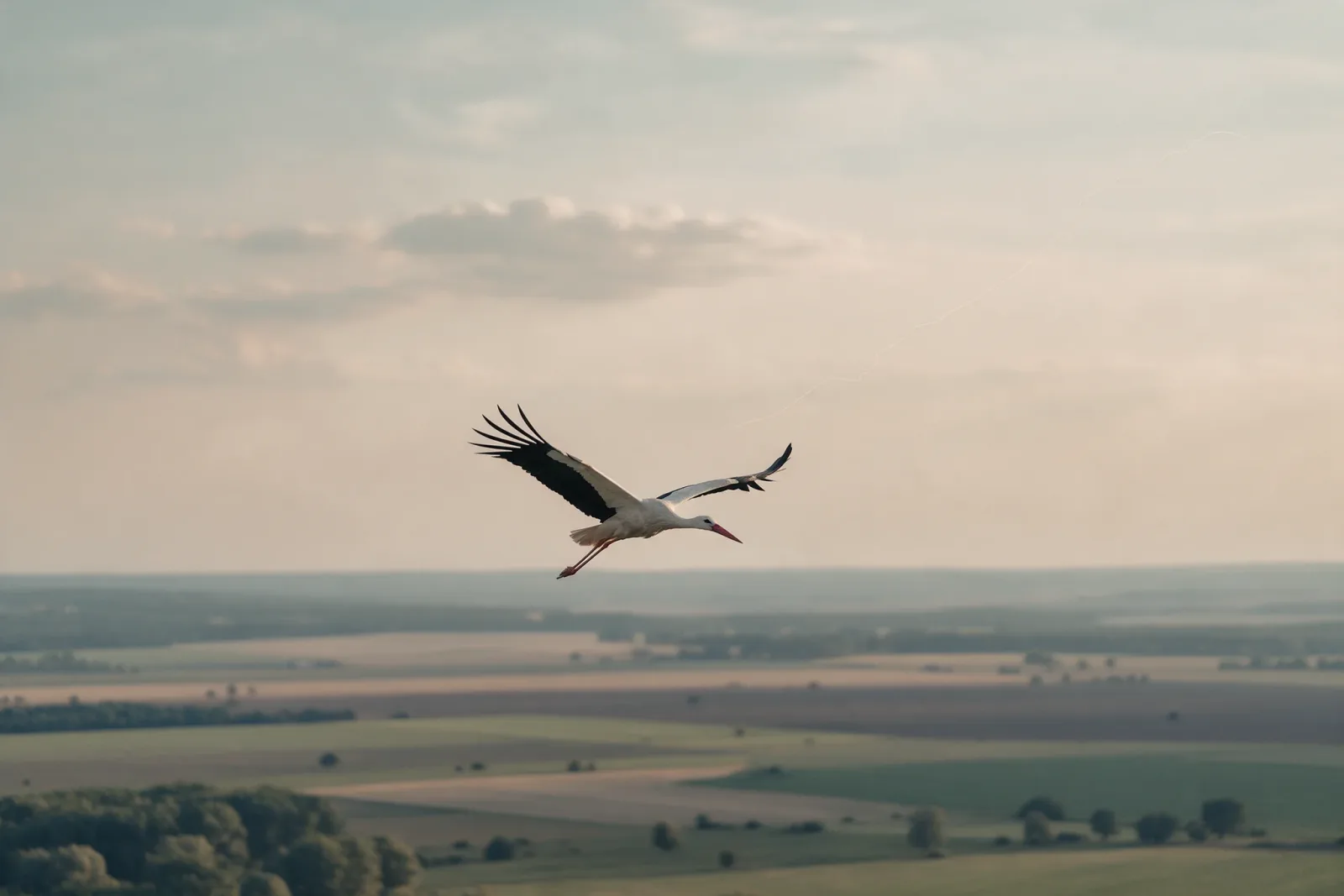
Riding thermals is the stork's great trick, the reason a heavy bird can cross a continent without wearing itself out. Watch a stork on a warm morning and you will see it happen. The bird spreads its wings, leans into a rising column of warm air, and begins to climb. Not by flapping, but by being lifted, the way a leaf is lifted by the breath of the earth. The stork goes up, and up, and up, and it does not move its wings at all.
What a thermal is
The sun warms the ground, and the ground warms the air above it. That warm air rises, because warm air is lighter than the cool air around it. Over a ploughed field or a bare hillside, where the ground heats fast, the rising air forms a column, an invisible chimney of warmth stretching from the earth into the sky. That is a thermal. A stork that finds one has found a free elevator, a current of air strong enough to carry its whole body upward.
The art of the spiral
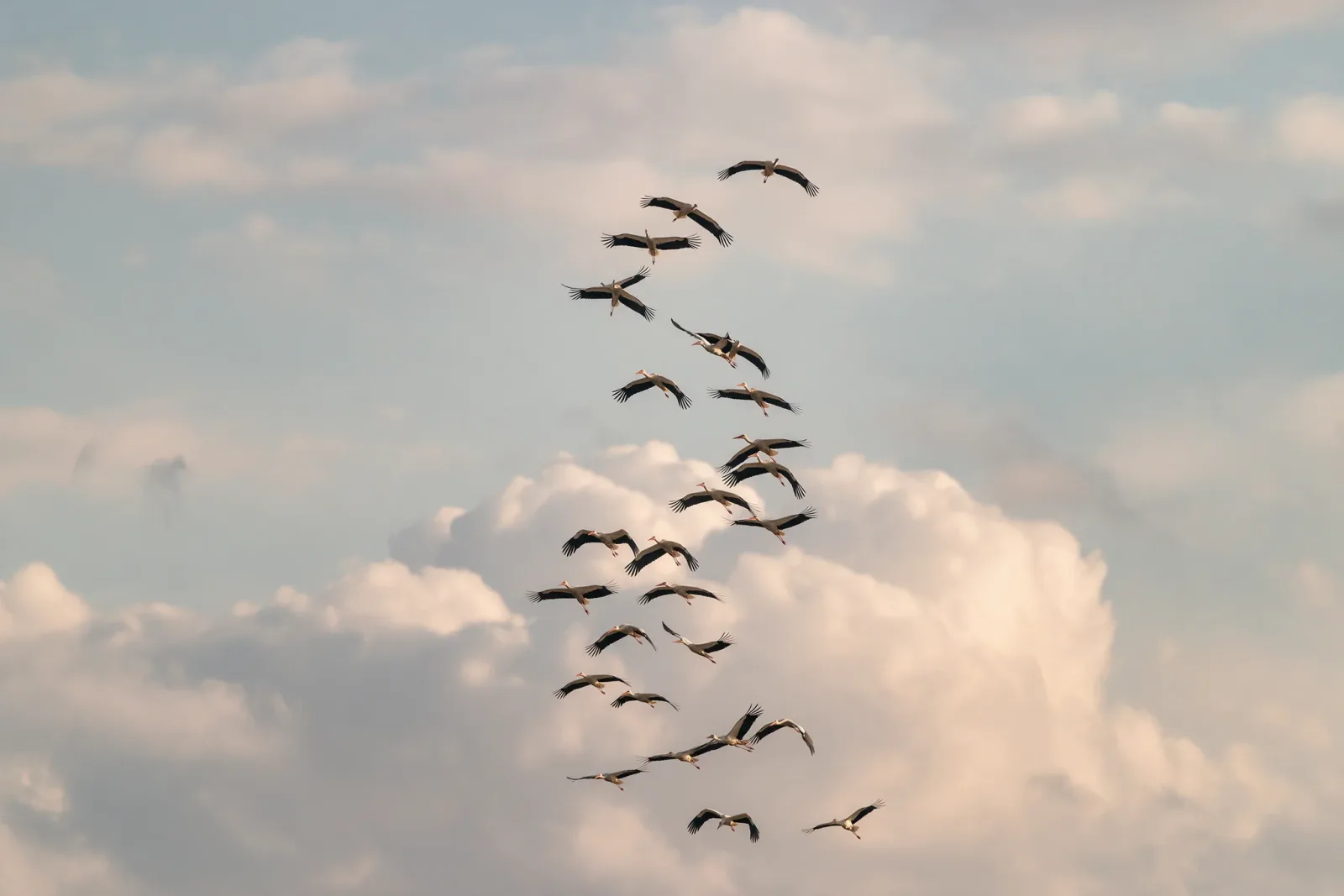
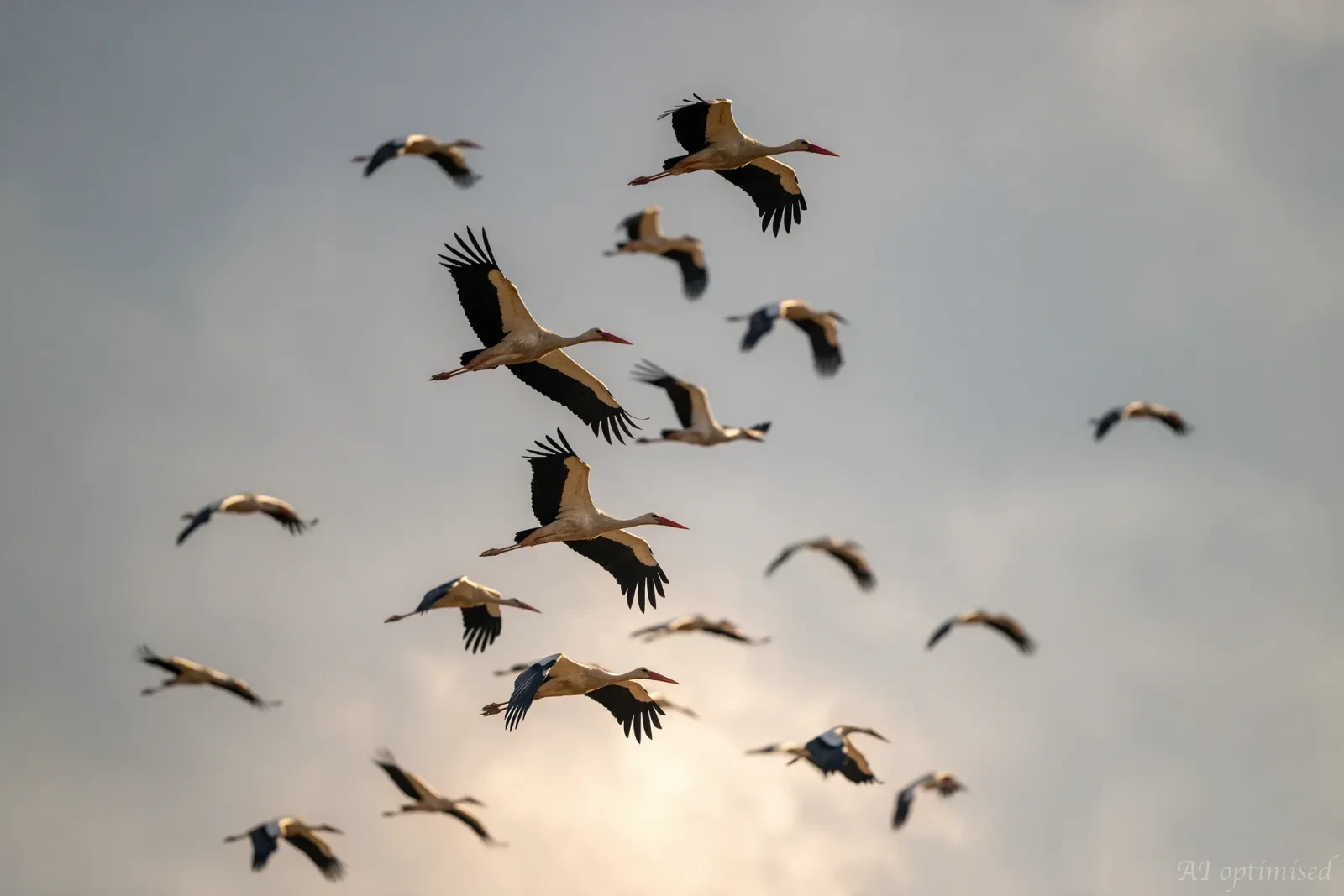
The stork enters the thermal and turns. It circles, holding its wings still and wide, letting the rising air push against their whole surface. Each circle carries the bird a little higher. The spiral is not random. The stork reads the invisible current through the tips of its feathers, sensing where the lift is strongest, and it works its way toward the heart of the column. Other storks see the climbing bird and join it, and soon a whole flock is turning together in a slow, silent tower of birds.
Why this matters for migration
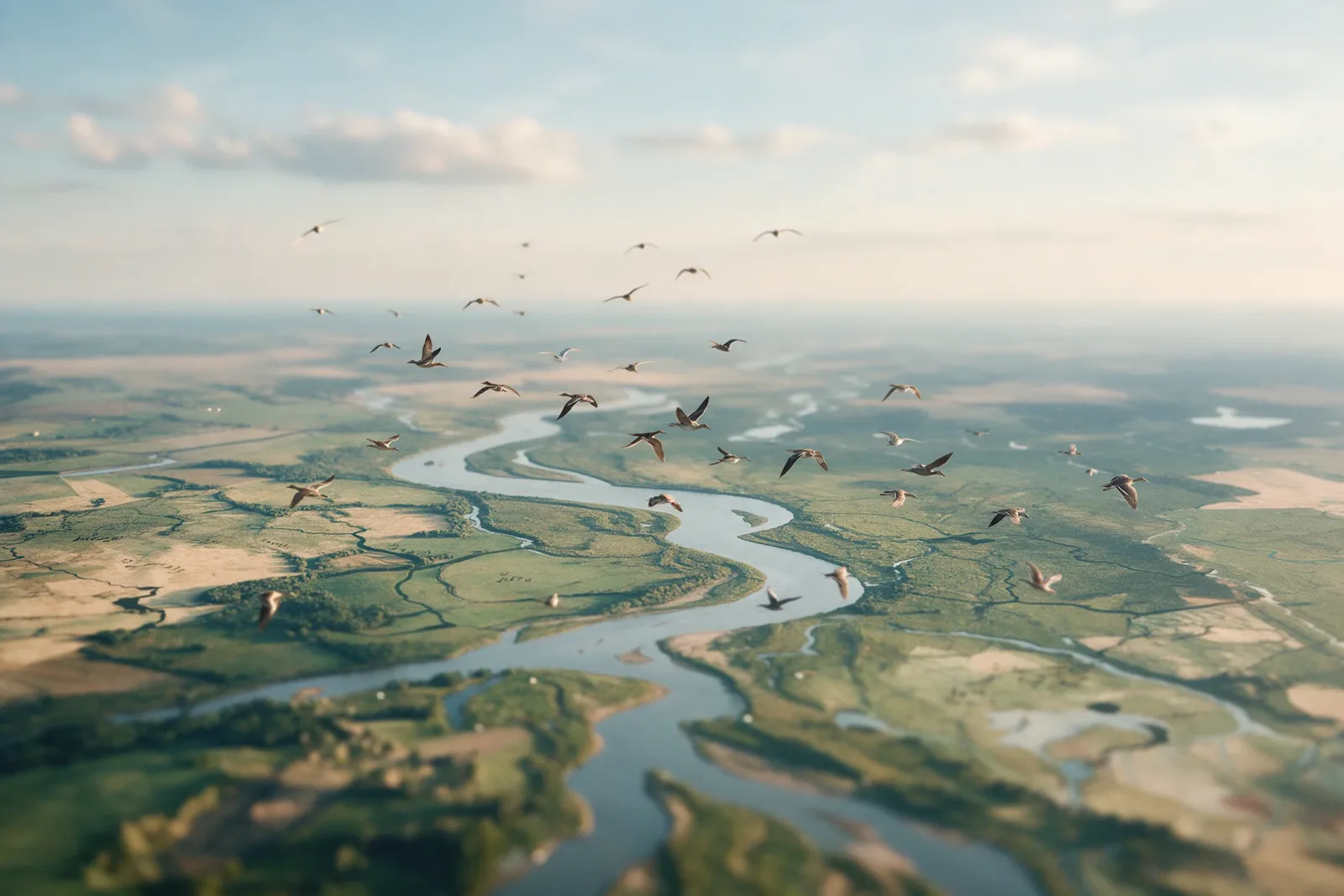
Riding thermals is not a game. It is how a stork travels. A bird in migration climbs on a thermal, then glides forward in the direction it wants to go, losing height slowly as it goes. When it has come down too far, it finds another thermal and climbs again. Over and over, for hour after hour. The bird uses the warm air the way a sailor uses the wind, and in this way it crosses hundreds of kilometres while spending very little energy.
The physics of the lift
What carries a stork upward is simple physics, and the bird uses it as naturally as it breathes. The sun heats the ground unevenly, and where the ground is warmest, the air above it rises fastest. Over a dark ploughed field or a bare hillside, the rising air is strong enough to hold a bird aloft, and the stork finds these places the way water finds a slope. It does not understand the physics. It does not need to. It needs only to feel the lift and follow it.
The stork's wings are made for this. They are long and broad, built to catch the widest possible share of the rising air, and the bird can hold them perfectly still while the world climbs around it. A bird that flaps constantly could never travel as far. The stork's gift is to move without effort, to be carried rather than to carry.
Thermals rise, cool, and fade, and the stork reads them all the while. It senses when a column is weakening and slides out to find the next. The whole art of riding thermals is this quiet reading of an invisible current, done by a bird that seems, to us, to be doing nothing at all while it climbs toward the clouds.
A flock does this together, each bird reading the others, and the lift of one becomes the lift of all. When one stork rises, the rest see it and come to the same warm column, and soon the whole group is turning upward in a slow spiral, a tower of birds built on nothing but warm air and patience.
The silence of the climb
There is a particular quiet to a climbing stork. No wingbeat, no cry, just the slow turning and the lift of the air. If you watch long enough, the bird becomes smaller and smaller, a black and white cross turning against the blue, until it is no bigger than a flake of ash. Then it sets its wings and glides away, high above the fields, riding the thermals the way its ancestors did long before anyone learned to watch.
Explore the gift