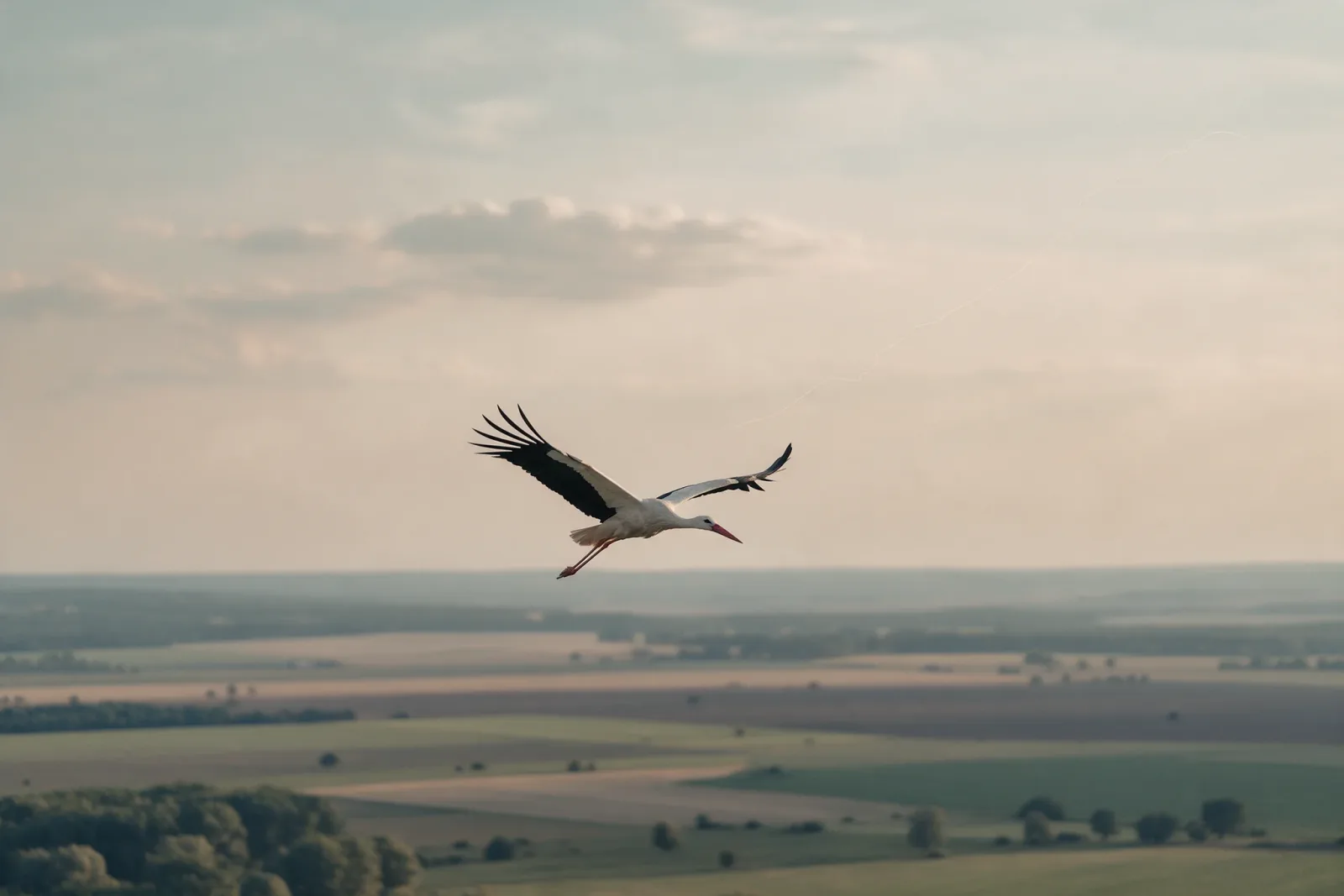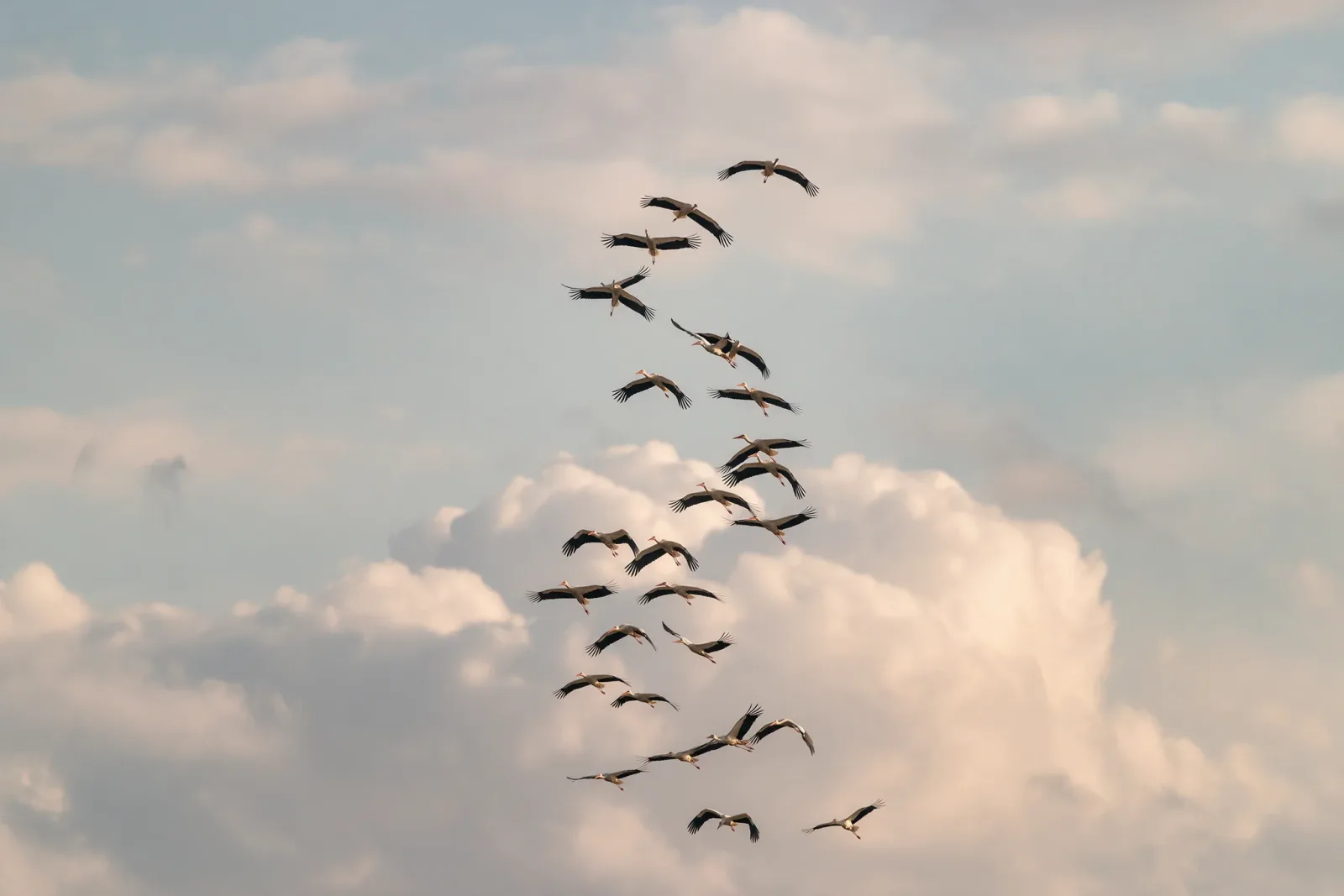
A route older than roads runs through the sky above us, and it was travelled long before the first stone was laid for the first highway. The migration paths of the white stork predate every map we have drawn and every border we have declared. Long before nations existed, before cartographers put ink to paper, the storks were flying the same corridors of warm air they fly today, season after season, following a road that no human being ever built.
A road written by the land
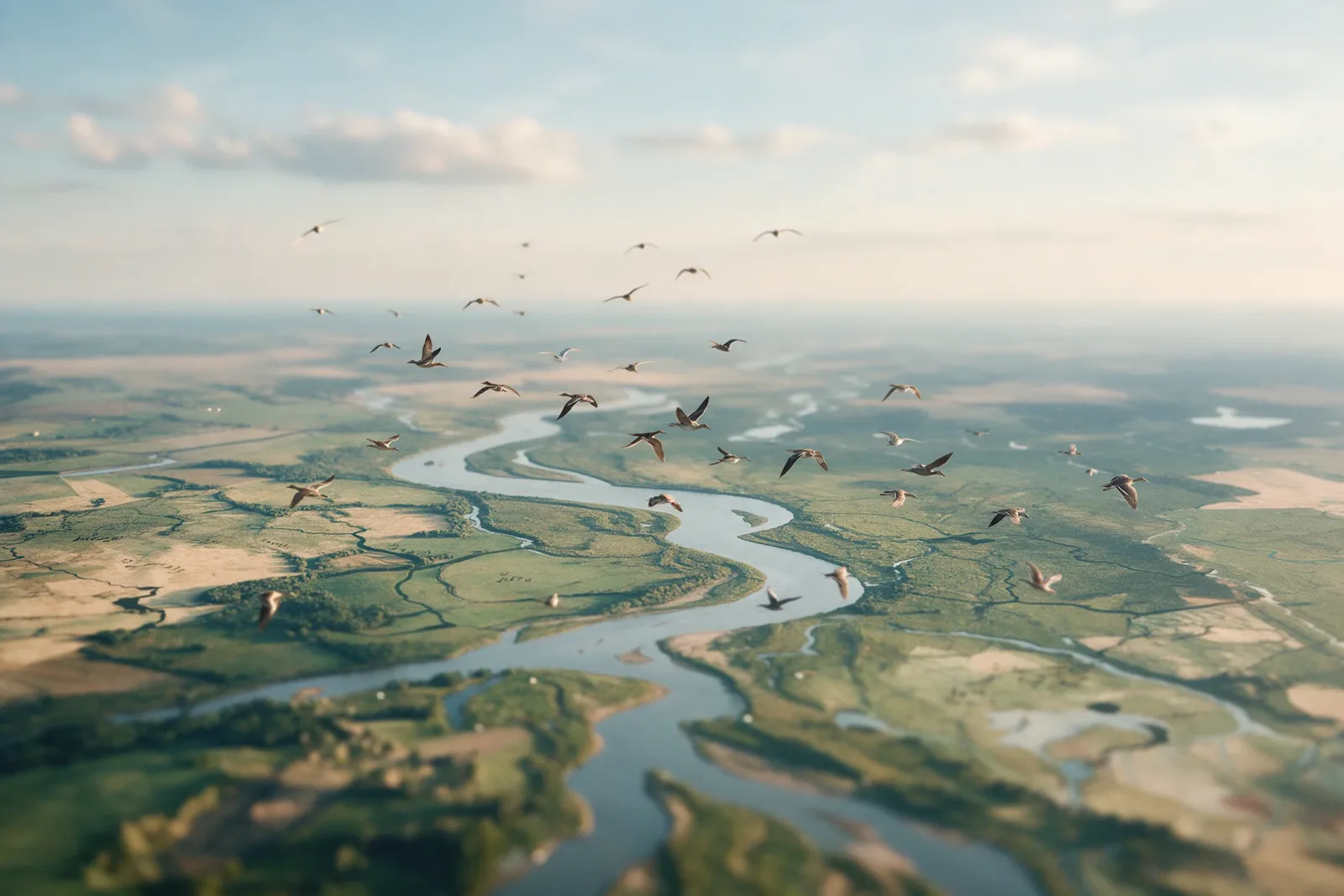
The stork's route is older than roads because it was never made by hands. It was shaped by the shape of the world itself, by mountains and seas and the rising of warm air over dry ground. The birds follow the places where the wind lifts them and avoid the places where it does not. The route is a fact of geography before it is a choice of the bird. Where the land climbs, the storks climb. Where the water is narrow, they cross. This has been true for longer than any of our records can reach.
Borders that came later
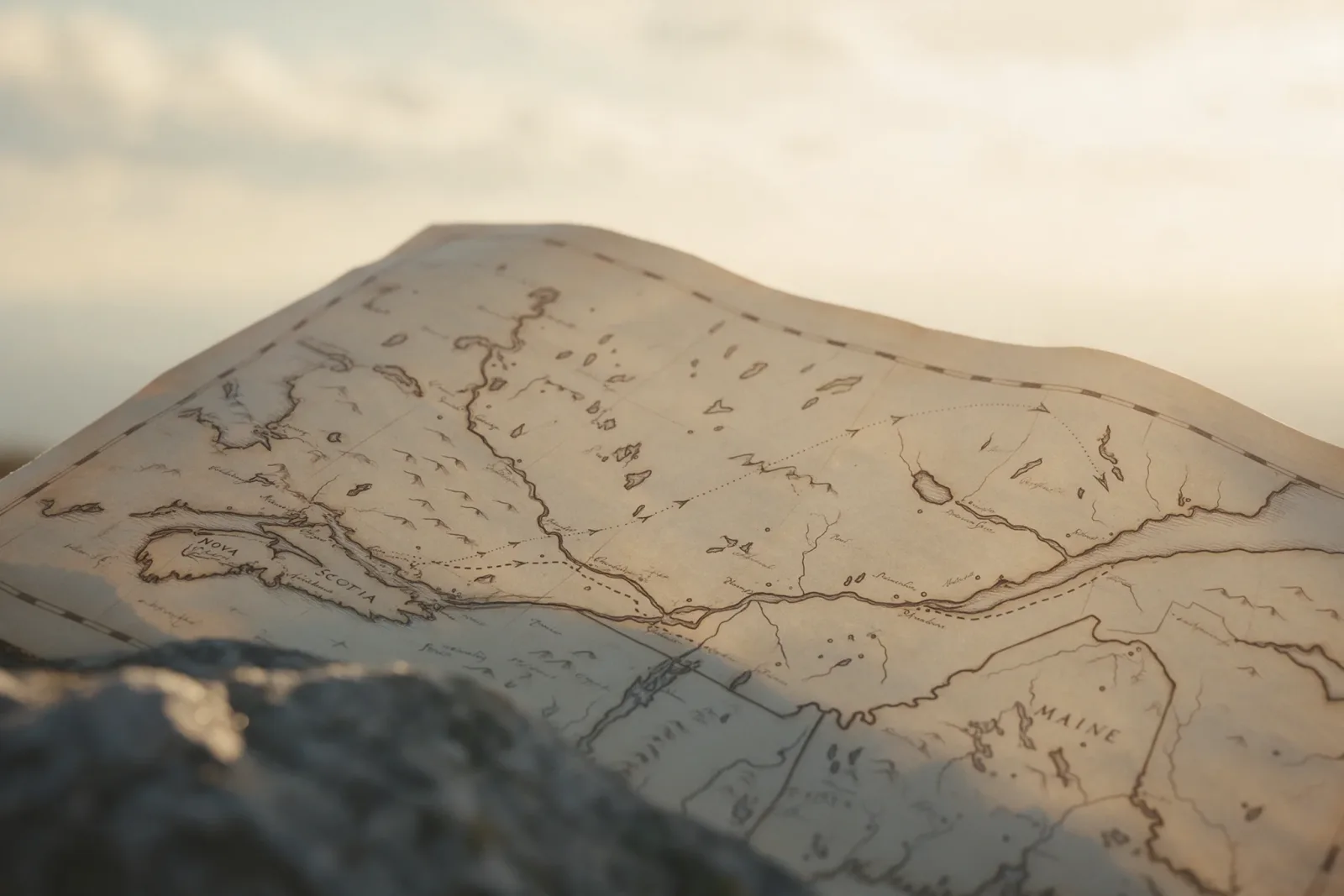
The lines we draw on maps are new. The storks crossed the Strait of Gibraltar before Spain and Morocco had names. They crossed the Bosphorus before there was a city on either shore. The flyway cuts straight across our borders without noticing them, because a stork does not know what a border is. It knows only the wind and the land and the far warm place it is trying to reach. To the stork, our boundaries are not real. The route is the only true map.
The patience of the old road
There is something humbling in the age of the flyway. A road we build lasts a few centuries at most, and most last far less. The stork's route has outlasted empires, outlasted the people who first watched the birds and wondered where they went. It is still here, still in use, still carrying birds south each autumn and north each spring. The old road does not need maintenance. It only needs the sun and the wind and the birds to keep coming.
What the old route has seen
The flyway has been travelled for longer than any nation has existed, and the birds have watched our whole history pass beneath them. They crossed the strait before there were ships, followed the Bosphorus before there was a city on its shore, and flew over the land while it was still covered in forest and marsh. The route is older than every road, every border, every name we have given to the places it crosses.
Imagine the changes the flyway has outlasted. Kingdoms rose and fell under the storks' wings. Languages appeared and vanished. The land below was cleared, ploughed, built upon, and redrawn a thousand times, and still the birds came south each autumn and north each spring, faithful to a road that did not belong to any of the people who lived below it.
There is a comfort in that persistence. In a world where so much is new and hurried, the flyway is old and unhurried. It does not change with fashion or politics. It changes only with the wind and the seasons, and it will be there, in the same sky, long after the roads we are so proud of have been forgotten.
The birds do not know they are keeping an old road. They know only the warm air and the direction of the south. But the keeping is real, done season after season, wingbeat after wingbeat, by creatures who were here before us and will be here after us, travelling the route older than roads.
What we can learn from it
A route older than roads is a reminder that some of the world's great journeys have no need of us. They were underway long before we arrived and will continue long after our maps have faded. When you watch a stork following the flyway, you are watching something that began before history and will outlast it. The bird passes over our roads and our borders and our busy towns, bound for a destination older than all of them, and it never once needs to ask the way.
Explore the gift