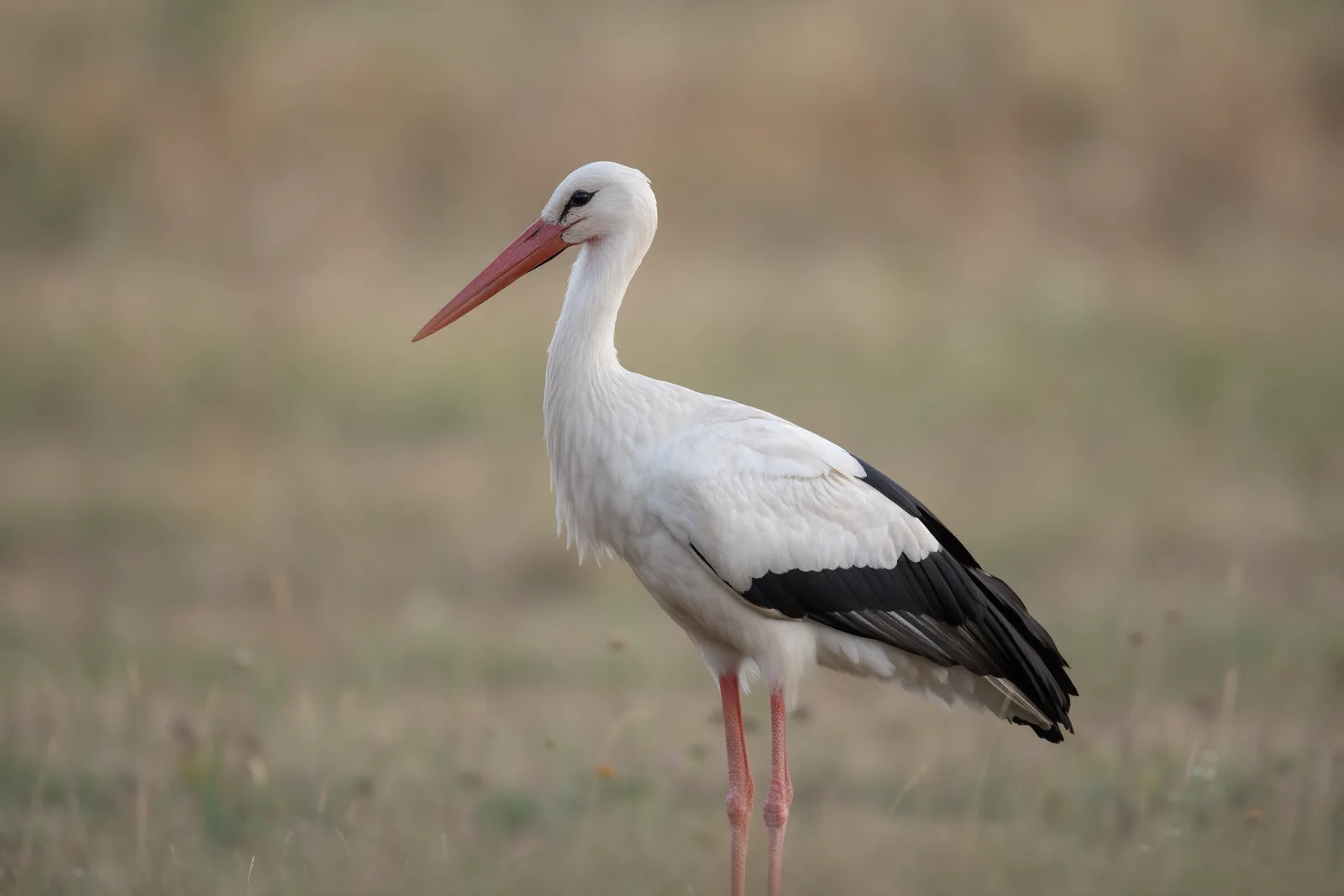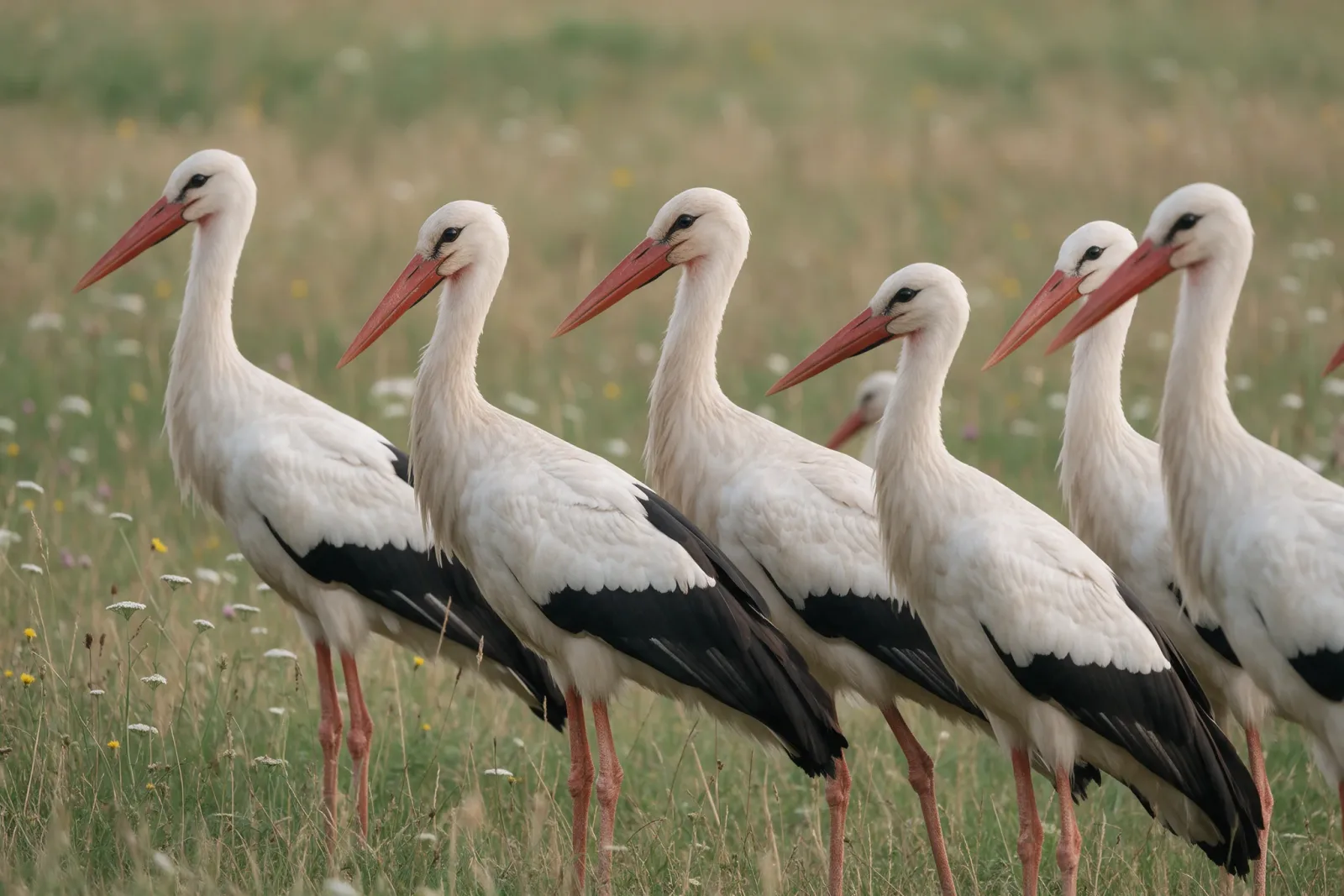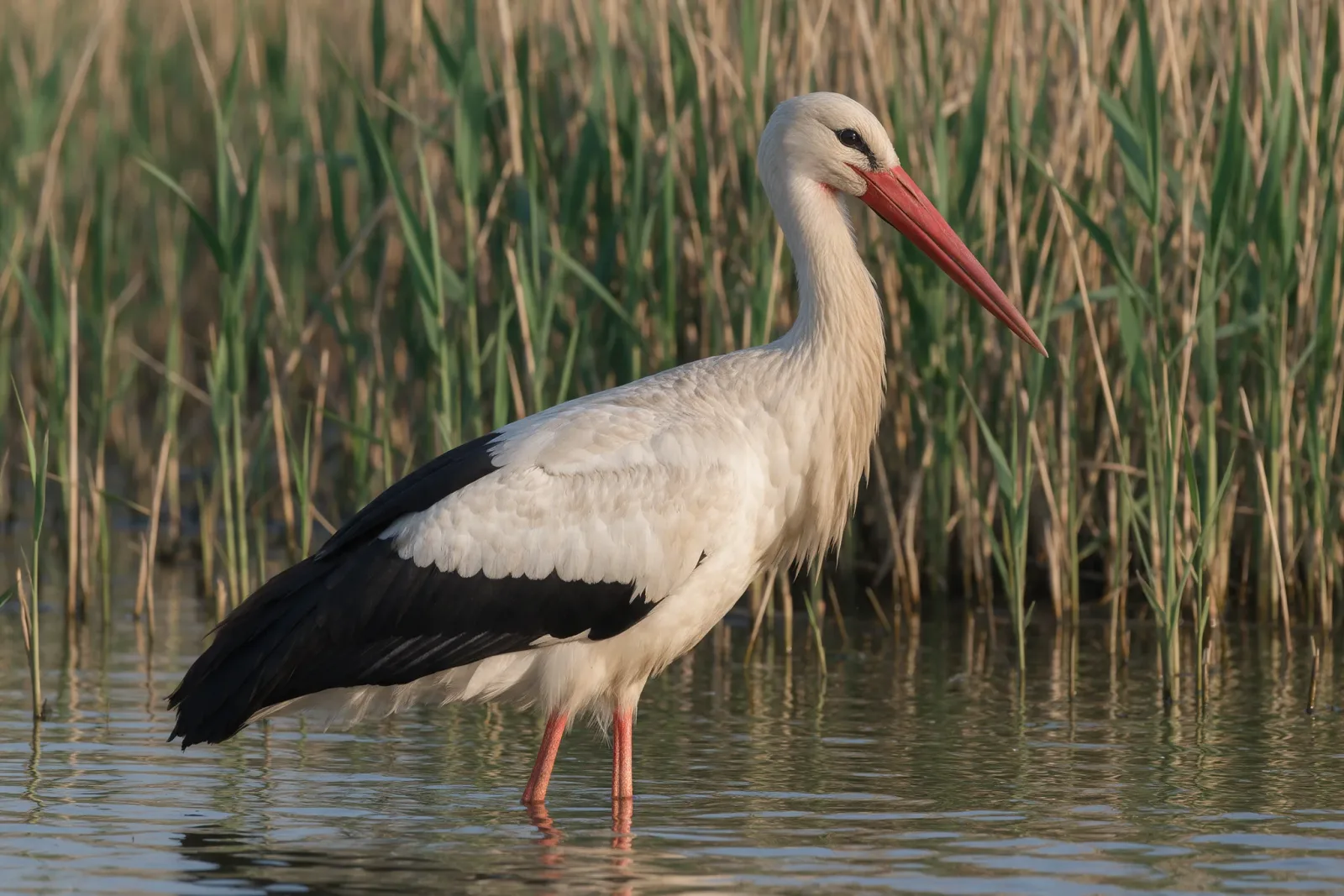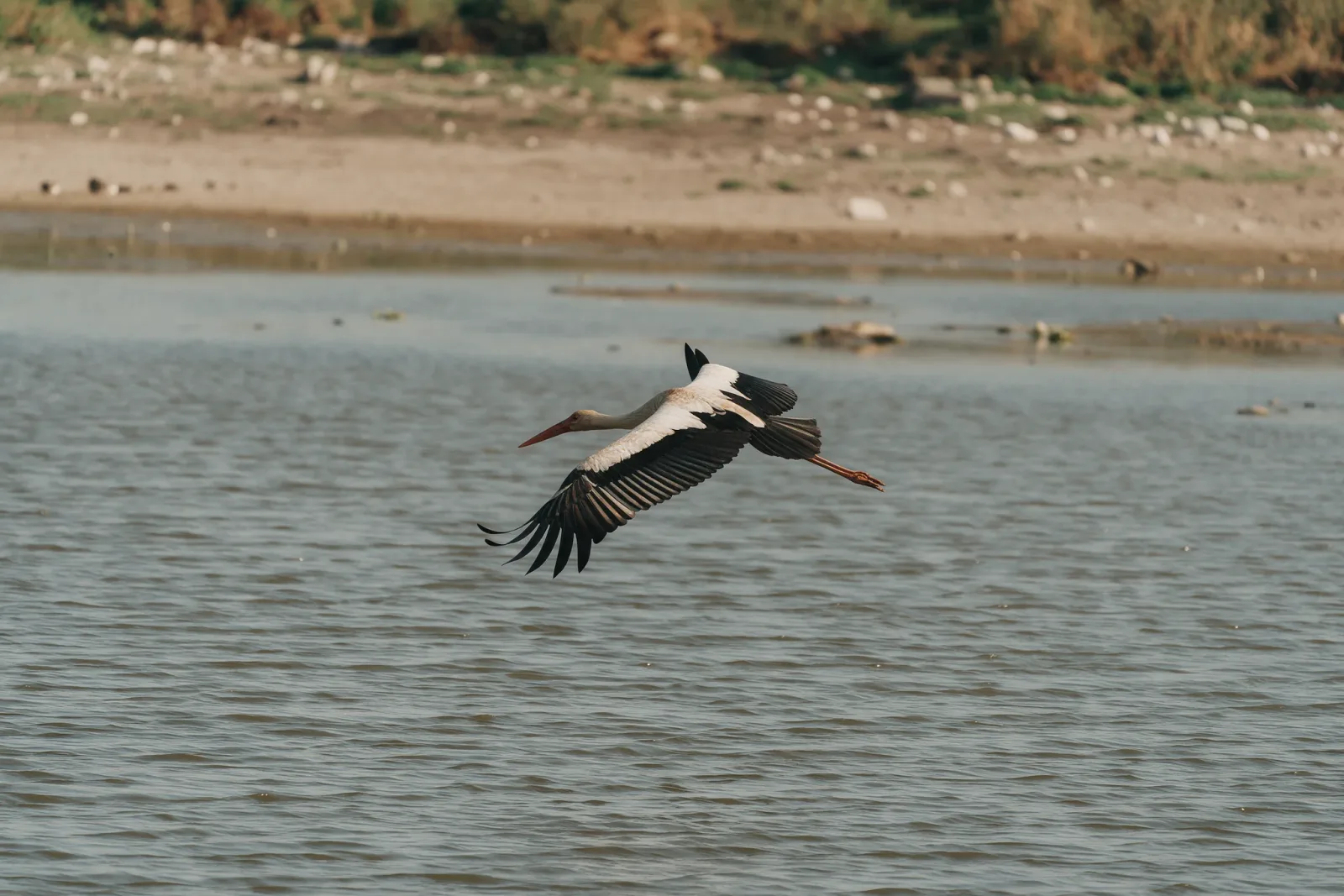
The stork that crossed first is the bird whose points leave the northern shore before all the others, and in the LifeTrack White Stork SW Germany study that distinction is noted quietly, with something like respect. Each autumn the white storks gather where the water is narrow, and each autumn one of them commits to the crossing before the rest have made up their minds.
The waiting season
A sea crossing is not a thing a stork does on impulse. The birds gather and wait, sometimes for days, watching the sky for the kind of weather that will lift them and carry them over open water. To cross first is to decide, before the safety of numbers has gathered, that today is the day. The bird that goes first crosses alone, or nearly so, and that takes a particular nerve.
The bird behind the line
The study does not crown a winner, because there is no race. But the data shows it plainly when one bird's line breaks away from the coast and runs out over blue, and the watchers mark it, the way you mark the first swallow of spring. The bird behind that line is not the biggest or the strongest, only the earliest, which is its own kind of courage.
The first leap
On the map, a first crossing looks abrupt. One point on land, the next far out over water, and then nothing for hours, because a bird over the sea is a bird beyond the reach of the transmitter's small sunlit charge. The gap is the crossing itself, the most honest blank in the whole data, a stretch of silence that means the bird is exactly where it is hardest to be.
What first means
To cross first is to be the season's opening note, the bird that the others will follow along the same corridor a day or two later. It is not a triumph, and the bird will never know it was first. But the people watching know, and they remember the bird that went before the crowd, the one whose courage made the first line on an empty sea.
Every migration needs a first bird. The study lets us see, for once, which one it was.
Explore the gift