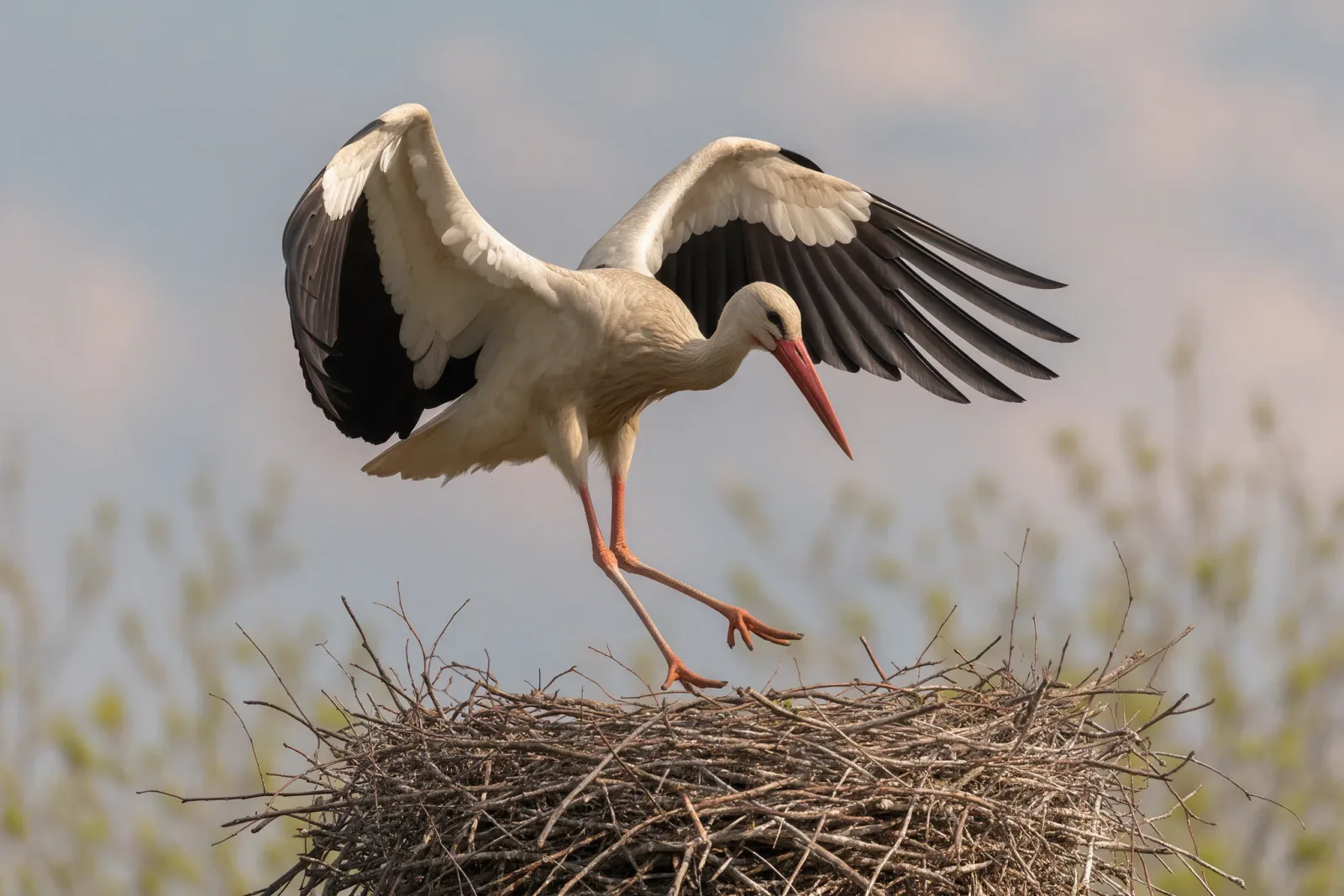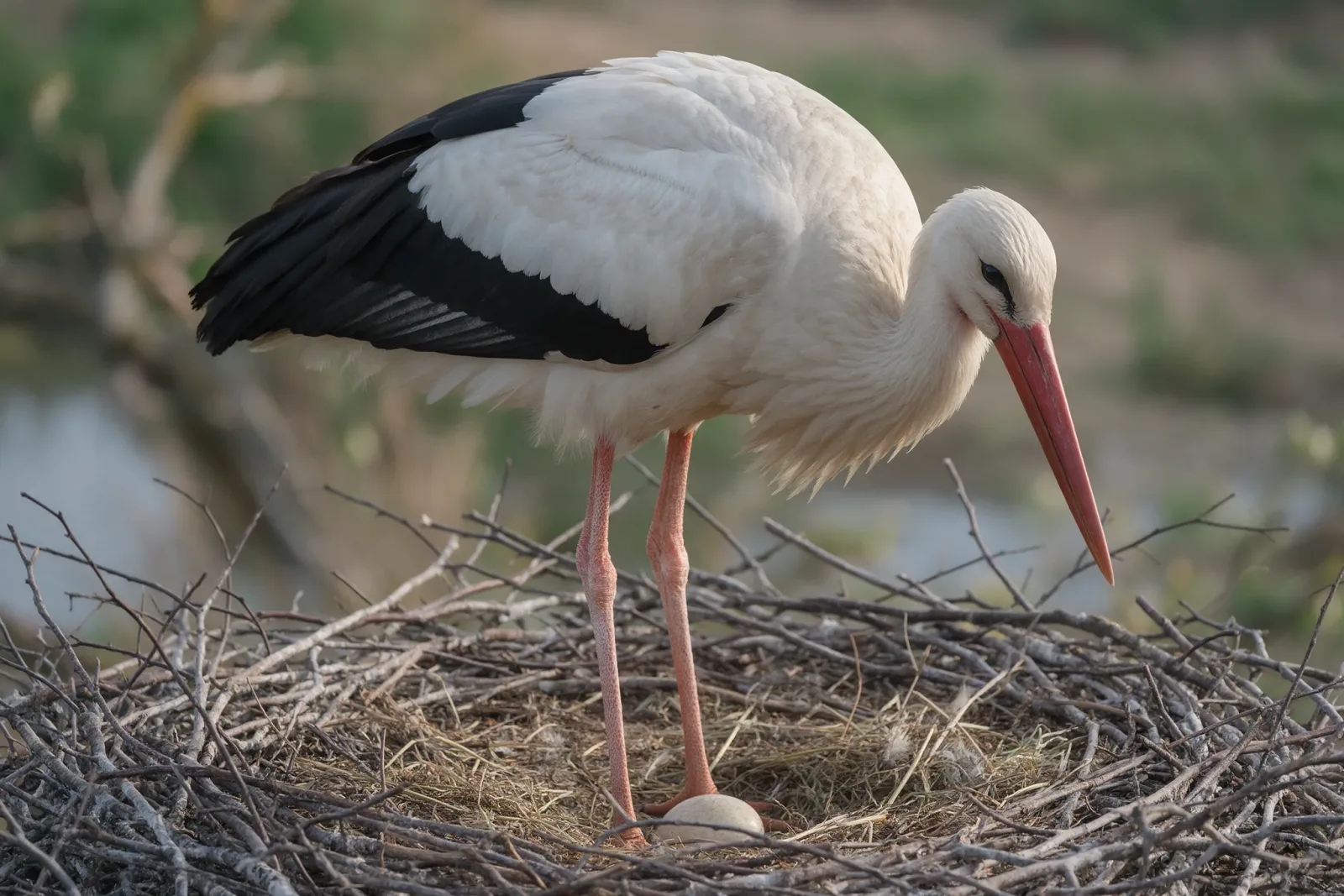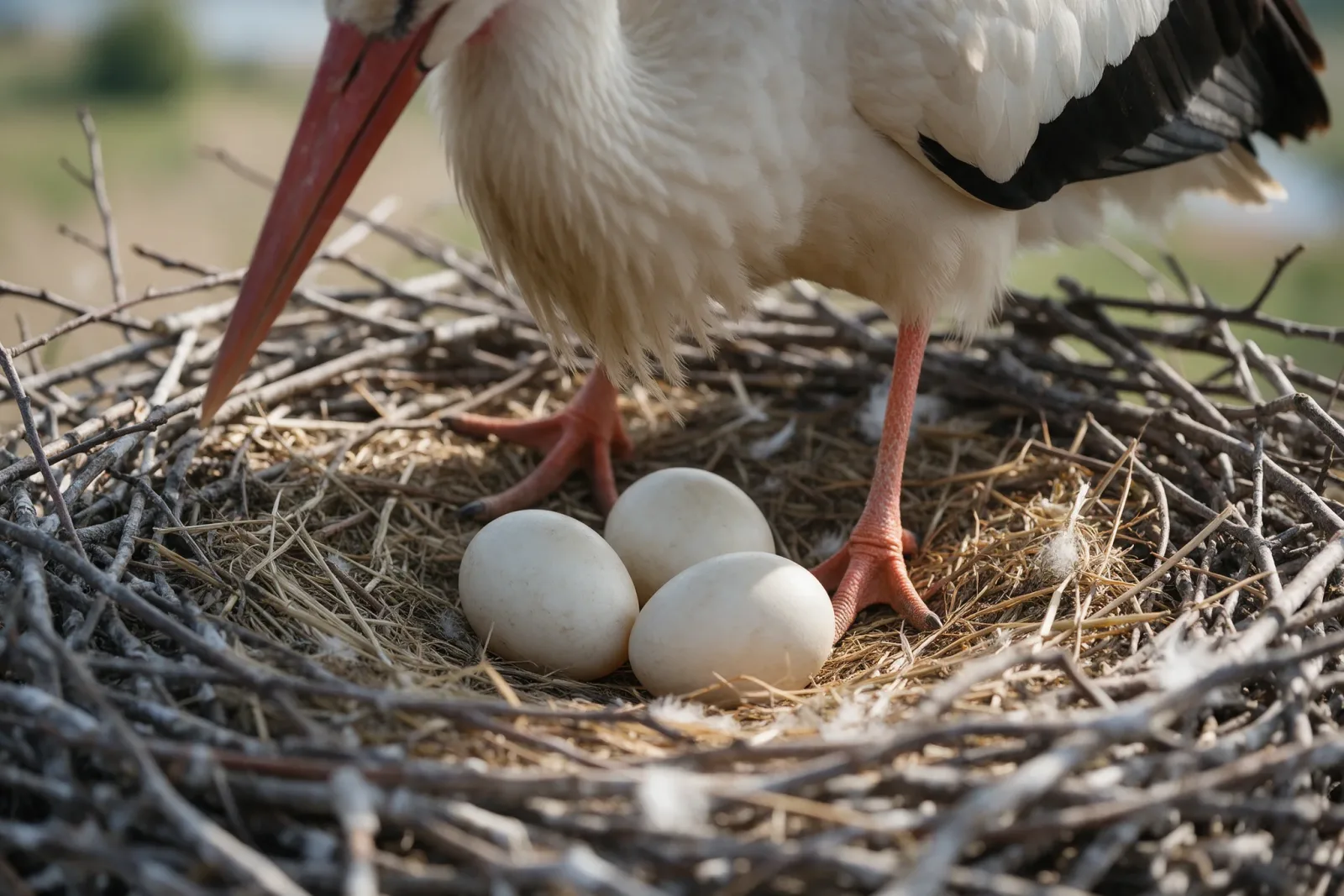
There is no single day when a chick becomes a stork, and yet the change, when it comes, is unmistakable. A white stork chick is a soft, downy, dependent thing. A stork is a long-winged traveller that crosses continents on the wind. The passage between the two is the whole drama of the summer.
The threshold is crossed in stages. First the feathers, then the first flight, then the long months of instinct that turn a bird of the nest into a bird of the sky.
The change of feathers
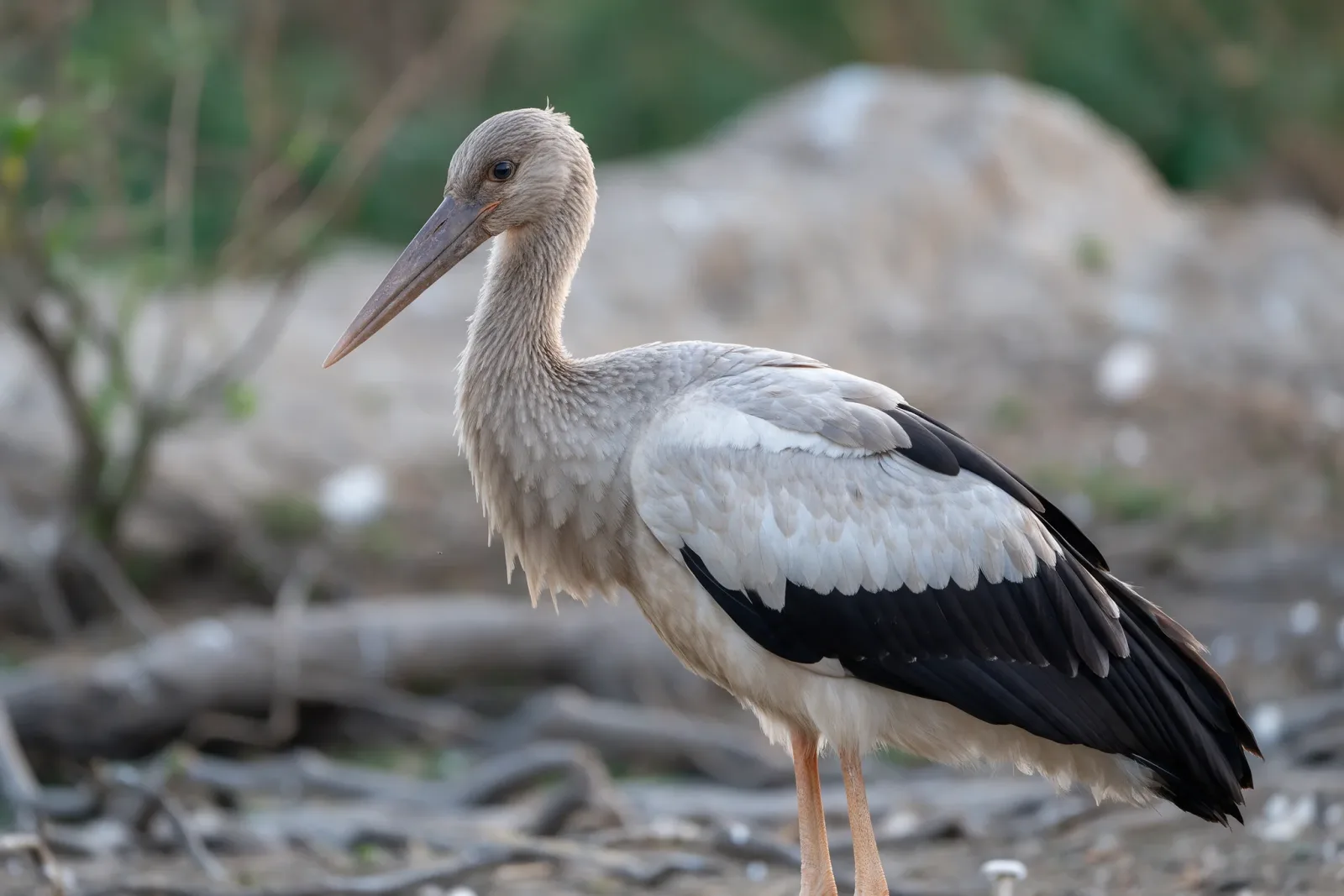
The clearest marker is the plumage. A young stork begins in grey down, then grows its juvenile feathers, which are duller than an adult's and often tinged with brown on the wings. The bill is dark at first, not yet the bright red of a breeding adult.
Over the first year these feathers are replaced, and the bird slowly takes on the clean white and black and red of full adulthood. The body changes, but so does the posture, the certainty of movement, the sense that this bird now knows what it is.
The first flight and beyond
The first flight is the true beginning of the change. Before it, the chick is a creature of the nest. After it, the bird belongs to the air. It still begs and follows and leans on its parents for a while, but the balance has already shifted.
In the weeks after fledging, the young stork learns to land, to feed, to ride the thermals, and with each lesson it needs its parents a little less. The dependence thins, then ends.
The long journey as proof
The real proof comes in autumn, on the first migration. A bird that can leave its birthplace and fly thousands of kilometres south, alone, following an instinct it was born with, is no longer a chick in any sense. It is a stork.
This first journey is the species' great rite of passage. The young bird proves, in the hardest possible way, that it has crossed the threshold. Not every first-year bird survives, but those that do return as adults in every sense.
The full circle
Even so, the change is not complete until the bird breeds. A young stork does not nest in its first or second spring. It wanders, summers in the north without breeding, and only later claims a nest and a mate of its own. That is the final step, the moment a stork becomes a parent and the cycle begins again.
When chicks become storks is not a moment but a process, played out across a year and more. And at its end stands a bird that was once a scrap of down, ready now to raise the next generation in the same old nest under the same wide sky.
Explore the gift