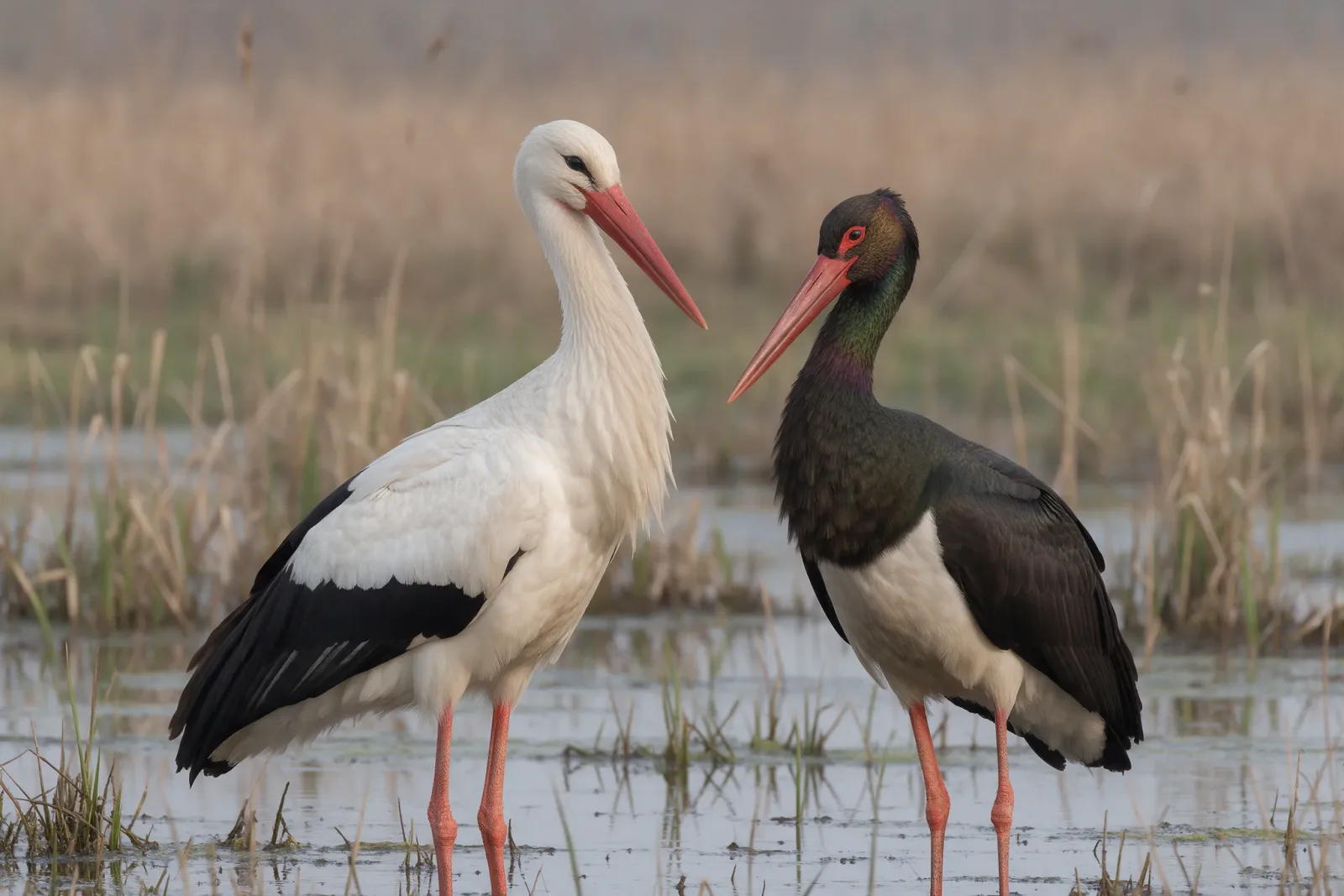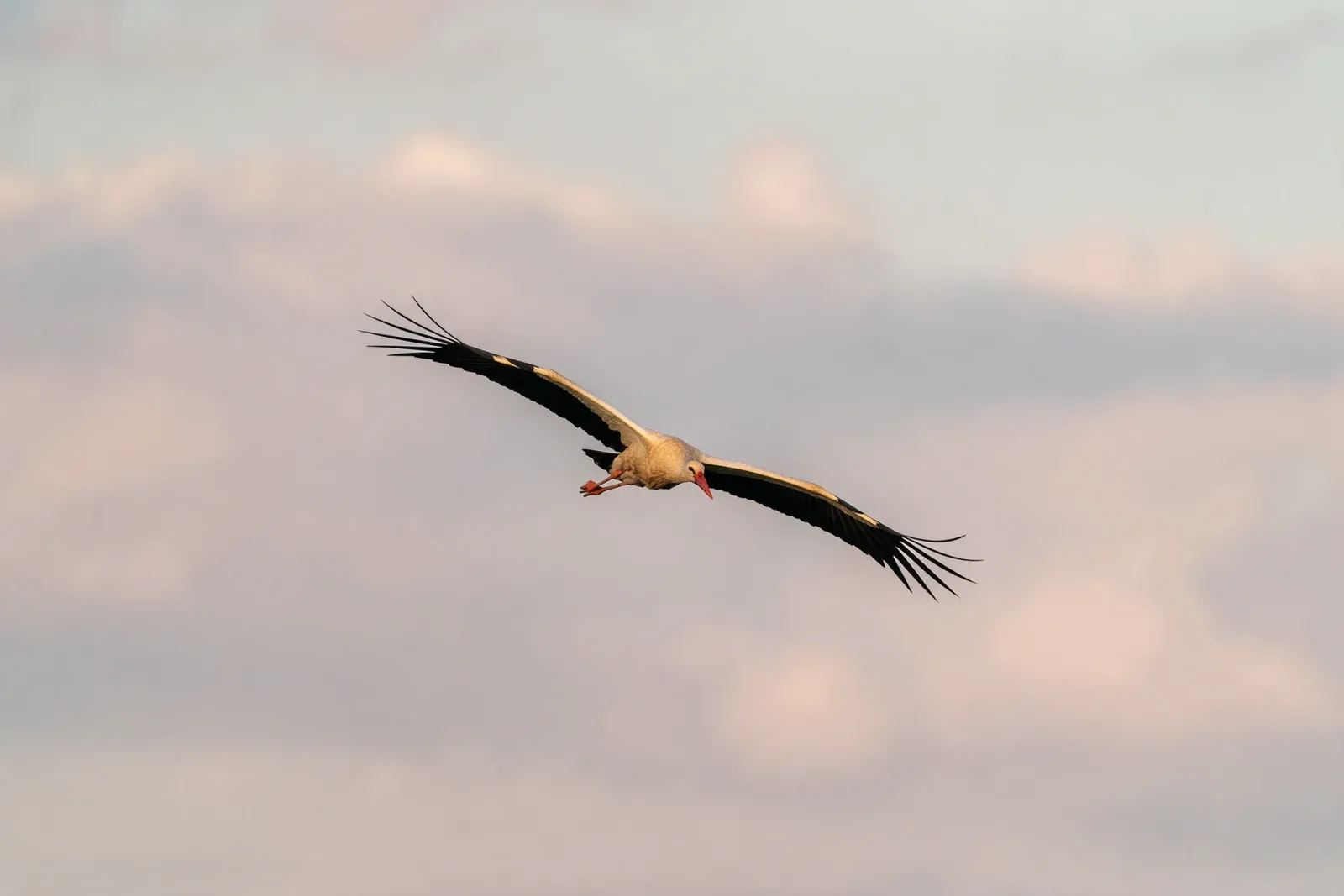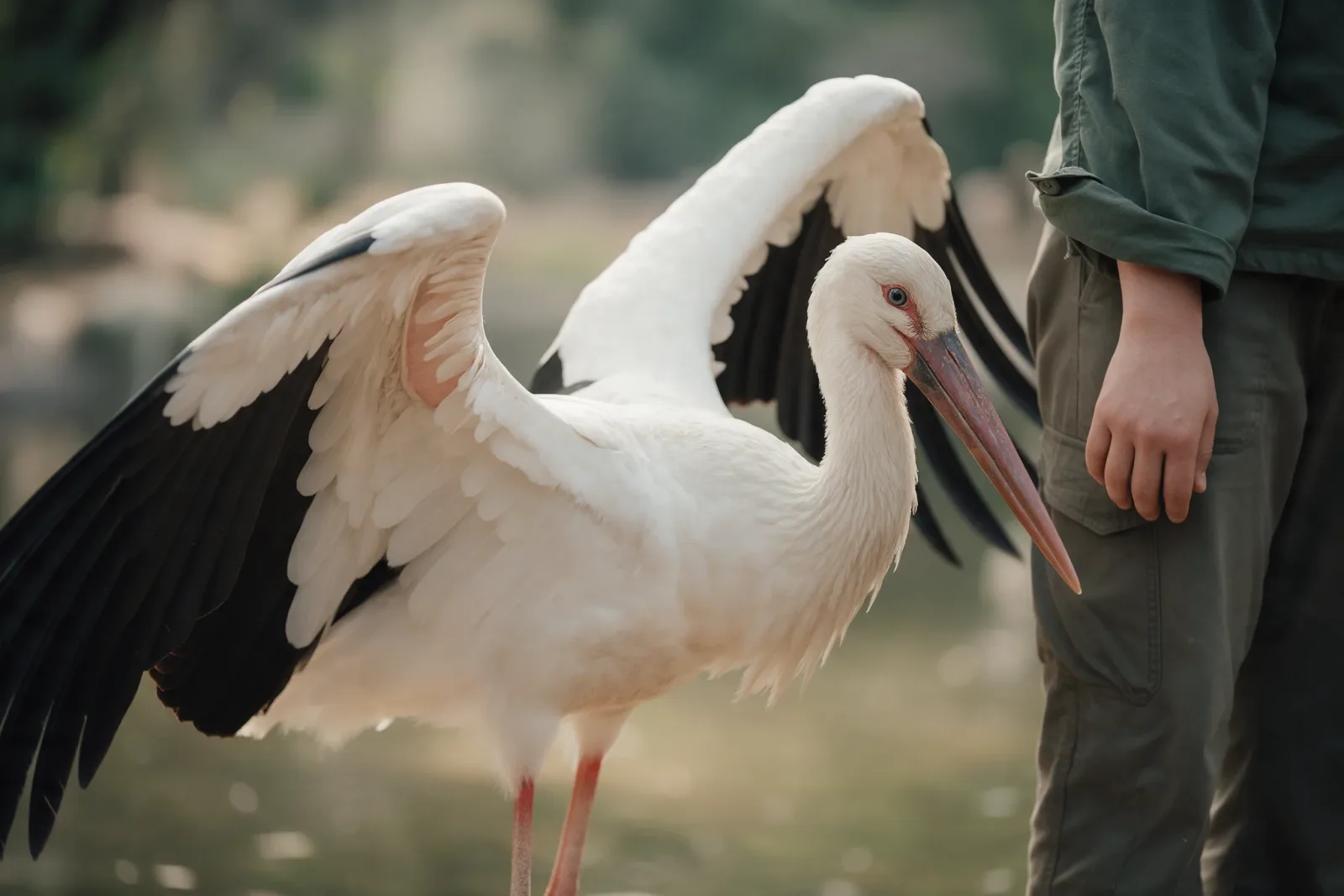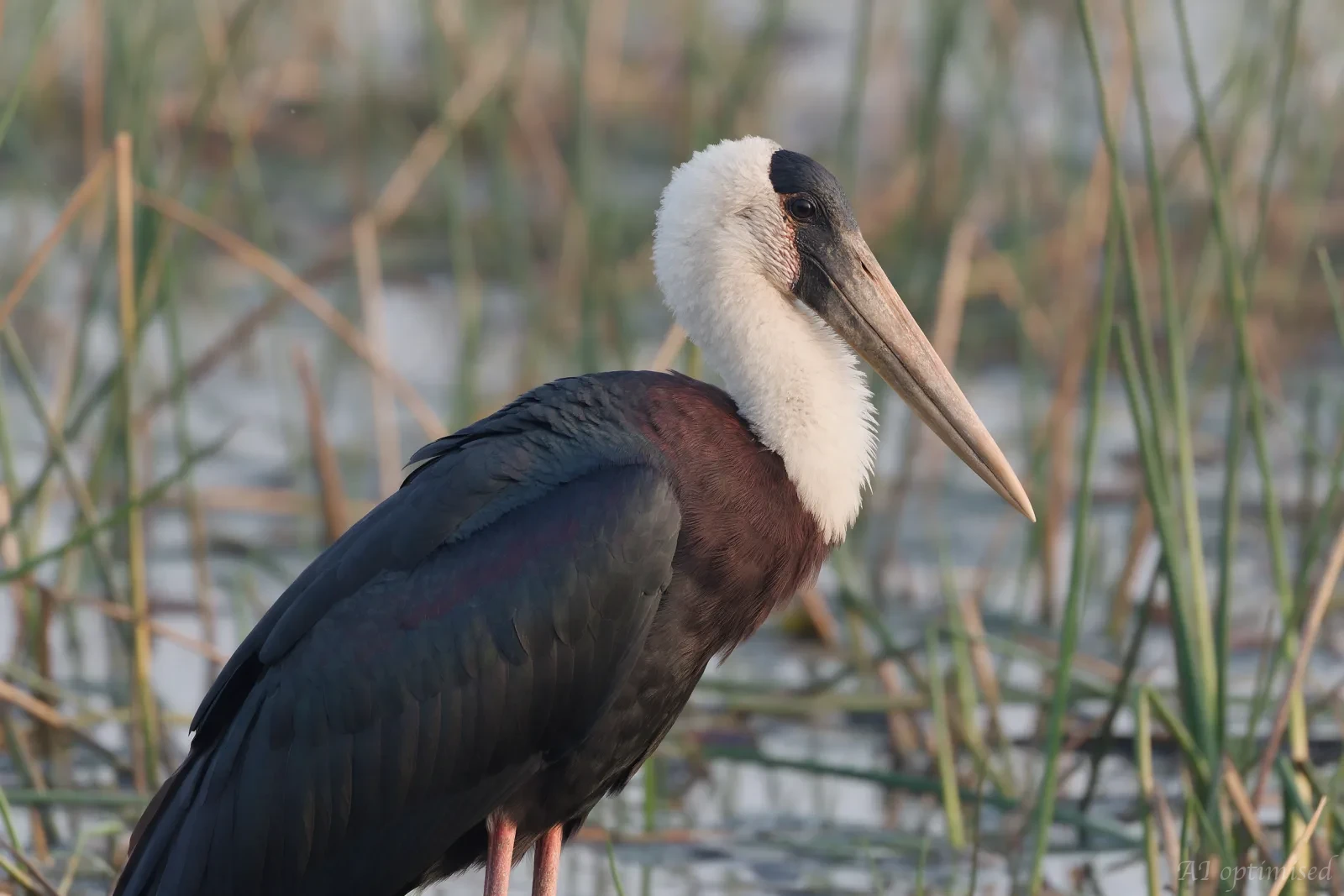
Somewhere between the famous white stork and the hidden black stork lives a third bird that few people have heard of. The woolly-necked stork is a stork of southern Asia and parts of Africa, and it wears its name around its throat. A soft ruff of pale, fluffy feathers circles its neck, giving the bird a gentler look than any of its better-known relatives. It is a quiet bird, and it prefers to keep out of the spotlight, going about its days in the wetlands where it is easiest to miss. Unlike its famous white cousin, it does not seek out our roofs or our attention. It keeps to the quiet places, and that is part of its charm. The woolly-necked stork rewards a patient eye, and it asks us to slow down and look where we would not usually look. A bird so easy to miss is a good teacher of attention.
A softer sort of stork
The woolly-necked stork is a medium-sized stork with dark, glossy plumage that shines with green and purple in the light. Its belly is white, and the woolly collar of feathers at the base of its neck is the feature that gives the species its name. The bill is dark, the legs are dark, and the whole bird has a tidy, understated beauty. It lacks the bright red of the white stork, and it seems content to be overlooked, a bird of soft edges and muted colours that asks for no attention.
Where it lives
This stork keeps to wetlands, flooded fields, and the edges of marshes, and it is often seen alone or in pairs rather than in great flocks. It wades through shallow water in search of food, moving slowly and deliberately, the way storks everywhere do. Unlike the white stork, which nests on buildings and tall poles, the woolly-necked stork usually nests in trees, often in a quiet stand near water, and it values its privacy. It does not court human company the way its white cousin does, preferring the reeds to the rooftops.
What it eats
Like its relatives, the woolly-necked stork is a generalist. It eats frogs, insects, small reptiles, crabs, and other small creatures it can find in the shallows and wet grass. It hunts by standing and waiting, then striking quickly with its straight bill. Its feeding habits tie it closely to healthy wetlands, and it is often a sign of water in good condition, a bird that appears where the marshes still hold their richness. To see one is to know the water nearby is still doing its quiet work.
A quiet life
The woolly-necked stork asks little and makes little noise. It shares the stork habit of bill-clattering rather than singing, and it goes about its days without fuss. For a bird that lives alongside people in parts of Asia, it remains easy to miss, a soft-voiced neighbour at the edge of the marsh. There is something restful in that, a bird that does its work without needing to be noticed, and that finds its reward in the quiet life it keeps.
The charm of the overlooked
There is a particular pleasure in noticing a bird that most people pass by. The woolly-necked stork rewards the person who stops to look, not with a bright flash of red or a famous name, but with the slow, calm dignity of a creature going about its life. It is a lesson in the value of the quiet things, and a reminder that the natural world is full of birds that are beautiful precisely because no one has told us to look at them. There is a quiet satisfaction in finding such a bird on your own, without a guidebook or a sign, and it is a pleasure that belongs to the patient and the curious.
If the white stork is the family's public face and the black stork its secret, the woolly-necked stork is its gentle middle child. It is proof that the world of storks holds quiet corners, and that a bird need not be famous to be worth watching. A bird can be quiet and still be worth a lifetime of looking.
Explore the gift