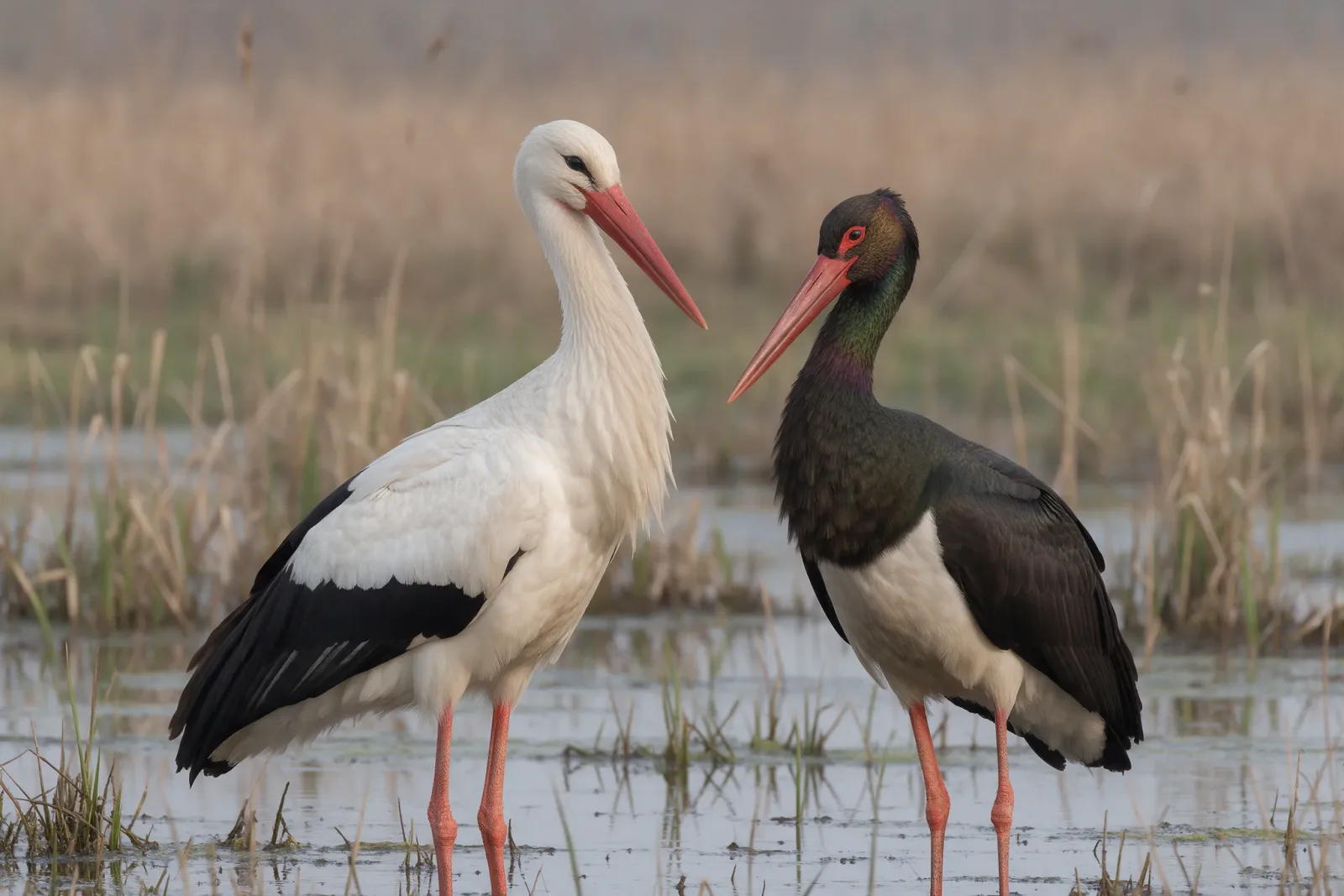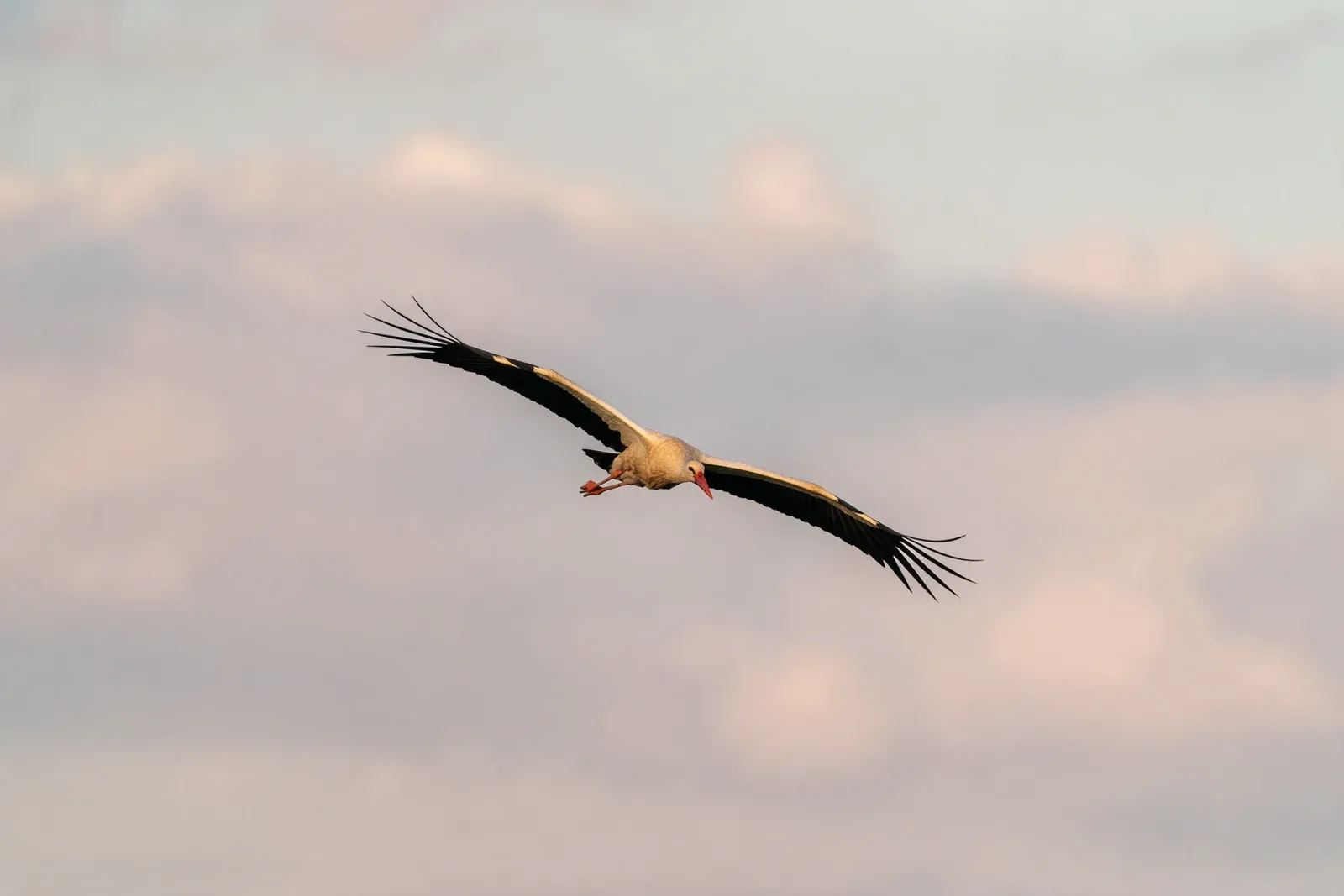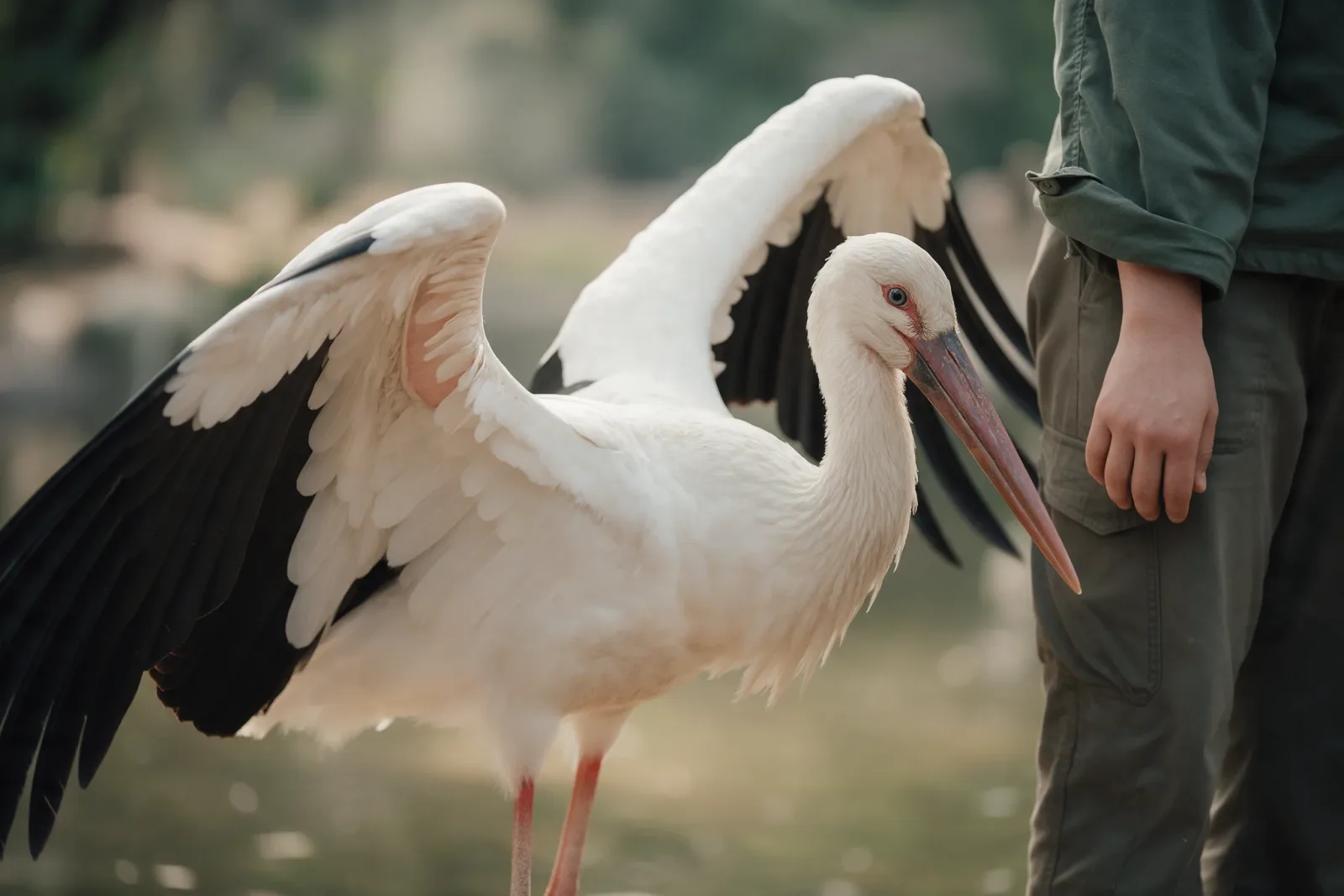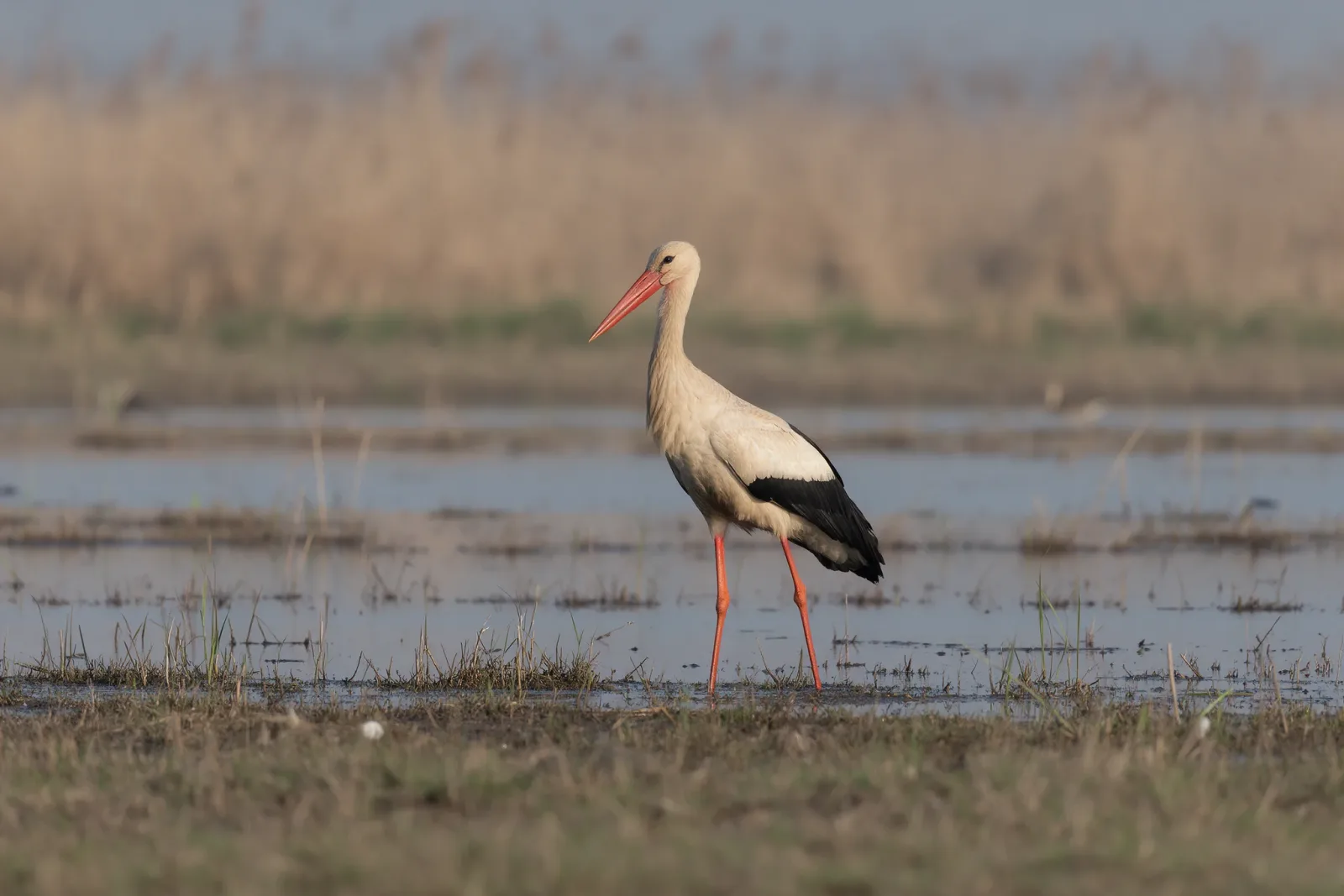
A stork standing in a wet meadow looks like a visitor, but it is a working part of the place it stands in. Every creature belongs to a food web, a web of eating and being eaten, and the stork's place in it is both humble and important. To understand where a stork sits among the frogs, insects, and grass is to understand a little of how a meadow holds together, and how the disappearance of one thread can loosen the whole. The stork is one knot in that fabric, and its place is earned, not given. It eats and is eaten, it depends on the grass and the water and the sun, and all of it in turn depends on the stork's hunger to stay in balance. A web is a thing of many threads, and the stork's thread is one of the ones that holds the meadow together.
What a stork eats
A stork is a generalist, and its menu is long. It eats insects, earthworms, frogs, small fish, snakes, mice, and almost any small creature it can catch and swallow. It does not hunt one thing alone. It takes what the meadow offers, snapping up prey from the shallows and the grass. That broad appetite is part of why the stork fits so easily into so many places. It is not a fussy eater, and that flexibility lets it thrive where a pickier bird would go hungry.
The stork as a hunter
In the food web, the stork is a predator, but a small one. It sits a few steps up from the bottom, above the insects and the frogs it eats. It is not a top hunter like an eagle, and it takes prey that is small and common. This means a stork helps keep the numbers of frogs, insects, and small rodents in balance, trimming the edges of those populations the way a careful hand does. The stork's hunger is one of the quiet forces that keeps a meadow from tipping out of balance.
What eats a stork
A stork is also prey, at least in part. A young stork in the nest, or a sick or careless adult, can fall to an eagle, an eagle owl, or a ground predator. For the most part, though, an adult stork's size and habit of nesting high keep it safe. Its place in the web is closer to the top than the bottom, but it is never entirely beyond the reach of danger. Even the most graceful bird has something watching it from above or below.
The web around it
The stork's place depends on everything below it. Healthy grass feeds insects, insects feed frogs, and frogs feed storks. Take away the wet meadow, or poison the insects, and the stork goes hungry. In this way the stork is a kind of messenger, a sign that the small, ordinary creatures it depends on are still thriving. A stork standing in a field is evidence that the whole web beneath it is still in working order, still producing the food that keeps a bird alive.
A thread among threads
No creature in a food web stands alone, and the stork is no exception. It eats and is eaten, it depends on the grass and the insects and the frogs, and they in turn depend on the water and the sun. Pull one thread and the whole fabric shifts. The stork, standing so still in the shallows, is one knot in that fabric, and its health is the health of everything around it. To protect a stork is to protect the whole meadow, and the frogs and insects and clean water it depends on, which is why the bird matters far beyond itself.
So the next time you see a stork dip its bill into the grass and come up with a frog, you are watching the food web at work, one small thread of it drawn tight. The bird is not apart from the meadow. It is one of its many careful balances, hunting and hunted in turn, and holding its place as the seasons turn. A single bird, standing still, holds a whole meadow in its steady care.
Explore the gift