The sound of a colony reaches you before you see it. White storks do not sing, and so a nesting site is not full of birdsong. It is full of a dry, rattling clatter, dozens of bills snapped rapidly together, a noise like rain on a tin roof or a hundred castanets played all at once. It is strange, ancient, and once heard, never forgotten.
A bird with no song
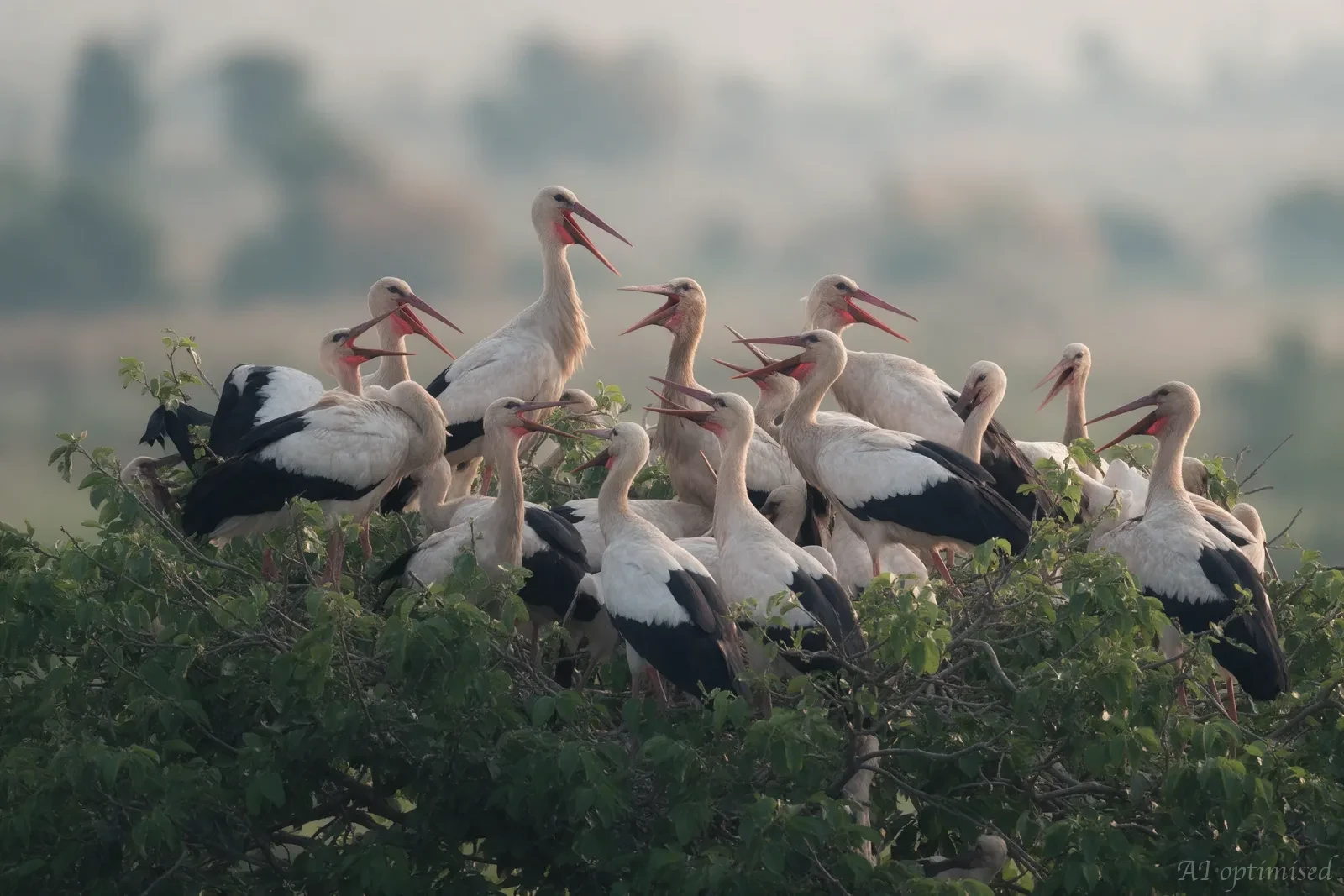
Storks have no real voice, and so they invented the clatter. A stork throws its head back, raises its bill, and snaps the two halves together at speed, sometimes for half a minute without pause. The sound carries far across open ground. It is used as a greeting when a mate returns, as a warning, and as a kind of conversation between the birds on neighbouring nests. The colony is never silent, but it is never musical either.
The greeting at the nest
The loudest clatter of all happens when one bird comes home. The bird on the nest throws back its head and rattles, and the arriving bird answers, and for a moment the whole platform seems to shake with the noise. The pair may bow to each other, touch bills, and settle. It is a welcome, and if you are close enough to watch, it is one of the most intimate things a stork colony has to show.
The colony as a choir
In a large colony the clatter ripples. One bird starts, another answers, and soon the whole site is rattling in waves that rise and fall and rise again. There is no conductor and no pattern you can predict, just a loose, spreading noise that tells you how many birds are up there and how busy the day has been. Listen for the quiet moments between the waves, when the colony drops back into stillness and the only sound is the wind in the reeds.
What the silence tells you
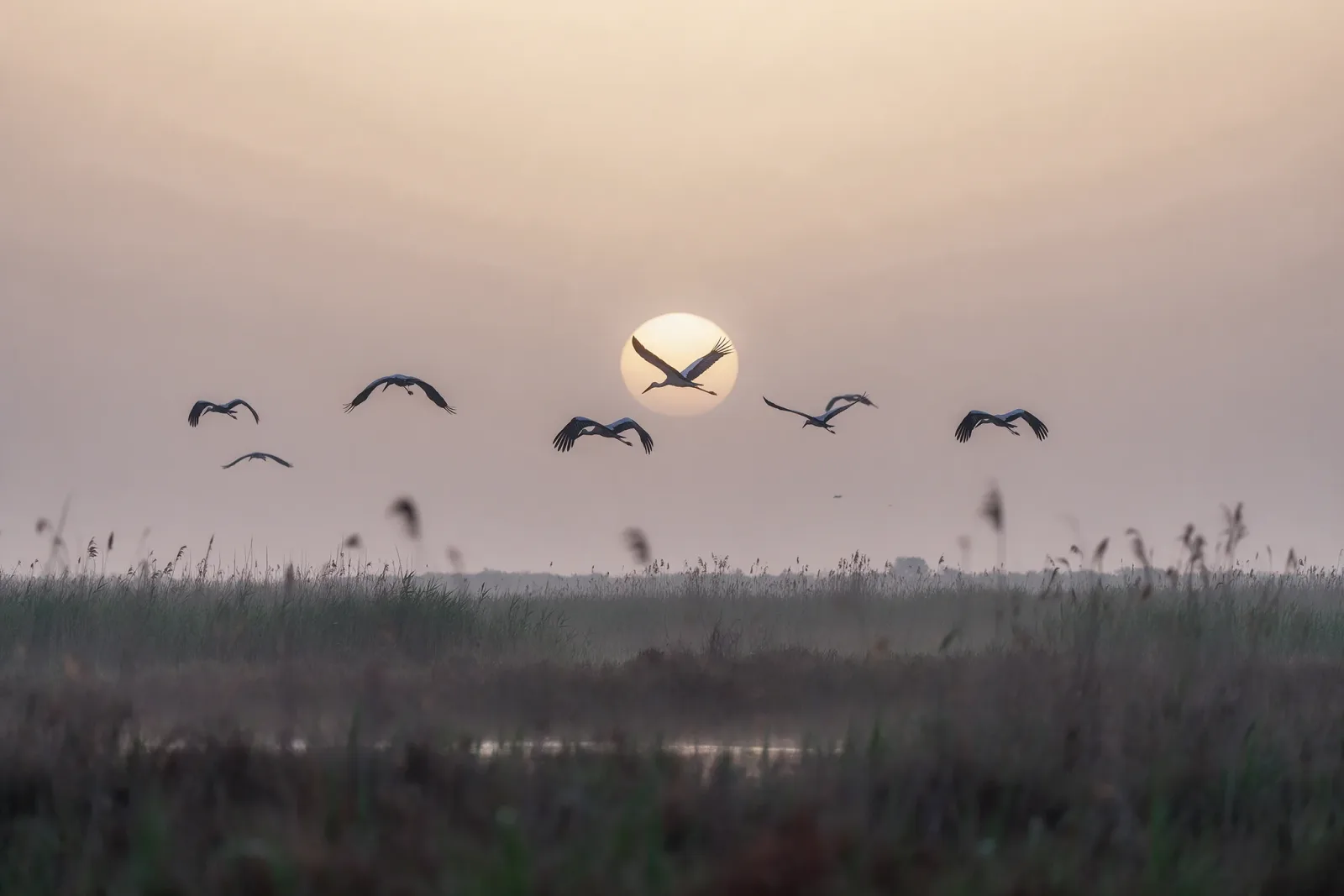
Silence at a colony is worth listening for too. A sudden hush can mean a passing bird of prey overhead, or simply that every bird has settled to sleep. In the evening the clatter dies away gradually, and the colony goes quiet for the night, the white shapes still visible against the dusk long after the last bill has fallen silent.
How to listen well
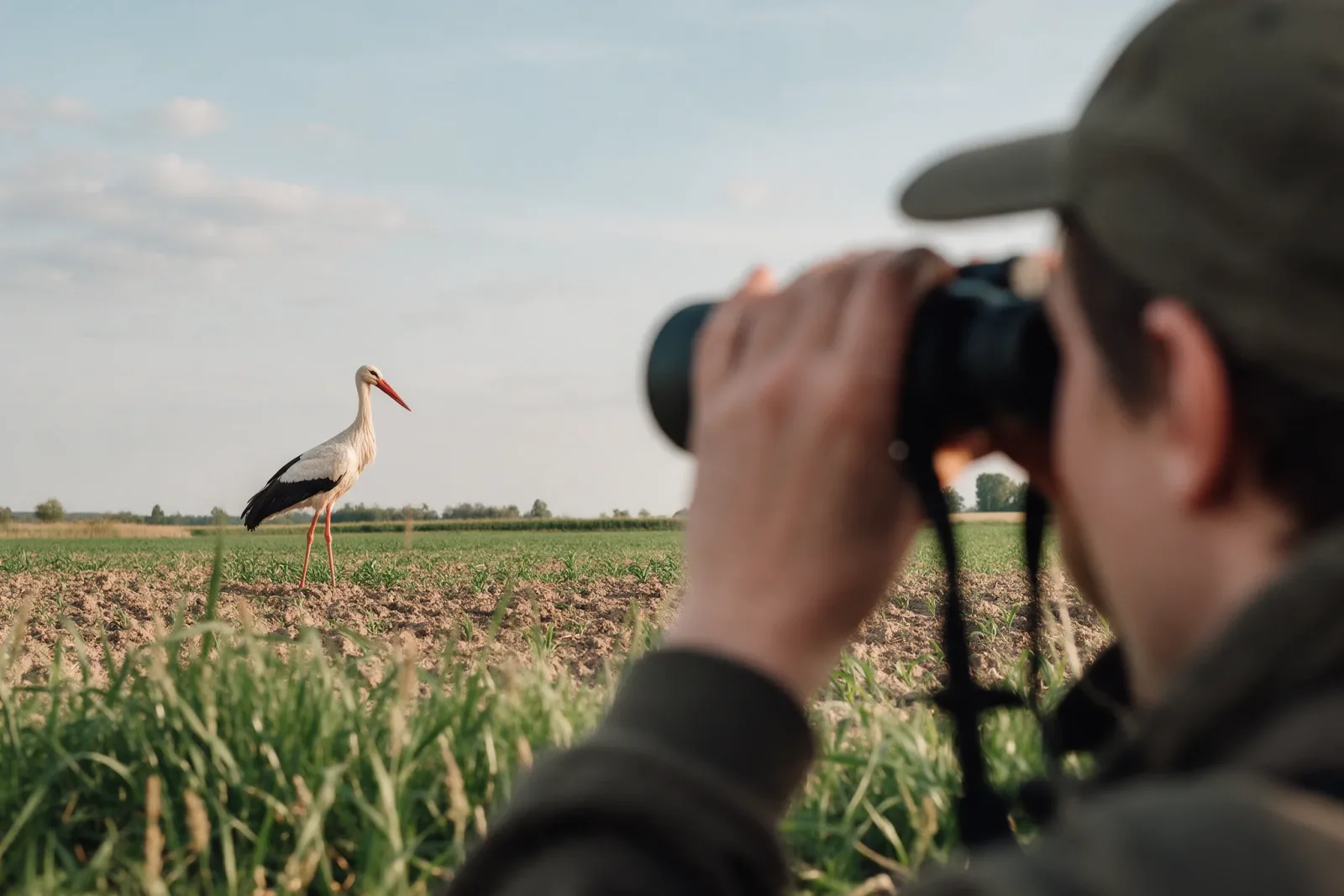
Find a spot downwind of the colony, sit still, and let your ears work while your eyes rest. Do not try to count the birds or follow every sound. Just receive it. The clatter of a stork colony is a sound from an older world, and there are not many places left where you can stand and hear it. Sit long enough and it will stop sounding strange and start sounding like the ordinary, wonderful noise of birds going about their lives.
Explore the gift