Every feather on a stork is a piece of flying equipment, and like any equipment it needs care. The preening hour is the time a stork sets aside to tend its plumage, drawing each feather through its bill, straightening the barbs, and spreading oil across the surface. It looks like vanity. It is in fact the work that keeps a bird able to fly, to stay warm, and to keep the water out. A stork that neglects its feathers is a stork that will soon struggle to leave the ground. A stork's feathers are its life, and it knows it. The bird cannot skip a day of this work, because a day of neglect is a day of slower flight, and slower flight on a long migration can be the difference between arriving and not arriving. Preening is not a luxury the bird enjoys in spare moments. It is as essential as food.
What preening is
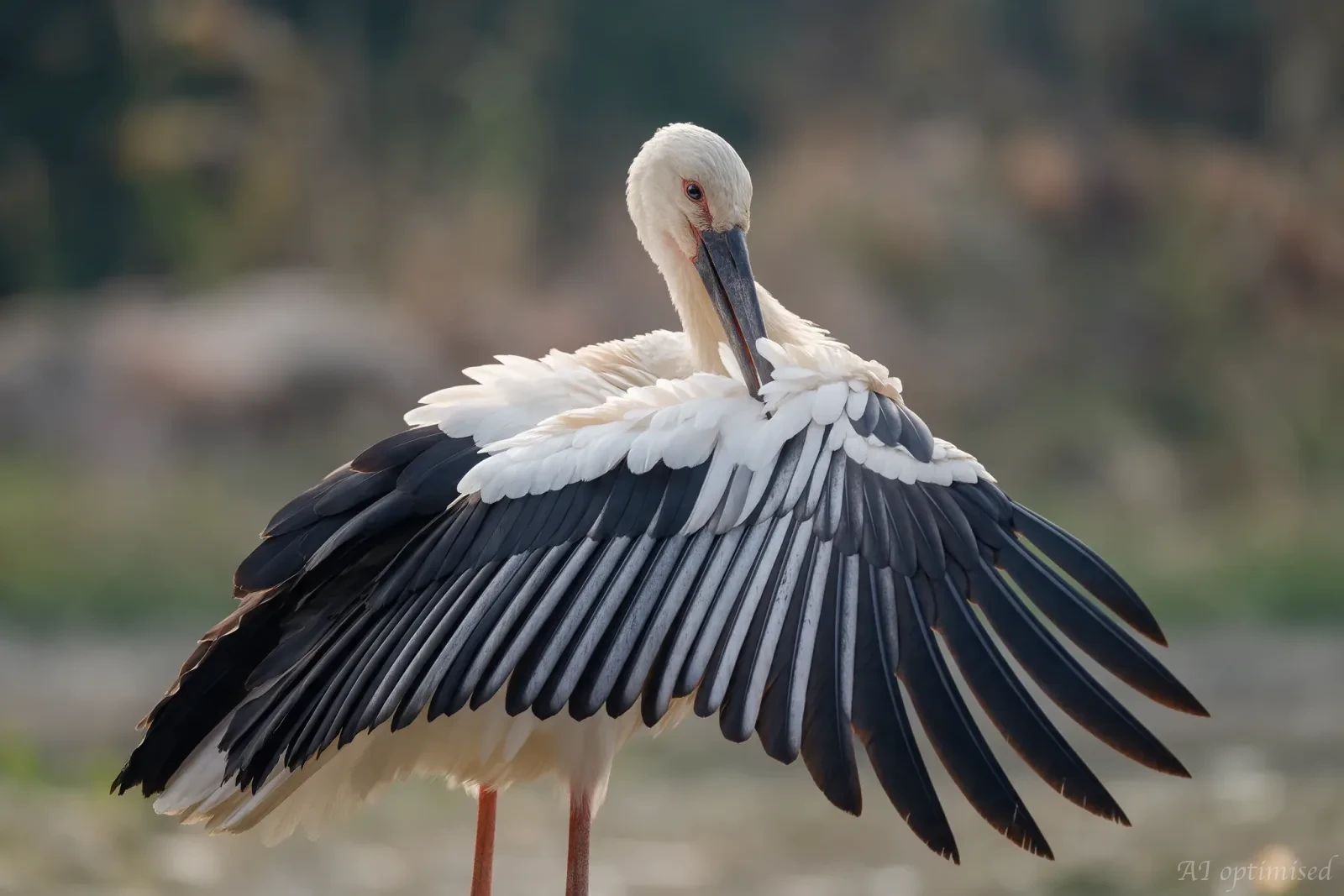
Preening is the way a bird grooms its feathers. A stork uses its bill to nibble and smooth each feather, realigning the tiny hooks that hold the barbs together so the feather stays whole and firm. It reaches back to its wings and breast, runs its long bill along its flight feathers, and works at spots it cannot quite see by feel alone. The bird does this often, sometimes for long stretches, because feathers are always falling out of order. A feather is a small machine of interlocking parts, and preening is the daily maintenance that keeps that machine running.
Oil from the preen gland
Near the base of its tail a stork has a small gland that produces oil, and the bird spreads this oil over its feathers as it preens. The oil keeps the feathers supple and helps them shed water, so that a stork standing in a damp meadow or flying through light rain stays dry and warm. A stork will reach back, gather oil on its bill, and then pass the bill over its feathers again and again. That oil is the bird's own waterproofing, and it is renewed a little every day, feather by feather.
Keeping the flight feathers fit
The feathers that matter most are the long primaries of the wings, the ones that press against the air on every glide and every beat. A stork spends real care on these, drawing each one through the bill to keep it straight and whole. A damaged or ragged flight feather costs the bird energy in the air, and on a migration that stretches thousands of kilometres, small losses add up. Preening is how a stork keeps its wings ready for the journey, and a bird about to migrate will preen with particular care.
A moment of quiet
There is something restful in watching a stork preen. The bird is absorbed, patient, wholly given over to the small work of its own care. Preening often happens after feeding or after a bath, in the calm part of the day, and it marks a stork at ease. A bird that preens openly feels safe, and a preening stork is a stork that has found a quiet moment. It is a sign of a bird that trusts its surroundings enough to lower its guard.
The discipline of care
Preening is not occasional. It is a discipline, repeated day after day, because a bird's feathers are its whole life and they never stop needing attention. The stork cannot take a day off from this work any more than it can take a day off from flying. Care, for a wild bird, is not a luxury of leisure. It is the quiet, unglamorous labour that keeps the grand thing aloft. Care, done faithfully and often, is what separates a bird that flies far from one that falls behind, and the stork gives itself to it without complaint or hurry.
The next time you see a stork standing with its bill buried in its wing, do not think it idle. It is at work, feather by feather, keeping itself fit to fly the next leg of a very long road. The stork's feathers are its life, and it tends them with the care they are owed.
Explore the gift