A white stork may raise its young in a crowded colony or on a single chimney far from any neighbour, and the two ways of living are both perfectly natural. Some storks like company. Others prefer a roof of their own. The bird adapts to what the land offers, and to its own temperament.
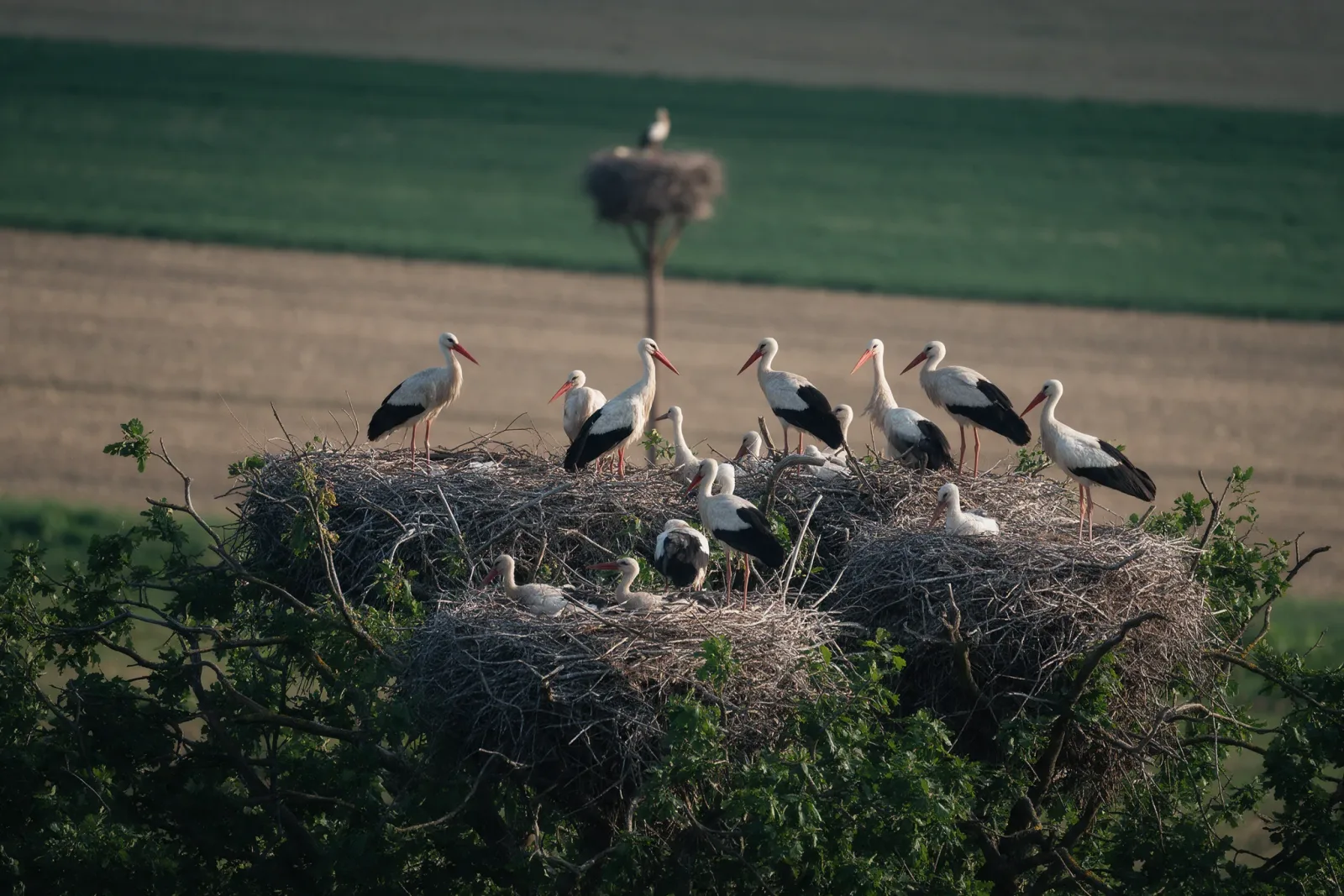
In a colony, dozens of nests crowd a stand of trees or a cluster of poles, and the air is full of clattering and coming and going. A lone nest, by contrast, sits in silence, one pair and their brood against a wide sky.
Life in a colony
Colonies form where food is abundant and safe nesting sites are scarce. If the wet meadows are rich and the tall trees few, many pairs will settle together, building their nests side by side until the trees sag under the weight of them. There is safety in numbers, and a shared watch against crows and other threats.
Colony life is loud and social. The birds see each other constantly, clatter at neighbours, and keep loose company through the season. A young stork raised in a colony knows the world as a busy, crowded place.
Life on a lone nest
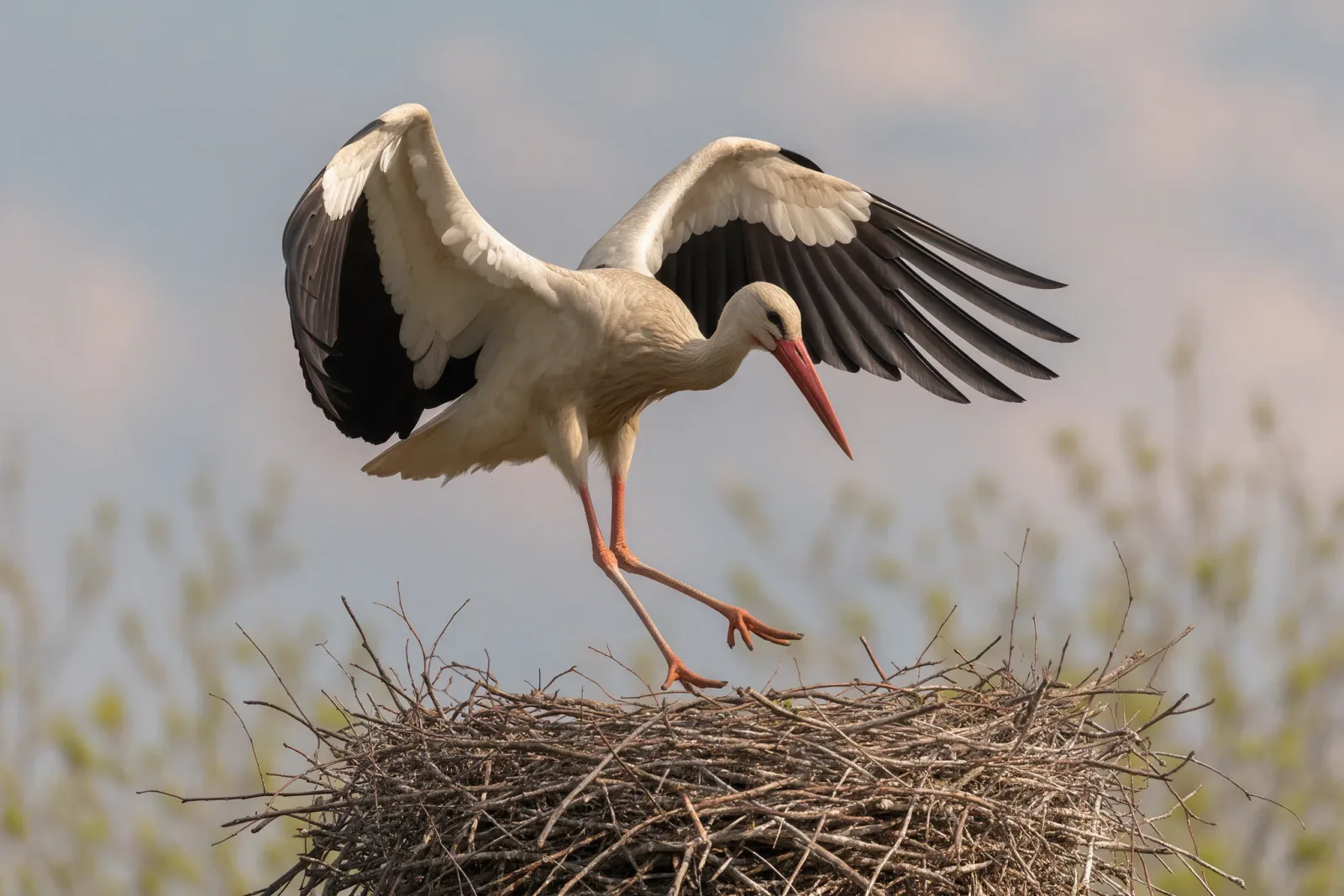
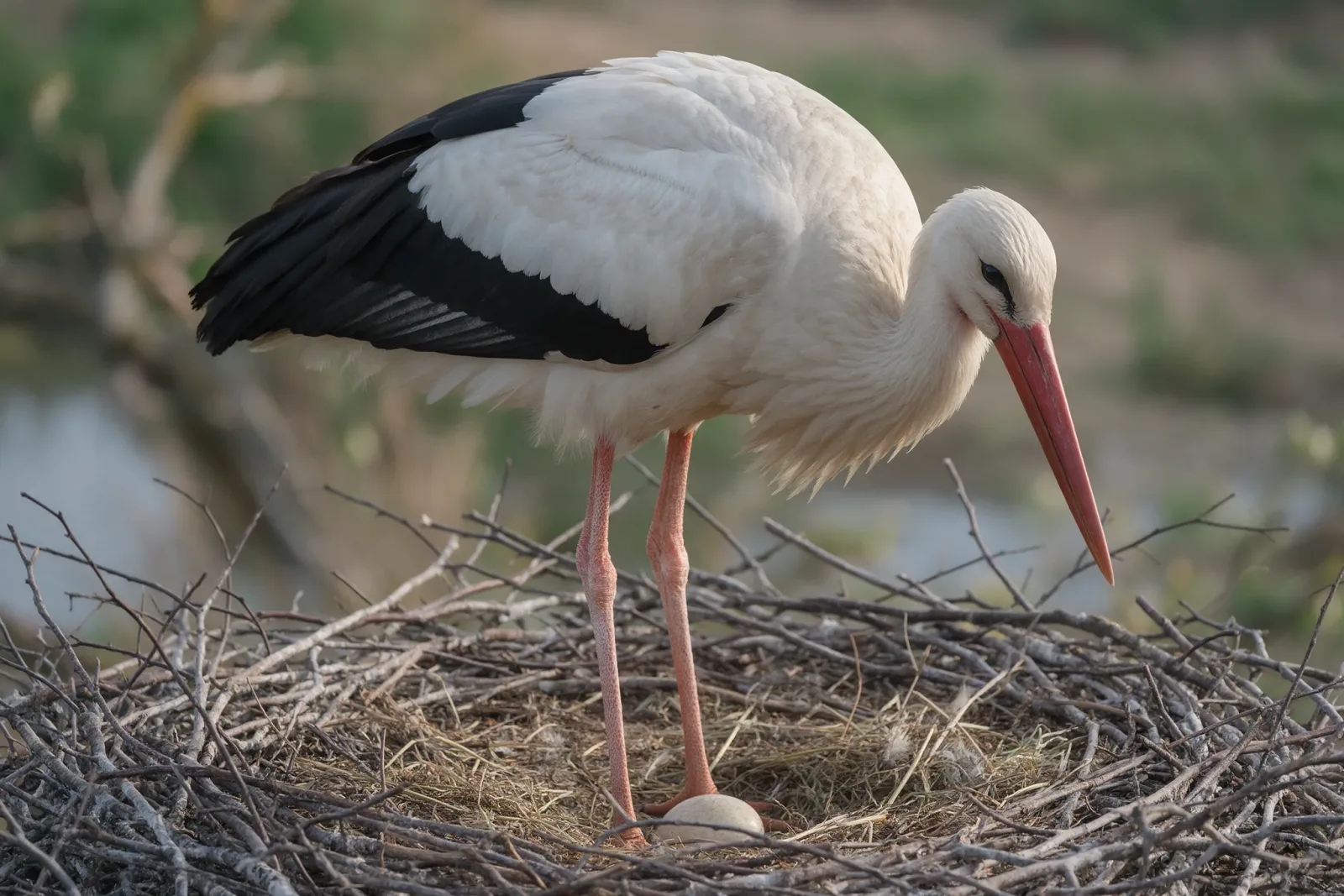
Elsewhere a pair will choose a single chimney or rooftop, far from other storks. These birds are no less content. They have their own territory, their own hunting grounds, and a quiet that a colony never knows. They return to the same nest year after year, and their world is small and orderly.
Lone nesters are often the birds people come to know best, because a single nest above a single home is easy to watch and easy to love. The pair becomes a neighbour, and their comings and goings mark the seasons of the household below.
Why the difference
The difference between the colony and the lone nest is not a matter of species or of character so much as of opportunity. Where food is rich and space is tight, storks crowd together. Where space is open, they spread out. The white stork is flexible, and that flexibility is part of its success.
Both ways work, and both have held for as long as people have lived among storks. The colony and the lone nest are two answers to the same question of how to raise a family in the world.
The same instinct
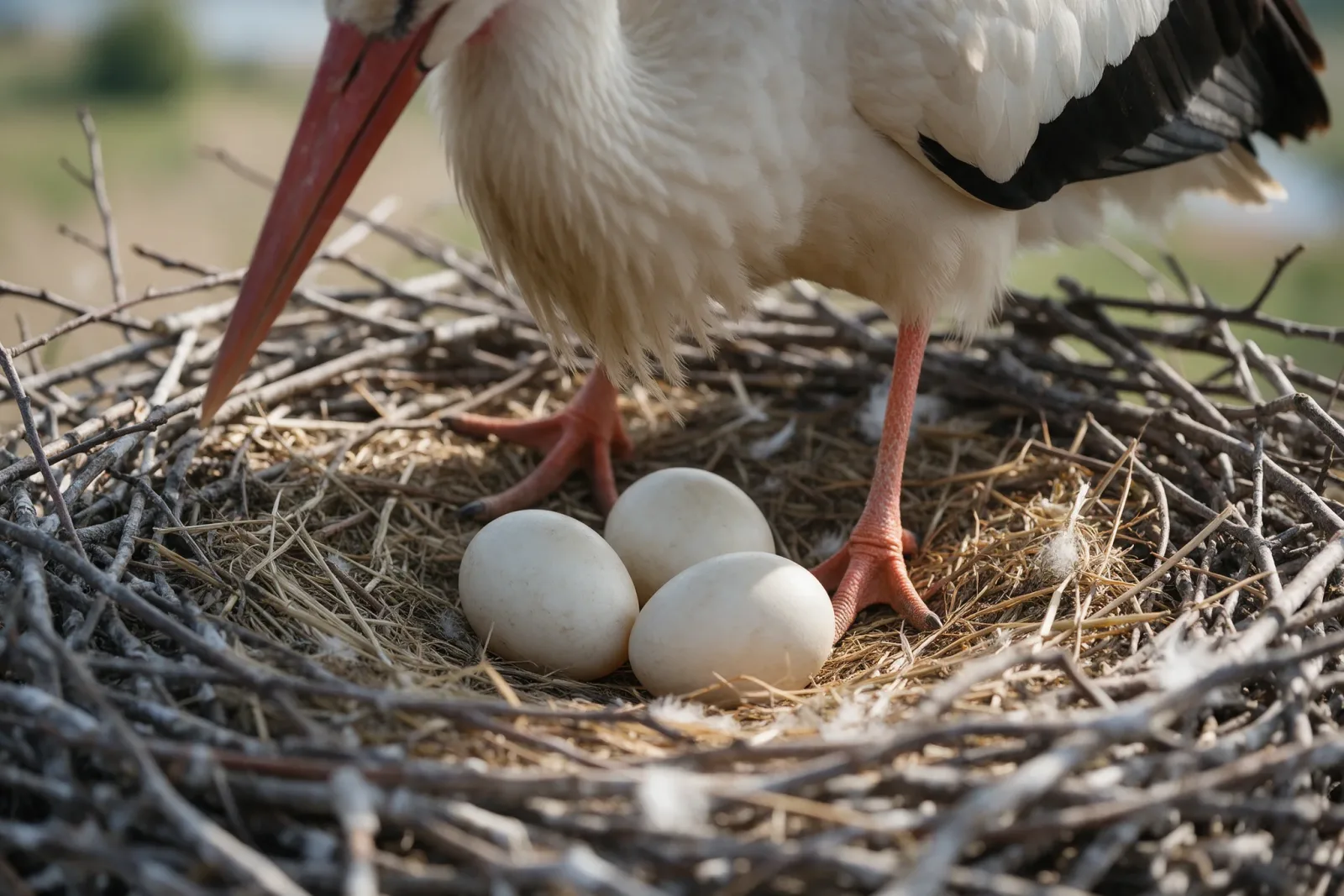
In the end, the colony and the lone nest share the same deep instinct. Whether in a crowd or alone, each pair is doing the same patient work: building, laying, feeding, and at last sending a new generation into the sky.
And whether a nest is one of a hundred or the only one for miles, the birds on it watch the horizon the same way, and leave for the same south when the summer ends.
Explore the gift