The cold snap comes without warning, a sudden frost that hardens the ground overnight and catches the season off guard. For the storks that stayed behind, the ones that judged the winter mild enough to weather, it is a sharp reminder that the north does not bargain. A sudden frost shapes their lives in ways that are quiet and brutal and, to anyone watching, deeply instructive about what it costs to stay.
The birds that stayed
Not every stork leaves for the winter. A few judge the coming cold as bearable, and they stay, preferring the familiar fields to the long journey south. Most winters their gamble pays off. The days are mild, the ground stays soft, and the food keeps coming. But a cold snap is the other side of that gamble, the sudden frost that turns a comfortable winter into a struggle overnight. The birds that stayed have made a bet, and the frost is the house calling it in.
The ground hardens
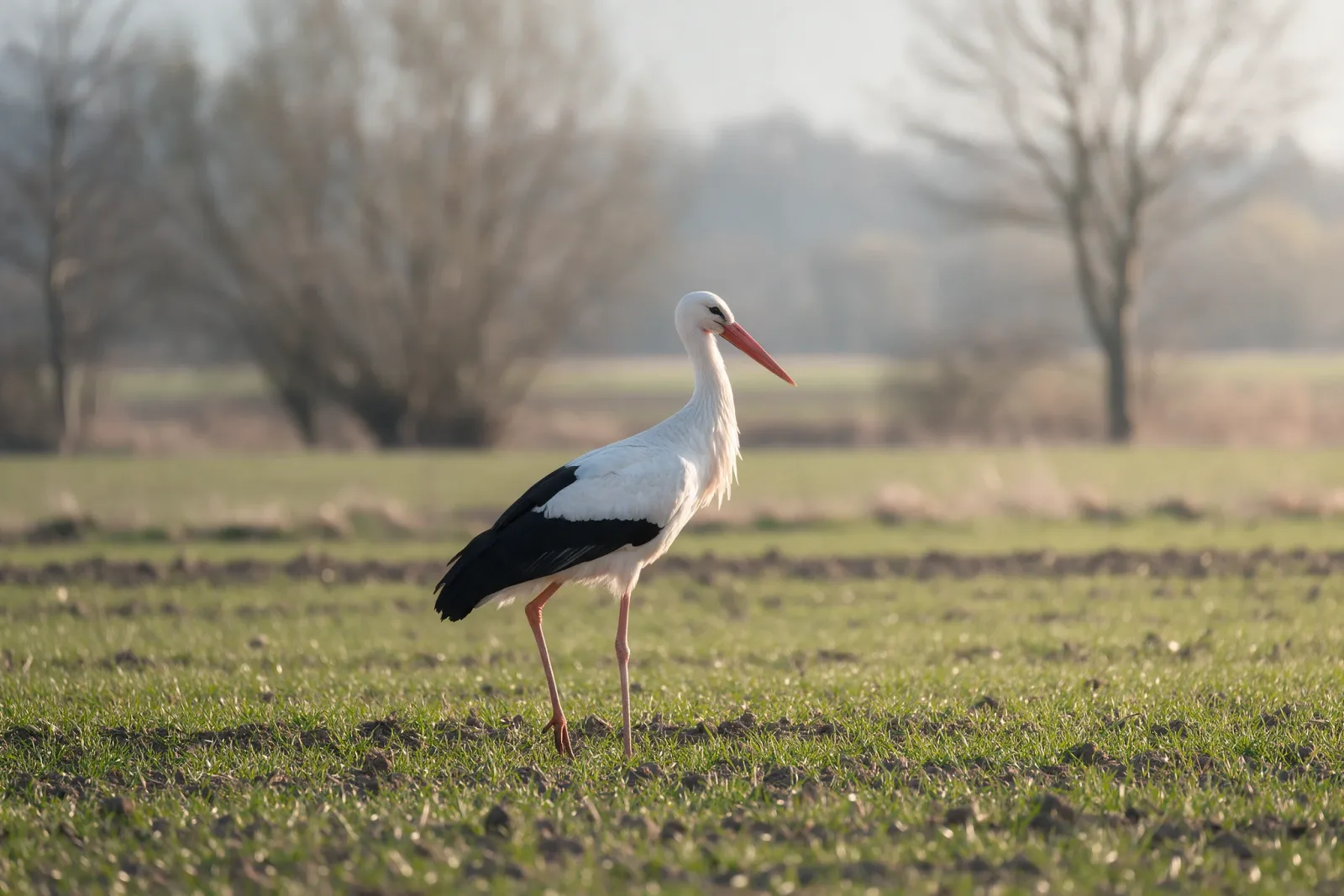
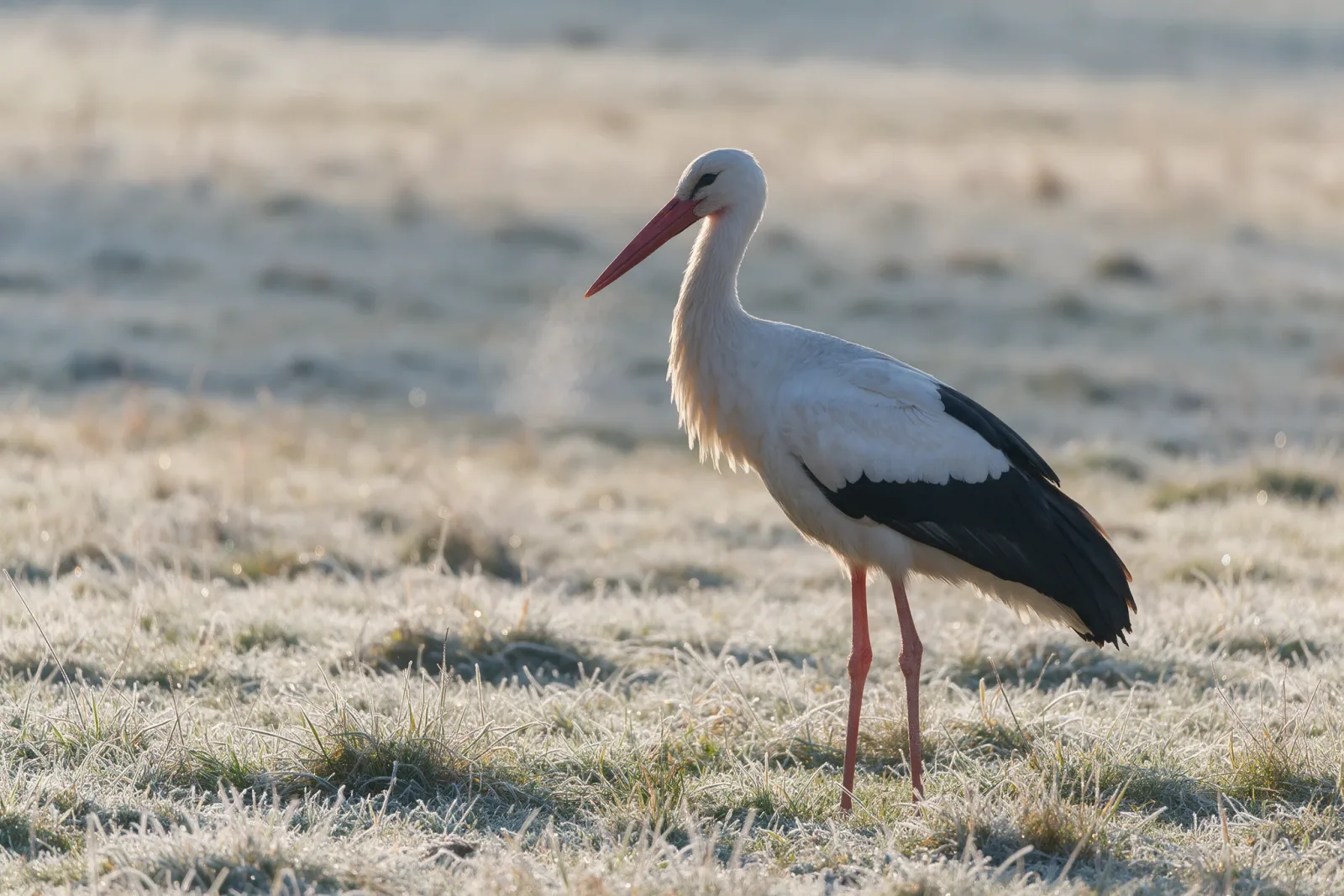
The first thing the cold snap does is harden the ground. The soft earth that gave up its insects so easily freezes into a hard crust, and the stork's food simply disappears beneath it. A bird that fed freely the day before now walks a frozen field, probing the iron ground for a meal that is no longer reachable. It is the difference between a mild winter and a hard one, and it arrives in a single night, the frost riming the grass and the bird's own breath hanging in the air.
The cost of staying
The cost of staying is measured in energy. A stork in a cold snap must spend more of itself simply keeping warm, and it has less to feed on, and the two things together are a slow squeeze. The birds stand still for longer, conserving what they have, and they range more widely, searching for any patch of unfrozen ground. They do not complain; they simply endure, as their kind has always endured, but the effort shows in the stillness of their waiting.
Watching the frost
There is something moving in watching a stork stand through a cold snap, breath clouding in the sharp air, wings folded against the cold. It is a reminder that the wild life is not all soaring and warm thermals. Some of it is simply holding on, standing still in a frozen field and waiting for the thaw. The bird's patience is its own kind of heroism, quiet and uncelebrated, and it earns a certain respect.
The thaw that follows
A cold snap, in the north, rarely lasts forever. The frost lifts, the ground softens, and the storks that stayed out the worst of it go back to feeding as if nothing had happened. The ordeal passes into the background, and the birds carry on, a little thinner perhaps, a little wiser about the winter they chose. The cold snap shapes them, as it shapes every creature that stays to face it, and then it lets them go.
Explore the gift