Patience is one of the hardest things to teach, mostly because it cannot be taught in a single sitting. It has to be lived. And there is no better first lesson in waiting than a wild bird, because a wild bird never hurries on your account. Teaching patience to a child is easier when there is a stork involved, a creature that keeps its own time and asks you to keep it too.
Children live in a world of instant things. Taps turn on water, screens answer questions, buttons make things happen at once. Against all that speed, a stork moves at the pace of the seasons. It does not appear on command. It does not perform. It simply is, and you must wait for it.
The waiting that has a reward
Waiting is bearable when there is something worth waiting for. A child who is waiting for a stork's signal, the next dot on the map, the next update in a long journey, learns that waiting can end in a small delight. The signal arrives, the dot moves, and the waiting was not wasted. It was the price of the pleasure.
Patience is learned in company
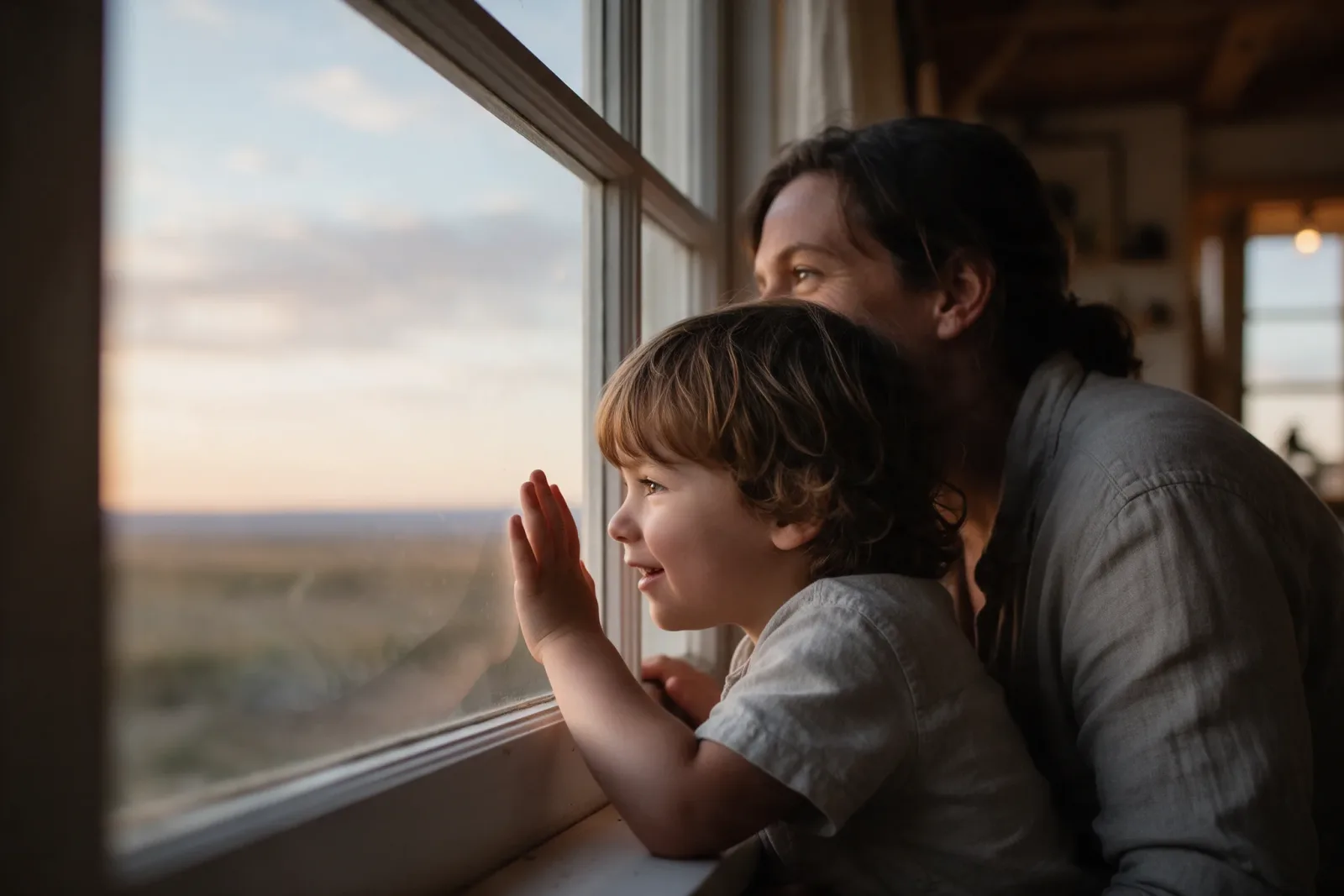
A child rarely learns patience alone. It learns it beside an adult who is also waiting, calmly, without complaint. Sit at the window together and watch for a bird that may not come. Check the map together and shrug when there is nothing new. Your calm is the lesson. The child learns that waiting can be peaceful, even companionable.
Do not be afraid to be honest about the waiting. It is all right to say, not today, maybe tomorrow. The words teach the child that waiting is not a failure, only a season, and that some things are worth more for being slow.
The seasons teach it best
A stork's year is a long lesson in patience. The bird flies south, and there are weeks with no news. The bird winters in Africa, and there is nothing to see. Then, in spring, it comes home, and the waiting is answered. A child who has waited a whole winter for a bird to return has learned something no lecture could teach.
Let the waiting be enough
Do not try to make every moment of waiting productive. Some of the best waiting is just standing there, together, looking at the sky. The bird may come or it may not. Either way, the child is learning that not everything can be hurried, and that some of the loveliest things in life arrive only when they are ready.
You will not teach patience in a single afternoon. It will happen slowly, across a hundred small waits, most of them unnoticed. The child who learns to wait for a stork's signal is learning something larger than the bird. It is learning that good things arrive in their own time, and that some of them are worth the wait.
Be careful not to fill the waiting with entertainment. The whole point is the waiting itself, the standing at the window, the quiet expectation. If you rush to distract the child every time the signal is slow, you teach the opposite of patience. Let the quiet stretch. It is doing its own work.
When the signal finally comes, let the moment be its own reward. The dot moves, the child cheers, and the waiting is repaid. No fanfare is needed. The lesson is complete without a single word: the bird was worth waiting for, and so, it turns out, are most of the things that matter.
The greatest kindness you can do a child learning patience is to be patient with the child. It will grow tired of waiting, it will ask a hundred times, it will want the signal now. Meet that with calm, and the child will learn that calm is possible, that waiting can be borne, and that you will wait beside it.
You are not only teaching a child to wait. You are teaching it that the waiting is shared, that it does not have to wait alone. That is the deeper lesson, and it is the one that stays long after the signal arrives and the bird moves on.
Start small, with a bird and a window and no expectation. The patience will come on its own, the way the stork does, slowly, in its own good time.
Explore the gift