Storks in your own sky are there long before you notice them. Most people never look up, and so the white stork that passes over a suburban street, a school field, or a back garden goes entirely unseen. The birds are not hiding. They are simply high, or brief, or glimpsed at the wrong moment, and the trick is to begin looking where you already are.
Start with the habits you already have
You do not need a special trip to find storks. You need to attach the habit of looking up to the moments you already spend outside. Walking to the car, hanging out washing, waiting for a bus, these are the moments a stork crosses overhead. Keep your eyes on the sky in the ordinary gaps of the day, and the birds will begin to appear in them.
Learn the flying shape
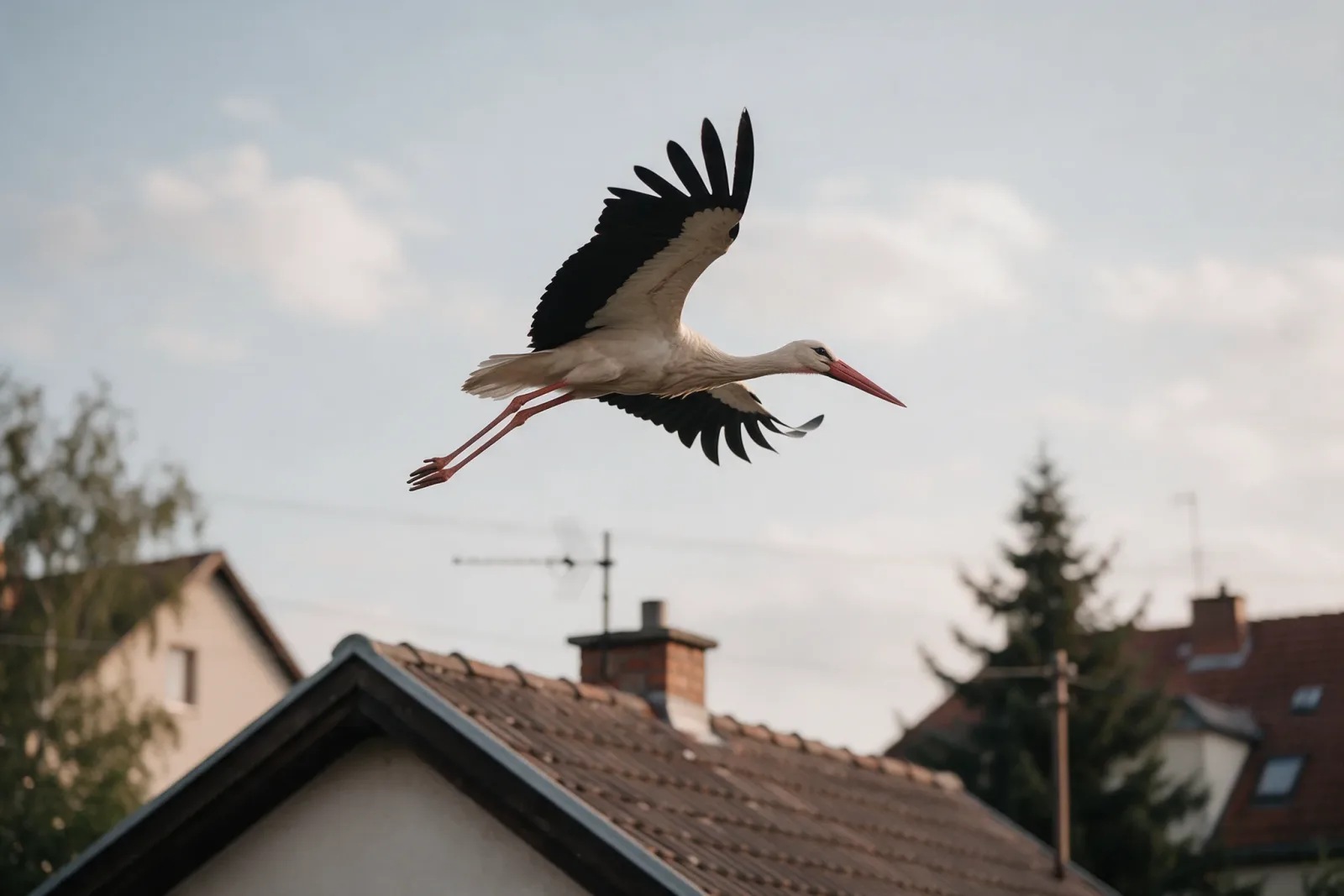
From below, a white stork reads as a cross of white and black: a long white body, black flight feathers, a long neck held straight out, and long red legs trailing behind. Gulls flap constantly and turn sharply. A stork is slower, steadier, and larger, and it often glides for long stretches without a wingbeat. Once you know the shape, you will start to separate storks from the common birds of the sky at a glance.
Watch the warm afternoons
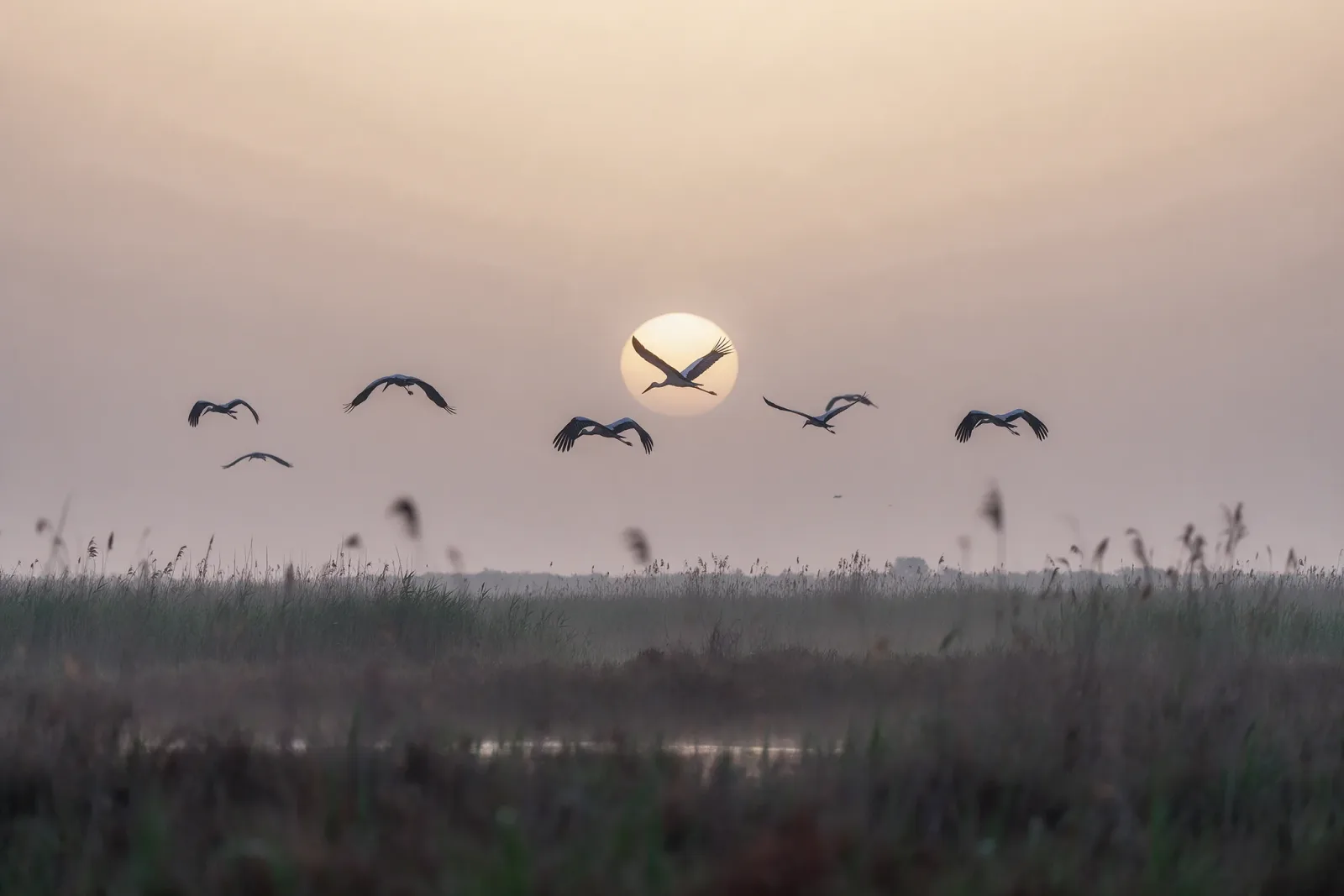
Storks ride thermals, columns of warm air that rise off roads, roofs, and open ground. On a sunny afternoon, especially in late spring and summer, those thermals are everywhere, and the birds circle upward on them, rising higher and higher until they are small white crosses against the blue. Lie back on the grass or tilt your head against a wall and scan the sky above the warmest ground you know.
Listen for the moments to look
Sometimes you will hear a stork before you see it. The bill clatter carries a long way on a still day, and a distant clattering will lead your eye to a nest you did not know was there. On other days it is a movement in the corner of your eye, a flash of black and white banking over the rooftops. Trust those small prompts. They are the bird announcing itself.
Let the sky become a place
The aim is not to see one stork. The aim is to make the sky above your home into a place you actually watch, the way you watch the road or the weather. Over a summer you will learn where the thermals form, which roof the gulls favour, which hour the swifts come through. And in the middle of all of it, on some ordinary afternoon, a white stork will pass over your own roof, and you will be looking.
Explore the gift