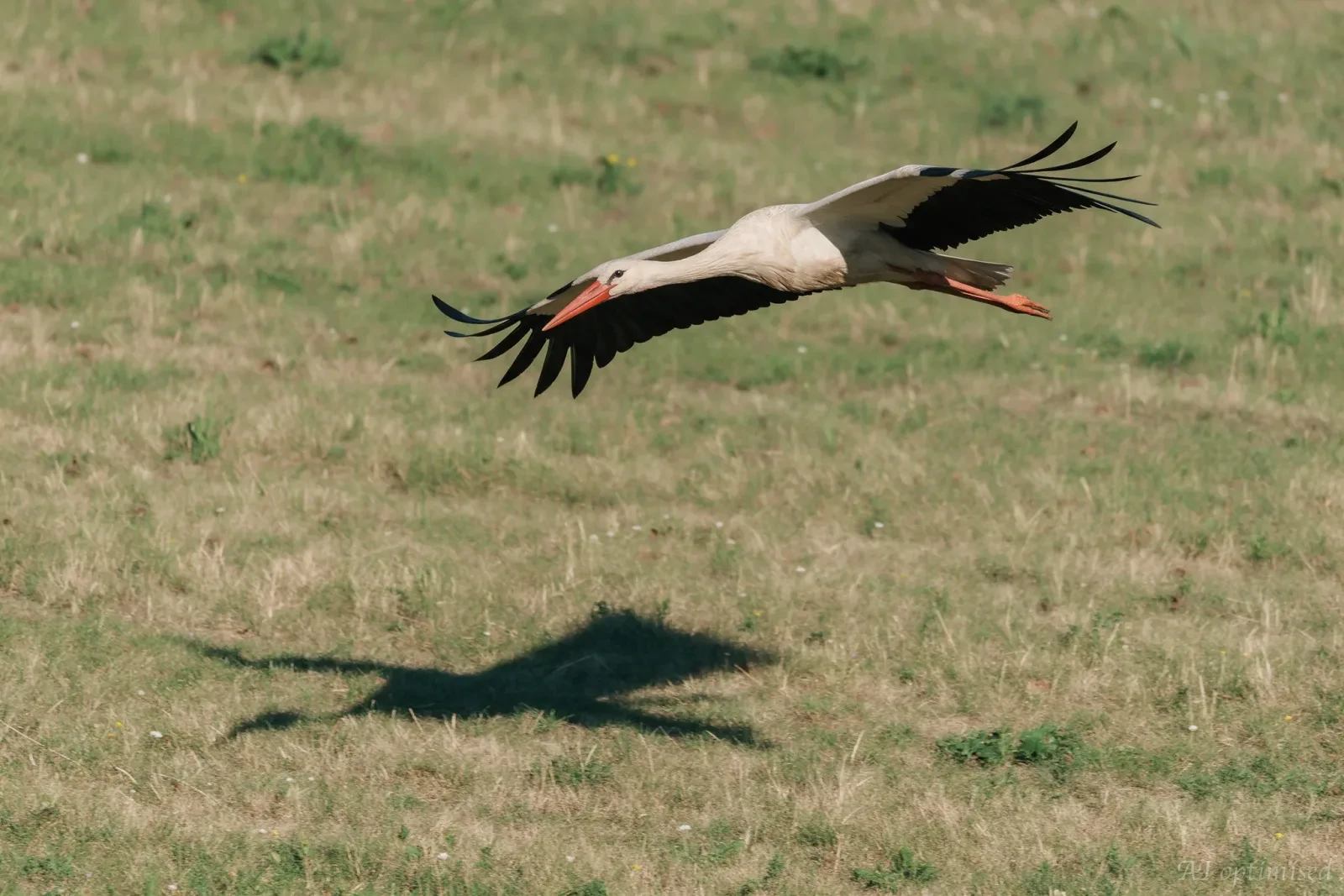
A stork gliding over a sunlit field leaves two birds below it. One is the stork itself, high and white. The other is its shadow, a dark shape that slips across the grass, sometimes far ahead of the bird that casts it. Storks and their shadows are worth a moment of thought, because a shadow in flight tells you things about the light, the height, and the bird that you cannot learn by looking up alone. The shadow is a second bird, drawn in shade, and it moves with a life of its own. A shadow is a strange companion, at once the bird and not the bird, and it follows the stork everywhere the light allows. It changes with the hour, long in the evening and short at noon, and it draws the bird's shape across the earth in a way the bird itself can never see. In the shadow, we see a stork as it can never see itself.
The shadow that leads the way
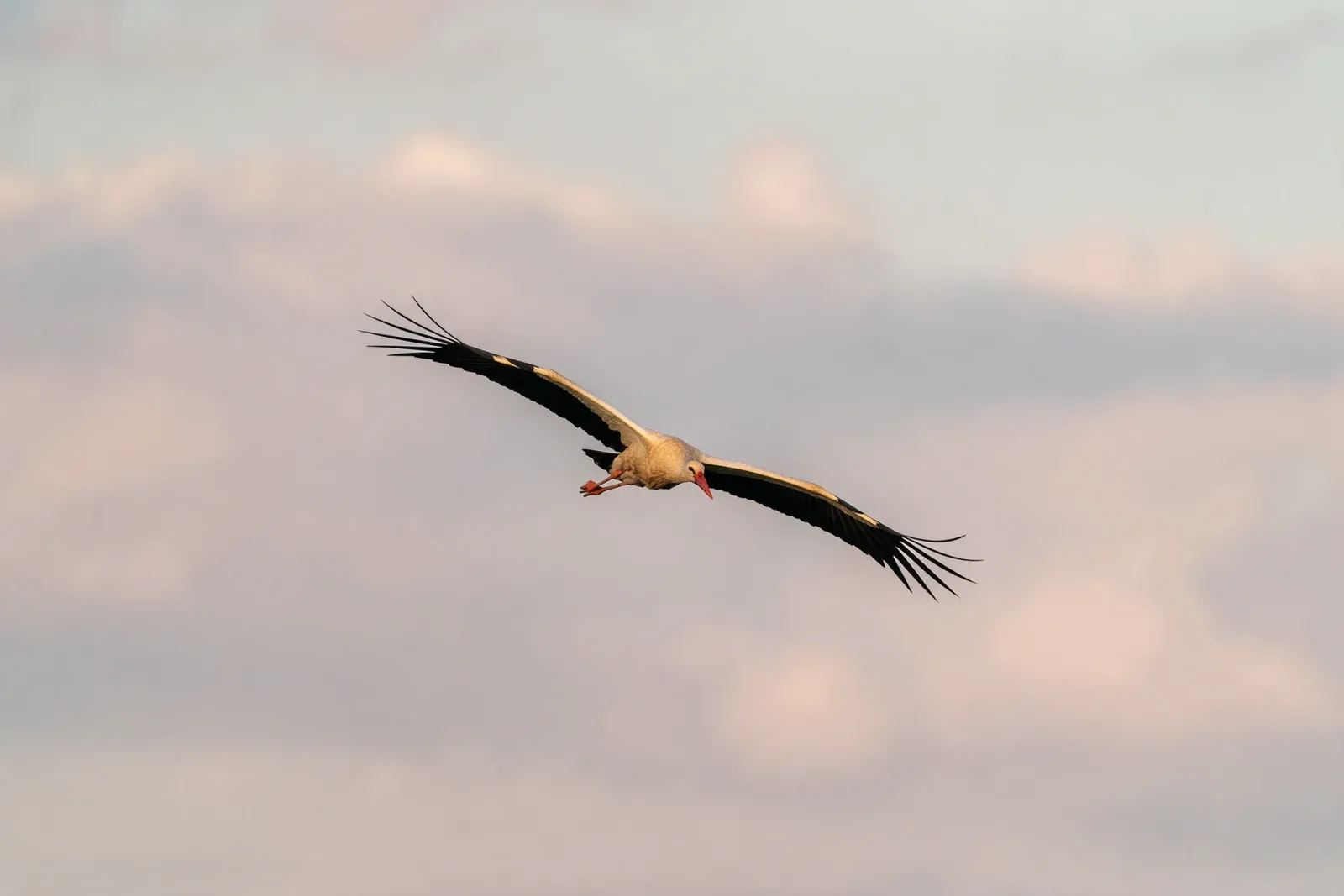
On a bright day, a stork flying high casts a shadow that may run a long way in front of it, sliding over fields and hedges and roads. The higher the bird, the larger and softer the shadow, and the more the light plays at its edges. A shadow that seems to travel ahead of the bird is a trick of the sun's angle, but the effect is lovely, as if a dark twin were scouting the way. For a moment the bird appears to be chasing its own reflection across the ground.
Reading height from the ground
If you watch a stork's shadow on the ground, you can learn something about how high the bird is flying. A low stork throws a crisp, dark shadow that follows close beneath it. A high stork throws a faint, spreading shadow that can be hard to see at all. The shadow is a kind of ruler, a way of measuring distance through the air without any instrument, just by watching the ground. The sharper the shadow, the nearer the bird, and the softer, the higher it climbs.
Shadows as a signal
Birds of many kinds are wary of shadows, and a stork is no exception. A sudden shadow moving across open ground can mean a predator overhead, and even the shadow of the stork itself can startle the small creatures it hopes to catch. For that reason a stork on the hunt may approach carefully, mindful of the shape it throws ahead of it, coming in low or out of the sun so its shadow does not give it away too soon. A shadow is a warning, and a wise hunter knows how to keep its own warning hidden.
The shadow at rest
A stork standing in water or on a nest casts a quieter shadow, a tall thin line with a long bill, and sometimes the still shadow is easier to read than the moving bird. In the low light of evening the shadow of a stork on a rooftop stretches out long and thin across the tiles. It is the same bird, drawn twice, once in feather and once in shade, and the two versions lean together as the sun goes down.
What a shadow teaches
There is a quiet lesson in watching a shadow. It shows the bird's motion without the bird, and it lets us see a stork's grace in pure outline, reduced to shape and speed. A shadow is the bird's own drawing of itself, laid across the grass, and it changes with every moment of light. In the shadow we see the stork as a kind of moving geometry, as clean and deliberate as the bird itself. The shadow is the bird's own signature, written across the ground, and it is one more way to know a creature that spends so much of its life too high to see.
The next time a stork passes over a field, look down as well as up. The shadow it drags across the grass is part of the same creature, moving with it, leading it on, and keeping it honest in the bright light of day. The bird and its shadow travel together, and each makes the other easier to see.
Explore the gift