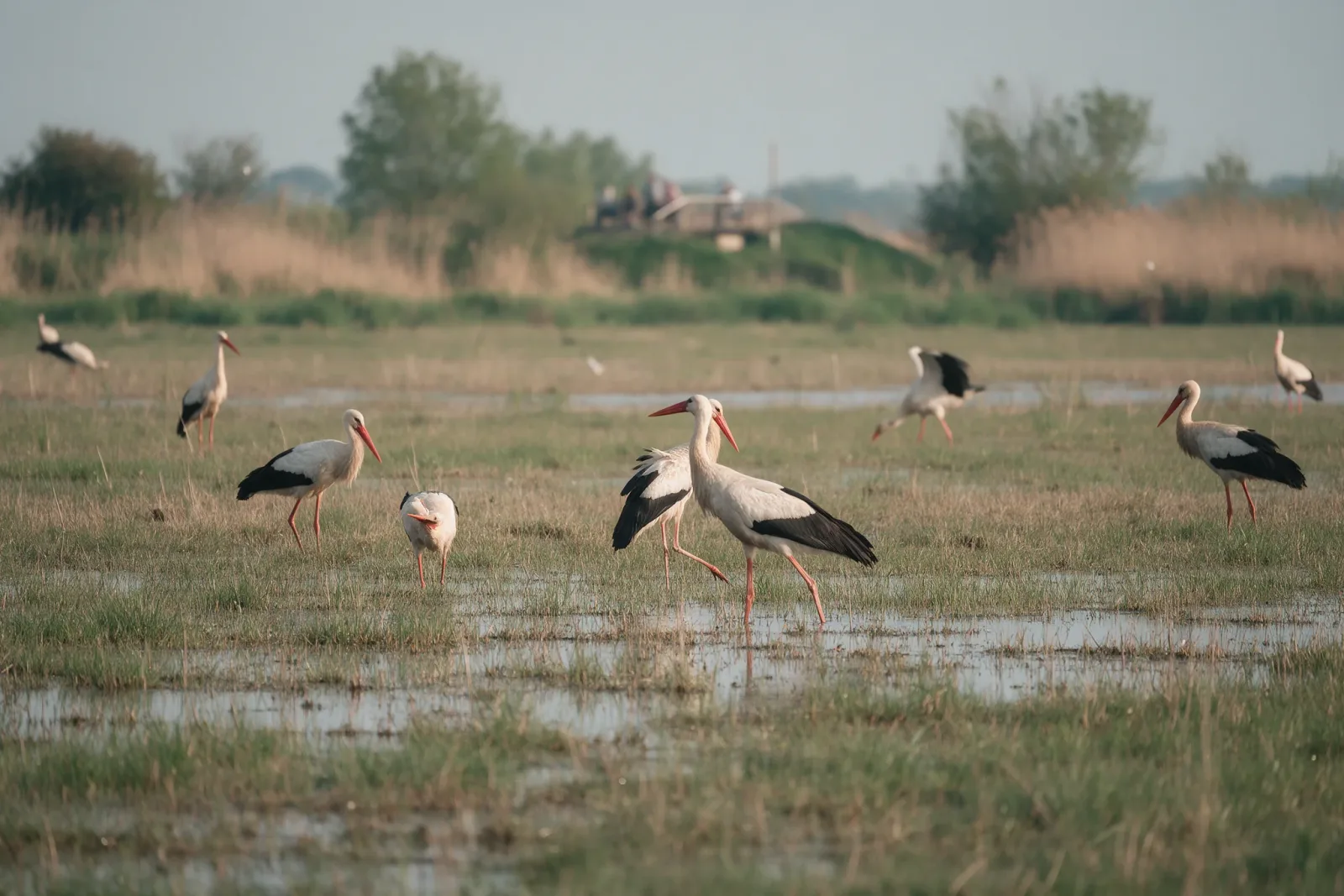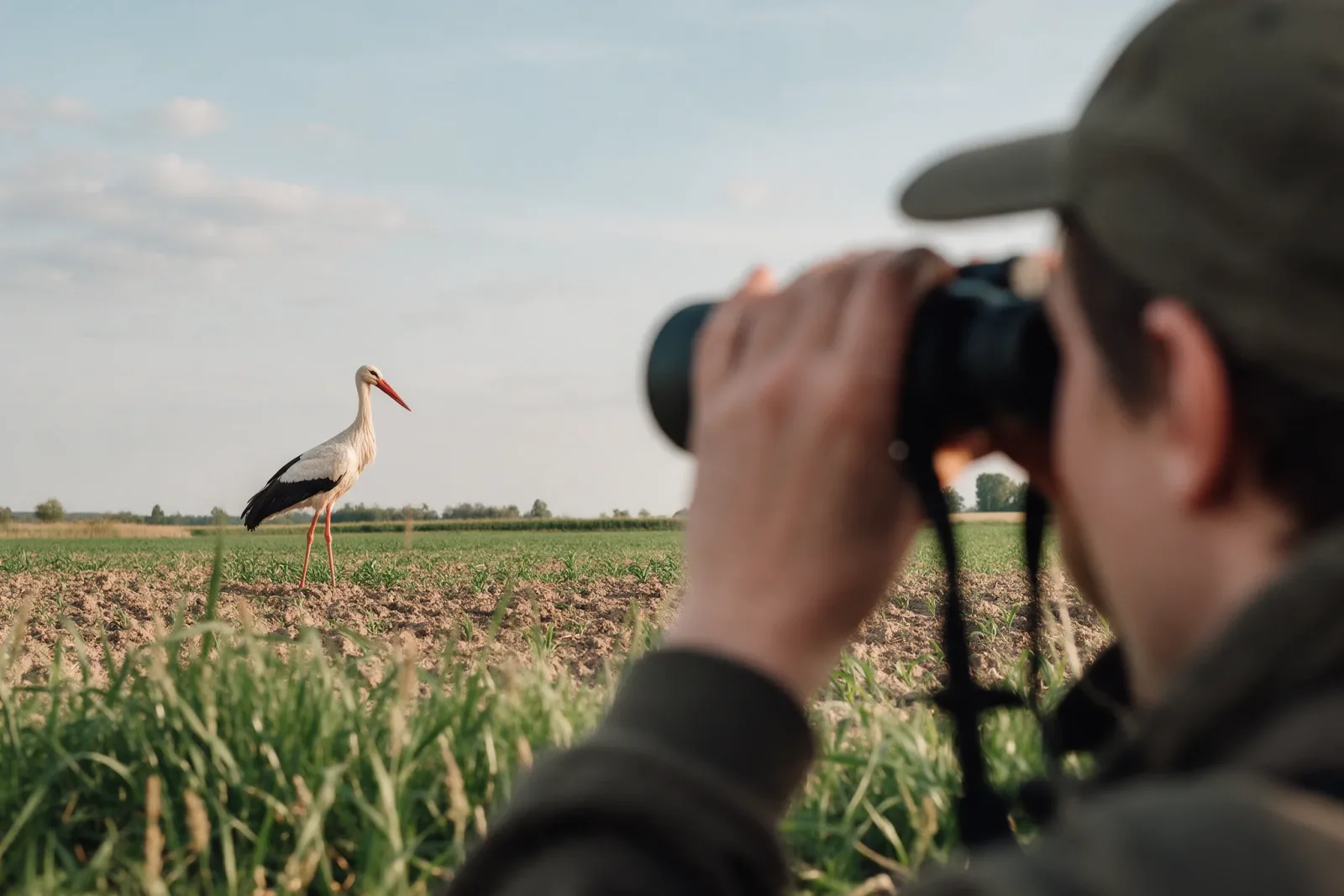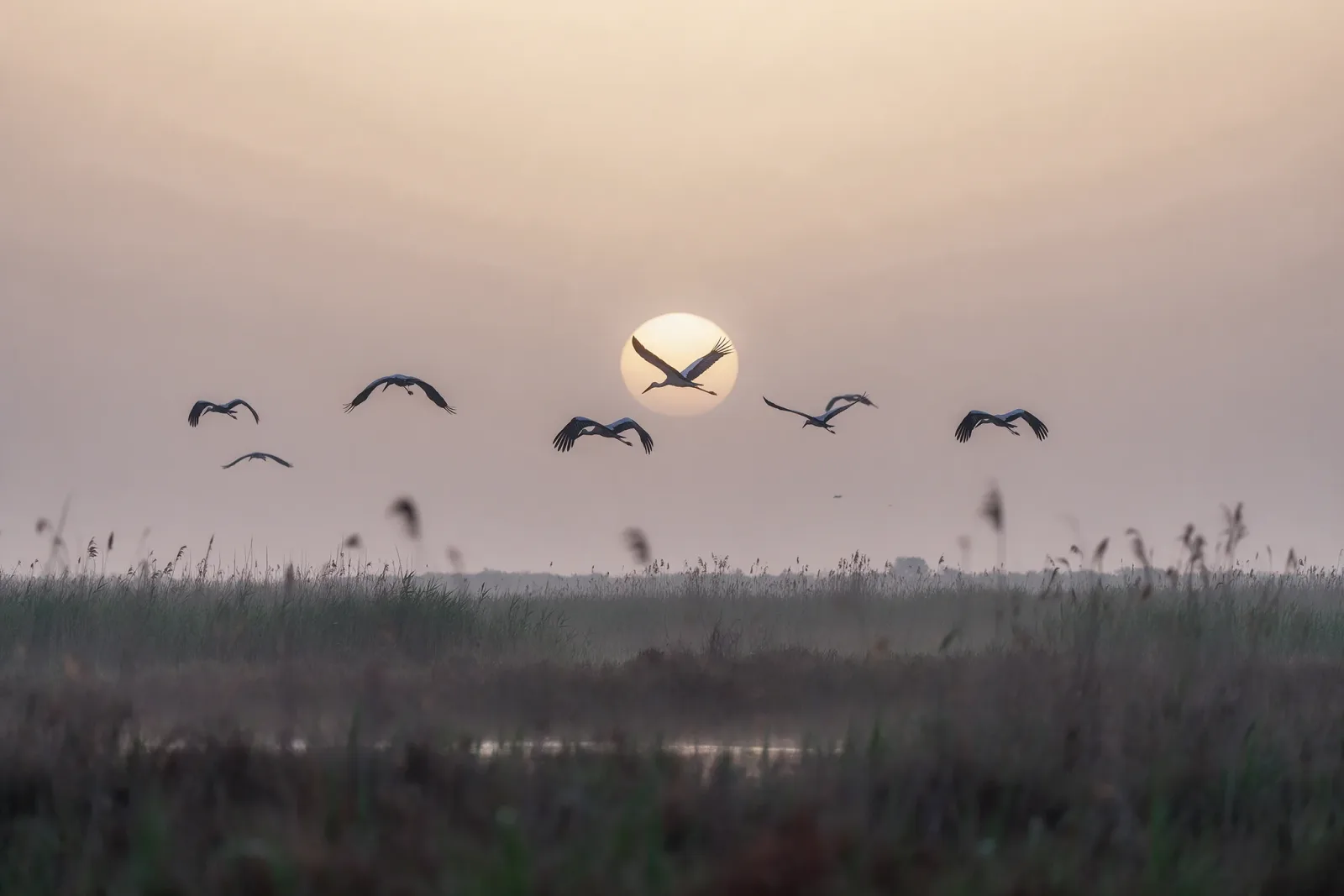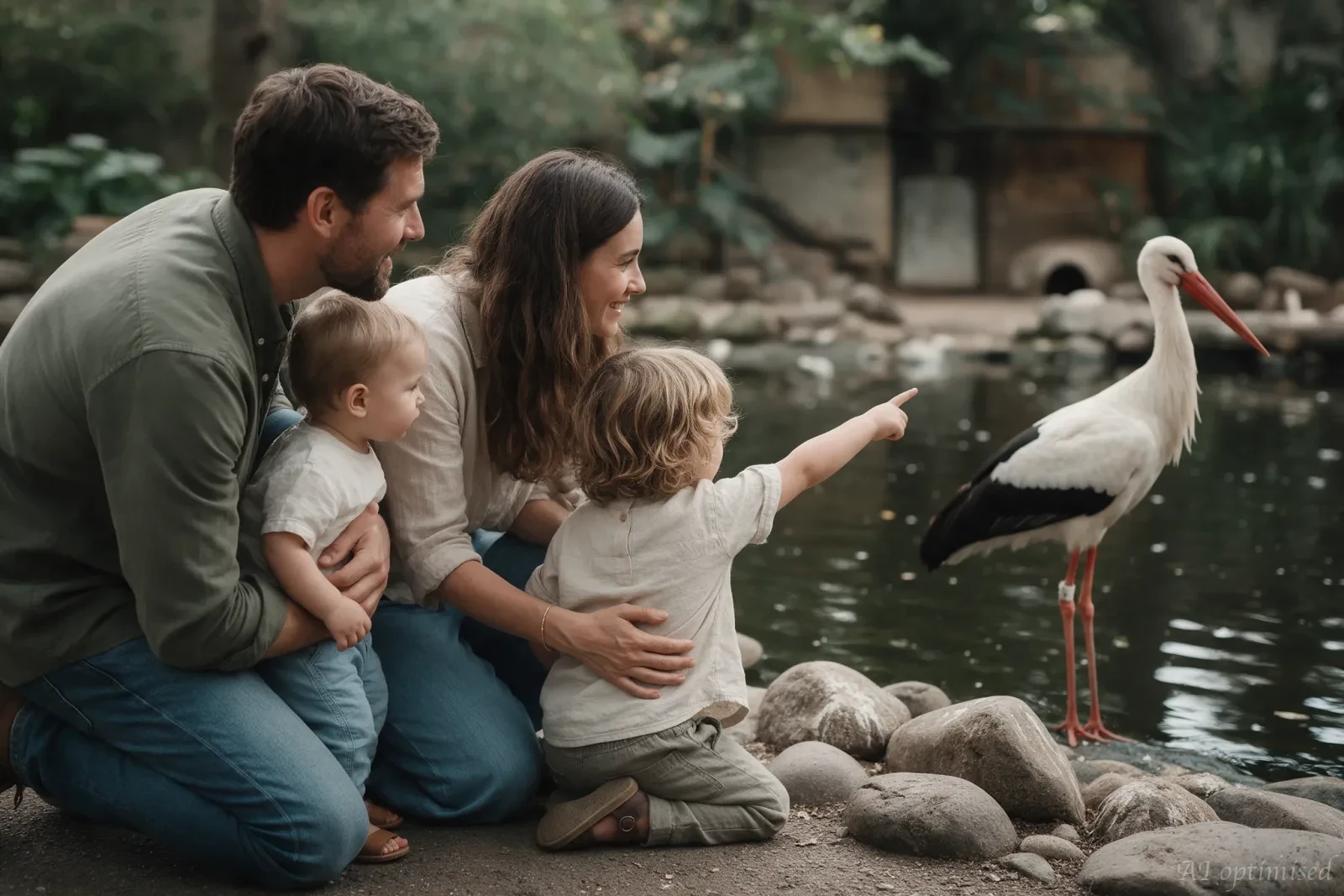
Stork watching with children is less about the bird and more about the pace. A child will lose interest in a stork standing still, and so the art is to keep the outing short, the snacks near, and the wonder shared. A white stork is a good bird for a child because it is big, easy to see, and does the one thing children find funny: it stands on one leg and stares.
Choose a bird a child can actually see
A distant speck through a telescope means nothing to a small child. Pick a stork that is close enough to watch with the naked eye, a bird in a field by the road, or a nest on a low roof in the village. A child who can see the bird without equipment will stay far longer than one who is told to wait for a view they cannot find.
Give the child a job
Children watch best when they have something to do. Let them count the storks in the field, or hold the map, or tell you what colour the bill is. Ask questions they can answer: what is the bird doing, is it walking or standing, how many legs can you see. A job turns waiting into a game, and a game keeps a child beside you while the bird does its slow, patient work.
Keep it short and end on the best note
The best birdwatching trip with a child is the one that ends while they still want more. Half an hour is plenty. Watch the bird together, share what you see, and leave before the restlessness sets in. A short, happy outing becomes a memory the child will want to repeat. A long, tired one becomes a reason to stay inside.
Let the child lead the way home
On the walk back, let the child talk. You will hear which details stuck, the red bill, the tall legs, the way the bird walked, and those details are the beginning of a birdwatcher. Do not correct or fill in. Just listen. A child who has been heard will come back to the marsh again, and next time they will see more.
Bring the bird home in a small way
When the outing is over, you can keep it alive with a drawing, a note in a journal, or simply a shared retelling at dinner. The stork will be mentioned again at odd moments, at bedtime, in the car. That is how watching takes root in a child, not in a single perfect sighting but in the quiet repetition of a bird that keeps coming back.
Explore the gift