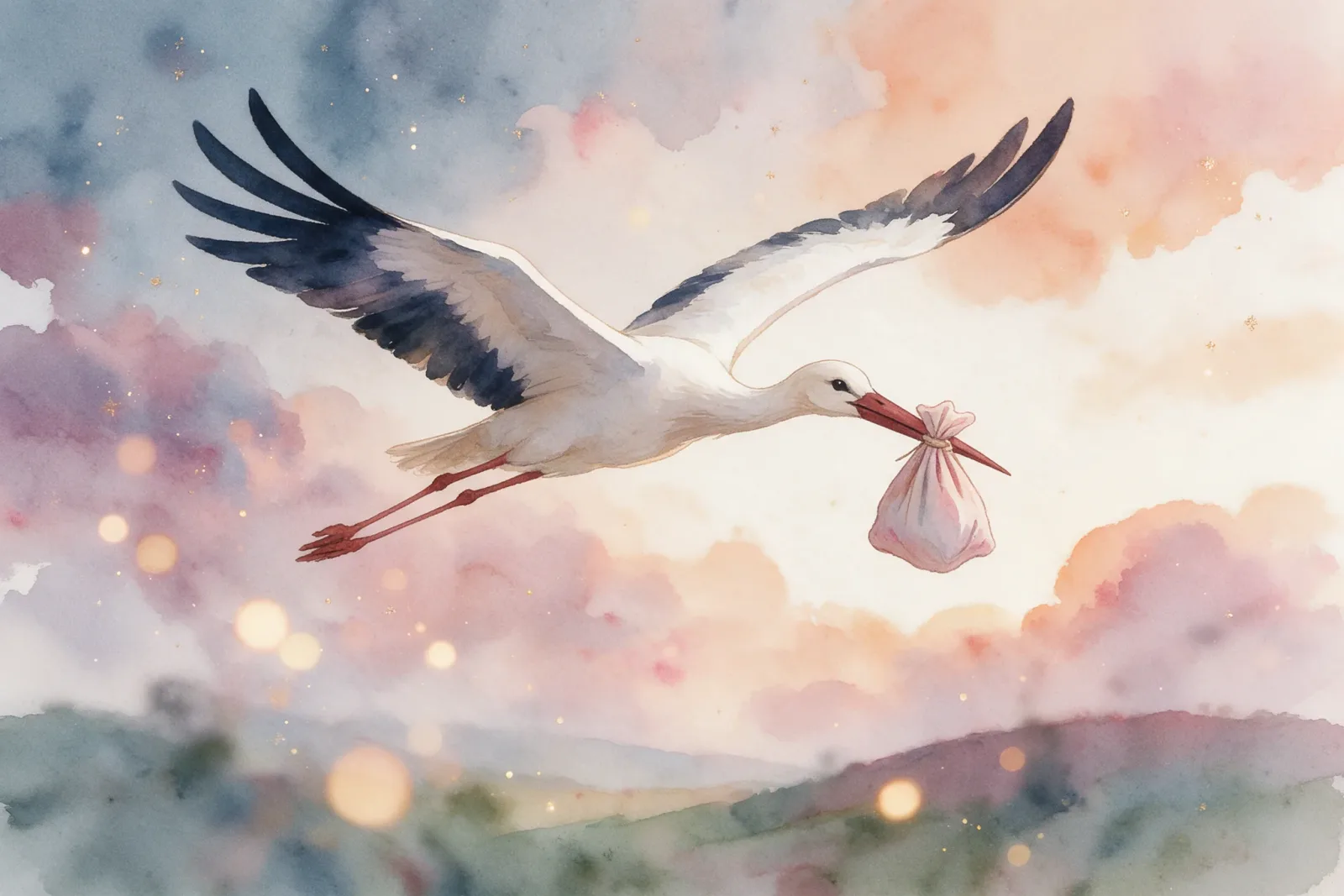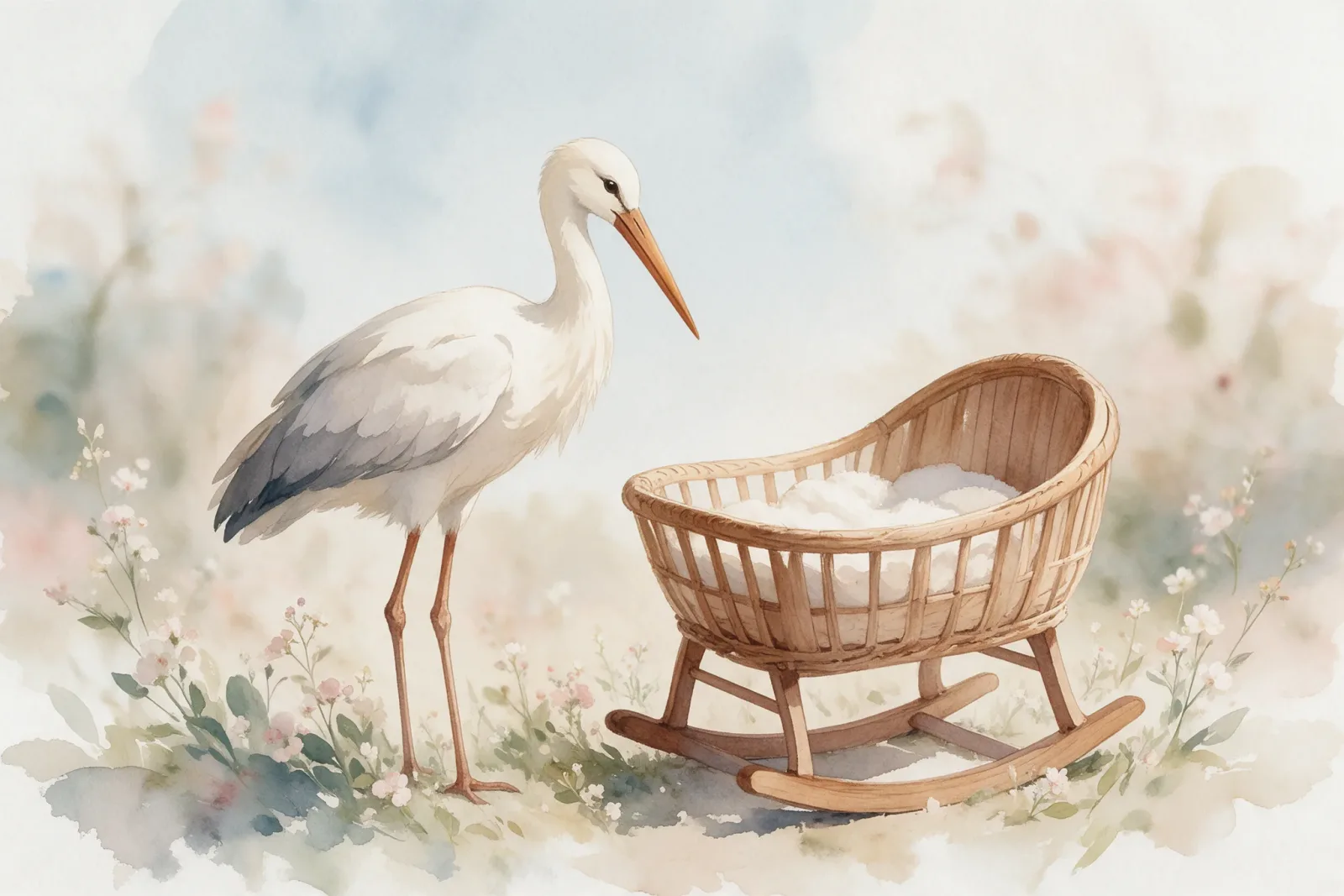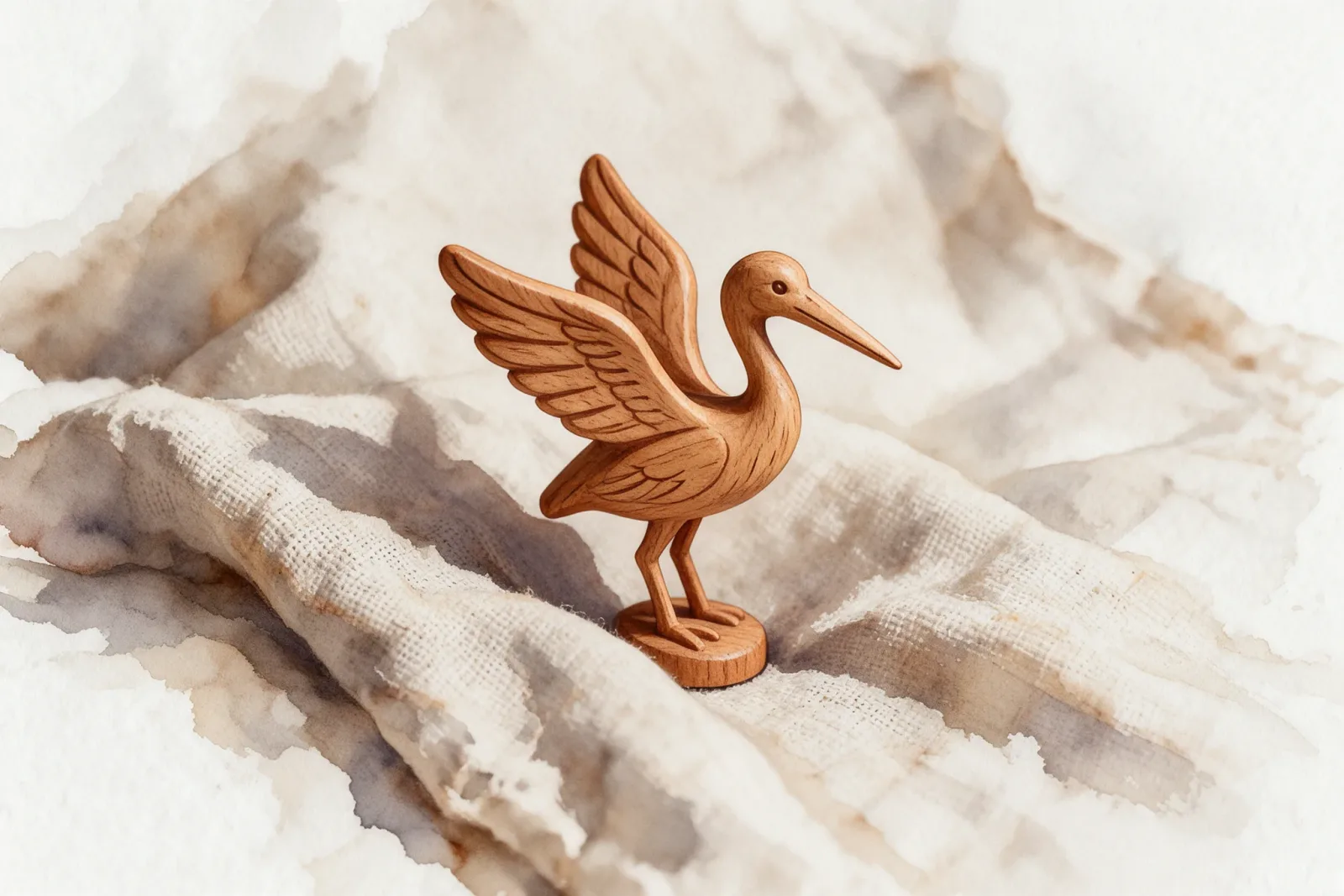
People once kept small objects to summon the stork's blessing, and among them were stork stones and charms. A carved bird, a polished stone, a scrap of cloth tied at the door, each one was a tiny request, a way of keeping the stork's luck close even when the bird was far away in the south.
The charm as a small prayer
A charm is a wish made small enough to hold. Where a prayer needed a church, a charm needed only a pocket, and the stork's luck could be carried anywhere. A mother might keep a wooden stork near the cradle, or a farmer might bury a shaped stone at the edge of a field.
These objects were not decorations. They were addressed to the bird itself, a way of saying to the stork, return to us, and bring the good weather and the children with you.
Stones and their quiet office
The stork stone was a natural choice, because stones survive. A smooth stone from a marsh or a riverbed, shaped or marked or simply kept, carried the memory of the wet places where the stork stood. To hold it was to hold a piece of the bird's own country.
Some stones were carried for luck in the pocket, others laid in the hearth or the cradle. The stone did not have to look like a stork to work. It had to be remembered, and it had to be kept.
The carved and the woven charm
Woodworkers carved small storks for the nursery, and these were the gentlest of the charms. Painted white with a red bill, they stood watch over sleeping children, a silent guardian in miniature.
Women stitched the stork into cloth as well, a bird on a hem or a cradle cloth, so that the child would sleep under the symbol of the bird that was said to have brought it. The stitched stork was a blessing worn close to the skin.
The charm that called the bird home
The deepest purpose of every charm was the return. Winter was long, and the stork's departure left a kind of absence over the house. The charm was a way of holding the bird's place, of keeping the nest warm, in hope, until spring came back.
When the first stork appeared, the charm had done its work. It had kept the promise alive through the cold months, and the household could put it away until the next autumn.
Why we still keep them
The old belief in the charm has faded, but the instinct has not. People still keep small birds on shelves and in nurseries, not as magic but as comfort. The shape of a stork still says protection, return, and hope.
Stork stones and charms are a reminder that the bird was never only a story. It was a presence people wanted near, and they kept it near the only way they could, in wood, in stone, and in thread.
Explore the gift